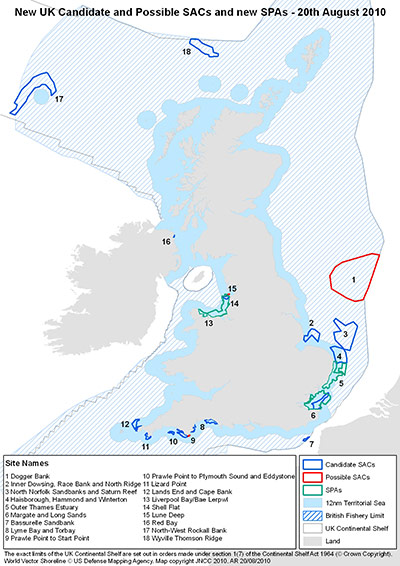
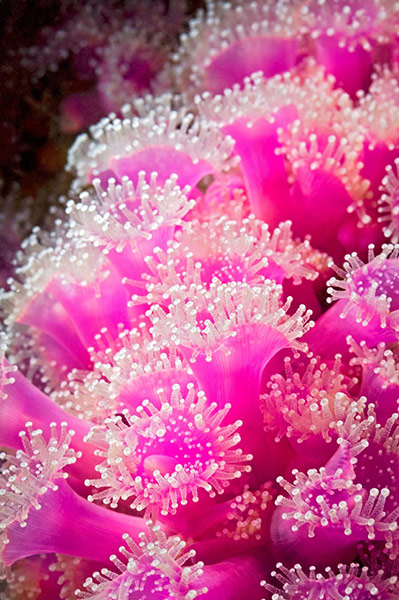
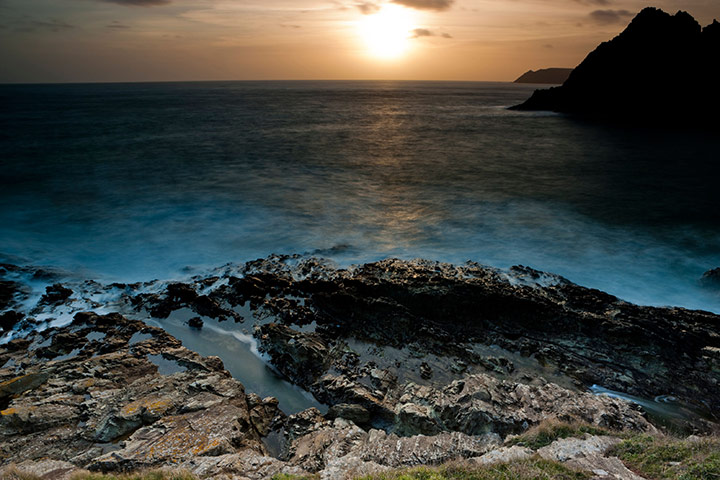
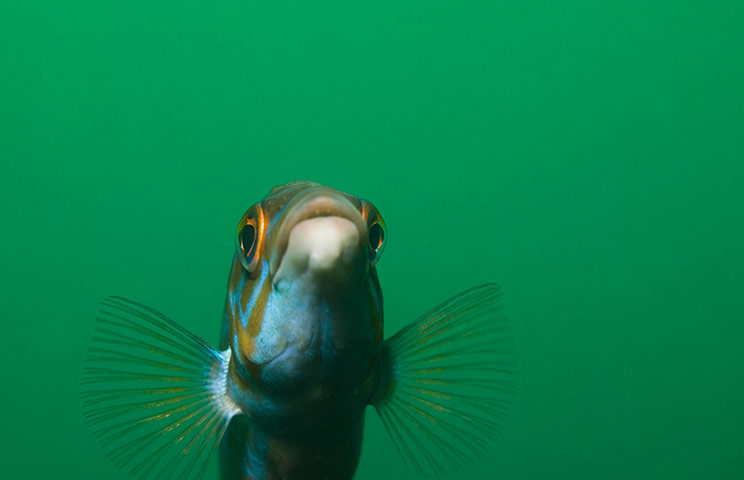
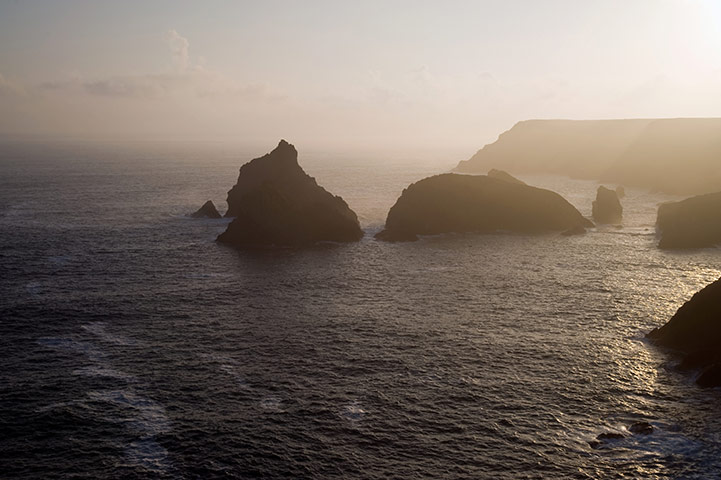
Fifteen new marine protected areas were created today, designed to protect important habitats and species. The UK government has submitted the sites to the European commission to be included within the European ‘Natura 2000’ network of protected areasPhotograph: DEFRAJewel anemones (Corynactis viridis) are common in all British coasts. Reefs support a colourful array of sponges, sea squirts and corals that provide shelter for crabs, lobsters and fish such as the multicoloured cuckoo wrasse. This one is located at the Lizard, Cornwall – one of the new Special Areas of Conservation (SAC) Photograph: Paul Kay/Natural EnglandSunset on the south Devon coast at Prawle Point near East Prawle. There are three types of habitats which will be protected in the Natura 2000 network – reefs, sandbanks and sea cavesPhotograph: Sebastian Wasek /Alamy
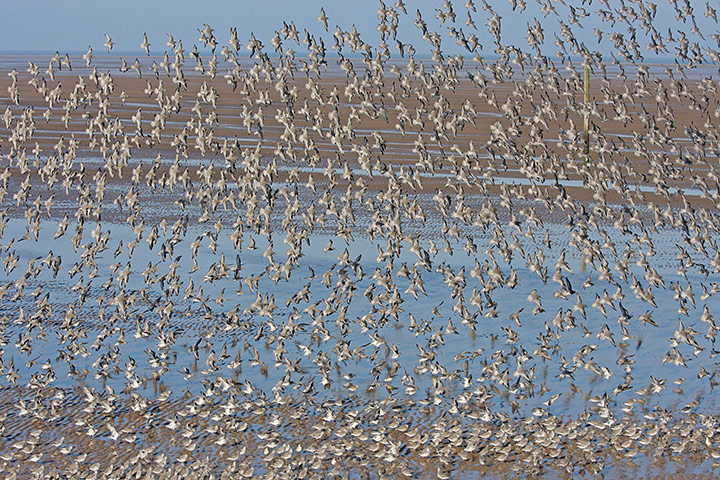
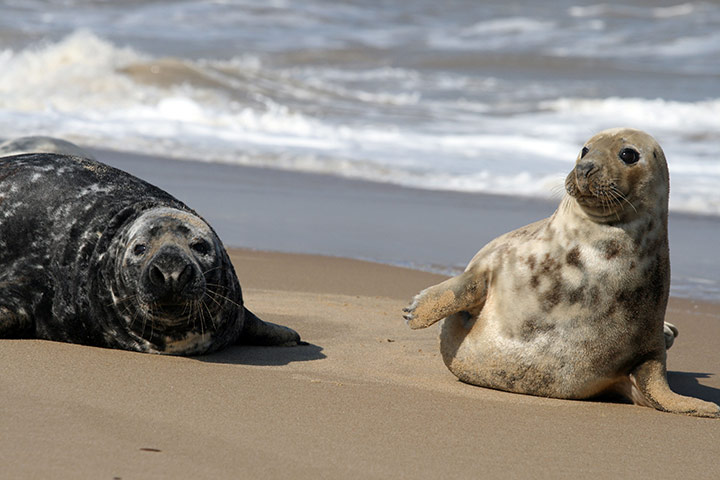
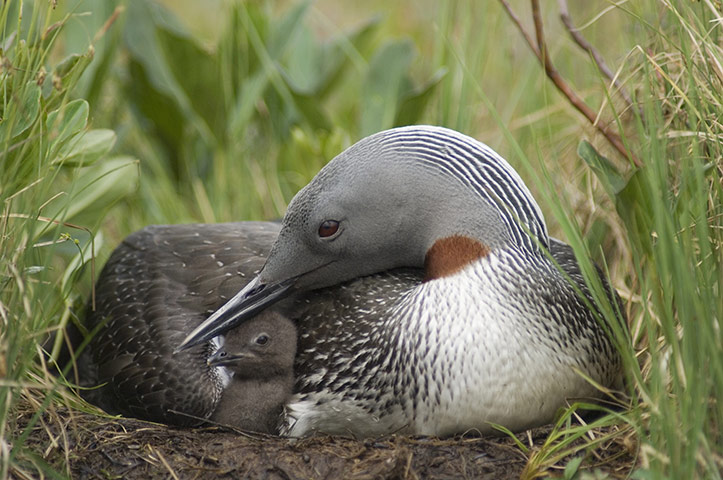
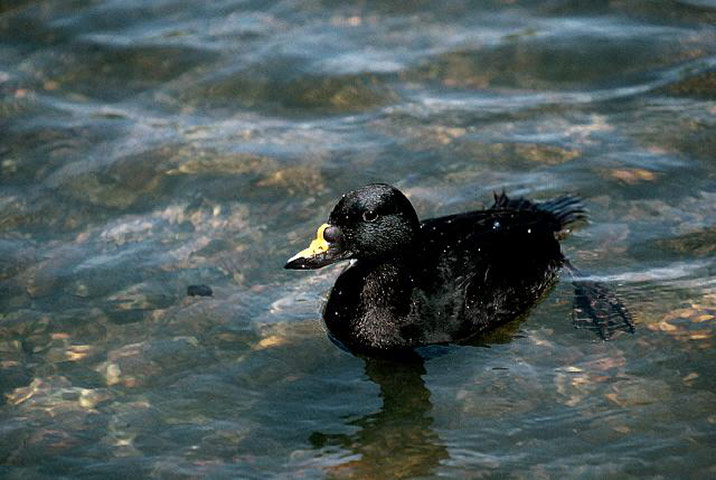
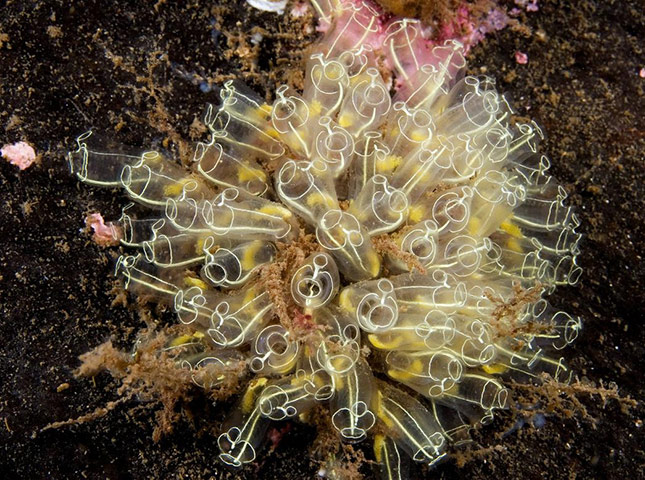
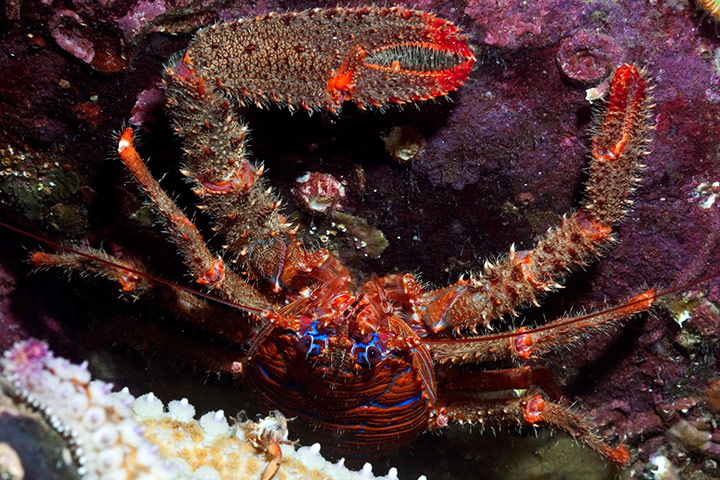
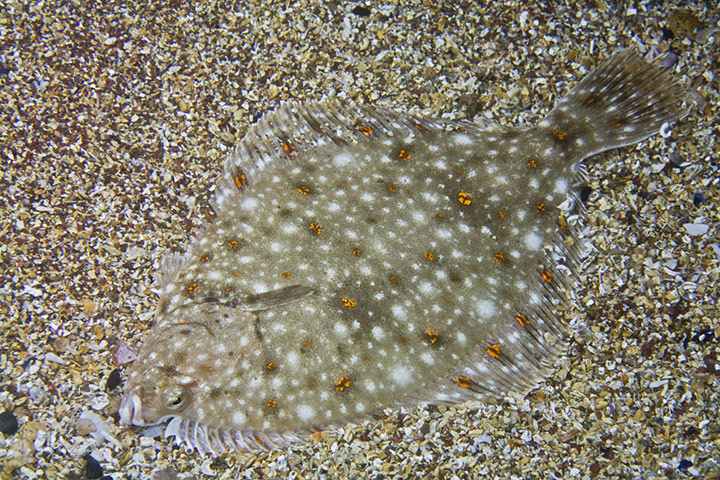
A red knot Calidris canutus flock in flight over shore in winter plumage Liverpool bayPhotograph: Alan Williams/AlamyNorfolk seals on Winterton beach in early springPhotograph: Kevin Osborne/AlamyRed-throated loon (Gavia stellata) nesting with a day-old chickPhotograph: Michael Quinton/Getty ImagesA common scoter, (Melanitta nigra)Photograph: David Hosking/CorbisLightbulb sea squirts are commonly found on reefs in the south-west of EnglandPhotograph: Paul Naylor/Natural EnglandA squat lobster ‘upside down’ in a crevice. The UK has the most varied and extensive sea caves on the Atlantic coast. They include tunnels, caverns and arches and can range from a few metres in size to hundreds of metres deep. Most cave communities are dominated by filter-feeding animals. Subtidal caves support more diverse animal communities including sponges, anemones, soft corals, sea squids and bryzoans. They may also provide refuge for crabs, lobsters, crawfish and fish such as gobies Photograph: Paul Kay/Natural England/Natural EnglandSandbanks act as nursery grounds for many commercial fish species such as plaice . They also support sand eel communities that are a food source for seabirds, porpoises and sealsPhotograph: Jim Greenfield/Natural EnglandA male cuckoo wrasse (Labrus mixtus)Photograph: Paul Kay/Rex FeaturesLizard Point in Cornwall has been nominated as one of the special areas of conservationPhotograph: Corbis
Sign up to read this article
Read news from 100’s of titles, curated specifically for you.