Early evening summary
- Boris Johnson and Joe Biden have had their first in-person meeting at Carbis Bay in Cornwall, where the G7 summit will start tomorrow. Johnson described the president as a “breath of fresh air”. (See 6.06pm and 6.21pm.) And Biden reaffirmed his commitment to the UK-US “special relationship”. The two men also signed a new “Atlantic Charter” (pdf). Here is the joint statement (pdf) explaining it. It says:
The president and the prime minister set out a global vision in a new Atlantic Charter to deepen cooperation in democracy and human rights, defence and security, science and innovation, and economic prosperity, with renewed joint efforts to tackle the challenges posed by climate change, biodiversity loss, and emerging health threats.
- Biden has announced that the US is buying 500m doses of the Pfizer vaccine to donate to 100 poorer nations.
That’s all from me for tonight. But our US coverage continues on our US live blog.
Biden announces US will be buying 500m doses of Pfizer vaccine to donate to poorer nations
Biden also confirmed that the US is buying 500m doses of the Pfizer vaccine to donate to 100 poorer nations.
JUST IN: Pres. Biden announces the U.S. will "purchase half a billion doses of Pfizer COVID-19 vaccine to donate to nearly 100 nations that are in dire need in the fight against this pandemic." https://t.co/9mMwX4dba6 pic.twitter.com/avNdGegaqw
— Evan McMurry (@evanmcmurry) June 10, 2021
Updated
Biden reaffirms his commitment to 'special relationship'
Joe Biden is speaking to the media now.
He started by mourning the loss of Prince Philip, who would have celebrated his 100th birthday today.
Biden begins remarks by mourning the most recent loss of the Royal Family, noting today "would have been Prince Philip's 100 birthday."
— Philip Melanchthon Wegmann (@PhilipWegmann) June 10, 2021
And then he paid tribute to the “special relationship”.
"We affirmed the special relationship -- it's not said lightly -- the special relationship between our people," Biden says of his Johnson meeting, using and repeating a phrase that Johnson reportedly bristles at.
— Josh Wingrove (@josh_wingrove) June 10, 2021
Using the term could be seen as antagonistic towards Boris Johnson, after No 10 confirmed earlier this week that he does not like to use the term. Johnson reportedly considers it needy and weak.
But Biden has used the phrase quite happily before, and so it might have looked odd if he did not repeat it again. And it is hard to argue that describing an ally as “special” can amount to a snub.
A hotel believed to be housing security staff and media for the G7 summit in Cornwall has temporarily closed after an outbreak of coronavirus.
The Pedn Olva hotel in St Ives, around a mile from Carbis Bay where the summit is being hosted, said it will close after liaising with Public Health England.
Ahead of the summit, there had been concern from local people and politicians that the event could lead to a surge in Covid in the area.
However, the hotel made it clear the outbreak was among staff members rather than visitors.
What No 10 says about the Johnson/Biden talks
Downing Street has released its read-out of the Johnson/Biden talks. It is long, and mostly rather bland, but her are some of the more interesting points.
- Johnson and Biden have agreed “to work to reopen travel and to continue to share information that will help defeat the spread of coronavirus in our countries and internationally”. But there is no announcement about a UK/US travel corridor, despite there being some speculation in advance that this might be an outcome of the meeting.
- The two leaders are reaffirmed their commitment to a UK/US free trade deal - but without saying anything new about its timing. No 10 said:
The prime minister and president concurred that the revitalised Atlantic Charter published today was a fitting testament to the sheer breadth and depth of the cooperation between our countries.
They resolved to take this cooperation further by expanding trade and progression towards a future UK-US free trade agreement, a deal which would create jobs and bring new opportunities to both of our countries.
- Johnson has committed himself to working with the EU to finding “pragmatic solutions” to the Northern Ireland protocol problem. No 10 said:
The prime minister and president both reaffirmed their commitment to the Belfast (Good Friday) agreement and to protecting the gains of the peace process. The leaders agreed that both the EU and the UK had a responsibility to work together and to find pragmatic solutions to allow unincumbered trade between Northern Ireland, Great Britain and the Republic of Ireland.
This is little more than what the UK government has always said. But Johnson has hinted several times this year that he might trigger article 16 of the protocol - an emergency measure allowing the UK to ignore parts of it - if the EU does not compromise, and such a move would mark the end of attempts to find a joint solution with the EU. This statement suggests he is paying some heed to the US view that it would be unacceptable for the UK to do that.
Asked if President Biden urged him to speed up implementation of the Northern Ireland protocol in their talks, Boris Johnson said Biden did not do that. But he said that all sides - the US, the UK, the EU - all want to uphold the Belfast/Good Friday agreement. “That’s absolutely common ground, and I’m optimistic we can do that,” he said.
Johnson welcomes Biden's desire to work with UK on issues like security and climate change
This is what Boris Johnson said in a clip for broadcasters about his meeting with Joe Biden.
I don’t think it is any exaggeration to say that the relationship between the UK and the US, the relationship between North America and Europe which is incarnated in that Atlantic Charter of 1941 which we’ve renewed today is of massive, massive strategic importance for the prosperity, the security of the world, for all the things we believe in together democracy, human rights, the rule of law.
The US and the UK stick up for those two things together so it’s incredibly important that we should affirm that.
The talks were great. They went on for a long time. We covered a huge range of subjects, and it’s wonderful to listen to the listen to the Biden administration, and to Joe Biden, because there’s so much that they want to do together with us - from security, Nato, to climate change and it’s fantastic. It’s a breath of fresh air.
Johnson’s comments are effectively an admission that he is glad to see the end of the Trump administration.
Although Johnson welcomed Donald Trump’s support for Brexit (Trump was one of the few world leaders who thought it was a good idea), and although both leaders boasted about their good relationship and and shared some populist political traits, Trump’s unpredictability, and aversion to multilateralism, made him a difficult partner - even for Johnson.
Johnson is also unusual among rightwing conservatives in being genuinely committed to tackling climate change (his father is a lifelong environmental campaigner, and his wife is a conservationist), and on this issue he far closer to Biden than he ever was to Trump.
Johnson praises Biden as 'breath of fresh air' after 'great' talks with US president
Boris Johnson has said his talks with Joe Biden were “great” and went on for a long period of time.
Biden was “a breath of fresh air”, he said.
He said there were a lot of things they wanted to do together.
I will full quotes from Johnson’s media clip shortly.
Updated
The Prince of Wales has described the G7 summit starting in Cornwall tomorrow as a “game-changing opportunity” to help create a partnership between governments, business and private finance to finally tackle the “existential crisis” of climate change.
Speaking to business leaders at an event at St James’s Palace, he said:
We do have a potentially game-changing opportunity to drive forward the partnerships between government, business and private sector finance that are of course absolutely vital if we are to win the battle to combat climate change and biodiversity loss.
So working together, and in the closest possible partnership with governments, we can move - and actually are moving or beginning to - mountains.
As I’m afraid I’ve been trying to say for several decades, unless we actually unlock private sector resources, innovation and finance, with the public sector setting a framework of incentives and regulation, we just don’t stand a chance of solving the existential crisis we have engineered over the years.

Updated
Wilfred, Boris Johnson’s one-year-old son, is with his parents in Cornwall. According to PM Media, the little boy made an appearance when he was pictured on the beach with Carrie Johnson and Jill Biden, as the two women dipped their feet in the sea.

Updated

Updated
AP’s Jonathan Lemire thinks what Boris Johnson said at his photocall with Joe Biden before the talks started indicted a desire to improve relations.
Laughing with Biden, Johnson seemed to hint that he would be looking to only improve relations with his American counterpart.
— Jonathan Lemire (@JonLemire) June 10, 2021
“I’m not going to disagree with you on that,” said Johnson, “or indeed on anything else.” https://t.co/vCzvKiIcl5
Perhaps. The two men have not met before. After their first conversation following Biden’s arrival in the White House No 10 briefed that they had bonded over a shared love of trains. But Johnson has never shown much interest in trains in the past (although he does like madcap infrastructure projects), and Biden is unlikely to have been won over that easily. In 2019 he called Johnson a “physical and emotional clone” of Donald Trump. Another US president once said much the same thing, but when Biden said it, it was not meant as a compliment.
Updated
Actually, Lord Frost wasn’t at the Johnson/Biden meeting after all, the FT’s Sebastian Payne says. See 4.48pm.
Downing Street say Lord David Frost wasn't at the Johnson-Biden bilat at the G7, despite his name appearing on official White House cast list.
— Sebastian Payne (@SebastianEPayne) June 10, 2021

Micheál Martin, the Irish taoiseach (prime minister), has welcomed the news that the White House has effectively rebuked the UK for its failure to properly implement the Northern Ireland protocol (the deal with the EU that governs post-Brexit trade arrangements for Northern Ireland, the only part of the UK remaining in the EU’s single market). Martin said:
I think it’s significant in the context of the messaging, and the clear message from President Biden and his administration that the sensible thing to do here is to have alignment between the United Kingdom and the European Union and the United States.
We all share common values of democracies, that’s the clear message I get from President Biden.
Therefore I think he’s saying to the United Kingdom, look, let’s do the sensible thing here.
Let’s work out a constructive sustained agreement with the European Union, in respect of Brexit, in respect of the withdrawal agreement and the protocol.
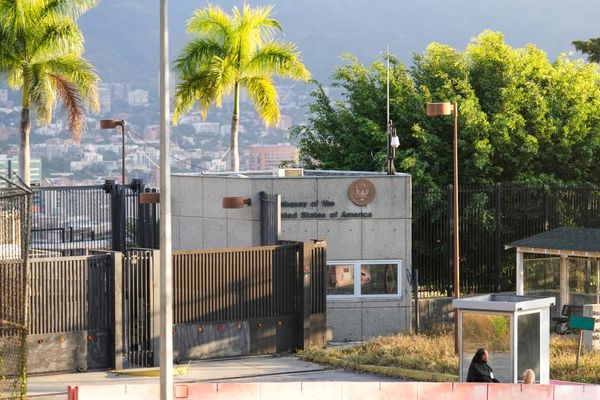
This is from Patrick Maguire, the Times reporter who broke the story about how the US charge d’affaires Yael Lampert delivered a warning to Lord Frost, the Brexit minister, on this in person.
Indeed, impossible to deny that this demarche (Lempert's first to UK) was ordered by the White House as a means of conveying just how aggravated Biden personally is by government conduct on NI - this, from the Whitehall memo of the meeting, is how it was put to Lord Frost. https://t.co/rPvSSeS5l7 pic.twitter.com/NkwnyzsqXJ
— Patrick Maguire (@patrickkmaguire) June 10, 2021

The FT’s Sebastian Payne says Lord Frost, the Brexit minister, has been at the Johnson/Biden meeting this afternoon. Boris Johnson may have wanted him there to address President Biden’s concerns about the UK’s approach to the Northern Ireland protocol.
Lord David Frost, Brexit minister, was one of the attendees at the bilateral meeting between Boris Johnson and Joe Biden at the G7 this afternoon.
— Sebastian Payne (@SebastianEPayne) June 10, 2021
👀
UPDATE: Actually, Frost wasn’t there, says Payne.
Downing Street say Lord David Frost wasn't at the Johnson-Biden bilat at the G7, despite his name appearing on official White House cast list.
— Sebastian Payne (@SebastianEPayne) June 10, 2021
Updated
And, according to the Mirror’s Ben Glaze, HMS Prince of Wales is by no means the only naval vessel off Carbis Bay.
According to @MarineTraffic there are currently two River-class OPVs (Tyne and Tamar), three Archer-class patrol boats (Smiter, Ranger and Exploit), one Type 23, Duke-class frigate (Northumberland) and the bloody huge Queen Elizabeth-class carrier Prince of Wales off #CarbisBay
— Ben Glaze (@benglaze) June 10, 2021
An OPV is an offshore patrol vessel.
Boris Johnson and Joe Biden will later sign a new “Atlantic Charter”. It is a deliberate imitation of the Atlantic Charter signed by Winston Churchill and Franklin D Roosevelt in 1941. The original one paved the way for the creation of the United Nations and the new world order after the second world war.
Churchill met Roosevelt in Newfoundland and he arrived there on HMS Prince of Wales. One of the navy’s new aircraft carriers has the same name, and it has been deployed to Cornwall, supposedly with the intention of forming the backdrop for today’s signing ceremony. But, as you can see from the picture, is is some way off in the background.

Updated
PA Media has filed on the pleasantries exchanged when Boris Johnson and Joe Biden posed for pictures at Carbis Bay with reporters and cameras in the room.
Biden said:
I told the prime minister we have something in common. We both married way above our stations.
And Johnson replied:
I’m not going to dissent on that one. I’m not going to disagree with you there or indeed on anything else, I think highly likely.
Given that Johnson got married less than a fortnight ago, Biden was bound to bring the topic up. But, with Johnson, raising the topic of marriage is potentially a risky move; presumably Biden was referring to Johnson’s new and third marriage - not the other two.
And when Johnson said they were not going to disagree on anything, he was being polite - but probably not entirely accurate (as is often the case).
Still, it was all less awkward than Tony Blair’s first on-camera encounter with George W Bush when Bush, also commenting on what they had in common, said they both used the same toothpaste. They were at Camp David, and Bush was referring to the standard toothpaste provided in visitor cabins, but reporters were totally mystified by the comment, and Blair was embarrassed by the mild homoerotic innuendo.

This is from Bloomberg’s Jennifer Jacobs.
“Well, I think that we're bringing love from America,” @FLOTUS told me when I asked what her “LOVE message meant. “I think that this is a global conference and we're trying to bring unity across the globe and I think that's important right now that you have a sense of unity.” pic.twitter.com/cDw3vOzpnR
— Jennifer Jacobs (@JenniferJJacobs) June 10, 2021
Flotus is Jill Biden, the first lady. She is wearing a jacket with LOVE on the back.
From CNN’s Kaitlan Collins
After President Biden jokes that he and Prime Minister Boris Johnson have in common that they both married up, Johnson says, "I am not going to dissent on that one — or indeed on anything else."
— Kaitlan Collins (@kaitlancollins) June 10, 2021
Here are some pictures from the Johnson/Biden meeting.


Updated
Edwin Poots, the new DUP leader, has criticised Joe Biden for arguing that getting rid of the Northern Ireland protocol would put the Good Friday agreement at risk. Following reports that the US embassy put this case forcefully to Lord Frost, the Brexit minister, at a meeting, Poots said:
It would strike me that [the US position is] not well informed in that the imperilling of the peace has been as a consequence of the Protocol and because of the implementation of the Protocol.
We’ve seen riots on the streets in Northern Ireland which we hadn’t seen for many years and I think the president would do well to reflect on what the reality is.
From Steve Holland from Reuters
“It’s gorgeous, I don’t want to go home,” said President Biden of seaside view in Carbis Bay with PM Boris Johnson. pic.twitter.com/Sbv9uQCJRV
— Steve Holland (@steveholland1) June 10, 2021
Sky News is showing footage of Joe Biden and Boris Johnson speaking to reporters.
Johnson says their wives have gone off somewhere.
There is a lot of shouting from reporters, and that’s about it.
We may get some fuller quotes soon.
Biden meets Johnson in Cornwall as talks start
Joe Biden has arrived for his meeting with Boris Johnson at Carbis Bay in Cornwall.
Pictured: Boris Johnson, his wife Carrie Johnson, US President Joe Biden and First Lady Jill Biden in Carbis Bay, Cornwall ahead of the G7 summit.
— Alan McGuinness (@Alan_McGuinness) June 10, 2021
📸: Toby Melville/Reuters pic.twitter.com/IzNzCRqiLP

Updated
This is from Jennifer Jacobs from Bloomberg. Flotus is Jill Biden, the US first lady.
Biden meets Boris Johnson. Flotus’s jacket says “LOVE” on the back. pic.twitter.com/s4pSkBdtNc
— Jennifer Jacobs (@JenniferJJacobs) June 10, 2021
English mist and rain has forced Boris Johnson to change the venue for his meeting this afternoon with the US President, Joe Biden, Reuters is reporting.
No 10 is putting a patriotic gloss on this, the Mail’s Jason Groves reports.
Govt source jokes it's all part of ensuring Biden gets 'the authentic British seaside experience' https://t.co/4A3I6EW6pw
— Jason Groves (@JasonGroves1) June 10, 2021
Hancock 'at best disingenuous' in evidence to MPs on care homes, says Labour
Labour says Matt Hancock was “at best disingenuous” in his evidence to MPs this morning. This is from Liz Kendall, the shadow social care minister.
Matt Hancock was at best disingenuous in his evidence to the select committee today. He selectively used briefings, evidence and clinical advice to defend his record instead of admitting his abject failure to protect care homes in the pandemic.
Even Matt Hancock knows he now categorically failed to put a protective ring around care homes. He has now used multiple excuses for failing to test those discharged to care, and family members who have lost loved ones will be frustrated and deeply upset that they still do not have the truth from the secretary of state today.
The government was much too slow to act to protect residents and staff. As we emerge from this pandemic ministers must put in place a plan to transform social care and ensure that care homes never again face a crisis of this scale.
Updated

Updated
Matt Hancock’s Covid evidence – verdict
Matt Hancock’s evidence will be judged by many as a counter-blast to Dominic Cummings’s, and decisions about who came across as more honest, or more responsible, will largely depend on prior assumptions about the government’s general handling of the pandemic.
Cummings’s evidence was certainly more blunt and shocking. People tend to assume that these qualities also correlate with honesty, and to his credit Cummings very rarely sounded evasive (apart from when asked about his own dealings with journalists). But what is the most blunt/shocking is not necessarily the most accurate, and Cummings’s tendency to depict everyone in government as either a genius or an idiot undermined his credibility to an extent for many people who were watching. Hancock probably came over as less candid, but a bit more sensible. One key group of observers are definitely going to take his side; from what Greg Clark and Jeremy Hunt (the two committee chairs) have said already, it is obvious that the final report is going to side with Hancock (their former cabinet colleague) and not Cummings (their opponent on Brexit) on the subject of Hancock’s honesty.
On the substance of what Hancock said, three things stand out.
First, the session provided fresh evidence that, when the inquiry starts, a key government strategy will be to “blame the scientists”. Hancock was at his most contrite (or contrite-seeming) this morning when he spoke about how he regretted not challenging more aggressively what the scientists were telling him about asymptomatic transmission not being a big problem. (See 10.48am.) It sounded like an admission of culpability, but it also served as a means of deflecting blame.
Second, on care homes, Hancock presented a new argument to justify the lack of testing that took place initially when patients were discharged into them from hospitals. Until now he has just been saying that testing capacity was not available. But this morning he said clinicians were also against testing at that point because results could take too long to arrive. (See 9.50am.) Arguably this compounds the argument testing was not being prioritised.
Third, although Hancock may have sounded a more reasonable witness than Cummings, there were still several moments when he sounded less than 100% convincing. For example, on PPE shortages, is it really that wise to rely so much on that one line in an NAO report? (See 1.18pm.) Does he really believe the briefing he’s had that no health or social care workers died because of PPE shortages? (See 12.48pm.) Another piece of government research on care home deaths was successfully rubbished by Clark. (See 11.32am.)
Perhaps the clearest example of Hancock’s refusal to fully face up to what was happening came when he was questioned by Barbara Keeley about people dying unnecessarily. Hancock maintains people always did get the treatment they needed. (Cummings said this was one of Hancock’s lies.) When Keeley gave examples of this not being the case, because of the use of “do not resuscitate” notices, Hancock insisted he intervened to put a stop to it. (See 12.03pm.) But acting to prevent a wrong is not proof that that wrong never happened in the first place; in fact, it’s the opposite. By the time the inquiry comes along, Hancock will probably need better answers on these points.
Updated
Greg Clark, the science committee chair, gets the final questions.
Q: Do we have a plan to deal with vaccine escape (a variant that is not susceptible to the vaccines)?
Hancock says this is a concern, and they are preparing for it. The PM wants diagnostics and treatment for a variant like this to be available within 100 days.
Vaccines can be developed within days, he says.
And the process for awarding regulatory approval for a vaccine like this could be speeded up, he says.
Hancock also stresses that vaccine escape is a gradual process.
If a variant were completely resistant to the vaccines, that would amount to a new pandemic, he says. And he says the government is much better prepared for that than it was.
And that’s it. The hearing is over. Hunt says it has lasted almost four and a half hours.
Updated
Hancock says hospital ventilation systems were not good enough to cope with Covid risk
Jeremy Hunt, the health committee chair, says health staff would want him to ask about hospital-acquired infections.
Hancock says there is no doubt there was nosocomial (hospital-acquired) infection. But it is hard to know the exact extent.
Q: Should testing for NHS staff have started earlier?
Hancock says the testing capacity was not available at the start.
Q: And, for an airborne virus, is it the case that some hospital ventilation systems were not good enough?
Hancock says yes, that is “definitely another lesson”.
Q: Is it still your view that there is nothing in the data to show we are off track of lifting remaining restrictions on 21 June?
Hancock says the PM will make an announcement on this next week. He says he does not want to say anything that might give a clue as to what will happen.
They are looking at the data every day, he says.
Taiwo Owatemi (Lab) is asking the questions now.
Q: Did hospitals ever run out of oxygen?
Hancock says some hospitals got very short of oxygen. The problem was to do with the piping, the supply mechanism, not the amount of gas available.
But patients were diverted to other hospitals, he says.
Updated
Delta variant now accounts for 91% of coronavirus cases in UK, Hancock says
Hancock says the assessment he saw last night says the Delta variant now accounts for 91% of coronavirus cases in the UK.
This is what Labour’s Dawn Butler, a member of the science committee, posted earlier, after Matt Hancock’s evidence on asymptomatic transmission. (See 10.48am.)
I'm sitting in this evidence session opened mouthed. He's just not telling the truth.
— Dawn Butler MP✊🏾💙 (@DawnButlerBrent) June 10, 2021
It's shocking! https://t.co/BqRjvFrPfE
Jeremy Hunt, the health committee chair, says just two more MPs are due to ask questions.
Q: What would you do differently?
Where to start, asks Hancock. There is “so much”.
He says you could start by looking at areas where policy is different, for example on care homes.
Monaghan says many people were urging the government to act differently in April.
Hancock says the SNP government in Scotland took a similar attitude to Westminster’s to care homes.
Monaghan says she is talking about borders, and April this year, not last year. The Scottish government imposed tougher border controls, she says.
Updated
Q: Dominic Cummings said that in September Boris Johnson said having done the first lockdown he was not going to make the same mistake again.
Hancock says he never heard Johnson say that.
Q: You have made the case against the two-week lockdown. But reportedly you were arguing for this in government.
Hancock says in government you have to argue the pros and cons of various options.
As health secretary, he is inclined to take a cautious view, focusing on protecting health, he says.
Carol Monaghan (SNP) is asking about the second lockdown, and the claim it should have started earlier.
Hancock says Wales tried a two-week lockdown, but once it was over cases starting rising again.
Newsnight’s Lewis Goodall says Matt Hancock is quoting the NAO report on PPE selectively. It did say the UK did not run out of PPE nationally, but it also highlighted many problems with PPE provision. Goodall has posted a Twitter thread on this starting here.
On Matt Hancock repeating his “no national shortage of PPE” https://t.co/qqggVjgP3X
— Lewis Goodall (@lewis_goodall) June 10, 2021
When Matt Hancock said there was no evidence of PPE shortages leading to Covid deaths, he was talking about people working in health and social care. I have amended the post at 12.48pm to make that clear.
Q: How do you respond to claims the procurement system created a high risk of fraud?
Hancock says he is grateful for the work done by officials.
He repeats the point about the NAO saying there was never a national shortage of PPE. (See 12.40am.)
Hancock says, if he had ignored people contacting the government about PPE procurement, he would have been criticised.
Labour’s Dawn Butler goes next.
Q: Were you ever involved in procurement contracts?
No, says Hancock.
Q: Were you ever helpful to people applying?
Hancock says that, when people made approaches, he passed them on. He recalls doing this when Rachel Reeves, then the shadow Cabinet Office minister, contacted the government with some possible PPE manufacturers.
Hancock says there is 'no evidence' PPE shortages led to any health or social care workers dying of Covid
In response to another question from Labour’s Sarah Owen about the deaths of health workers, Hancock says:
With respect to the provision of PPE to the health and social care sector, it is my responsibility as secretary of state.
But the other thing I’d say is we have looked into this and there’s no evidence that I have seen that a shortage of PPE provision led to anybody dying of Covid.
Owen says that is a “bold claim”. She asks if Hancock will share the evidence to back it up. Hancock says that’s the information he has.
Updated
The SNP’s Anum Qaisar-Javed, a former teacher, has posted this on Twitter about her exchanges with Matt Hanock earlier. (See 11.48am.)
A public apology to my former pupils who I used to give into trouble when they didn't provide clear + concise answers in their schoolwork.
— Anum Qaisar-Javed MP (@AnumQaisarJaved) June 10, 2021
In hindsight, your answers had more depth in comparison to what Secretary of State for Health, @MattHancock, is saying in committee today.
I am updating some of the earlier posts with direct quotes from Hancock’s evidence, from the PA Media wire. To get the updates to appear, you may need to refresh the page.
Labour’s Sarah Owen goes next.
Q: How can you say there was never a national shortage of PPE when we saw nurses wearing bin bags?
Hancock says he can say that because that it was the National Audit Office concluded in a report.
But he says he accepts that in some places there were problems.
Hancock says, from his experience of economic models, he is sceptical of pandemic modelling.
But he says models can help you understand the data.
Decisions are best taken on the basis of the data in front of you, he says.
Hancock says he does not think it will take another 100 years for another pathogen similar to coronavirus to strike.
Luke Evans (Con) goes next.
Q: What is your attitude to risk?
Hancock says his view is that you should take risks, but manage them.
Q: How did you view the balance of risk with the first lockdown?
Hancock says epidemiology is all about the balance of risk.
He says he is trained as an economist. Understanding economic metrics helps with understanding epidemiology, he claims.
Hancock claims Wales able to vaccinate people more quickly than England because it can rely on England's reserves as safety net
Q: Why was Portugal taken off the green list?
Hancock says that decision was based on data from the UK Health Security Agency.
Q: Andy Burnham wants the whole of Greater Manchester to get vaccine supplies so everyone can get vaccinated, as is the case in Bolton. Why won’t you do that?
Hancock says the Bolton programme has been successful.
But, if applied on a wider scale, you need to find more people to vaccinate.
Stringer asks about the “wonderful” Radio 4 programme More or Less. Hancock says it’s a “fine programme”.
Q: More or Less did a feature on Wales recently. It showed they have vaccinated more people, because they are not holding vaccines in stock; they are using them as they get them.
Hancock says England needs to be sure it has enough vaccine to give people second doses.
We need to ensure that whatever happens in terms of security of supply there is enough vaccine for people to get their second doses.
So we ensure that there is enough of a buffer that we can be confident that people will get their second doses. It’s a judgment how big that buffer needs to be.
Our colleagues in Wales decided to hold no such buffer and go ahead on presumption supply would come through. But they also knew if there was an interruption to supply England’s buffer would be used to ensure nobody in Wales would miss their second vaccination.
That’s not a decision I could make for England because I can’t draw on anybody else’s buffer.
Updated
Labour’s Graham Stringer goes next. He says he wants to return to the claims raised earlier about advice being ignored. He asks about the Byline Times report.
Q: Will you provide the evidence required by Dr Cathy Gardner for her judicial review challenge?
Hancock says he is happy to provide all the evidence required.
Then he repeats a general point he has made already; every day, from the moment he woke up to the moment he went to bed, he focused on what he could do to save lives.
Q: In July Prof Chris Whitty, the chief medical officer, said the risk of care home staff spreading Covid from one home to another was not recognised. The Labour MP Peter Kyle raised this issue on 25 March last year. I wrote to you on 1 April about problems with care homes, including lack of PPE and lack of testing. You had no social care experts in your group of advisers. So why didn’t you heed the concerns from MPs.
Hancock says advice from MPs did lead to the government strengthening the guidance. He says, after Keeley’s letter, guidance for care homes was strengthened on 15 April.
Q: Care England has said some care providers offered the use of brand new care facilities to house patients discharged from hospital.
Hancock says he was not aware of that letter.
When challenged, he says he cannot recollect it.
Keeley says this would have been a solution to the problem posed by patients being discharged from hospital. Your advisers did not include care sector specialists.
Hancock does not accept this point. He says although Sage does not have experts with operational experience of the care sector on it, that does not mean that he was not getting advice taking this into account.
UPDATE: This is from Jennifer Williams from the Manchester Evening News.
Very salient q from @KeeleyMP - why were offers of a sort of step-down provision for care home residents leaving hospital without a definite negative test not taken up? Hancock looks uncomfortable. This was a thing Manchester did, although not sure how early on
— Jennifer Williams (@JenWilliamsMEN) June 10, 2021
Updated
Labour’s Barbara Keeley goes next.
Q: You said in the Commons on Monday that everyone got the treatment they needed. But in the light of the use of do not resuscitate notices, and the refusal of some hospitals to admit patients from care homes, is this really true?
Hancock says this is the clinical advice that he has had.
But he says the use of do not resuscitate notices without consent was inexcusable.
Q: Did you know last spring some hospitals were saying care homes patients would not be admitted?
Hancock says, as soon as he heard this was happening, he said this was unacceptable. It was not policy, he says.
Q: But why did this keep on happening? The Telegraph has published new evidence today about the use of do not resuscitate notices for people with mental illness and learning disabilities.
Hancock says, in a system as big as the NHS, people need to challenge wrong things when they happen.
Q: But how can you say this was not happening when it was?
Hancock says the strongest thing he could do was to issue guidance to stop this happening.
He says the priority was to protect the NHS so that it could provide treatment. “Treatment was always available at all times,” he says.
Hancock says it saddens him enormously that around 1,500 health and social care workers died during the pandemic.
The first four doctors to die were from ethnic minorities, he says.
Q: What steps did your department take to engage with communities where English is not the first language?
Hancock says this has been difficult, but his department has got better at this.
With vaccines, there has been a “huge amount” of engagement with minority ethnic communities.
But he says he does not like the idea that this is just about reaching “hard-to-reach” communities. That implies it is their problem, he says. He says he prefers to think in terms of making services accessible.
Hancock suggests rise in government's popularity linked to Cummings' departure
The SNP’s Anum Qaisar-Javed is asking the questions now.
Q: What lessons is the government learning from how Nicola Sturgeon is rated much more highly than Boris Johnson?
Hancock says Qaisar-Javed is quoting figures from last year.
He says since November (when Dominic Cummings left No 10) the government has been more efficient and more effective. The public has noticed that, he says.
UPDATE: From the Times’s Chris Smyth
Brutal from Hancock on Cummings: "the operation of government has improved very significantly since November, and the public have definitely noticed that... it is more efficient, more effective, there's better communication inside of government, there's better sense of teamwork"
— Chris Smyth (@Smyth_Chris) June 10, 2021
FURTHER UPDATE: Here is the full quote from Hancock.
I’ve already said that I think that the operation of government has improved very significantly since November.
And the public have definitely noticed that. And, in fact, the public trust across the UK in the measures that the government have taken has increased significantly.
I’ve noticed as secretary of state, that it is now more efficient, more effective, there’s better communication inside of government, there’s a better sense of teamwork, and that is so important in a pandemic, and the public have undoubtedly noticed this improvement over the past six months or so.
Updated
Hancock says there were “very significant divisions” amongst scientists in the early phases of the pandemic about the value of face masks.
Now there is much more of a consensus, he says.
And at first there were worries about the shortage of PPE. That is why the guidance focused on face coverings, not face masks. Now PPE supply is not a problem.
Updated
Q: Was there a debate about whether people would accept Asian-style test and trace arrangements?
Hancock says there was a debate, but he was always of the view that people would consent to these measures. If people are willing to give their iris data to the Home Office so they can get through a passport queue, they are likely to want to share data to save lives, he says.
Hancock says China's 'lack of transparency' hindered UK's early response to Covid
Hancock says the “lack of transparency” from China was one of the factors that “hindered” the UK’s early response. He says that must be put right. He says:
One of the things that hindered our early response was a lack of transparency from China. That must be put right in terms of future preparedness for future pandemics
It is absolutely vital for the world that China is more transparent about its health information as soon it understands there are problems.
Updated
Clark asks about the recent Public Health England report (pdf) claiming that only a very small proportion of care home deaths were linked to infected patients being discharged from hospital. He says the suggestion that only 1.2% of care home cases were linked to this policy requires a “stretch of the imagination” because people were not being tested.
Hancock says that data is the best available.
And he says people were being tested when they were symptomatic.
He says that, even though this figure is low, he is not arguing that these cases did not matter.
Updated
Q: Is it possible that there was a misunderstanding in cabinet? That when you said people being released from hospital into care homes would be tested, people thought that would happen straight away, when you meant it would happen when capacity was available?
Hancock says at the time they were taking big decisions on the basis of imperfect information.
And he says the advice at the time was against asymptomatic testing of patients. (See 9.50am.) He says he has checked that recently with the chief medical officer.
Q: Did the PM ever say he was surprised when he found out people were discharged into care homes without having been tested first?
Hancock says he cannot remember that.
Hancock says a news report from Spain is “burnt across my soul”. It was about a care home where all the residents died because it was abandoned by staff.
All countries were struggling with this problem, he says.
Hancock says his powers over social care sector 'extremely limited'
Greg Clark, the chair of the science committee, goes next.
Q: Do you accept that we should have locked down earlier, and that it would have been better if we had had better testing capacity earlier?
Hancock says he agrees on testing. But he is a practical man. They did not have that. He says he set out to build one.
Q: You said you would put a protective ring around care homes. What did that mean?
Hancock says: “Each and every death in a care home weighs heavily on me, and always will.”
He says he put in funding, provided PPE and arranged for testing for staff.
But he says, as health secretary, his powers over the social care sector are “extremely limited”.
Councils are mainly in charge, he says. He says he did not even have full data.
UPDATE: Hancock said:
I think the most important words in the sentence are ‘we tried to [throw a protective ring around care homes]’. It was very hard.
Each and every death in a care home weighs heavily and always will. We knew from the start from very early in January that the impact of this disease was most significant on the oldest and therefore care homes were going to be a particular risk.
We put in funding. We made sure PPE was as available as possible. We set guidance for care homes. Then later when we had the testing capacity - in July - we brought in weekly testing for staff.
Updated
Hancock says he thinks contact tracing works best when local and national services work together.
Hancock says since February there have been two important changes to test and trace.
He says, in targeted areas, the isolation payment scheme has been extended, so that anyone earning less than £26,000 can get a £500 payment if they have to self-isolate.
And the isolation assurance service has been beefed up, so there is more checking on people who have to self-isolate.
Q: Wouldn’t it be better to guarantee people any lost income?
Hancock says the problem with that idea is that it might be “gamed” (ie, people might cheat).
Jeremy Hunt, the health committee, chairs opens the second phase of the hearing. He wants to start on test and trace.
Q: Why did test and trace not prevent a second lockdown?
Matt Hancock says they want into this without a large-scale test and trace programme.
The test and tracing capacity they had was for small outbreaks.
They needed someone with retail experience. There was no one better than Dido Harding, he says.
He says “building a plane in flight is harder than flying a plane that has been built for a while”.
Q: In October Sage said test and trace had only had a marginal impact on transmission.
Hancock says that was a backward-looking assessment.
Q: Did you agree with it?
Hancock stresses that that was Sage’s assessment. He says he thought test and trace had had an impact.
The number of people waiting for hospital treatment in England has exceeded 5 million for the first time, highlighting the growing problem of long waits for NHS care, my colleagues Denis Campbell and Pamela Duncan report.
Hunt calls for a five-minute break, because the first section of the hearing is over. There are three more to go.
At this rate, the whole session could last more than five hours.
Hancock says he 'bitterly' regrets accepting early scientific consensus that asymptomatic transmission unlikely
Hancock says at first there was a global scientific consensus that coronaviruses are not transmitted asymptomatically.
But that was not true of Covid, he says.
He says he asked officials to look into this. At one point he was told that the message coming out of China on this may have been confused because of translation issues.
He says that he “bitterly” regrets not over-ruling the scientific advice he was getting on this at the start.
Hunt says there was not a consensus on this. There may have been mixed messages from scientists, but in January Sage was saying asymptomatic transmission could occur.
Hancock says the overall clinical advice was that against asymptomatic transmission being a problem.
Hancock says ordering lockdown earlier would have meant 'overruling scientific consensus'
Q: But wasn’t it your job to challenge scientific advice?
Hancock accepts that. He says he did that.
But “overruling a scientific consensus” was another matter, especially when the cost of lockdown would be so high.
He says he recalls at the start of March, when Spi-M came in with new projections, that he went into No 10 and said he was glad the data was now in line with what he thought was actually happening.
Q: How did you know what was happening?
Hancock says he was getting information from the ground, and from anecdotes, and seeing it in the testing data and the health data.
He says he recalls being in cabinet and saying that they would have to tell people to stop all social contact.
UPDATE: Hancock said:
The clear scientific advice at the time was that there was a need to have these tools like lockdown at your disposal but also that the consequences and the costs of lockdown start immediately and, critically, the clear advice at the time was that there’s only a limited period that people would put up with it, would put up with lockdown. Now that proved actually to be wrong.
We absolutely debated and challenged that advice but when you’re faced with a decision of this enormity, and ultimately of course as health secretary my primary goal is protecting lives, finding a way out of this, and protecting the NHS, I made that argument.
But ultimately we didn’t know how long people would put up with it and now it seems obvious that people will put up with lockdowns - it was not at all obvious.
These are huge decisions, to take those decisions against the scientific advice is an even bigger decision to take. Now when the scientific advice moved that became easier.
Updated
Hancock says scientists were wrong to advise ministers that public would not tolerate long lockdown
Q: Why did we miss the big picture, and act earlier?
Hancock says the costs of lockdown would have started immediately. And the advice at the time was that people would only put up with lockdown for a limited period of time.
That was wrong, he says.
Now it seems obvious that people will put up with a long lockdown. But it was not obvious at the time, he says.
He says ordering a lockdown “against scientific advice” would have been an even bigger decision.
But when the advice changed, it was easier to change policy.
Updated
Hancock says he was told in January Covid could cause 820,000 UK deaths
Greg Clark is asking questions again.
Q: Clearly we did not lock down early enough. Prof Neil Ferguson says half of the lives could have been saved. People say there was a degree of groupthink around this. Could you not see that the mathematics of this were stark? How did you miss this for so long, for six to eight weeks?
Hancock says “we knew about this problem from the start”.
The challenge in early March was about making a significant judgment, probably the biggest made by a PM in peace time, on limited information.
In January he asked for a reasonable worst-case planning assumption.
That was for 820,000 deaths. It was based on Spanish flu. It was signed off by Sage on 27 January. He says he was determined that would not happen.
He says they did the work in February, and on 3 March he set out to parliament the Covid action plan, including actions up to and including shutting schools.
But there there were no deaths then, and only 50 cases.
But the following weeks the deaths started, and they started to follow the worst-case scenario.
On 16 March the government told people to stop unnecessary contacts. At that point there were 611 cases and 53 deaths.
Updated
Labour’s Rebecca Long-Bailey goes next.
Q: A whistleblower says your department leant on officials to get them to change the advice about testing people being discharged into care homes. Is that right?
Long-Bailey is referring to this Byline Times story.
Hancock says he is not aware of that.
He says the most important thing that could be done to protect people in care homes was to test staff. He says he made arrangements for that.
Q: Will you provide this committee with the advice from your department on testing for people being discharged from hospitals?
Hancock says he is willing to hand that over.
Q: And will you publish your written responses to the advice you got, and written responses from your ministerial team?
Yes, says Hancock.
Hancock says the UK’s position on borders was based on World Health Organization advice that closing borders was not an appropriate response.
The government was told that closing borders unilaterally would only delay the spread of the pandemic by about a week.
But if all countries had acted together, it would have been different, he says. That can have a “big impact”, he says.
He says the UK now has one of the strongest border policies in the world.
In future, if there is a dangerous pathogen, there should be global cooperation on closing borders, he says.
Updated
Hancock says the UK needs a standing testing capacity, and an at-scale contact-tracing capacity.
This needs to be retained “in good times”, so the UK is ready to pounce if a pandemic hits, he says.
Updated
I have updated some of the earlier posts with direct quotes from Hancock’s evidence, from the PA Media wire. To get the updates to appear, you may need to refresh the page.
Greg Clark is asking questions again.
Q: Dominic Cummings was very critical of the target for getting tests up to 100,000 per day. At the time officials were not keen to back it either.
Hancock says people thought the government might not hit it.
But he personally set it as a target. He says the target was designed to “galvanise the system, and it worked”.
He says that applied not just in government, but outside too; it sent a message to diagnostic companies.
The whole of government focused on the goal, and they hit it.
He says he did not know that others were “not as supportive as I might have hoped”.
He says he was surprised by Cummings’ evidence that he did not support the target, because the PM backed it. He says he subsequently learned setting an ambitious target is a standard business school strategy - although he did not know that at the time, because he did not go to business school.
Updated
Hunt turns to a Dominic Cummings allegation. Again, like Greg Clark, he stresses that he considers those allegations unproven.
Q: Is it true you said you should always say you were following the scientific advice, so you could blame scientists if it went wrong?
Hancock says he does not think that’s right. He says he always tried to say they were guided by the science, and rather than that they were just following it.
UPDATE: Hancock said:
My approach throughout has been that we are guided by the science, I try not to say that we follow the science.
There are examples where ministers make decisions different to the scientific advice - one example is that when we brought back people from Wuhan in January, I was advised that they should be asked to go home and isolate and I said ‘no, they need to quarantine’.
Updated
Q: Did you ever asks Sage to model a South Korean testing approach?
Yes, says Hancock. He says he spoke to South Koreans about this too.
Q: So why did Sage not do this until May?
Hancock says capacity was a problem. Originally they could not do the tests.
Q: Why did it take until May for Sage to discuss the South Korean and Taiwanese approach to testing?
Hancock says he does not know.
Q: Was there a blind spot?
Hancock says the need for a mass testing capacity must be part of pandemic preparedness. He says the UK’s response was strong in some areas: with the NHS, and in science capacity.
But the UK did not have a major diagnostics capability, he says.
And the test and trace system was designed for small outbreaks. For example, he is currently dealing with a small monkey pox outbreak, he says.
Updated
Jeremy Hunt, the chair of the health committee, is asking the questions now. He asks about testing capacity.
Hancock says it was important at first to prioritise testing.
Q: The week before the big lockdown was announced, Imperial College published a paper looking at two options, suppression and mitigation. There was no South Korean-style mass testing option.
Hancock says no country in the world used testing alone.
Hunt says that’s not right; South Korea did. They did not have a lockdown.
Q: You were not told using testing alone was an option?
Hancock says they did not have the capacity for mass testing at that point.
And he says at that point he received clinical advice saying testing asymptomatic people would lead to false negatives. He says in January Sage advised against testing people without symptoms. That advice later changed, he says.
Updated
Asked for his response to the Dominic Cummings allegations overall, Hancock says it is “telling” that Cummings has not been able to provide evidence to back up his claims.
He says he has “no idea” why Cummings seems to have a vendetta against him.
But he says he knew Cummings wanted him to be sacked, because Cummings briefed the papers to that effect.
Hancock says initially clinicians said testing patients could delay their discharge from hospital
Q: Did you tell colleagues, as Cummings alleged, that people would be tested before being discharged into care homes from hospitals?
Hancock says he said people would be tested when testing capacity was available. And he worked on building up that capacity, he says.
At first they did not have the testing capacity, he says. And he says he was told a test could give a false negative. And it took four days to turn tests around. Keeping people in hospital during those four days could increase the chance of their getting Covid, and then going back into a care home with an infection, he says.
He says that is why the clinical advice from focused on infection prevention in care homes.
UPDATE: Hancock said:
We set out a policy that people would be tested when tests were available. Then I set about building the testing capacity for us to be able to deliver on that.
The challenge was not just that we didn’t have the testing capacity but also that the clinical advice was that a test on somebody who didn’t have any symptoms could easily return a false negative and therefore give false assurance that that person did not have the disease.
At the same time, the clinicians were worried that, because it took four days to turn a test around, that if they leave somebody in hospital for those four days they might catch Covid and therefore go back to a care home with a negative result but having caught it.
Updated
Q: Did you ever say, as Cummings alleged, that PPE shortages were the fault of Simon Stevens, the NHS England chief executive, or the Treasury?
Hancock says that is not his recollection. Getting PPE was hard, he says. He says there was never a point where NHS providers could not get PPE, but there were huge challenges.
He says they had to remove a piece of bureaucracy that put a limit on what could be paid for PPE.
UPDATE: Hancock said:
That is not a fair recollection of the situation.
Getting hold of PPE was always a huge challenge, and as the National Audit Office have shown in their reports into this when they went through all of the details, there was never a point to which NHS providers couldn’t get access to PPE, but there were huge challenges ...
And we took a policy decision that we should pay at the top of the market - that did require the Treasury to make that change, the chancellor was incredibly helpful in driving that through, and we managed to get to this position where despite local challenges - and I don’t deny at all there were challenges in individual areas - there was never a national shortage of PPE because of the action that we took.
Updated
Hancock says he was never told by CMO and CSA people were not getting treatment they needed
Q: Cummings says you said everyone got the treatment they required, when you had been told by the chief medical officer and the chief scientific adviser that was not true.
Hancock says he did say, in private and in public, that everyone got the Covid treatment they needed. He is proud of that.
He says he has checked, and he says he was never told by the CMO and the CSA that people were not getting the treatment they needed.
Hancock denies ever lying to PM
Clark starts the questioning.
Q: Did you ever say anything to the PM you knew to be untrue?
No, says Matt Hancock.
Greg Clark, the chair of the science committee, opens the committee hearing.
He says the hearing will focus on four issues: the initial response to the pandemic; lockdown measures and test and trace; vaccines; and decisions taken in the autumn and winter of 2020.
There will be brief pauses between each section, he says.
He says Dominic Cummings told the two committees that he would provide them with written evidence to back up his claims about Matt Hancock. Cummings has not provided that evidence, he says.
He says he and Jeremy Hunt, the health committee chair, will regard allegations as unproven if they are not backed up by evidence.
UPDATE: Clark said:
We have not received that evidence nor any explanation as to why that has not been available.
It’s important that if serious allegations are made against an individual, they should be corroborated with evidence and it must be counted as unproven without it.
Updated
EU leaders attend G7 summits and this morning Ursula von der Leyen, the European commission president, held a press conference ahead of her participation at the summit in Cornwall.
Asked about the dispute with the UK over the Northern Ireland protocol, she insisted that the EU had “shown flexibility”. But the protocol had to be implemented in full, she said. She told journalists:
We have been debating that for years and we have found the one and only solution.
We have a treaty on that - the withdrawal agreement. It has been signed by both sides. It is important that we now implement the protocol.
We have shown flexibility, we will show flexibility, but the protocol and the withdrawal agreement have to be implemented completely.

Fresh accusations Hancock neglected care homes as he faces MPs questions
Good morning. Matt Hancock, the health secretary, will be questioned by MPs from the Commons health and science committees this morning about the government’s handling of the Covid pandemic. He is expected to take questions for up to four hours, and it should be the most in-depth interrogation of a cabinet minister on this topic we have had so far.
Hancock will be asked to respond to the multiple allegations against him last week. But he also faces fresh questions about what was done to protect care homes. As my colleague Robert Booth reports, some of the UK’s biggest care home operators have told the Guardian they repeatedly warned Hancock’s department about the risk of not testing people discharged from hospitals into care homes in March 2020.
And this morning Rachel Clarke, the prominent palliative care doctor and author, has posted a Twitter thread claiming that when Hancock said he was protecting care homes, he was lying. It starts here.
Today @matthancock will attempt to persuade the Commons that he's behaved impeccably throughout this pandemic - and that Cummings’ accusations of serial lying are, themselves, a lie.
— Rachel Clarke (@doctor_oxford) June 10, 2021
But the fact is, @matthancock *has* lied during the pandemic - and I can prove it. (1/16)
Clarke says she was working in a hospice when the pandemic started, and that they were given the same PPE as care homes.
During the first wave, my hospice was supplied with the same official PPE as care homes. Namely, a single box containing one roll of plastic aprons, one box of gloves and one box of paper masks. We had 300 masks in total – enough to last 2 or 3 days at most. (4/16)
— Rachel Clarke (@doctor_oxford) June 10, 2021
She says Hancock said he was setting up an NHS PPE hotline for people who needed PPE. But it took a long time to get through, and the hospice was then told it did not qualify for help. The hospice feared it might have to close, and only stayed open because a charity provided PPE. Clarke says this was the worst dereliction of duty she has encountered in 12 years as a doctor.
But this was no thanks whatsoever to @matthancock or @DHSCgovuk. The fact is, no-one in government gave one single damn about my terminally ill hospice inpatients who faced eviction - in the last days of their life - because of government PPE failings. (12/16)
— Rachel Clarke (@doctor_oxford) June 10, 2021
It is the single most disgusting example of dereliction of duty I have ever encountered in my 12 years as a doctor. A truly hideous gulf between political rhetoric ("we’ll protect you!") and actual reality (we’ll throw you to the wolves). (13/16)
— Rachel Clarke (@doctor_oxford) June 10, 2021
So when, today, @matthancock tells you that he’s never lied, that care homes were always protected, and that he threw a protective ring round them, please remember my hospice. Exactly like the country's care homes, we were an afterthought, an irrelevance, hung out to dry. (14/16)
— Rachel Clarke (@doctor_oxford) June 10, 2021
Here is the agenda for the day.
9.30am: Matt Hancock, the health secretary, gives evidence to the Covid inquiry being jointly held by the Commons health and science committees.
9.30am: NHS England publishes its monthly waiting time figures.
10am: Simon Case, the cabinet secretary, Sir Chris Wormald, permanent secretary at the Department for Health, and Sir Tom Scholar, permanent secretary at the Treasury, give evidence to the Commons public accounts committee on lessons learned during the pandemic.
2pm: Public Health England publishes its weekly Covid surveillance report.
Afternoon: Boris Johnson meets Joe Biden, the US president, in Cornwall. They will sign a new “Atlantic charter”.
Politics Live has been a mix of Covid and non-Covid news recently, and that is likely to be the case today. This morning I will be mostly focusing on the Hancock committee hearing, and this afternoon I will be mostly focusing on the Johnson/Biden meeting.
For more Covid coverage, do read our global live blog.
I try to monitor the comments below the line (BTL) but it is impossible to read them all. If you have a direct question, do include “Andrew” in it somewhere and I’m more likely to find it. I do try to answer questions, and if they are of general interest, I will post the question and reply above the line (ATL), although I can’t promise to do this for everyone.
If you want to attract my attention quickly, it is probably better to use Twitter. I’m on @AndrewSparrow.
Alternatively, you can email me at andrew.sparrow@theguardian.com.
Updated