UK overtakes Italy with Europe's highest official coronavirus death toll
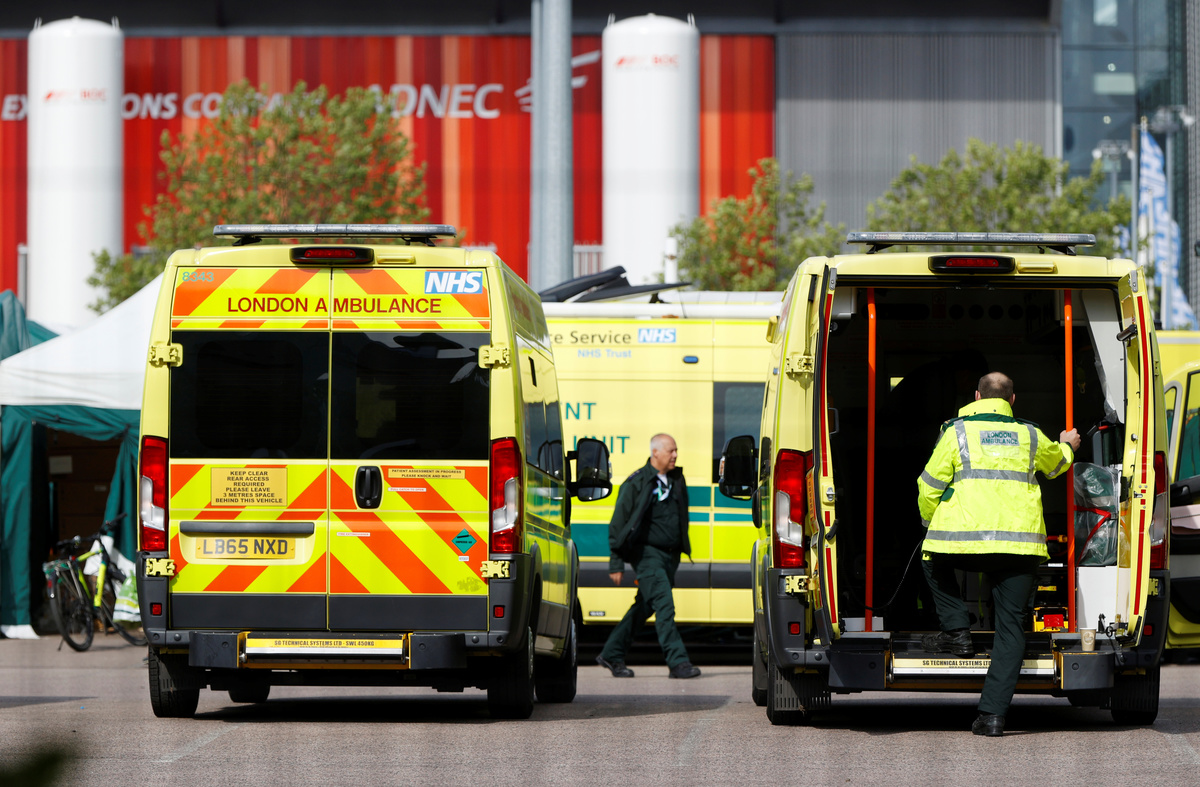
A general view of ambulances and staff outside the NHS Nightingale Hospital at the Excel Centre, following the outbreak of the coronavirus disease (COVID-19), London, Britain, May 5, 2020. REUTERS/John Sibley
The United Kingdom has overtaken Italy to report the highest official death toll from the new coronavirus in Europe, figures released on Tuesday showed, increasing pressure on Prime Minister Boris Johnson over his response to the crisis.
Weekly figures from Britain's Office for National Statistics (ONS) added more than 7,000 deaths in England and Wales in the week to April 24, raising the total for the United Kingdom to 32,313.
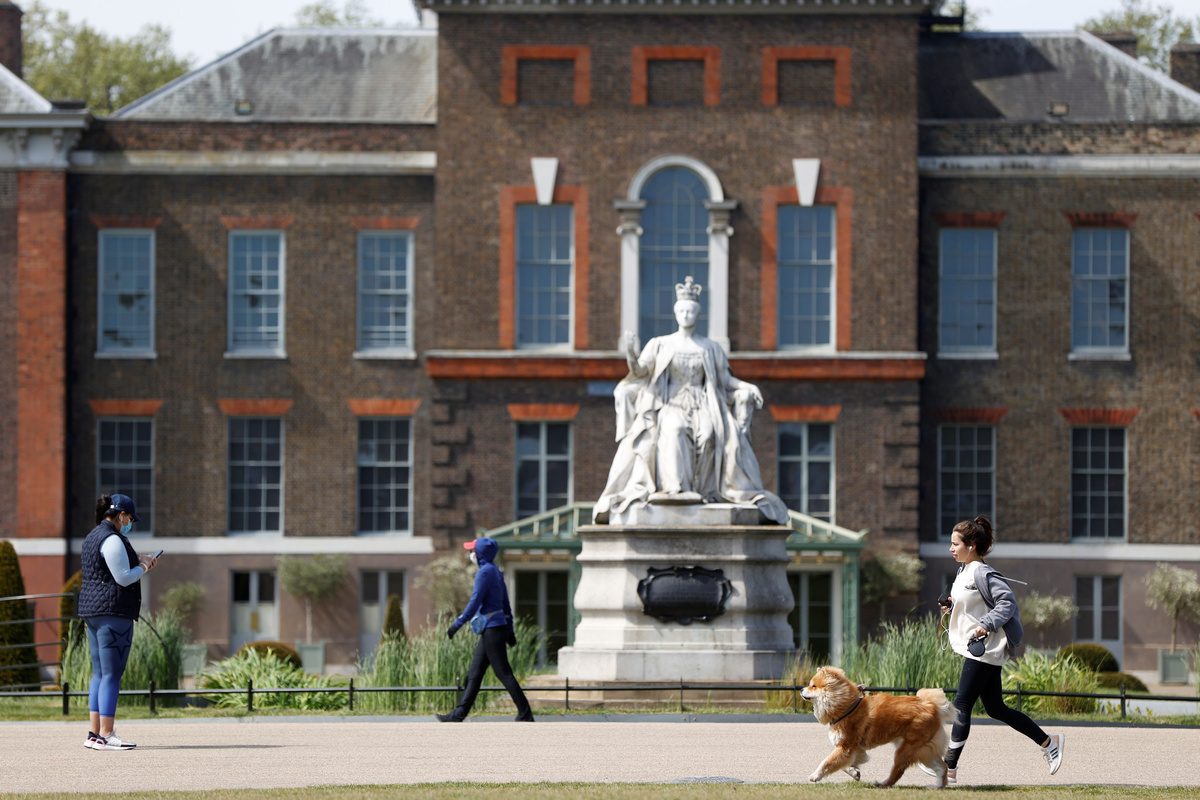
People wearing protective face masks are seen infront of Kensington Palace following the outbreak of the coronavirus disease (COVID-19), London, Britain, May 5, 2020. REUTERS/John Sibley
Only the United States, with a population nearly five times greater, has suffered more confirmed fatalities from the virus than Britain, according to the data so far.
Tuesday's figures are based on death certificate mentions of COVID-19, the disease caused by the novel coronavirus, including suspected cases.
While different ways of counting make comparisons with other countries difficult, the figure confirmed Britain was among those hit worst by a pandemic that has killed more than 250,000 worldwide.
The sun rises behind the London skyline, as the spread of the coronavirus disease (COVID-19) continues, in London, Britain, May 5, 2020. REUTERS/Toby Melville
"I don't think we'll get a real verdict on how countries have done until the pandemic is over, and particularly until we've got international comprehensive data on all-cause mortality," Foreign Secretary Dominic Raab told reporters.
Opposition politicians said the figures proved the government had been too slow to provide enough protective equipment to hospitals and introduce mass testing.
"I'd be amazed if, when we look back, we don't think: yep we could have done something differently there," the government's chief scientific adviser, Patrick Vallance, said in response to lawmakers' questions on testing.
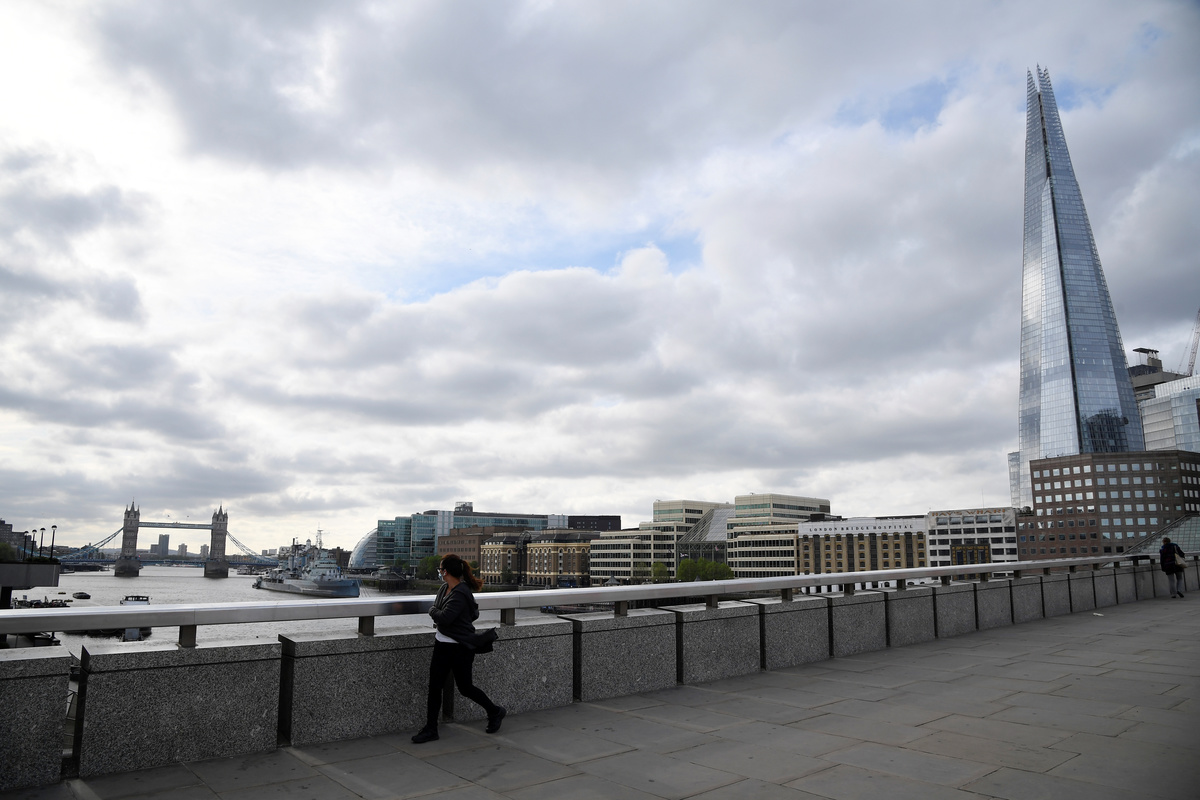
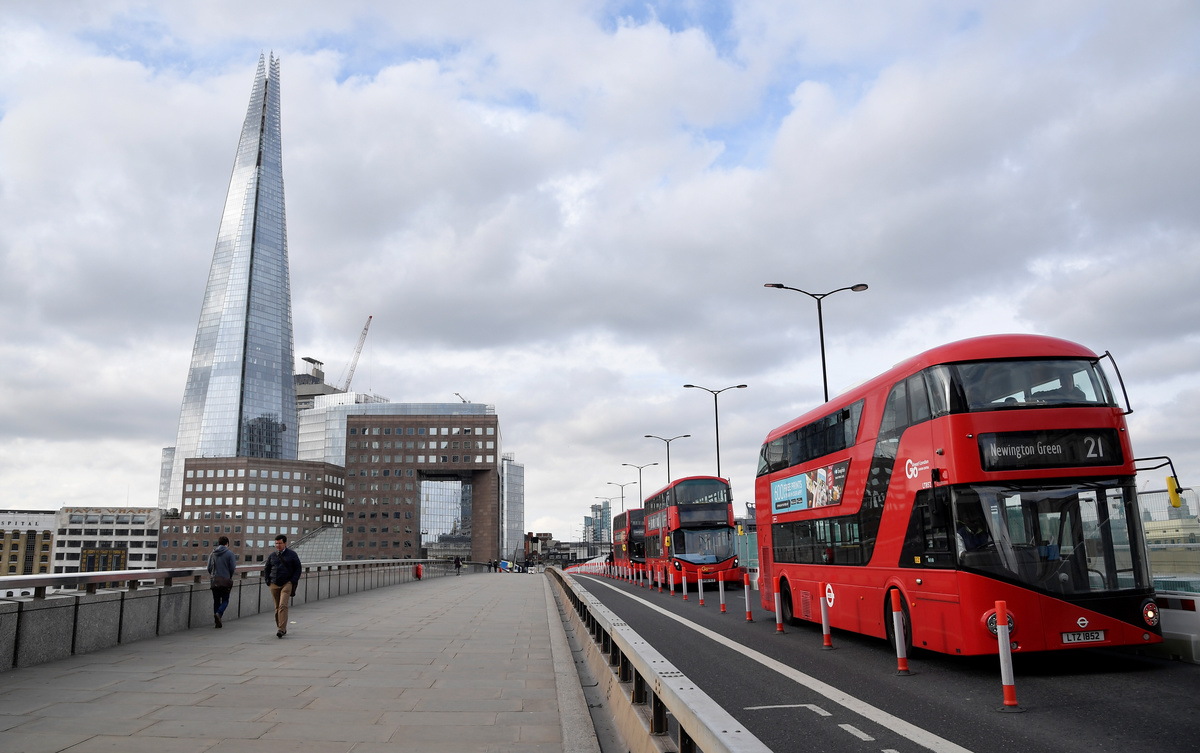
A woman walks on an almost empty London Bridge at the height of the traditional morning rush hour, following the outbreak of the coronavirus disease (COVID-19), London, Britain, May 5, 2020. REUTERS/Toby Melville
Responding to the ONS figures, a Downing Street spokesman pointed to Johnson's recent comments that Britain had passed the peak of the disease but remained in a "dangerous phase".
He also cited the advice of England's chief medical officer, Chris Whitty: "Different countries are recording different things in relation to deaths."
Italy and Spain, the next worst-hit European countries, have smaller populations than Britain, further complicating comparisons.
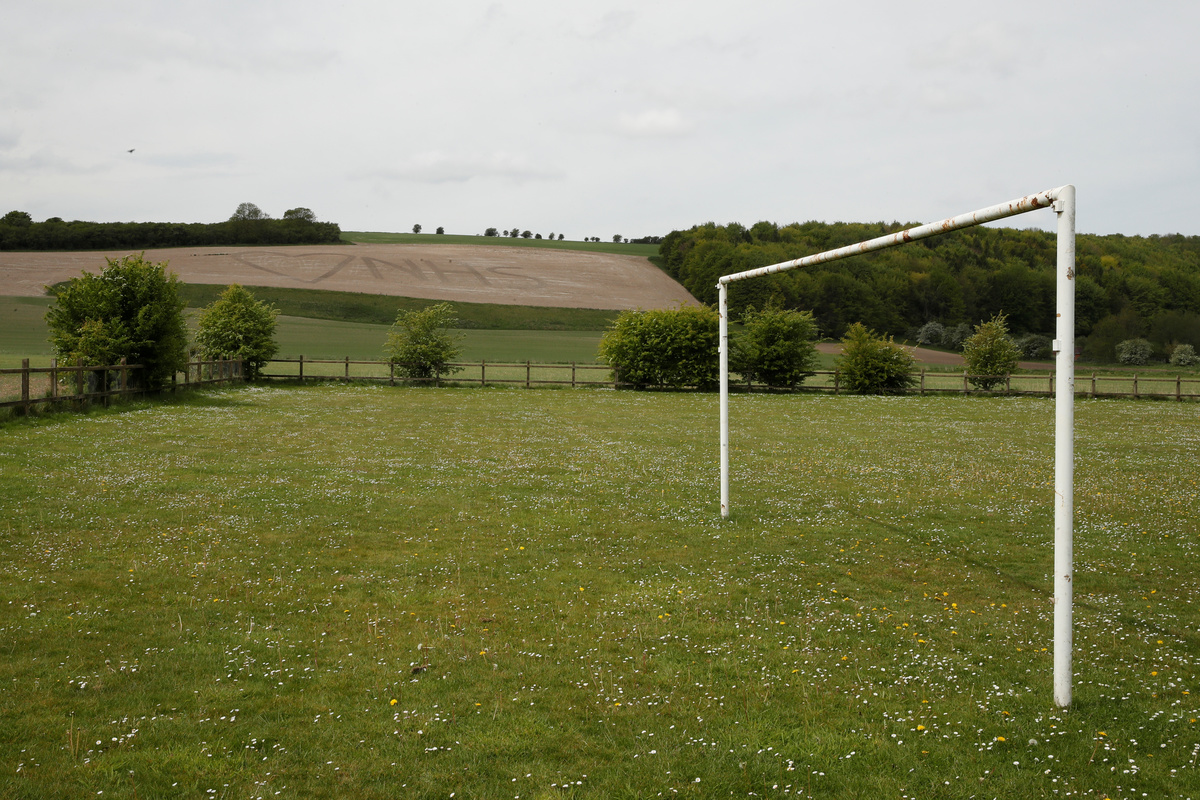
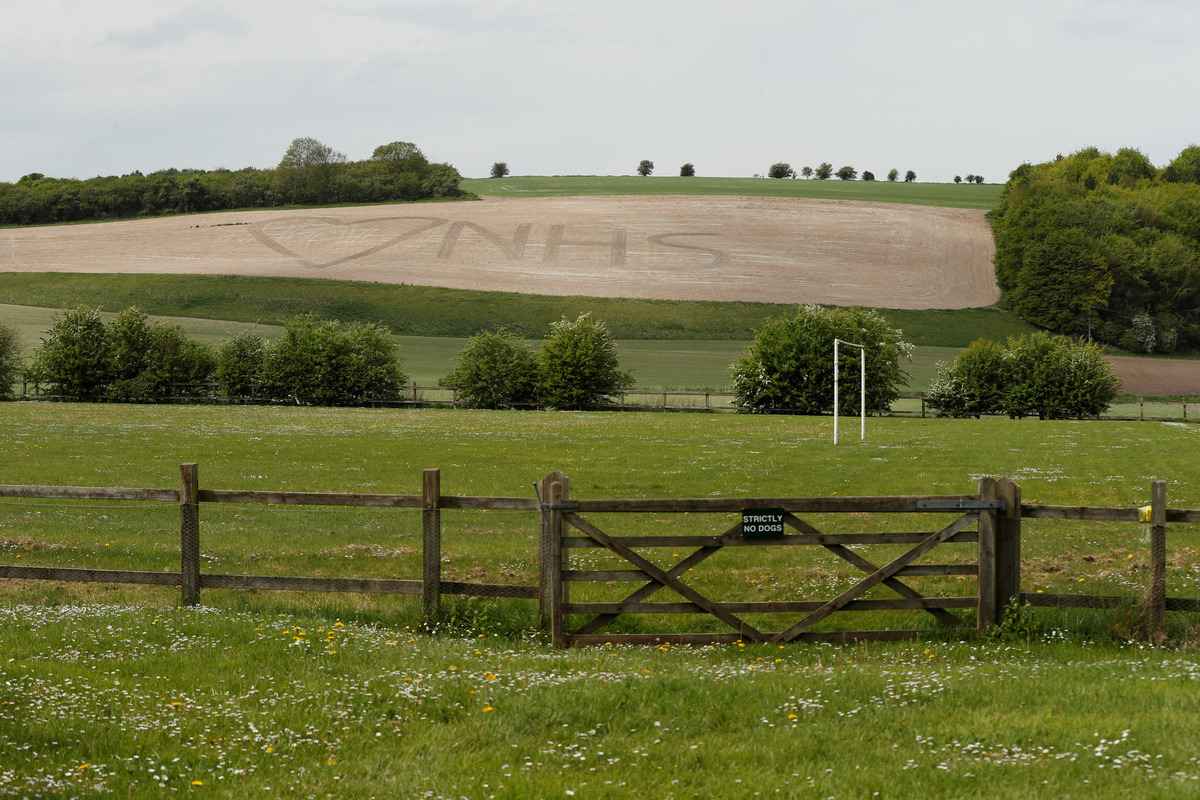
A tribute to the NHS is seen ploughed into a farmers field in East Meon, following the outbreak of the coronavirus disease (COVID-19), East Meon, Britain, May 5, 2020. REUTERS/Matthew Childs
"Putting a graph out with the United States at the top and UK second is not helpful, but once you start to break it down by looking at the population we should be seriously asking questions about what's different," said Carl Heneghan, professor of evidence-based medicine at Oxford University.
"Why are six countries disproportionately affected?" Heneghan added, referring to a list dominated by Europe.
The daily cumulative death toll published by Britain's government, which records deaths only for confirmed coronavirus cases, rose on Tuesday to 29,427 - exceeding Italy's own daily toll for the first time.
A tribute to the NHS is seen ploughed into a farmers field in East Meon, following the outbreak of the coronavirus disease (COVID-19), East Meon, Britain, May 5, 2020. REUTERS/Matthew Childs
Ministers dislike comparisons of the headline death toll, saying that excess mortality - the number of deaths from all causes that exceed the average for the time of year - is more meaningful because it is internationally comparable.
EXCESS DEATH
But early evidence for excess mortality suggests Britain will be one of the hardest-hit on this measure, too.
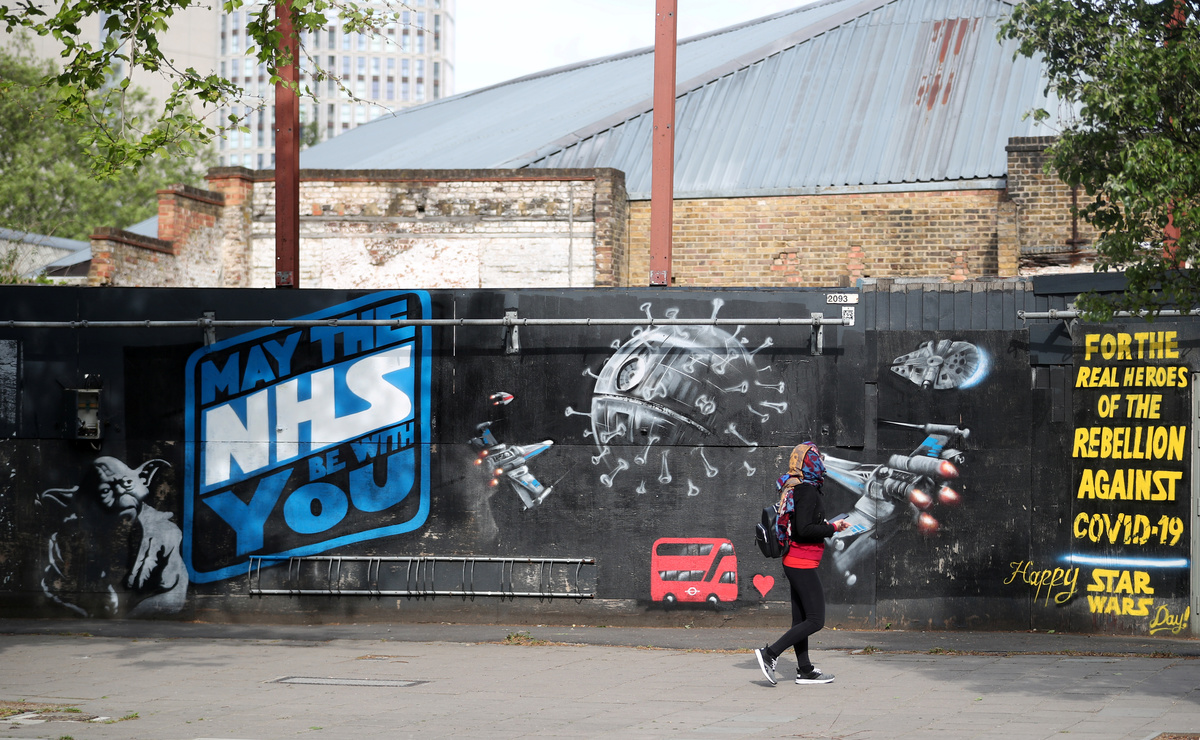
A person walks past streetart in tribute to the NHS in Elephant & Castle, following the outbreak of the coronavirus disease (COVID-19), London, Britain, May 5, 2020. REUTERS/Hannah McKay
ONS statistician Nick Stripe said excess deaths for the United Kingdom were running about 42,000 higher than average at this point in the year.
However, only about 80% of these excess deaths have been linked specifically with COVID-19.
The weekly ONS data also showed the peak in COVID-19 deaths has likely passed, although the week to April 24 was still the second-deadliest since comparable records began being kept in 1993.
People and buses are seen on London Bridge at the height of the traditional morning rush hour, following the outbreak of the coronavirus disease (COVID-19), London, Britain, May 5, 2020. REUTERS/Toby Melville
The overall decline also masked a worsening picture in care homes.
The ONS said 7,911 deaths from all causes were registered in care homes in the week ending April 24, three times higher than a month previously.
"These figures show that talk of being 'past the peak' of this awful virus simply does not hold true for social care," said Labour opposition lawmaker Liz Kendall.
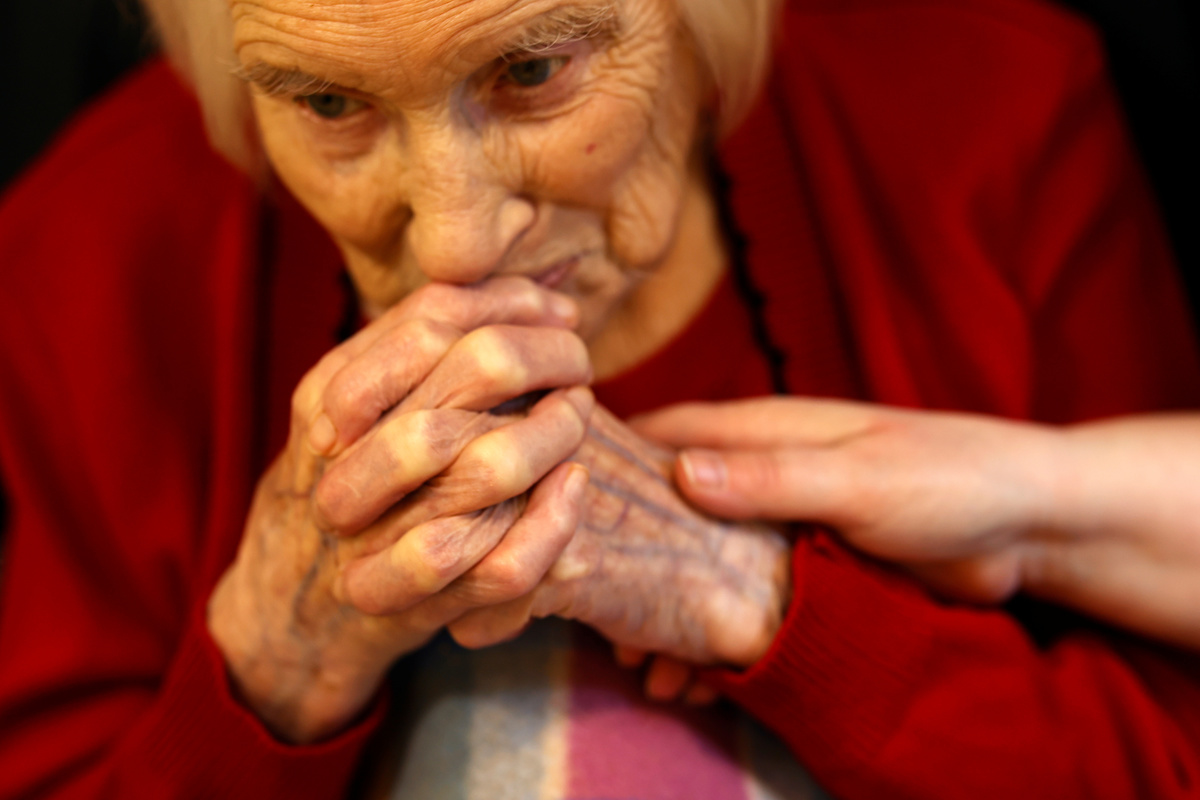
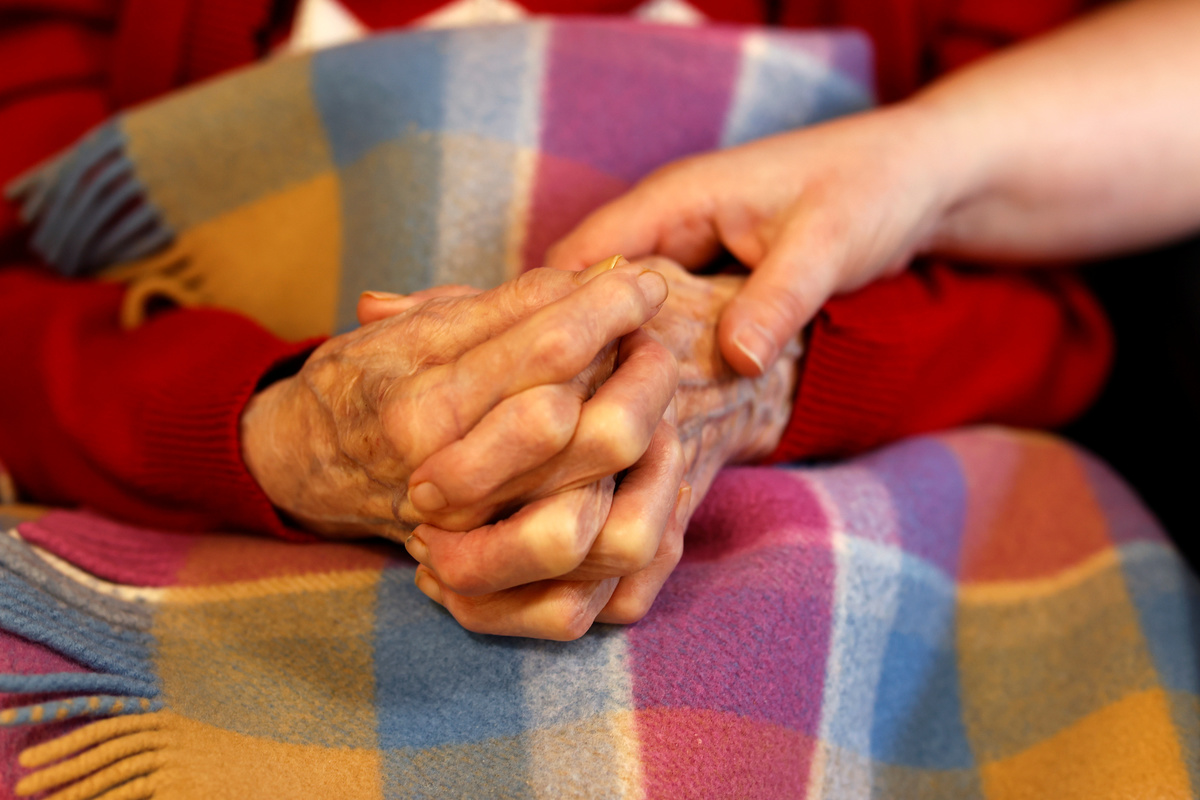
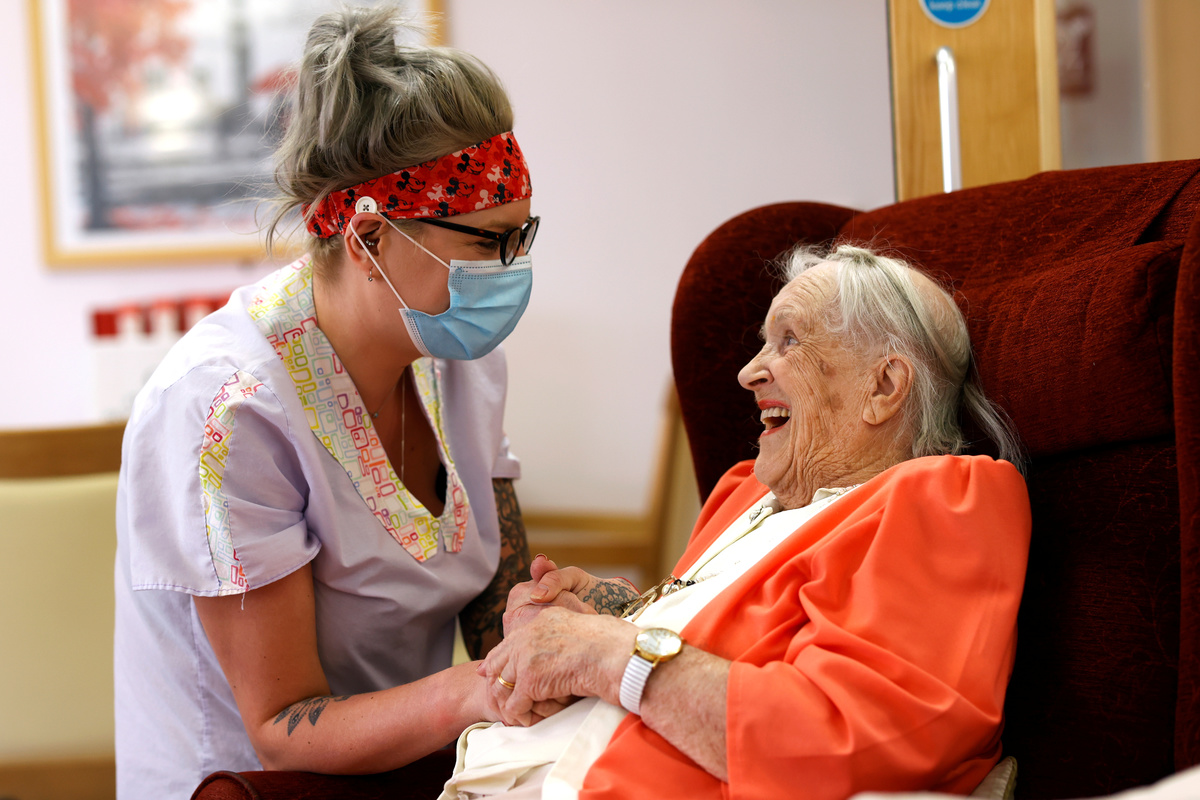
Deputy Manager Anne Frearson, who remains on site with six colleagues, holds the hand of resident Vera Bull at Fremantle Trust care home, amid the outbreak of the coronavirus disease (COVID-19), in Princes Risborough, Britain, May 4, 2020. REUTERS/Eddie Keogh
A Reuters Special Report published on Tuesday showed that even as the government was promising to protect the elderly and vulnerable from the deadly virus, local councils said they did not have the tools to carry out the plan, and were often given just hours to implement new government instructions.
According to Reuters calculations, the pandemic has resulted in at least 12,700 excess deaths in British care homes.
Deputy Manager Anne Frearson, who remains on site with six colleagues, holds the hand of resident Vera Bull at Fremantle Trust care home, amid the outbreak of the coronavirus disease (COVID-19), in Princes Risborough, Britain, May 4, 2020. Picture taken May 4, 2020. REUTERS/Eddie Keogh
(Additional reporting by Elizabeth Piper; Editing by Giles Elgood, Gareth Jones, Nick Macfie and Jonathan Oatis)
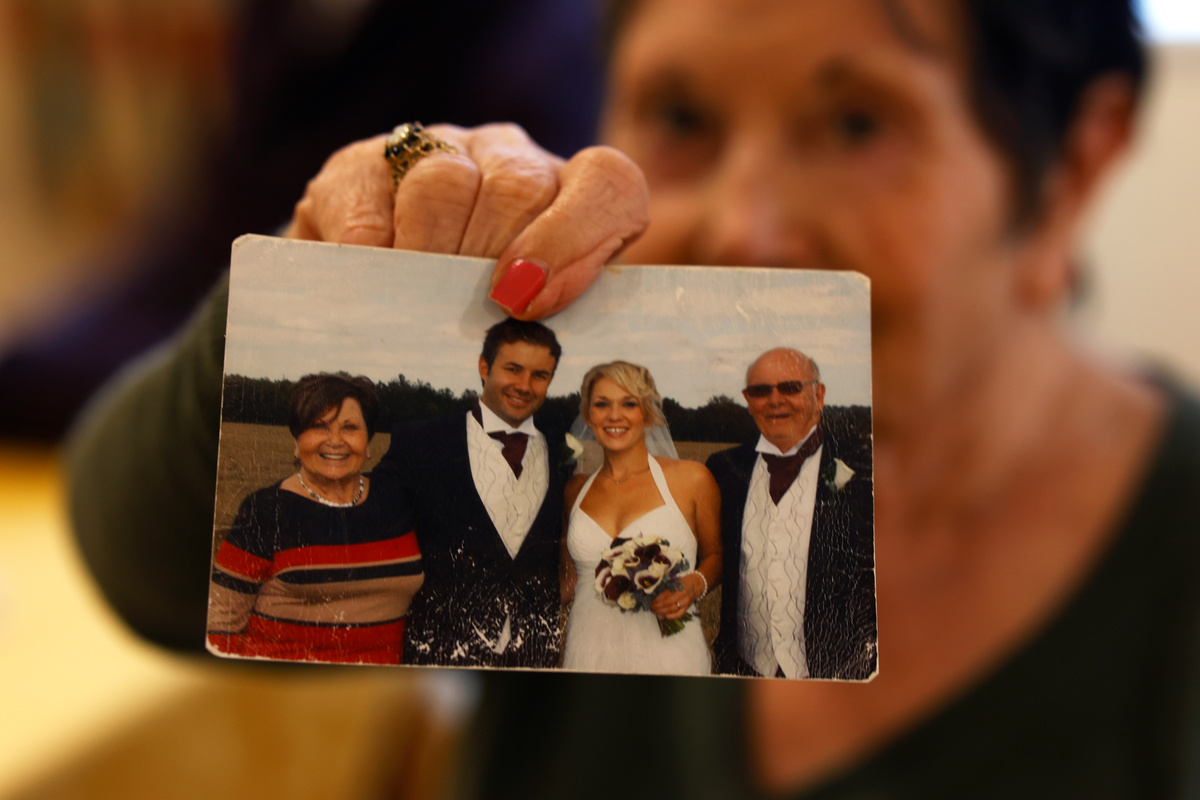
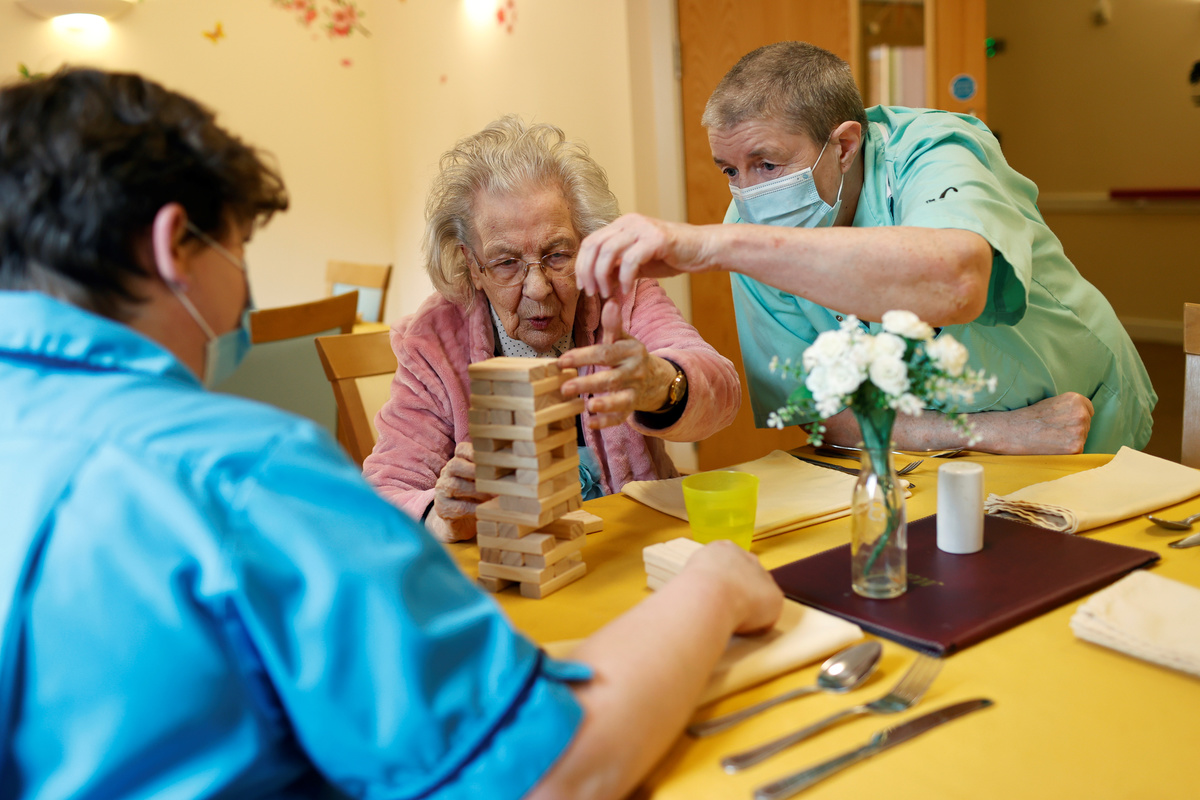
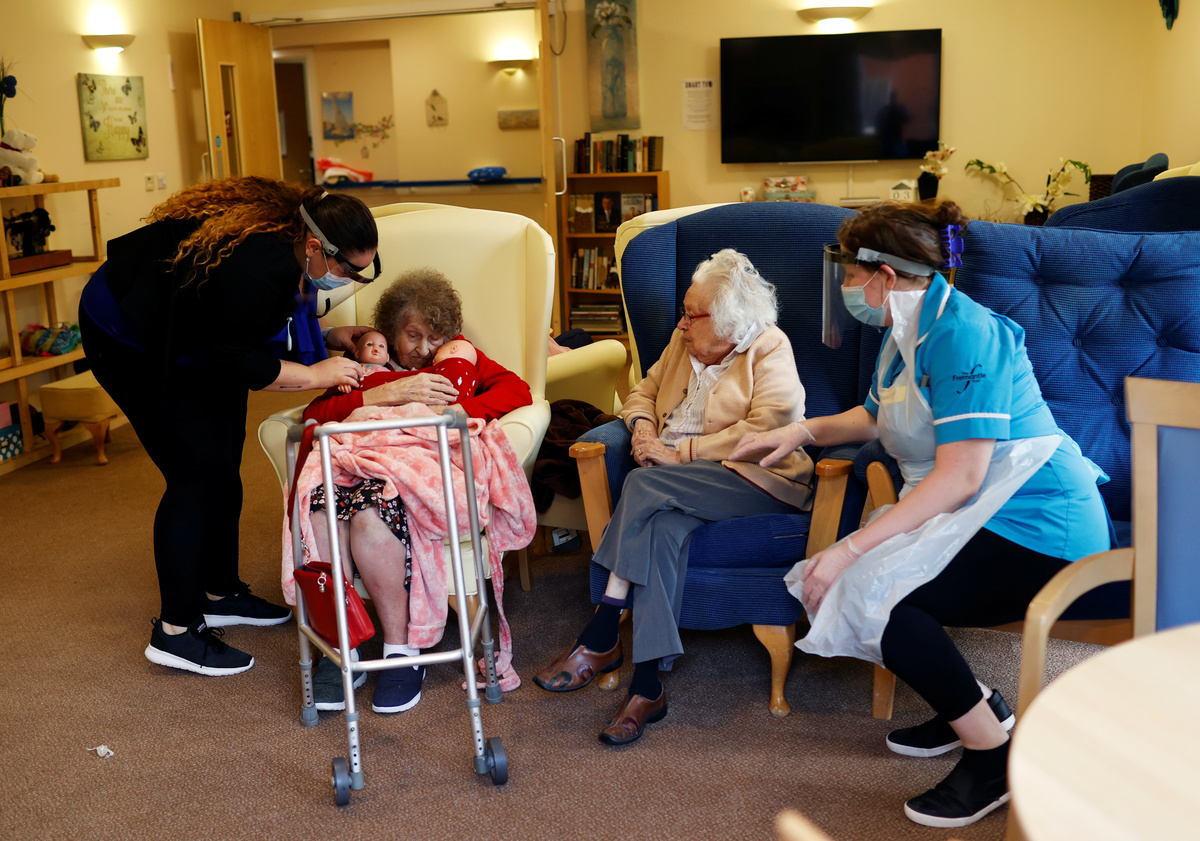
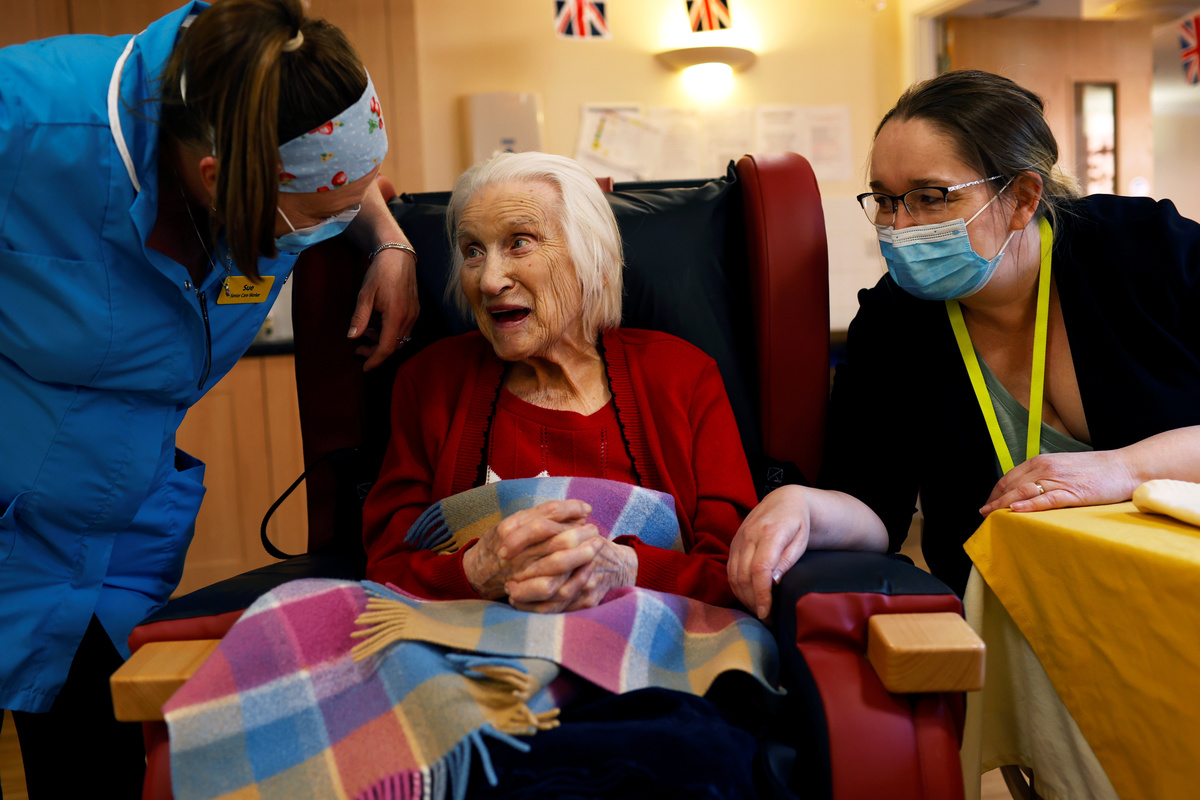
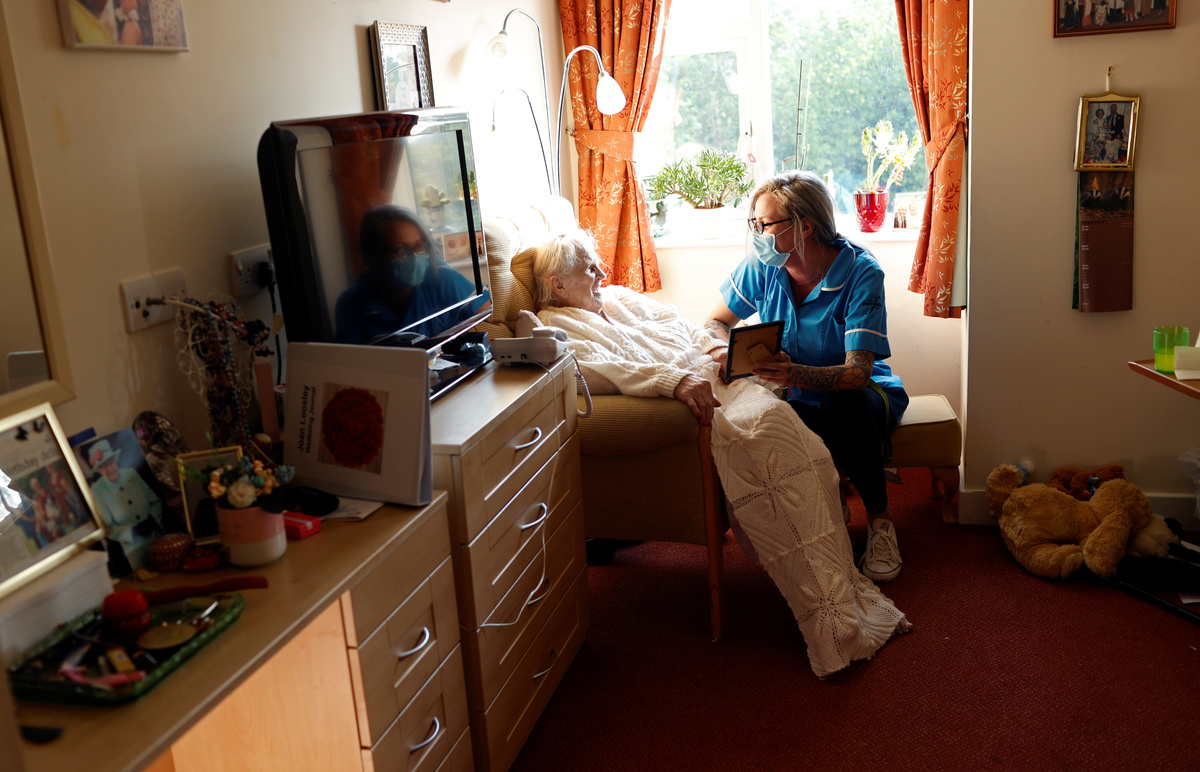
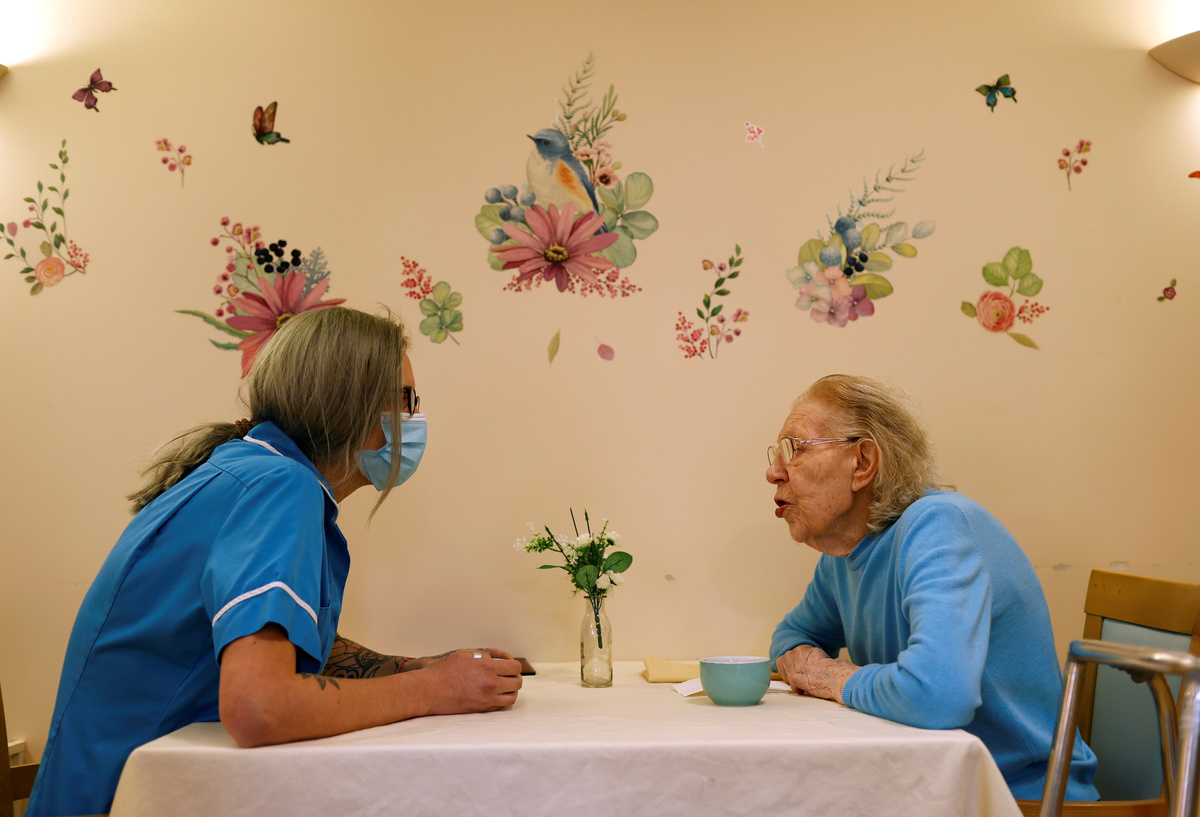
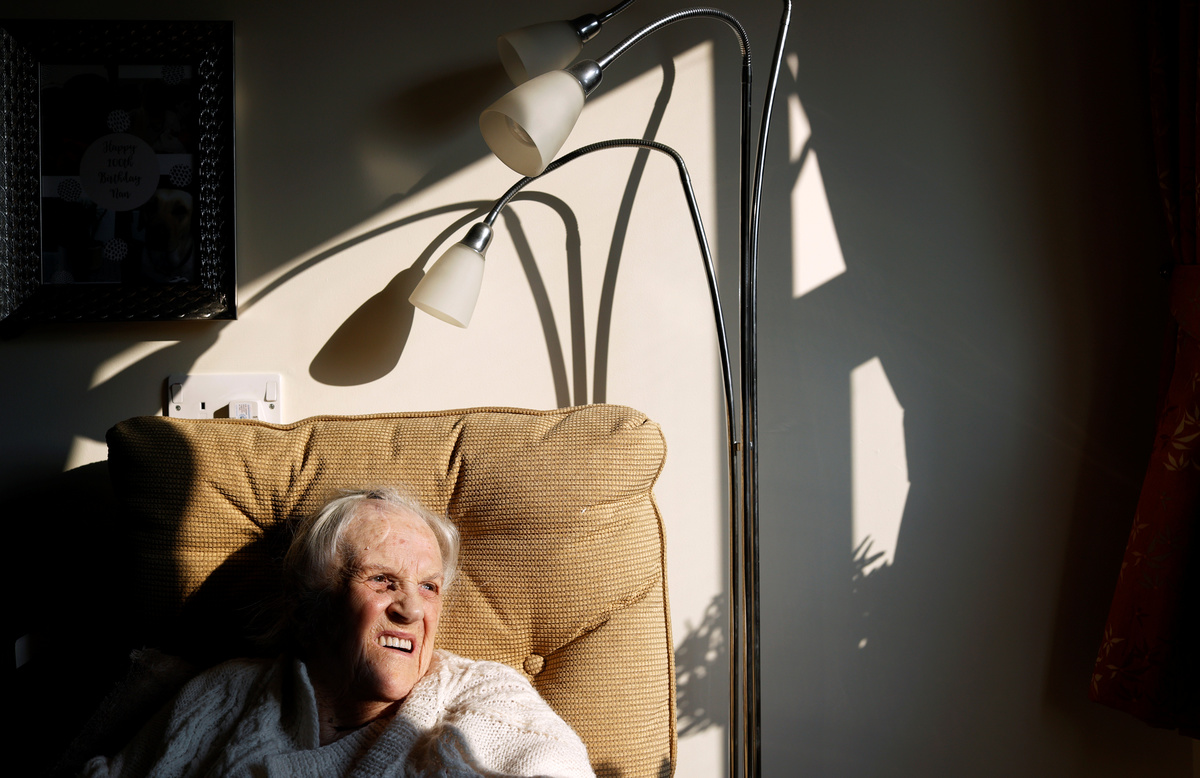
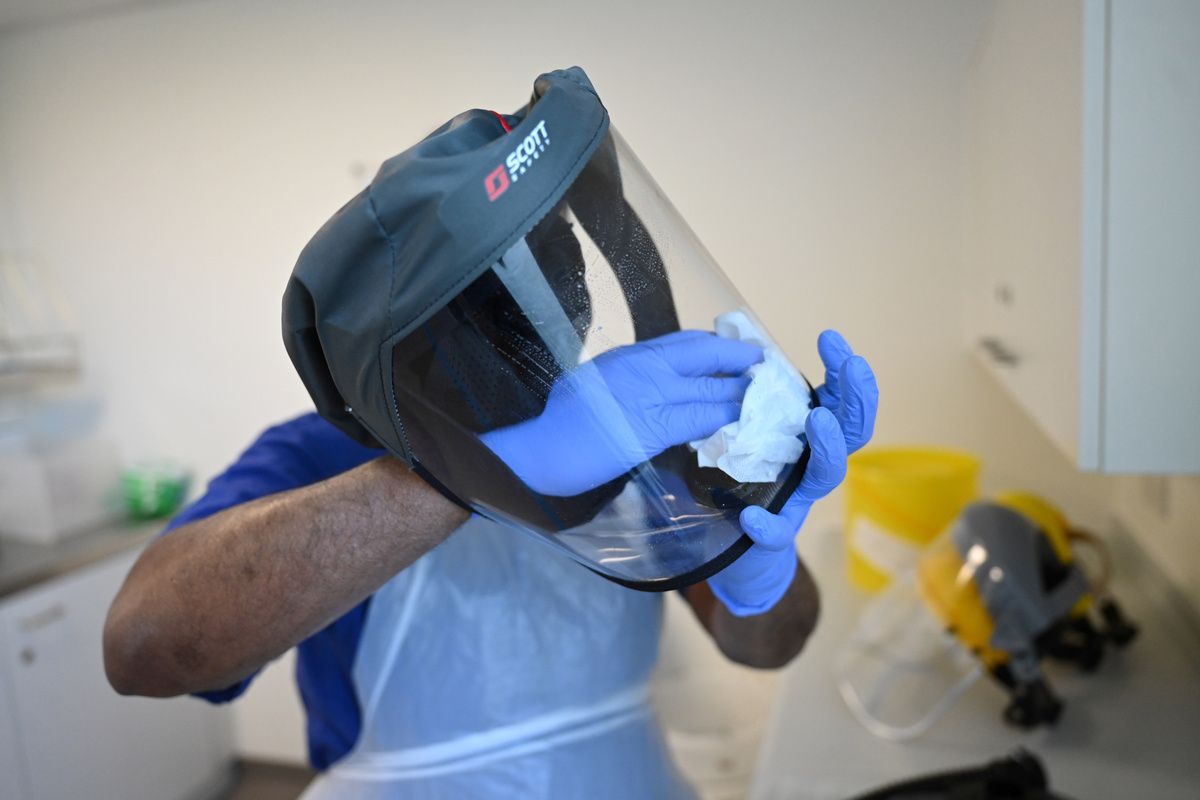
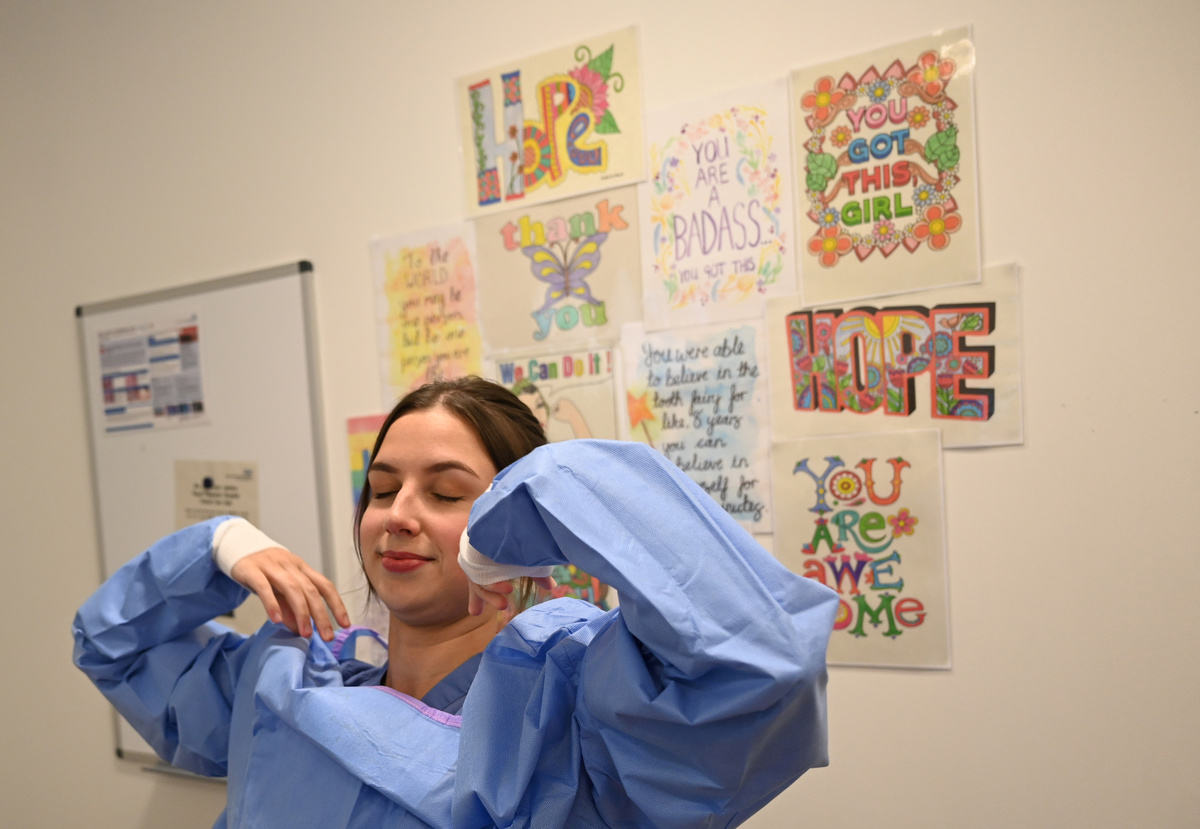
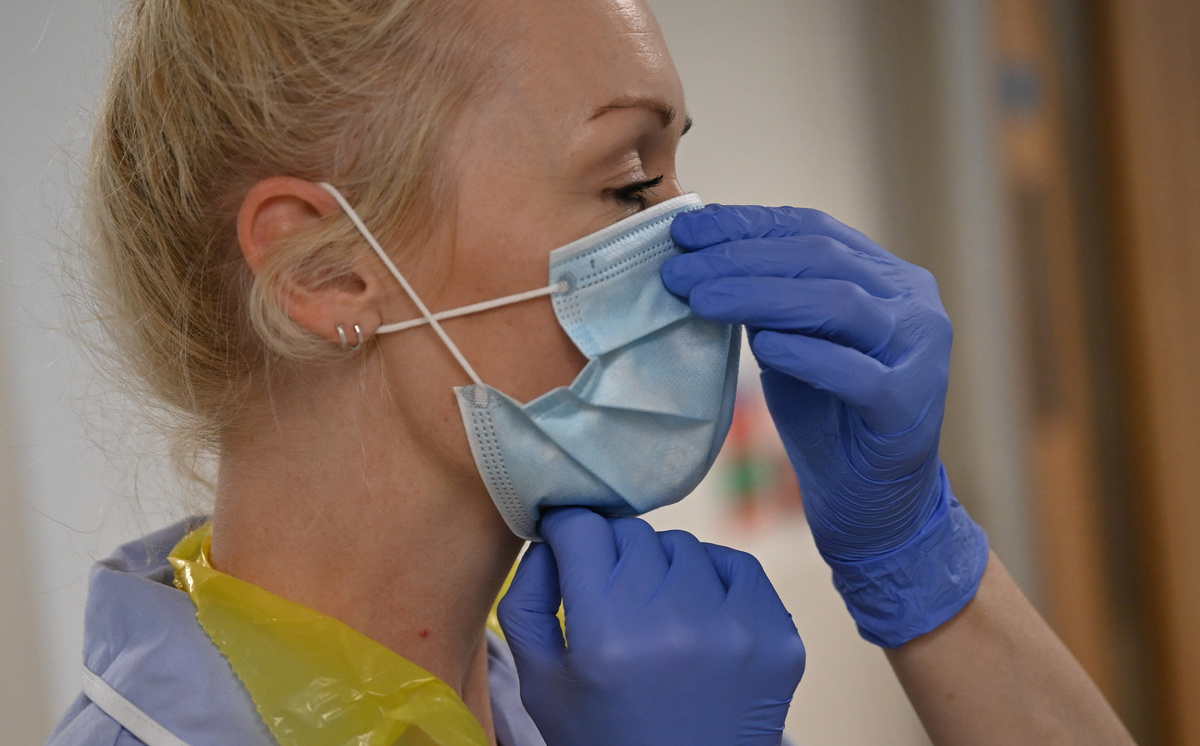
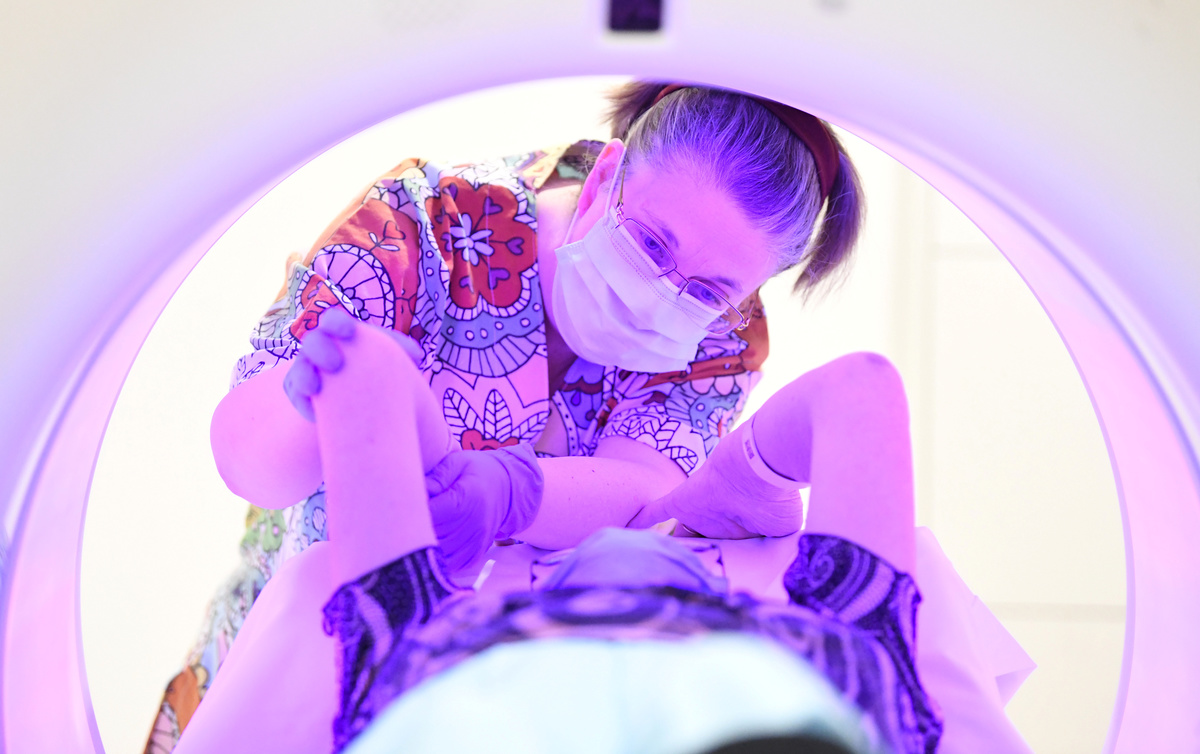
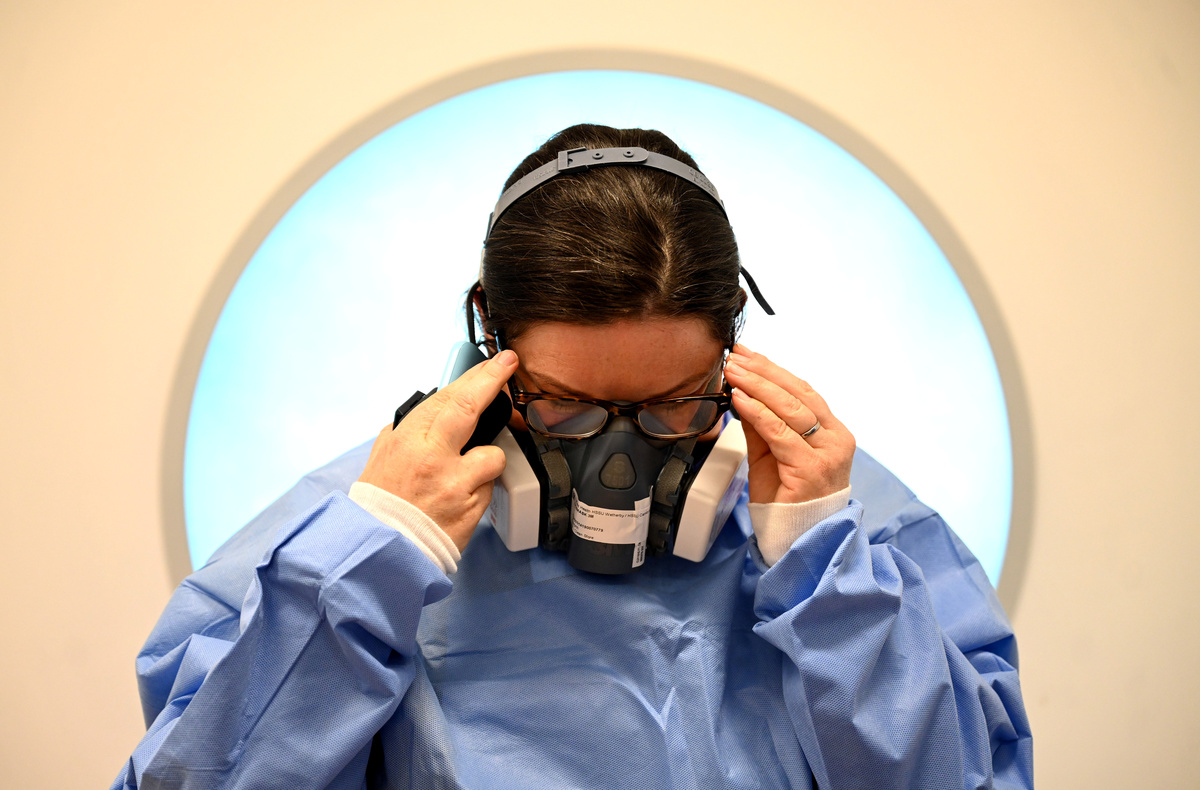
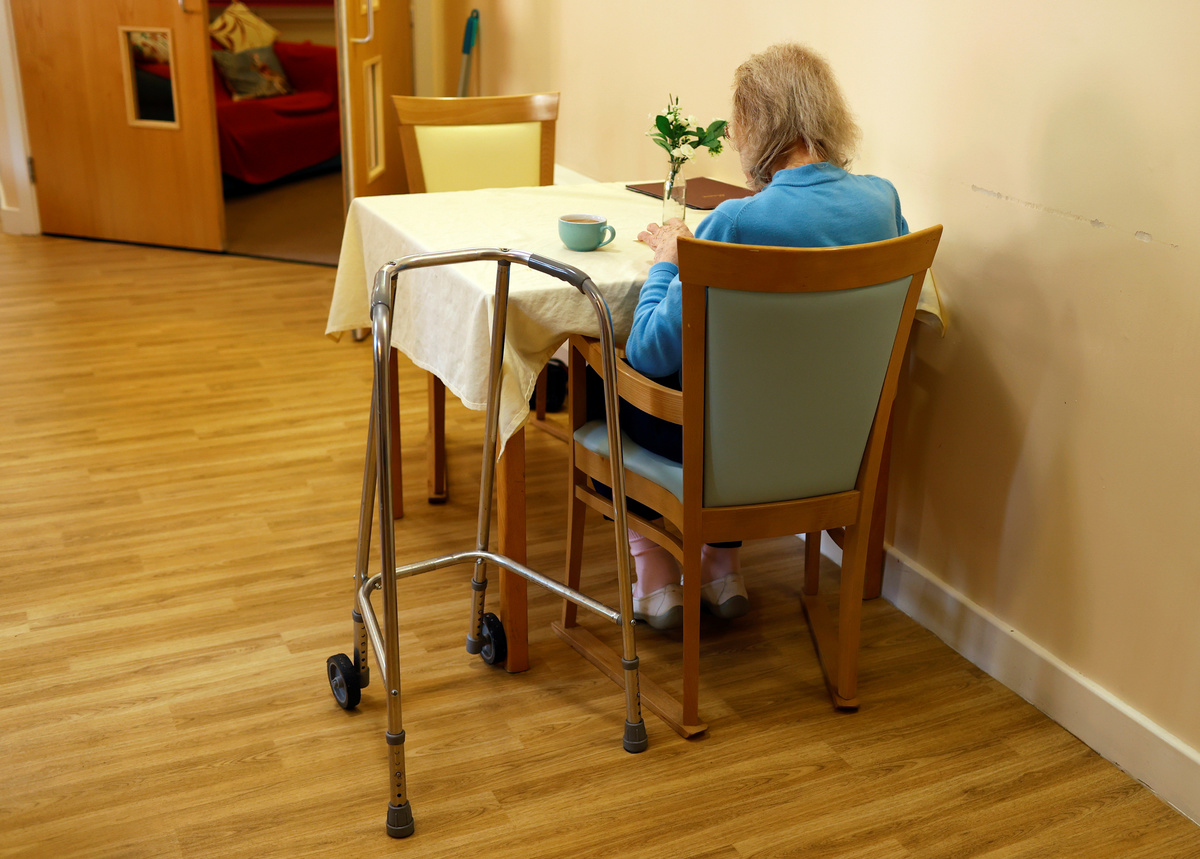
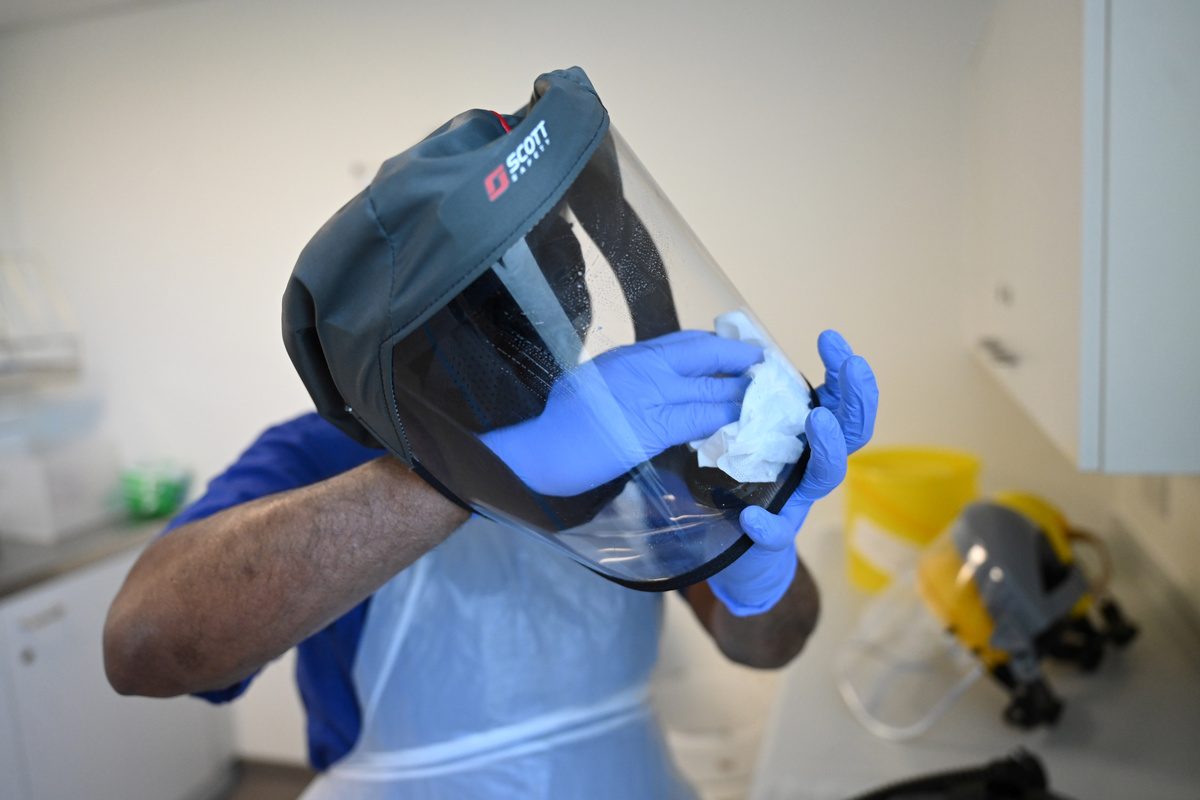
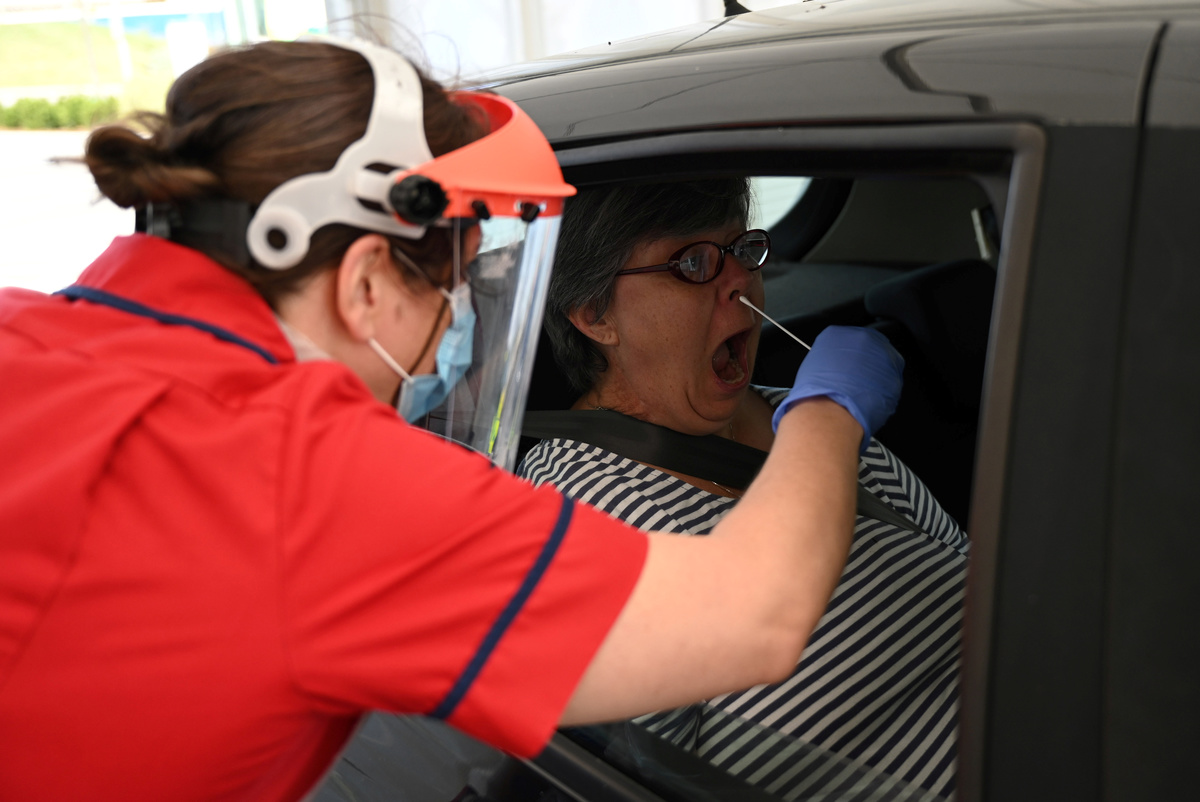
Resident Pat Lane holds a picture of her grandchildren at the Fremantle Trust care home, amid the outbreak of the coronavirus disease (COVID-19), in Princes Risborough, Britain, May 4, 2020. REUTERS/Eddie KeoghSenior carer Jo Battams and housekeeper Gillie Gillroy, who remain on site with six colleagues, play Jenga with resident Iris Hook at Fremantle Trust care home, amid the outbreak of the coronavirus disease (COVID-19), in Princes Risborough, Britain, May 4, 2020. REUTERS/Eddie KeoghDeputy Manager Arvette Hattingh and carer Lizzie Putman, who remain on site with six colleagues, talk to residents Jean Hyland and Barbara Mannerings at Fremantle Trust care home, amid the outbreak of the coronavirus disease (COVID-19), in Princes Risborough, Britain, May 4, 2020. REUTERS/Eddie KeoghCarer Sue Gwenlan (L) and Deputy Manager Anne Frearson (R), who remains on site with six colleagues, talk to resident Vera Bull at Fremantle Trust care home, amid the outbreak of the coronavirus disease (COVID-19), in Princes Risborough, Britain, May 4, 2020. Picture taken May 4, 2020. REUTERS/Eddie KeoghCarer Lucy Skidmore, who remains on site with six colleagues, talks to her 100-year-old great-grandmother and resident Joan Loosley in her bedroom at Fremantle Trust care home, amid the outbreak of the coronavirus disease (COVID-19), in Princes Risborough, Britain, May 4, 2020. Picture taken May 4, 2020. REUTERS/Eddie KeoghCarer Lucy Skidmore, who remains on site with six colleagues, talks to resident Gwen Jackson at Fremantle Trust care home, amid the outbreak of the coronavirus disease (COVID-19), in Princes Risborough, Britain, May 4, 2020. REUTERS/Eddie Keogh100-year-old resident Joan Loosley looks out of her bedroom window at Fremantle Trust care home, amid the outbreak of the coronavirus disease (COVID-19), in Princes Risborough, Britain, May 4, 2020. Picture taken May 4, 2020. REUTERS/Eddie KeoghCarer Lucy Skidmore, who remains on site with six colleagues, talks to her 100-year-old great-grandmother and resident Joan Loosley at Fremantle Trust care home, amid the outbreak of the coronavirus disease (COVID-19), in Princes Risborough, Britain, May 5, 2020. REUTERS/Eddie KeoghComedian Norman Wisdom is seen on a television screen at Fremantle Trust care home, amid the outbreak of the coronavirus disease (COVID-19), in Princes Risborough, Britain, May 5, 2020. REUTERS/Eddie Keogh NO RESALES. NO ARCHIVESClinical staff clean Personal Protective Equipment (PPE) at Royal Papworth Hospital, during the coronavirus disease (COVID-19) outbreak, in Cambridge, Britain May 5, 2020. Neil Hall/Pool via REUTERSClinical staff put on Personal Protective Equipment (PPE) at the Intensive Care unit at Royal Papworth Hospital, during the coronavirus disease (COVID-19) outbreak, in Cambridge, Britain May 5, 2020. Neil Hall/Pool via REUTERSClinical staff wear Personal Protective Equipment (PPE) as they care for patients on the Covid Recovery Ward at Royal Papworth Hospital, during the coronavirus disease (COVID-19) outbreak, in Cambridge, Britain May 5, 2020. Neil Hall/Pool via REUTERSClinical staff wear Personal Protective Equipment (PPE) as they care for a patent on a CT scanner at Royal Papworth Hospital, during the coronavirus disease (COVID-19) outbreak, in Cambridge, Britain May 5, 2020. Neil Hall/Pool via REUTERSClinical staff put on Personal Protective Equipment (PPE) at the Intensive Care unit at Royal Papworth Hospital, during the coronavirus disease (COVID-19) outbreak, in Cambridge, Britain May 5, 2020. Neil Hall/Pool via REUTERSResident Gwen Jackson practices drawing at Fremantle Trust care home, amid the outbreak of the coronavirus disease (COVID-19), in Princes Risborough, Britain, May 4, 2020. REUTERS/Eddie KeoghClinical staff clean Personal Protective Equipment (PPE) at Royal Papworth Hospital, during the coronavirus disease (COVID-19) outbreak, in Cambridge, Britain May 5, 2020. Neil Hall/Pool via REUTERSClinical staff wear Personal Protective Equipment (PPE) as they test key workers at Royal Papworth Hospital, during the coronavirus disease (COVID-19) outbreak, in Cambridge, Britain May 5, 2020. Neil Hall/Pool via REUTERSGeneral view of New Brighton beach with the Burbo Bank windfarm behind during sunset, following the outbreak of the coronavirus disease (COVID-19), New Brighton, Britain, May 5, 2020. REUTERS/Phil NobleAn adult and a child walk their dog in New Brighton beach before sunset, following the outbreak of the coronavirus disease (COVID-19), New Brighton, Britain, May 5, 2020. REUTERS/Phil Noble
Sign up to read this article
Read news from 100’s of titles, curated specifically for you.