That’s it from the UK blog for now. You can continue to follow our coverage in the global coronavirus blog below -
A summary of today's developments
- Daily hospital admissions in England are at their highest level in more than three months as coronavirus cases continue to rise, according to government data. As of 9am on Friday, there had been a further 6,874 lab-confirmed cases of coronavirus in the UK, the highest single-day figure of recorded cases.
-
The government has confirmed local lockdown measures will be introduced in Wigan, Stockport, Blackpool and Leeds from 12:01am on Saturday. Among the restrictions are residents in the areas will no longer be allowed to mix with people outside their household or bubble in private homes, including gardens.
- A further 6,874 people in the UK have tested positive for coronavirus in the 24 hours to Friday, a new record, bringing the total number of infections to 423,236.
- Bolton continues to record the highest rate in England, up from 197.5 in the seven days to 15 September. Some 696 new cases were recorded in the seven days to 22 September 22 - the equivalent of 242.0 per 100,000 people, while Burnley has the second highest rate, up from 113.6 to 233.9 with 208 new cases.
- London mayor Sadiq Khan has called on Boris Johnson to ban household mixing for London’s 9 million residents, warning that a 43% fall in testing in the capital risks masking the severity of the virus’s spread.
- All of London’s boroughs have been made areas of “concern”, Public Health England’s latest coronavirus weekly surveillance report said. The report shows the seven-day rolling average of case rates in the capital, with the rate in the City of London estimated at 185.4 per 100,000 people, while in Havering it stands at 139.2.
- Scotland’s first minister Nicola Sturgeon has backed disciplinary action being taken as a “last resort” against students who breach new rules aimed at curbing the spread of Covid-19 on university campuses. Speaking as the daily increase in cases reached a record high, with 558 Scots testing positive in the past 24 hours, the first minister said that for those who are “flagrantly breaching rules, then of course discipline and enforcement has to be part of the answer”.
- Experts have described a possible feature showing people a “personalised risk score” for coronavirus within the new contact tracing app as “alarming”. The boss of Zuhlke Engineering, which developed the NHS Covid-19 app for England and Wales, revealed engineers are working on such an option for a future update on the app.
All of London’s boroughs have been made areas of “concern”, Public Health England’s latest coronavirus weekly surveillance report said.
The report shows the seven-day rolling average of case rates in the capital, with the rate in the City of London estimated at 185.4 per 100,000 people, while in Havering it stands at 139.2.
The majority of Covid-19 cases in Cardiff have been in family networks which have broken extended household rules and have been meeting more people indoors, the city council’s leader said.
Councillor Huw Thomas was speaking ahead of local lockdown restrictions coming into force in Wales’s capital at 6pm on Sunday following a rise in coronavirus cases.
Currently, the infection rate in Cardiff is 46.1 cases per 100,000 people, with 3.4% of those tested returning a positive result.
Thomas said it was “prudent” to take stronger restrictions in the area, which has a population of about 367,000 people.
“In taking this course of action we’ve had to weigh up the economic damage, the social cost, the impact on mental health,” he said.
“But we’ve seen in the past what can happen if there is a delay in bringing measures in. Delaying by a matter of days could mean many more lives could be lost.”
He said the decision to enforce a local lockdown in Cardiff was informed by data from the test, trace and protect service.
The measures, which will be enforced by police and the local authority, will be reviewed formally in two weeks’ time.
Masks or three-layer face coverings are mandatory in Wales in all indoor public spaces and where social distancing cannot be maintained.
Residents are also being asked to voluntarily wear masks in all busy outdoor public spaces, including high streets and outside school gates at pick-up and drop-off times.
Updated
Local measures confirmed in Leeds
The government has confirmed local lockdown measures will be introduced in parts of the North West and Yorkshire and the Humber, following a rise in coronavirus cases in the areas.
Health Secretary Matt Hancock, NHS Test and Trace, the Joint Biosecurity Centre (JBC), Public Health England (PHE) and the chief medical officer for England have agreed to introduce local measures in Wigan, Stockport, Blackpool and Leeds.
From 12.01am on Saturday, residents in the areas will no longer be allowed to mix with people outside their household or bubble in private homes, including gardens.
They are also advised not to meet people outside their household or bubble in any setting - whether a bar, shop or leisure facility - indoors or outdoors.
Hancock said: “We continue to see an acceleration of Covid-19 cases across the country, especially in the North West and the North East. Working alongside our scientific and public health experts and local leaders, we are prepared to take swift and decisive action to reduce transmission of the virus and protect communities.
“I recognise the burden and impact these additional measures have on our daily lives but we must act collectively and quickly to bring down infections.”
Updated
The seven-day rolling average of cases in Blackpool has risen from 48.8 per 100,000 a week ago to 69.6 per 100,000 on Friday, the government’s coronavirus dashboard shows.
The latest seven-day Covid-19 rate in Leeds was found to be 113.3 per 100,000 people, according to government figures, while Leeds director of public health, Victoria Eaton, said there was an 8.4% positive test rate.
Updated
Hospital admissions rise to highest levels since June
Daily hospital admissions in England are at their highest level in more than three months as coronavirus cases continue to rise, according to government data.
As of 9am on Friday, there had been a further 6,874 lab-confirmed cases of coronavirus in the UK, the highest single-day figure of recorded coronavirus cases and taking the overall number of cases to 423,236. It is the second consecutive day of the highest recorded case number.
The climbing case rates come as a further 314 people with Covid-19 were admitted to hospital on Wednesday in England.
It is the first time that more than 300 patients have been admitted with the illness in England since June 22, and a rise of more than 45 on the previous day, when 268 were admitted.
A week previously, on September 16, 183 people across England were admitted to hospital.
Admissions are also increasing in Wales, where 94 people were admitted on Thursday, up from 42 the week before.
However, data for Wales includes both confirmed and suspected cases, whereas other nations only include those with a confirmed positive test result.
The latest available data in Scotland is from September 16, when 16 Covid patients were admitted to hospital.
As of Friday, a further 34 people across the UK had died within 28 days of receiving a positive test for Covid-19 but this figure does not include deaths in Scotland, due to a technical issue. This brings the UK total to 41,936.
A council has approved plans to spend £120,000 on private Covid-19 tests for key workers.
The tests are being bought by Wokingham borough council in Berkshire due to “the inadequacies” in NHS test and trace, the Conservative lead for health, councillor Charles Margetts, said.
The 500 tests (costing £60,000 in total) will be available from next month and will be reserved for workers in the borough who cannot get tests.
A private firm will deliver the results within 48 hours.
Councillors agreed to paying for a second lot of 500 tests at the same price if required.
Updated

I am Nadeem Badshah and will be taking over the UK blog now from my colleague Jedidajah Otte.
Friday’s update of the rolling seven-day rate of new cases of Covid-19 for every local authority area in England confirmed that Bolton continues to record the highest rate in England, up from 197.5 in the seven days to 15 September.
696 new cases were recorded in the seven days to 22 September 22 - the equivalent of 242.0 per 100,000 people.
Burnley has the second highest rate, up from 113.6 to 233.9 with 208 new cases.
Knowsley is in third place, where the rate has risen from 125.3 to 230.7, with 348 new cases.
Other areas recording sharp increases in their seven-day rates include:
- Newcastle upon Tyne (up from 74.0 to 208.7, with 632 new cases)
- Halton (up from 100.5 to 206.3, with 267 new cases)
- Liverpool (up from 124.5 to 227.3 with 1,132 new cases)
- Pendle (up from 91.2 to 192.2 with 177 new cases)
- Sunderland (up from 75.6 to 173.9, with 483 new cases)
Lucy Mair, 49, from Manchester, is everything but impressed with the way her daughter’s university has handled the coronavirus outbreak on campus.
Her daughter is a first year at Glasgow University, having arrived 12 days ago and living in Murano, the largest student village and epicentre of the current outbreak at the university.
“Every single flat around her has positive cases, only her flat of 12 so far has not tested positive but they are in self-isolation anyway for 14 days due to having had contacts with others who have now tested positive in other flats,” Mair told the Guardian.
“The lack of support from the university is mind-boggling. Despite purporting on their website, Twitter and Facebook accounts that they are supporting students who are self-isolating and positive this could not be further from the truth.”
Mair said her daughter and many others in halls had not received any communications from the university, “apart from a sign that was slapped on their flat door telling them to self-isolate”.
“When they had to ring and ask what they should do about food and laundry they were told to wash their clothes in their bathtub and that they would have to sort their own supermarket food delivery, it took them three days to get a slot. There is no welfare support, mental health support, daily check-in to see if they are OK and need anything, even though they have two 17-year-olds amongst them for whom the university has an extra duty of care,” Mair said.
“Meanwhile the flat above had played music from their flat yesterday, including Queen’s I Want to Break Free”. They have received an official warning from the university. For what? Playing music while under lockdown? Since when is that banned?”
Mair added the university had provided “zero assistance” in getting students tested for coronavirus.
“The kids were arranging the tests themselves,” she said. “I and other angry parents suggested the uni should get a mobile testing unit in, and lo and behold they finally did yesterday, a week after the first positive test. Even now they are not testing all the students in the Covid-riddled buildings - only those who have symptoms. It’s a shambles beyond shambles.”
Updated
Historically, medical research has often lumped women and men together despite growing evidence that the sexes differ in how they catch and fight disease.
Covid-19 seems to be a case in point when it comes to differences between the sexes, with men thought to be up to twice as likely as women to die from the virus.
But a new analysis suggests that scientists involved in the race to develop medical interventions for the coronavirus have paid little attention to these disparities.
In a still to be peer-reviewed study, researchers found that only 416 of the 2,484 Covid-19 clinical trials mention sex/gender as a recruitment criterion on the ClinicalTrials.gov database, which could have fatal consequences.
My colleague Natalie Grover reports.
Updated

Updated
Friday’s daily government figures on coronavirus did not include deaths in Scotland, with a message on the dashboard reading:
“Due to a power outage at National Records of Scotland we have not been able to update the deaths figures for Scotland.”
Separate figures published by the UK’s statistics agencies show there have been 57,600 deaths registered in the UK where Covid-19 was mentioned on the death certificate, PA reports.
Commenting on the latest infection figures from the Office for National Statistics and the government’s latest readjustment of the R figures, Tim Spector, professor of genetic epidemiology at King’s College London, said cases were rising at an alarming rate.
“In particular we are worried about places like London and other major cities like Manchester, Belfast and Glasgow where cases are surging and the R value is around 1.4,” he said.
The ONS data confirms what other data sources have recently revealed: while the uptick in infections was, at first, largely among younger people, a rise is now being seen in all age groups – although rates are highest among 17-24-year-olds.
Last Friday it was reported about 1 in 900 people in the community in England had Covid the preceding week, with about 6,000 new cases a day.
Today’s data suggests in the recent week there were 9,600 new cases a day.
Dr Simon Clarke, associate professor of cellular microbiology at the University of Reading, said that while cases were not rising as quickly as they did in March the new findings were of concern, and extra pressure on hospitals and a rise in deaths were to be expected.
“These data indicate that the ONS believes the number of daily coronavirus infections has tripled in a fortnight. It’s a worrying increase and is occurring across all age groups, particularly in the north of England and London,” he said.
Updated
New record rise in UK infections over past 24 hours
A further 6,874 people in the UK have tested positive for coronavirus in the 24 hours to Friday, a new record, bringing the total number of infections to 423,236.
The UK had recorded 6,634 new cases of Covid-19 on Thursday, then the highest reported figure during the course of the pandemic.
Restrictions to be reintroduced for Stockport
Additional restrictions are also to be reimposed in Stockport, Greater Manchester from midnight, after mixing between households had been allowed since 2 September.
Writing on Facebook, David Meller, the council’s cabinet member for economy and regeneration, said:
Some bad news, I’m afraid. Stockport will be subject to additional Covid restrictions on top of the ones announced earlier this week.
The validated figure the council has currently is 71.2 (cases) per 100k (population), which is still below north-west and Greater Manchester averages.
However, this is above the England average of 46.4.
Therefore, the government have decided to include Stockport in the Greater Manchester-wide restrictions currently in place.
Among the new restrictions would be a ban on households inviting others to their homes or gardens and on socialising with other households in public venues or places, he said.
Updated
New restrictions for Blackpool from Saturday
Blackpool is to have extra Covid-19 restrictions imposed from Saturday, a local MP has said.
Scott Benton, the Conservative MP for Blackpool South, said the town’s council and the government had decided to impose additional restrictions on the resort, which will bring it into line with the rest of Lancashire where extra restrictions were imposed last week.
Blackpool was controversially exempt from the last round of restrictions on the county, but saw a huge surge in visitors last weekend.
Benton, writing on his Facebook page, said when the decision was made to impose additional restrictions on the rest of Lancashire at the beginning of last week, the Blackpool infection rate was 23 cases per 100,000 people, significantly below the average for the rest of Lancashire.
But by Wednesday the town’s rate had increased to 63 cases per 100,000, still below the average for the whole of Lancashire but a significant rise over the last week, PA reports.
Updated
More than 20 million people face enhanced lockdown restrictions across the UK after the announcement that extra curbs will apply to Blackpool (140,000 people) and Stockport (293,000).
That, following on from the news that stricter lockdown measures are being extended to three more parts of Wales imminently brings to 20.2 million people living under enhanced curbs, 30% of the population.
The announcement that people will not be allowed to travel into or out of Cardiff, Swansea and Llaneli other than work or education affects 670,000 people.
This brings to 1.5 million people the number of people under more stringent lockdown rules in Wales, almost one-in-two.
All people living in the UK are now restricted from meeting in groups of six or more (the exact definition differs between the four nations).
Updated
London mayor Sadiq Khan has called on Boris Johnson to ban household mixing for London’s 9 million residents, warning that a 43% fall in testing in the capital risks masking the severity of the virus’s spread.
My colleague Heather Stewart reports.
As my colleague Libby Brooks reported earlier, Scotland’s first minister Nicola Sturgeon has backed disciplinary action being taken as a “last resort” against students who breach new rules aimed at curbing the spread of Covid-19 on university campuses.
Speaking as the daily increase in cases reached a record high, with 558 Scots testing positive in the past 24 hours, the first minister said that for those who are “flagrantly breaching rules, then of course discipline and enforcement has to be part of the answer”.
University principals - backed by the Scottish Government - have made it “absolutely clear” to students that they must not take part in house parties.
As part of efforts to prevent outbreaks in university campuses from spreading into the wider population, all students are being asked to avoid pubs this weekend.
In addition, universities will adopt a “yellow card/red card” approach to breaches of discipline, with students warned the consequences could include “potential discontinuation of study”.
Asked if she supports such a tough stance, Sturgeon said:
Yes I do support universities taking disciplinary action as a last resort, and as a back stop.
I would not expect universities - and I spoke to principals this morning and I know this is not their intention - to use discipline as a first resort.
But as with the police, if you have people who are just flagrantly breaching rules then of course discipline and enforcement has to be part of the answer.
The National Union of Students has claimed students are being “unfairly” blamed for spreading the disease, and it condemned the “unjustified step of applying different rules to students over and above the rest of the adult population”.
But hundreds of students are currently self-isolating after outbreaks of the virus at Glasgow, Edinburgh Napier and other universities.
The latest daily coronavirus figures also show a rise in positivity rates - with almost one in 10 (9.5%) of those tested confirmed as having Covid-19.
Updated
Experts have described a possible feature showing people a “personalised risk score” for coronavirus within the new contact tracing app as “alarming”.
The boss of Zuhlke Engineering, which developed the NHS Covid-19 app for England and Wales, revealed that engineers are working on such an option for a future update on the app.
“That might actually help people get a feel for how risky a life they lead,” chief executive Wolfgang Emmerich told PA.
It would work using Bluetooth on board smartphones, which the app already heavily relies on.
But the British Computer Society (BCS), the Chartered Institute for IT, has expressed concern about it over accuracy and potential “unintended side effects”.
“Comments from the developers about their plans to provide information to individuals about ‘how risky their life is’ based on Bluetooth contacts are alarming,” said Adam Leon Smith, a fellow of BCS.
“These sorts of algorithmic scoring approaches are often inaccurate and can have unintended side effects.”
Smith said personal risk scores needed to be encrypted.
“I’m keen to see this isn’t passed to the developer’s servers to establish a centralised tracking system by the backdoor,” he said.
“There are security issues with using Bluetooth in this way, it remains possible for attackers to manipulate the behaviour of the system to give incorrect information to users, however this has been made more challenging through various means.”
Smith also questioned why the QR code scanning for checking into venues could not be made available to people with older phones, after issues were identified by those unable to use the latest version of iOS or Android operating systems.

“The QR code functionality would have been a great way to provide exposure notification functionality for users of older phones,” he added.
“It is not clear why people need to have the latest iOS release in order to take pictures of QR codes.”
Students who contracted coronavirus after starting university have said an outbreak in their accommodation was inevitable.
One student told the PA she has now been isolating for nearly a month, having been placed in an initial 14-day quarantine on arrival from California.
The teenager and three other people in her eight-person flat in Glasgow University’s Murano Street Student Village have now tested positive for coronavirus.
The complex is the university’s largest halls of residence and can house 1,175 students.
The 18-year-old, who is studying international relations and sociology, said she is having to wash her clothes in the sink as the laundry is outside the flat.
The residents of the flat had already been isolating for five days when she received her positive test result on Friday morning.
She said: “With this many kids in this small an area, it was bound to happen.
“We have it, so the negative people are cooking. They will drop off food outside our doors.
“It’s really hard not to mix, our kitchen is small and we have to share a bathroom. We’ve been wearing masks.
“I’ve been watching a lot of movies and just trying to focus on other things.”

One flatmate, 19, from London, who also tested positive on Friday morning, said he arrived late to the flat and it had already been placed in isolation.
He said: “It’s freshers’ week - it just happens. You couldn’t stop it if you tried. I was washing my hands everywhere I went.”
The flatmates had already booked a test at Glasgow Caledonian University in another part of the city before they discovered a mobile testing unit had been set up at Murano Street.
Another student in separate accommodation at the complex said there had been some positive cases in her 12-person flat, but she had tested negative.
The 19-year-old from London, who is studying medicine, said: “The uni put in place all the precautions they could, but things happen.
“As much as it’s horrible to have to be isolating already, we’re still getting to know each other so it’s not as bad as it could be.”
Updated
Dr Deepti Gurdasani, a clinical epidemiologist at Queen Mary, University of London, has put the government’s updated R and infection growth rate into context, highlighting that the actual growth rates are likely to be higher.
Speaking to the Guardian, she said:
Estimates of R are derived from data on hospitalisations and deaths, as case numbers can be dependent on testing capacity, and are therefore less reliable.
Because of this, as stated on the government website, these reported estimates represent the R values from 2-3 weeks ago due to the time delay between someone being infected, having symptoms and needing healthcare.
Estimates from daily cases are currently not reliable due to testing capacities having been reached, and lack of availability of widespread testing.
However, if the cases are doubling every week, as suggested by the government, this would suggest that the current value of R is higher than these estimates.
We would expect the current growth rate to be reflected in estimates of R calculated from hospitalisation and death data 2-3 weeks from now.
Andrew RT Davies, shadow health minister for the Welsh Conservatives, has called for “clarity and consistency” following the news of three further local lockdowns in Wales.
He said:
Welsh Conservatives have been calling for the use of more detailed data and the introduction of ‘smart, hyperlocal’ lockdowns and I take some comfort that is at least the case in Llanelli, but I regret this has seemingly not been possible in our capital city of Cardiff.
I have to say I’m also confused as to why the local lockdowns are being imposed on different days in Cardiff and Swansea, and Llanelli.
Covid doesn’t know one day from the next, and I didn’t find the health minister’s explanation that satisfactory.
The chief medical officers on both sides of the Irish border have appealed for people to avoid all but necessary cross-border travel.
Irish acting chief medical officer Dr Ronan Glynn and the chief medical officer of Northern Ireland, Dr Michael McBride, met on Friday to review the pandemic, the Press Association reports.
In a joint statement Glynn and McBride said:
Given the current number of new cases in Donegal and neighbouring areas of NI in Derry, Strabane and Fermanagh we would appeal to everyone to avoid all but necessary travel across the border.
It is also recommended that employers on both sides of the border make every effort to facilitate employees to work from home in so far as is possible.
We realise that for those living in border areas this will not be welcome news but we must prevent further spread of this virus and we can only do so by working together to protect each other.
The pair called on people across the island to continue to follow public health advice to keep themselves and others safe.
They said they were concerned about the significant proportion of cases in young people in Donegal and Derry, and appealed to teenagers and those in their 20s and 30s in particular to reduce their social contacts.
33 further Covid-related deaths in England
A further 33 people who tested positive for coronavirus have died in hospital in England, bringing the total number of confirmed deaths reported in hospitals to 29,871, NHS England said on Friday.
The patients were aged between 56 and 93 and all except two, aged 84 and 88, had known underlying health conditions.
The deaths occurred between 21 April and 24 September.
Two other deaths were reported with no positive Covid-19 test result.
Updated
The mayor of Greater Manchester, Andy Burnham, has called for financial support from the government for areas under extra restrictions.
At his weekly press conference, he told reporters:
These restrictions in our case have been in place for a number of weeks, getting on for seven to eight now, and they are having an impact on people’s lives but also on people’s jobs and people’s businesses.
There was not any compensatory support for many of those people announced yesterday and I think this is an unacceptable situation.
We are being levelled down, not up, and this can’t continue, because if it does it will make the recovery so much harder in Greater Manchester.
Restrictions must come with support and that has to be a principle that is firmly established before we go any much further forward.
That will be the clear message we will be giving to the government as we go to this new tiering system that is being proposed.

Burnham also called for a “wholesale change” of the government’s Test and Trace programme.
He said:
I’m really convinced there needs to be a major change ahead of the winter and that is to take resource out of a system at a national level that isn’t working. We read that has now risen to 12 billion in the chancellor’s statement yesterday.
It is not delivering the results, quite simply. So that money now needs to be redirected to the teams on the ground in districts like Greater Manchester, but across the country, so that we have people in communities doing that testing and that contact tracing.
For me, that is the only hope we have got of rescuing this system ahead of the winter.
Updated
Wales has recorded a further 320 confirmed cases of Covid-19, bringing the total in the country to 22,215.
Public Health Wales said three further deaths had been reported, with the total since the beginning of the pandemic increasing to 1,609.
Restrictions on household mixing to be tightened again in Wigan
Lisa Nandy, the Labour MP for Wigan, said additional restrictions on mixing between households would be reimposed on the borough in line with most of Greater Manchester.
The Health Minister confirmed in a call this morning that a rise in infections in Wigan means we’re subject to wider Greater Manchester restrictions again. I know how hard it is but to prevent the NHS from being overwhelmed please follow the guidance:https://t.co/uzShJCqW1n
— Lisa Nandy (@lisanandy) September 25, 2020
Local restrictions were previously lifted in Wigan on 26 August as infection rates were low, but latest seven-day rolling figures show 106.2 positive cases per 100,000 population, according to PA Media.
Updated
Students are able to travel into Cardiff and Swansea to attend university, the Welsh health minister, Vaughan Gething, has confirmed.
“Coming for work or education is a reasonable excuse for travel and so students will be arriving, many of them are here already of course in their chosen university towns or cities,” Gething said.
“The message to students is to be responsible, to familiarise themselves with the local rules.”
Gething said it would be “an interruption” in the normal university experience, where people would expect to go out and want to meet many other people.
“We’re asking people to restrict the length and nature and level of those contacts, but it’s about keeping them safe as well as the towns or cities that they’ve chosen to come and live and study in,” he added.
People are however not allowed to travel into areas of Wales subjected to a local lockdown for holidays, Gething stressed.
“We’ve been really clear that travel for holiday to stay within a local area isn’t a reasonable excuse,” he said, adding he had written to holiday providers and insurance companies asking them to provide refunds and support for those no longer able to travel.
Updated
R number rises to between 1.2 and 1.5 for UK
The government has updated the latest R number range for the UK to between 1.2 and 1.5, which puts the latest growth rate for coronavirus at +4% to +8%, meaning the number of new infections is growing by 4% to 8% every day.
An R number between 1.2 and 1.5 means that on average every 10 people infected will infect between 12 and 15 other people.
However, the estimates are time delayed and represent the situation over the past few weeks rather than today, as data from a variety of sources is used for the calculations of R and growth rate.
“Epidemiological data, such as hospital admissions, ICU admissions and deaths, usually takes up to 3 weeks to reflect changes in the spread of disease. This is due to the time delay between initial infection, having symptoms and the need for hospital care,” a government website states.
London, North East and Yorkshire, and the North West have shown the highest growth rates over the past week, according to NHS England.
Updated
As reported earlier, the Office for National Statistics (ONS) has published its latest coronavirus infection survey, which for the first time also includes figures for Northern Ireland.
According to the report, an estimated 103,600 people in England were infected with coronavirus during the week from 13 to 19 September 2020, equating to about 1 in 500 people.
The report states:
In recent weeks, there has been clear evidence of an increase in the number of people testing positive for Covid-19 in all age groups, with the current rates highest in the 17 to 24 years age group. There is evidence of higher infection rates in the North West, Yorkshire and the Humber, London and North East; both West and East Midlands are recently showing a small increase.
During the most recent week (13 to 19 September 2020), we estimate there were around 1.75 new Covid-19 infections for every 10,000 people per day in the community population in England, equating to around 9,600 new cases per day.
The estimate shows that the incidence rate for England has increased in recent weeks.
[...]
[T]he percentage of people testing positive for antibodies is higher in London than in the East Midlands, the South East and the South West of England.
During the most recent week (13 to 19 September 2020), we estimate that 10,800 people in Wales had Covid-19, [...] equating to 1 in 300 people.
We have extended the survey to Northern Ireland; during the most recent two weeks (6 to 19 September 2020), we estimate that 0.35% of people in Northern Ireland had Covid-19, [..] which is around 1 in 300 people.
Commenting on the findings, Prof Kevin McConway, an emeritus professor of applied statistics at the Open University, said:
The new data from the NHS infection survey, for the week ending 19 September, confirm the impression from the government’s daily new case counts and from the NHS test and trace results, that the number of infections in the English community population is continuing to increase, and indeed to increase at a rate that gives me cause for concern.
The survey also covers Wales, where ONS are now reporting (for the first time) that there is suggestion of increasing numbers of infections, though the evidence is not so clear as in England because fewer people can be tested in Wales.
It’s too early to say anything about trends in the Northern Ireland data, and there is even more statistical uncertainty than in Wales because of limited numbers of participants so far.
Updated
The new lockdown restrictions, which will apply to everyone living in Llanelli, Cardiff and Swansea, are:
- People will not be allowed to enter or leave these areas without a reasonable excuse, such as travel for work or education;
- People will only be able to meet people they don’t live with outdoors for the time being. They will not be able to form, or be in, extended households (sometimes known as ‘bubbles’). This means meeting indoors (in people’s houses, in a pub or elsewhere) with anyone you don’t live with is not allowed at the moment unless you have a good reason, such as providing care to a vulnerable person.
The lockdowns for Cardiff and Swansea means that around 50% of the Welsh population will be subject to local lockdowns by the end of the weekend.
Asked why the whole country was not going into a national lockdown, the health minister, Vaughan Gething, said: “We have a different pattern in south Wales to north Wales.”
Gething said there were “challenges” in north Wales but the rates of infection were more significant in the south.
On reports of panic buying taking place, Gething asked people to stay calm, adding: “There isn’t a need to buy large additional amounts of items.”
Gething said action was being taken now at an earlier point in the outbreak than in March to try to prevent a stricter lockdown.
Only parts of Llanelli will be under local lockdown. The situation in other areas of south Wales including the Vale of Glamorgan, where Cardiff airport is sited, are being closely monitored.
Nicola Sturgeon addressed students directly at her daily briefing, as she confirmed 558 new coronavirus cases overnight, telling them:
I know you might feel like you are somehow being blamed, you don’t deserve to be facing this – no one does – and it’s not your fault.
She said that she had spoken personally to university principals today to stress their duty of care to students, in terms of both practical and emotional support.
Following concerns raised particularly by parents about their self-isolating or sick children not being allowed to return home if they are not coping in their halls of residence, she said that the Scottish government was “looking at what might be possible” and aimed to publish further guidance over the weekend.
Meanwhile Scotland’s chief constable, Iain Livingstone, was definitive about student socialising:
It is absolutely clear that house parties are not permitted under any circumstances.
Universities Scotland confirmed to the Guardian on Friday morning that no student representatives or organisations had been involved in the drafting of last night’s rules.
But a spokesperson insisted:
Universities are acutely aware of mental health concerns in their student communities and have taken steps, ahead of the start of term, to be able to offer extra support for students that require help ... The extra measures announced on Thursday were a rapid response to concerns about increasing transmission in specific contexts as relevant to students.
They added that they had been in regular touch with NUS Scotland throughout the summer.
Meanwhile, Louise Macdonald of Young Scot said she was “concerned” about freshers, especially those away from home for the first time. She pointed out:
The evidence shows the vast majority of students – indeed the vast majority of young people in Scotland – are complying with Covid-19 measures such as FACTS and want to play their part in stopping this virus.
Macdonald called for students to be treated as equal partners in the formulation of regulations such as this:
It would be great to see even more solutions on campus and in halls of residence which are co-produced with students – setting out clearly what support systems universities have in place and what students can do to make those work.
Updated
Lockdowns announced for Cardiff and Swansea
Cardiff and Swansea will be subject to local lockdowns from Sunday evening, the Welsh government has announced.
From 6pm on Sunday residents will not be able to travel in or out without reasonable excuse. Nor will they be able to meet indoors with anyone they do not live with.
Some parts of Llanelli in south Wales will also be under a local lockdown from Saturday evening.
The new restrictions will affect around 800,000 people.
Welsh health minister Vaughan Gething called on the people of Cardiff and Swansea not to treat the weekend as a “big blow-out” ahead of the lockdowns on Sunday evening.
Updated
The mayor of London, Sadiq Khan, pointed to a lack of testing capacity in the capital as the reason why it had become an area of concern (see previous update). He said:
London is at a very worrying tipping point right now. We’re seeing a sharp rise in 111 calls, hospital admissions and patients in ICU [intensive care units].
The near collapse of test and trace and the resurgence of the virus means new measures to slow its spread were absolutely necessary.
Testing capacity was diverted away from London in the last two weeks to other national hotspots and weekly testing numbers are now down 43% in the capital since mid-August. The lack of testing capacity is totally unacceptable and it is why London has been added to the government’s coronavirus watchlist as an area of concern.
Ministers simply have to get a grip. It’s vital that testing capacity is increased immediately in London and focused in the areas it is needed most. Any delay will mean letting the city down and will cost lives.
London added to Covid watchlist
London is being placed on the national Covid-19 watchlist, London Councils, a cross-party organisation which represents all 32 boroughs and the City of London, announced a short while ago.
The list is divided between areas where intervention is required via local lockdown restrictions and areas of concern that are closely monitored.
London Councils said no additional measures were being taken in the city but that its entry on the list was a “stark reminder that now is time for all Londoners to pull together and take action to keep themselves, their families and their communities safe, and to ensure that London’s economy is protected”.
A statement said:
There are no additional measures at this stage but it is welcome that that the city’s testing capacity is boosted so that Londoners have timely access to Covid-19 tests and the government must ensure that this is sustained from now on. If Londoners have Covid-19 symptoms they should apply for a test at nhs/coronavirus or call 119.
London boroughs are working with their communities, business and the police to engage, educate, explain and, if necessary, enforce the new restrictions and regulations, and the government must ensure that it funds these so resources do not need to be drawn from other services.
We ask all Londoners to work together and abide by the national restrictions announced on Tuesday.
The former rector of Glasgow University, Aamer Anwar, whose three-year term ended earlier this year, has posted this highly critical thread describing the treatment of students as a “shambles” and alleging that they are regarded as “cash cows” by accommodation providers.
As former Rector @UofGlasgow a thread on Universities shambles👇🏽 far too desperate for income from ‘cash cow’ students, exploitative rents, international fees, fill the halls but what were the contingency plans to keep them safe until it was too late? https://t.co/eeE0SpRBh5
— Aamer Anwar🎗✊🏽#BlackLivesMatter (@AamerAnwar) September 25, 2020
Anwar is also critical of reporting of the guidance not to attend pubs as a ban - in fairness to the media, this may have stemmed from lack of clarity in the original Universities Scotland press release which didn’t make it clear that this only applied to the coming weekend, not indefinitely.
He also points out that many students themselves work in pubs and bars to support their studies, and that “patronising diatribe against students, thinking this is about getting a pint, fails to recognise how many struggle financially”.
Updated
New restrictions for Leeds likely from Saturday
Leeds is likely to face new restrictions from midnight in the fight against Covid-19, including a ban on households mixing, its city council leader has said.
Judith Blake said she expected Leeds to be made an “area of intervention”, meaning “more household restrictions along the lines of those already in force across three of the West Yorkshire districts in Bradford, Kirklees and Calderdale”.
She told reporters: “We expect them to come in from midnight.”
The addition of Leeds’ 793,000 population would take the number of people living under local restrictions to more than 16.2 million people across the UK.
Tom Riordan, chief executive of Leeds city council, said: “What we are trying to do is give a simple message: you shouldn’t really mix with other households.”
He said about 780,000 people would come under the new measures, which could be in place through the winter, PA Media reports.
He added: “I think we know from the experience of Leicester, Greater Manchester and West Yorkshire that when these restrictions are brought in they do not tend to be lifted after a week or two.”
Updated
This just in from the Office for National Statistics:
Our headline estimates suggest that at any given time between 13 and 19 September, around 1 in 500 people not in care homes, hospitals or other institutional settings in England would test positive for #COVID19, an average of 103,600 people https://t.co/fOqrNsqFaq pic.twitter.com/IIpmxtM9K3
— Office for National Statistics (ONS) (@ONS) September 25, 2020
During the most recent week, we estimate there were around 9,600 new #COVID19 infections per day in England, not including those living in institutional settings.
— Office for National Statistics (ONS) (@ONS) September 25, 2020
Our evidence shows that the incidence rate for England has increased in recent weeks https://t.co/zYPLnAfNmb pic.twitter.com/cMbEBNMyxw
In Wales, during the same week, we estimate that at any given time 10,800 people had #COVID19 (around 1 in 300 people) https://t.co/hvw0fAqqt6 pic.twitter.com/gPstMiehka
— Office for National Statistics (ONS) (@ONS) September 25, 2020
For the first time we are also publishing data on Northern Ireland.
— Office for National Statistics (ONS) (@ONS) September 25, 2020
From 6 to 19 September we estimate that 0.35% of people in Northern Ireland had #COVID19 (around 1 in 300 people), though these are early estimates and should be interpreted with caution https://t.co/MWw69dv4ZQ pic.twitter.com/vHOlQSdJiV
Concern and confusion reign as the implications of the Universities Scotland guidelines for students sink in this morning.
The Scottish children and young people’s commissioner, Bruce Adamson, has expressed his concern about their human rights implications, and said that his office is “seeking an urgent conversation with the Scottish government and Universities Scotland to establish the nature and legal basis for these restrictions”.
As well as the limits on socialising, there are particular worries about clinical director Jason Leitch’s insistence yesterday that parents and children could not meet indoors, something that has particularly troubled those with sick student children.
The Scottish government’s higher education secretary, Richard Lochhead, did try to soften this earlier today, saying that individual universities should be “pragmatic” in exceptional circumstances, but there is still much confusion about what that actually means.
Elsewhere, students have been asked how the rules – which Universities Scotland insist are merely advisory, despite the involvement of Police Scotland – affect their individual circumstances.
Is a student who lives off campus in a private flat still only allowed to socialise within their own household, when the rule of 2/6 would normally apply? What if a student needs to return to their home town for a medical appointment?
There is no central place to find fuller guidance and exceptions and exemptions, because these have been left up to individual universities, which not only adds to the confusion but also risks inconsistency across the country.

Updated
Covid-19 cases in UK more than double in space of one week
The number of people with symptomatic Covid in the UK has more than doubled in the past week, for the second week in a row, according to scientists behind the Zoe Covid symptom app.
Figures based on nearly 7,000 swab tests performed between 7 and 20 September point to 147,498 people with symptomatic Covid across the UK, up from 69,686 last week.
Tim Spector, professor of genetic epidemiology at King’s College London, said the number of UK cases continued to rise “at an alarming rate” with figures now doubling each week across the country.
“In particular we are worried about places like London and other major cities like Manchester, Belfast and Glasgow where cases are surging and the R value is around 1.4,” he said. The R value is the average number of people that an infected person infects. When R is above one, the number of cases will grow exponentially.
The app, which has been downloaded by more than 4 million people, records symptoms and positive test results when people submit them. The latest data suggest that in the past two weeks, an average of 16,130 people a day have picked up new symptomatic Covid infections.
Most striking is the rise in the north-west where infections are estimated to have tripled over the past week from 12,544 to 36,316.
In the north-east and Yorkshire cases appear to have doubled to 27,731.
In the past week, the number of new infections appears to have doubled in London, too, reaching 18,200.
All 25 regions monitored by the app have seen “huge” rises, the scientists say, making all of them areas of concern.
Updated
No local area in England is considered a low-risk coronavirus zone within the nation’s new contact-tracing app, as cases continue to climb, the Press Association reports.
The NHS Covid-19 app was rolled out across England and Wales on Thursday after months of delay, designed to automatically alert people of anyone who tests positive that they have been close to.
One element within the app is a localised risk level based on the first part of a person’s postcode.
But in the current environment it is not considered appropriate for anywhere in England to be deemed low-risk, the Department for Health and Social Care (DHSC) said.
This is to reflect the general increase in infection rate across the country, the department added.
The rank can be anywhere from low to medium to high.
In England, the local risk level is determined by data from the local authority watchlist, though the list itself most recently only highlighted 44 areas of intervention, three on enhanced support and 11 marked as concern.
In Wales, the local risk level is determined each week by the Welsh government.

Meanwhile, the NHS Covid-19 app has shot to the top of the download chart on both iOS and Android since being launched, with more than a million downloads confirmed on Android alone.
DHSC said it expected to release an update on exact download numbers across both operating systems on Monday.
On Thursday, the app was hit by complaints from some users that they were unable to download it because of the age of their mobile phone.
“The more people who download the app, the more people who may have Covid but otherwise wouldn’t be traced should be identified and instructed to isolate,” said Dr Chaand Nagpaul, British Medical Association (BMA) council chairman.
“The use of the app does not diminish the pressing need to have sufficient testing capacity, and must complement a properly functioning national test-and-trace system which can also quickly identify local outbreaks.”
Updated
The UK government, Northern Ireland executive, Scottish government and Welsh government have issued a joint statement on Covid-19, in a sign that a more unified response to the pandemic may be on the cards.
The statement stressed that cases across the UK are “rising rapidly” and announced the need for action “to stop an exponential increase that could overwhelm our health services”, while “minimising the impact on the economy” at the “start of a second wave”.
The UK’s coronavirus alert level increased to 4 on Monday, which means “severe”, the second most serious of Boris Johnson’s five-point alert system.
Here is the statement in full:
1. Covid-19 threatens lives, health, prosperity and our way of life. We have taken action to protect the health of our citizens, communities and economies. However, the threat remains all too real.
2. We are seeing the start of a second wave. The chief medical officers have agreed the alert level should increase to 4. Cases are rising rapidly and we must take action to stop an exponential increase that could overwhelm our health services and aim to bring R back below 1 while minimising the impact on the economy and society.
3. Following our meeting at COBR this week, we therefore reaffirm our shared commitment to suppressing the virus to the lowest possible level and keeping it there, while we strive to return life to as normal as possible for as many people as possible. We agree that our policy decisions should be consistent with this objective.
4. In the months ahead, we will work determinedly, energetically and cooperatively to:
● Make sure people are working and socialising safely, communicating clearly and effectively the steps we all need to take.
● Provide tests to those with symptoms and trace their contacts.
● Prevent new index cases through our approach to travel arrangements.
● Respond quickly to contain any localised outbreaks, wherever they occur.
● Prepare for the pressures we know the winter will bring.
● Protect the most vulnerable in society from the effects of the virus.
● Help the economy and society recover and renew.
● Reach a long-term solution to the threat of Covid-19 in the form of a treatment or vaccine as soon as possible.
5. As we continue to work together, we are committed to:
● Maintaining transparency and openness with the public, communicating clearly the measures each of us takes to suppress the virus.
● Coordinating and cooperating as much as possible across these islands, while respecting differences of approach and clarifying where measures apply.
● Sharing and acting on the best data, research and science.
● Ensuring our collective response delivers for all of the citizens we serve.
● Creating a sustainable legacy from our work on Covid-19, building back better and becoming more resilient in the face of future threats.
6. The ongoing fight against Covid-19 will continue to require much from us all, wherever we live. We ask that everybody endeavours to adhere to the rules and advice designed for our safety, as this is the only way to keep the virus suppressed, and make further progress on the path back to normality. Failing to do so will put everyone else at risk. So in the weeks and months ahead we must carry on pulling together to protect and care for those most at risk, and keep the virus under control.
Updated
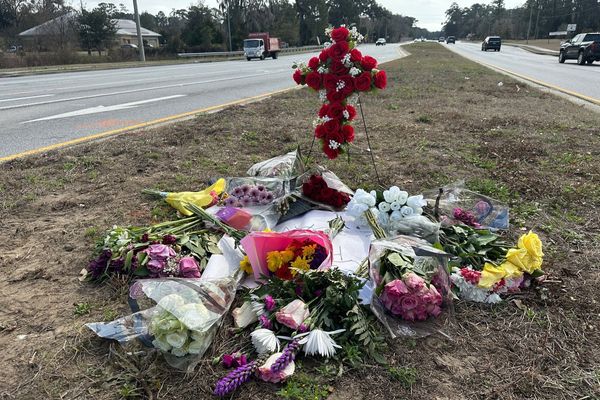
The prime minister, Boris Johnson, has sent his “deepest condolences” to the family, friends and colleagues of a police officer who died after being shot in Croydon.
The sergeant was shot dead overnight by a man who had been brought into the Croydon custody centre, police said, and the gunman then shot himself at about 2.15am.
Ken Marsh, chairman of the Metropolitan Police Federation, said:
The murder of a colleague on duty is utterly devastating news. Officers across London are in shock and sick to their stomachs at the nature of his death.
All our thoughts – and that of all our members – are with his family, friends and close colleagues at this time. We and all members of the police family across the country are all utterly heartbroken at this news.
Officers put themselves in danger every day to protect the public. Sadly, on very rare occasions officers make the ultimate sacrifice whilst fulfilling their role. When that happens we will ensure their bravery and sacrifice is never forgotten.
Colleagues involved in the incident will have our full support for as long as is needed.
A number of policing colleagues have changed their social media profile pictures to black, with a blue line, as a mark of respect to the officer who was shot dead, PA reports.
Independent Office for Police Conduct regional director Sal Naseem said the watchdog’s investigators were at the scene of the shooting.
He said:
Our deepest sympathies go out to all those affected by this terrible event. We were notified by the MPS of the shooting incident at Croydon Custody Centre early this morning.
We understand a police officer has since sadly died and a man is in a critical condition in hospital.
A murder investigation by the force is under way. Our investigators are at the scene and police post incident procedure to begin our independent inquiries.
The shadow justice secretary, Labour’s David Lammy, tweeted his condolences in light of what he described as “appalling news”.
Appalling news that a police officer has been shot dead in Croydon.
— David Lammy (@DavidLammy) September 25, 2020
It is tragic when an officer loses their life in the line of duty, while doing their job keeping the public safe.
My thoughts and condolences are with the officer's family, colleagues and friends.
Updated
Rishi Sunak’s deputy has denied there is a rift between the chancellor and Boris Johnson over how to respond to the coronavirus pandemic, PA reports.
Some interpreted Sunak’s statement that the nation must learn to “live without fear” as contradicting the prime minister’s move to impose new restrictions to slow the spread of Covid-19.
The chancellor’s remark that “our lives can no longer be put on hold” as he detailed his latest emergency jobs package was also welcomed by Tory backbenchers uneasy over fresh restrictions.
But the chief secretary to the Treasury, Steve Barclay, insisted on Friday both men occupying the top offices in Downing Street were working in tandem.
Asked who was in charge, Barclay told BBC Radio 4’s Today programme: “The prime minister and the chancellor are working extremely closely together and I think you can see that in the dovetailing of measures.”
He said there was a need to work “in tandem between both the health measures announced by the prime minister and those of the chancellor”.

On Sky News, Barclay was asked whether the chancellor’s use of the word “fear” was a suggestion that people should not follow the guidance.
He responded: “Quite the opposite. I think what’s very clear from the message, the chancellor said we need to address the health risks in order to protect jobs.”
Eyebrows were raised when Johnson did not appear in the Commons alongside his chancellor as he unveiled his new jobs support scheme.
Downing Street insisted there was no rift at the top of government, as the prime minister instead chose to visit a police station in Northamptonshire.
The senior Conservative MP Tom Tugendhat praised the chancellor’s approach when asked whether it was No 10 or 11 running the show.
He told Today: “I’m sure the prime minister is running the government. But I think Rishi Sunak did an extremely impressive job yesterday and I have to say he enjoys huge amounts of confidence on Conservative benches and when I speak to people around the country, and certainly the people I represent in Kent, he has huge support as well.”
Conservative backbenchers are growing increasingly uneasy over the government’s move to impose sweeping restrictions without parliament voting on them.
More than 40 Tory MPs have backed an amendment from the influential Conservative Sir Graham Brady which could force a debate on measures.
The number of rebels means there is the distinct possibility Johnson could lose if it goes to a vote, with his Commons majority just under 80.
Updated
A “landmark” report setting out a possible roadmap towards independence in Wales has been launched by the nationalist party Plaid Cymru.
The report argues that only independence can bring a fundamental improvement to the Welsh economy, claiming the country struggles not because it is too small or poor but because it is “trapped” within an economy shaped in the interests of the City of London.
It says the views of Welsh people should be tested in an “initial exploratory referendum”, setting out constitutional options, followed by a second binary referendum that could lead to independence.
My colleague Steven Morris reports.
Here my colleague Kalyeena Makortoff with a report on the Boohoo review:
You may recall a story the Guardian broke in August about how the fast-fashion brand Boohoo profited from increased online shopping during lockdown, before Leicester garment factories were linked to surging infections and new lockdown restrictions for the city.
My colleague Archie Bland has been tweeting about the findings made during an independent review of the matter by Alison Levitt QC.
Alison Levitt QC's review of Boohoo/Leicester has been published. It finds:
— Archie Bland (@archiebland) September 25, 2020
-Allegations of poor conditions/low pay are true
-Boohoo monitoring of supply chain was inadequate
-Directors knew problem from Dec 19 at latest but saw Leicester as low priorityhttps://t.co/uChqSBpoYH
Also says:
— Archie Bland (@archiebland) September 25, 2020
-No evidence company/officers committed criminal offences
-BH should have appreciated lockdown risks
-No evidence company's practices led to 2nd wave in Leicester
-BH not solely to blame
Levitt sharply critical of authorities in Leicester:
— Archie Bland (@archiebland) September 25, 2020
Inaction by the authorities contributed significantly… If the law is not enforced, this sends a clear message that the
violations are not important and the people affected do not matter.
Levitt on why Boohoo took no responsibility in Leicester:
— Archie Bland (@archiebland) September 25, 2020
In truth Boohoo has not felt any real responsibility for workers in Leicester and reason is a v human one: they are largely invisible to
them. Hard for people to empathise with plight of those of whom they know little.
Levitt says she is "satisfied Boohoo did not deliberately allow poor conditions and low pay to exist within
— Archie Bland (@archiebland) September 25, 2020
its supply chain, nor did it intentionally profit from them. I do not accept that Boohoo’s business
model is founded on exploiting workers in Leicester."
Boohoo says: "With the benefit of hindsight we regret that [reforms] did not advance quickly enough." John Lyttle says: "[Review] identified significant and clearly unacceptable issues... clear we need to go further and faster to improve governance, oversight and compliance."
— Archie Bland (@archiebland) September 25, 2020
This line is damning:
— Archie Bland (@archiebland) September 25, 2020
"Boohoo was quick to take advantage of the commercial opportunities afforded by the increase in
demand during the pandemic. I have concluded that it was inexcusable that at no point was any
assessment made as to how the Leicester workforce was to cope."
Tesco introduces curbs on bulk-buying
Britain’s biggest supermarket Tesco has introduced limits to prevent customers bulk-buying key products such as flour, pasta, toilet roll and anti-bacterial wipes after the government introduced new curbs to suppress Covid-19, Reuters reports.
British customers stockpiled key goods at the start of the coronavirus pandemic lockdown in March, stripping shelves bare.
“We have good availability, with plenty of stock to go round, and we would encourage our customers to shop as normal,” a spokeswoman said.
“To ensure that everyone can keep buying what they need, we have introduced bulk-buy limits on a small number of products.”

Updated
In Brexit news, supermarkets and their shoppers are facing around £3.1bn in tariffs on food and drink each year unless the UK reaches a free trade deal with the EU, a leading trade body has said.
The British Retail Consortium (BRC) said retailers will have “nowhere to go other than to raise the price of food” to mitigate the tariffs if there is no deal before Christmas.
It said many non-food retailers will also face “large tariff bills” for EU-sourced products, increasing the cost for struggling shops and their customers.
Andrew Opie, director of food and sustainability the BRC, told the PA:
UK consumers have benefited from great value, quality, and choice of food thanks to our ability to trade tariff-free with the EU.
Unless we negotiate a zero-tariff deal with the EU, the public will face higher prices for their weekly shop.
This would prevent harm to shoppers, retailers and the wider economy.

Students may have to spend Christmas on campus
Back to Scotland for a minute, where frustration is rife over the sudden announcement that students across the country will not be allowed to socialise outside their households amid rising infections in halls.
University students may have to remain on campus over Christmas if there are outbreaks of coronavirus, a government scientific adviser has now said.
Sir Mark Walport, a member of the Scientific Advisory Group for Emergencies (Sage), has warned that students could have to stay in their university accommodation when term ends to ensure the infection does not spread to their parents and grandparents, as well as other parts of the country.
Walport told BBC Radio 4’s Today programme:
Universities are very large communities, they bring together people from across the country and they’re far from monastic communities these days.
The one thing that we don’t want is for an outbreak of coronavirus in a university to then result in students going home and spreading that infection to other parts of the country and other communities, to their parents, to their grandparents.
If students are infected when it comes near to the end of term they may have to remain where they are.
A number of universities across the UK have introduced their own testing centres on campus ahead of the start of term to ensure students and staff can easily access a test if they start showing symptoms.
Earlier this week, the University of Liverpool confirmed there were already 87 confirmed cases of Covid-19 among students and staff on campus before the autumn term had even begun.
This from Lauren McDougall, who works for the Student experience department at the University of Glasgow:
Blaming students as individuals for the current outbreaks at Scottish universities is not only unfair but downright dangerous. This wasn't caused by a handful of students going to parties & suggesting so only shifts the blame & seriously risks the mental wellbeing of students 1/2
— Lauren McDougall (@shoogle_mac) September 24, 2020
Many of the Covid+ students will have broken no rules & it's likely the most conscientious students are the ones who will feel the weight of the blame even more than those who have breached restrictions. Where's the accountability? Systemic failures need systemic solutions. 2/2
— Lauren McDougall (@shoogle_mac) September 24, 2020
Updated
Meanwhile, Tory heavyweights and Commons committee chairmen are among the growing number of rebels demanding a greater say for parliament over coronavirus lockdown restrictions.
Boris Johnson this week set out a series of new measures designed to get a grip on the rising tide of Covid-19 cases as the UK faces a second wave of infections. The restrictions include a 10pm curfew on pubs and restaurants, table service only in such venues and stricter rules on where face coverings must be worn.
But there is mounting disquiet on the government benches at Downing Street’s decision to announce the regulations without giving MPs a say, PA reports.
There is increasing support for the amendment submitted by Sir Graham Brady, chairman of the powerful 1922 Committee of Conservative backbench MPs, which would force a parliamentary debate and vote on such measures in future.
Tom Tugendhat and Huw Merriman, chairmen of the Commons foreign and transport committees respectively, have both voiced their support for the amendment in the past 24 hours, along with the former Wales secretary David Jones.
Tugendhat warned that “controlling the lives of 65 million people by fiat” was “not sustainable”.
Sir Bernard Jenkin, veteran Tory and chairman of the liaison committee, which scrutinises the work of the prime minister, confirmed on Twitter that he too supported the call for a vote.
and I am just adding my name too https://t.co/mUQ0knKxYJ
— Bernard Jenkin (@bernardjenkin) September 24, 2020
Ex-Tory leader Sir Iain Duncan Smith and former Brexit secretary David Davis are among the original signatories, while former deputy Labour leader Harriet Harman and the DUP’s Sammy Wilson have also put their names to it.
More than 40 Tory MPs have now expressed backing for Brady’s move, enough to challenge the government’s majority if they and the opposition vote the amendment through, should it be selected by the Commons Speaker, Sir Lindsay Hoyle, next week.
Tugendhat warned that the government needed to enter into discussions with backbenchers to calm a potential rebellion.
He told BBC Radio 4’s Today programme:
You can give various blanket permissions in emergency ways but that doesn’t mean you don’t have to come and ask for permission as soon as is practical.
It’s quite clear that there’s at least another six months of it as the government has announced and it may indeed be longer than that depending on whether a vaccine comes or not, so the idea that we can have a permanent state where the government is making emergency decisions for people and effectively controlling the lives of 65 million people by fiat is not sustainable.
Updated
Shadow chancellor Anneliese Dodds warned on the Today programme that unemployment was heading towards “1980s levels” despite Sunak’s wage subsidy package, as official figures showed borrowing continued to soar, the Press Association reports.
Dodds questioned whether the wage support scheme will fail to incentivise employers to keep people on as she sounded the warning of further mass job losses.
I think the real question now, and I asked this in Parliament yesterday of the Chancellor, is whether this system of targeted wage support will incentivise employers to keep people on.
That’s the real kind of million-dollar question, because if it doesn’t, if it’s not actually designed in a way that will make it economically sensible for employers to keep people on, then unfortunately it won’t be living up to the promise of other wage support schemes that we’ve seen being so successful.
Steve Barclay, Sunak’s deputy, denied economic experts’ warnings that the new jobs protection scheme would not give enough of an incentive to employers to keep workers on, with suggestions it is cheaper to bring back one furloughed employee than two on half-time.
The issue is that this is more than about spreadsheets, this is about the flexibility that employers said they want, they want to retain their skilled workforce.
The chancellor has been very honest that we cannot save every job, but what we need to do with these measures is target our funding on jobs that are viable, enabling people to come back, rather than them being at home with a furlough that’s already for eight months, for a very long period of time.
But the equally important thing is not just the number of people that are unemployed but how quickly we get them back into the labour market, because the length of unemployment is absolutely critical.
Updated
Chancellor Rishi Sunak has been warned his latest emergency package will not be enough to prevent the loss of hundreds of thousands of jobs from sectors hardest hit by coronavirus.
Conservative peer Lord Wolfson, the chief executive of Next, said roles will be shed from the retail industry as consumers make a permanent shift to shopping online.
Speaking to BBC Radio 4’s Today programme, he said that the seemingly permanent shift to online shopping means that a lot of “unviable” jobs are in retail.
Asked if a lot of those roles are in retail, Wolfson replied:
I think that is right. I wouldn’t want to underestimate the difficulty that is going to cause a lot of people who work in retail.
I think it’s going to be very uncomfortable for a lot of people. We will inevitably, and have already, reduced the number of people working in our shops and I’d expect that to continue over the coming five or six years as the demand for retail goes down.
Steve Barclay, Sunak’s deputy as chief secretary to the Treasury, defended the measures as being targeted to roles that remain “viable” but warned “we cannot save every job”.
Sectors hardest hit by the restrictions in place to slow Covid-19’s spread continued to raise warnings despite the Chancellor’s Job Support Scheme to help pay wages for employees able to work at least a third of their hours, the Press Association reports.
Barclay said it was “very sadly” the case that there will be more unemployment as a consequence of coronavirus but that support was targeted at getting those in “viable” jobs back to work while the unemployed can be retrained.

The multibillion-pound Job Support Scheme, which will last for six months from November, will see the state and employers top up the wages of staff working at least a third of their normal hours.
A worker doing a third of their normal hours will still receive 77% of their usual pay, up to a cap - 33% from their firm for the hours worked, a 22% top-up from the employer and a further 22% from the state.
Other measures included in the package include an extension of the VAT cut for tourism and hospitality and more flexible terms for the repayment of government-backed loans.
But sectors including the performing arts have warned there was little to help their venues remain open.
Sunak argued it would be “fundamentally wrong” for people to be kept in jobs that can only exist due to state funding.
Former prime minister Gordon Brown believes that a range of measures are needed to help the job market.
Speaking on ITV’s Good Morning Britain on Friday, he said:
Unemployment is not inevitable, it is the decisions that we make to do something about it.
Let’s listen to what people are saying about what jobs could be created, companies that are struggling that perhaps need more loans to keep going - perhaps we should convert that into equity taken by regional growth funds - and at the same time we have to get these young people into work.
Of course, if it is a one-in-a-century event, you have got to say: ‘We have got to take action now to prevent worse damage later’.
On whether there should be a collective response to the pandemic from all of the devolved governments, former prime minister Brown said:
If you are going to sort the problem of unemployment or testing, you really have got to work together.
I think people want the governments of all the different parts of the United Kingdom to co-operate more intensively to get things done.
Updated
The Scottish government is facing a backlash over strict rules for students that were introduced last night following a series of coronavirus outbreaks that have left more than a thousand students self-isolating.
Universities Scotland and the Scottish government have been accused of blaming students for the outbreaks, as it was announced that this weekend students will be banned from pubs, bars and restaurants, while strict socialising rules will remain in place.
These include not mixing outside their household, the adoption of a “yellow card/red card” disciplinary system which could lead to students losing their places, while police will help tackle rule-breaking.
To the consternation of parents, Scotland’s national clinical director Jason Leitch has also said that students cannot return to their family homes.
The Universities Scotland guidance met an outcry last night, with NUS Scotland condemning the new rules as showing “a complete disregard for students’ mental health and wellbeing”.
But this morning, Scotland’s higher education minister Richard Lochhead said the government was reviewing guidance on students self-isolating and urged universities to be “pragmatic” if parents wanted to see their children in exceptional circumstances.
He told BBC Radio Scotland: “”If there was any young person who was not coping, who was very anxious, we would very much understand if their parents wanted to meet them or take them home.”
Last night, NUS Scotland president Matt Crilly said that the guidance took the “unjustified step of applying different rules to students over and above the rest of the adult population”.
“These measures are deeply concerning- not least to those students who rely on income from hospitality jobs. Having different rules for students makes it even more confusing to stay within guidance which could make things less safe,” h said.
But health secretary Jeane Freeman insisted that he government was not blaming students:
Except @scotgov is not “blaming students” just as we have deliberately & consciously not ‘blamed’ anyone or any group throughout. Asking all of us to look out for each other & follow the rules isn’t ‘blame’. From what I can see Principals aren’t doing ‘blame’ either. https://t.co/iA9qhwklzN
— Jeane Freeman (@JeaneF1MSP) September 24, 2020
Hello everyone, I’m Jedidajah Otte and I’ll be bringing you the latest developments from around the UK in all things politics and Covid-19 for the next few hours.
Ministers face fresh questions today over how chancellor Rishi Sunak will pay for his coronavirus bailout schemes, after the Office for National Statistics announced this morning that the UK was £2,023.9bn in the red at the end of August, £249.5bn more than at the same time last year.
And we’ll be looking at Scotland, where hundreds of thousands of students have been banned from socialising as coronavirus cases spread to more than 20 universities across the UK.
As ever, feel free to get in touch if you have pertinent updates to flag, or would like to share tips or comments. You can get me on Twitter @JedySays or via email.
I won’t always have time to respond, but I’ll read everything.