Afternoon summary
- Matt Hancock, the health secretary, has told MPs he will consider a proposal to use rapid-result testing for people who have been told to self-isolate for 14 days after being in contact with someone testing positive. Hancock spoke after Sir John Bell, regius professor of medicine at Oxford University and a member of the government’s vaccine taskforce, told MPs that the current self-isolation policy was “massively ineffective” and that the new lateral flow tests, which deliver results very quickly, made it more sensible to test people in this category instead. (See 1.47pm and 12.50pm.)
- Boris Johnson has had his first call with Joe Biden, the US president-elect. Although not first in the queue for a call with Biden, who spoke to Canada’s Justin Trudeau yesterday, Johnson got to speak to Biden around the same time or ahead of other major European leaders. Fears that he might be snubbed because of his close links with Donald Trump proved unfounded. (See 5.13pm.)
That’s all from me for today.
But our coverage continues on our global coronavirus live blog. It’s here.
Updated

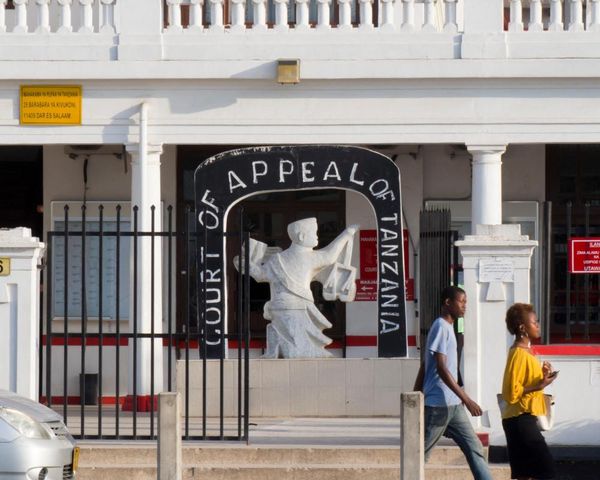
Sufficient funding must be made available by the Treasury to clear the extensive backlogs of cases that have accumulated in the courts during the pandemic, the lord chief justice has told MPs.
Appearing before the justice select committee, Lord Burnett of Maldon said: “Funding has got to be provided to enable us to deal with the work coming in and also the backlog.”
At the start of the March lockdown there were around 40,000 crown court cases waiting to be heard, Burnett said. That figure now stands at around 50,000; not all cases will end up as full trials.
Delays in hearing - which have resulted in some cases being listed for trial as far ahead as in late 2022 - must not be allowed to become “the new normal”, Burnett said.
The danger, he said, was that if the Treasury did not ensure adequate money was available then “much bigger backlogs would be baked into the system”.
Burnett also said he “deeply regrets” a decision by chief constables to stop police premises and staff being used to facilitate remote remands on video links. If the problem was money not being made available, then the justice secretary, Robert Buckland, and the home secretary, Priti Patel, “should be in a position to sort it out”, he added.
Referring to rhetorical attacks on “activist” and “lefty” lawyers by Patel and the prime minister, Boris Johnson, the lord chief justice declared:
Lawyers have got a duty to act fearlessly for their clients, subject always to their overriding professional obligations and duties to the courts. They shouldn’t be subject to criticism for doing so. A general attack on the legal profession in my view undermines the rule of law.
Identifiable individual failings, unfortunate though they are, do not begin to justify a general attack upon the integrity of groups of lawyers.
Updated
This is from David Lammy, the shadow justice secretary, on Boris Johnson’s tweet following his call with Joe Biden. (See 5.13pm.)
Promoting democracy?
— David Lammy (@DavidLammy) November 10, 2020
You should start by condemning your best mate @realDonaldTrump for his attack on the US people's right to have their votes counted.
Late would be better than never. https://t.co/Inn6eeXkW3
From the Washington Post’s John Hudson
The major European allies get their calls in with Biden today. Boris announces his. I'm told Macron has just concluded his. Merkel also slated for today https://t.co/JWCey7IBil
— John Hudson (@John_Hudson) November 10, 2020
Johnson invites Biden to attend Cop26 climate crisis conference in Glasgow next year
Downing Street has now released this read-out from the Johnson/Biden call. A spokesperson said:
In a call this afternoon the prime minister warmly congratulated Joe Biden on his election as president of the United States.
The prime minister also conveyed his congratulations to Vice President-elect Kamala Harris on her historic achievement.
They discussed the close and longstanding relationship between our countries and committed to building on this partnership in the years ahead, in areas such as trade and security – including through Nato.
The prime minister and president-elect also looked forward to working closely together on their shared priorities, from tackling climate change, to promoting democracy, and building back better from the coronavirus pandemic.
The prime minister invited the president-elect to attend the Cop26 climate change summit that the UK is hosting in Glasgow next year. They also looked forward to seeing each other in person, including when the UK hosts the G7 Summit in 2021.
Updated
Johnson speaks to Biden, and says he looks forward to strengthening UK-US partnership
Boris Johnson has spoken to Joe Biden, the US president-elect. He said he looks forward to working with Biden on “shared priorities”, including climate change, promoting democracy and building back better after the pandemic.
Build back better is a slogan that both men share. Biden uses it to describe his economic plan. Johnson has been using it to describe his post-Covid agenda, although leftwing campaigners in the UK have accused the PM of lifting it from them.
In fact, the slogan reportedly goes back to 2004.
I just spoke to @JoeBiden to congratulate him on his election. I look forward to strengthening the partnership between our countries and to working with him on our shared priorities – from tackling climate change, to promoting democracy and building back better from the pandemic.
— Boris Johnson (@BorisJohnson) November 10, 2020
According to the BBC’s Laura Kuenssberg, the call lasted 20 to 25 minutes, and Johnson spoke to Biden before other major European leaders.
The Prime Minister has spoken to President-Elect Biden - the two spoke for 20-25 minutes in a phone call that finished around 15 minutes ago
— Laura Kuenssberg (@bbclaurak) November 10, 2020
And there we go... it's understood the call took place before calls to other major European leaders https://t.co/lVruZWp6aR
— Laura Kuenssberg (@bbclaurak) November 10, 2020
According to the BBC, the tweet from the Irish taoiseach, Micheál Martin, earlier (see 3.56pm) describing his call with Biden was a draft posted by mistake ahead of their actual conversation.
Updated
Nicola Sturgeon has said she has no immediate plans to cut the recommended self-isolation time from 14 days, despite pressure from Downing Street to reduce it to 10 days.
The first minister told Alison Johnstone, the Scottish Green MSP, the Scottish government would not take instructions from Dominic Cummings, the Downing Street strategist. It was focusing instead on increasing compliance by offering extra financial support for people off work, Sturgeon said.
Johnstone pressed Sturgeon to set out her policy on improving compliance after the Guardian revealed there was a row between Cummings and Chris Whitty, England’s chief medical officer.
Whitty discovered Cummings wanted to scrap self-isolation entirely by using rapid Covid-19 tests to find positive cases, and is instead recommending tests for those in self-isolation after eight days, as a compromise. The plan has been put to the UK’s devolved nations, with Wales understood to be considering it.
Sturgeon did not deny she was aware of the proposal, but the up-to-date advice was to stick with 14 days. She said:
I will always listen to clinical and scientific advice, so I cannot stand here and say I will never get advice of that nature and I will consider it carefully if I do, but it certainly won’t be advice from Dominic Cummings. I hope that reassures Alison Johnstone.
She said these policies were being reviewed, and Scottish ministers were actively pursuing other measures to drive up compliance. She added:
It remains, not the only, but one of the most important things anybody can do; if you have symptoms, then you should self-isolate immediately and get tested; if you’re a close contact it’s absolutely vital that you self-isolate and the more we can do to support people with that, the more we will encourage higher compliance.
Other scientists have backed Cummings. Sir John Bell, regius professor of medicine at Oxford University and a member of the government’s vaccine taskforce, told MPs earlier that Cummings’ plan to use new lateral flow tests on people in contact with positive cases would be far more effective that blanket quarantines for two weeks. (See 12.50pm.)

Updated
Micheál Martin, the taoiseach (Irish PM), seems to have beaten Boris Johnson in the contest to have an early call with the US president-elect, Joe Biden. He posted a message on Twitter this afternoon saying he had had a “very positive” call with Biden. It has now been deleted, but here is a screengrab.

Yesterday Biden spoke to Justin Trudeau, the Canadian prime minister.
In the past the British prime minister was always near the top of the queue for a call from a new US president. Downing Street claims to be unconcerned that that no longer appears to be the case.
Updated
Sturgeon says three Scottish council areas facing tougher Covid restrictions
No local authority in Scotland has been put into the highest tier of Covid restrictions – with rules similar to England’s current lockdown – as Nicola Sturgeon announced her first weekly review of the new five-level system that came into force on 2 November.
Sturgeon told the Holyrood parliament it was “not prudent” to ease any restrictions today, and that the majority of local authorities would see no immediate change.
Most council areas in central Scotland were initially placed in level three, with much of the rest of the country in level two and a few rural councils across the Highlands and Islands in level one.
Sturgeon also announced that Shetland, Orkney and the Western Isles, will be able to meet with one other household indoors up to a maximum of six people. She said that this was because cases there were “very low and sporadic”, and “we recognise social isolation is exacerbated in island communities where there are not as many public places to meet”.
Three local authority areas – Fife, Perth and Kinross, and Angus – are moved from level 2 to level 3. Sturgeon said that infection rates in all three areas were on “a sharply rising trajectory” and her advice was that level 2 restrictions were not sufficient to reverse that.
“I know how disappointing this will be to residents and businesses in these areas,” she said. She added that there were growing concerns about rates in Inverclyde and Stirling too.
Citing a levelling out of infection rates and a fall in hospital admissions, Sturgeon said nobody should be in doubt that restrictions were having effect. She went on:
While we have seen a levelling off we have not yet seen a sustained fall in cases. Clearly that requires continued caution. A rising or even plateauing rate of infection is not a stable position.
Describing the latest vaccine news as “extremely encouraging”, she said “we’re not at the end of the tunnel but a glimmer of light has appeared.”

Updated
Back in the Commons Hancock says mink farming was due to come to an end in Europe in 2023. He says there are animal welfare reasons for objecting to this practice. He certainly has his own views on this, he says (implying he strongly disapproves). But he says there are now public health grounds for stopping mink farming too.
NAHT Cymru, the union for school leaders in Wales, has said that despite the Welsh government’s announcement about exams being cancelled in 2021 (see 12.11pm), it fears that pupils will end up sitting “exams in all but name”. Ruth Davies, its president, said:
We welcome the acknowledgement that things need to be different in 2021, but there is a real concern that we will end up with exams by stealth.
It has been announced that pupils will still be given externally-set and marked tests, just in the classroom. We can’t see how that isn’t an exam.
There is an awful lot of detail still to be determined, and we await further clarification, but we are worried we will end up with exams in all but name.
The same problems still exist that pupils may not be able to attend school that day, and that the exams will be testing areas that haven’t been able to be taught. We can’t have a situation where pupils are assessed on teaching they simply haven’t had.
These are from the UK Covid-19 Statistics website, with the latest figures out today for England, Scotland, Wales and Northern Ireland.
NHS England reports a further 300 COVID-19 hospital deaths occurring over 24 dates.
— UK COVID-19 (@UKCovid19Stats) November 10, 2020
225 were reported last Tuesday, 207 two weeks ago & 134 three weeks ago. pic.twitter.com/ETPWXNKuVu
Scotland Daily Coronavirus (COVID-19) Report · Tuesday 10th November.
— UK COVID-19 (@UKCovid19Stats) November 10, 2020
832 new cases (people positive) reported, giving a total of 75,187.
39 new deaths reported, giving a total of 3,079. pic.twitter.com/qRzNvkW6Ly
Wales Daily Coronavirus (COVID-19) Report · Tuesday 10th November.
— UK COVID-19 (@UKCovid19Stats) November 10, 2020
444 new cases (people positive) reported, giving a total of 61,356.
22 new deaths reported, giving a total of 2,063. pic.twitter.com/s9JJJgw9dF
In a statement Public Health Wales says the number of positive cases in Wales is lower today than in recent days “due to a reporting delay in Public Health Wales receiving data from non-NHS Wales laboratories”.
Northern Ireland Daily Coronavirus (COVID-19) Report · Tuesday 10th November.
— UK COVID-19 (@UKCovid19Stats) November 10, 2020
514 new cases (people positive) reported, giving a total of 43,902.
11 new deaths reported, giving a total of 802. pic.twitter.com/mROY5xIja1
School attendance in England has improved, according to the latest official figures which show that fewer schools had pupils at home because of Covid-19 last week as the country entered the second lockdown.
There had been concerns attendance might drop if parents decided to keep children at home as the new national restrictions came into force last Thursday, but were figures were up on the week before half-term.
Around 4% of pupils did not attend class for Covid-19 related reasons on 5 November, according to Department for Education statistics.
Around 16% of schools had one or more pupils self-isolating, compared with 21% on 15 October, with secondary schools once again worse affected that primaries (38% v 11%).
Updated
At cabinet this morning ministers were given a briefing by the head of MI5, Ken McCallum, on the terrorism threat facing the UK. The PM’s spokesman told journalists at the daily lobby briefing:
Cabinet received an update on the UK terrorism threat level from MI5 director general Ken McCallum. This follows last week’s announcement that the threat from international terrorism has been raised from substantial, meaning an attack is likely, to severe, meaning an attack is highly likely.
The director general reiterated this is a precautionary measure and is not based on any specific threat. However, there is a risk that the recent attacks in France and Austria could have a galvanising affect in other parts of Europe - including the UK.

Suzy Davies, the Conservative education spokesperson in the Senedd (Welsh parliament), said it was a “shame” that A-level students in Wales would not get a chance to sit exams next year. (See 12.11pm.) She said:
The critical issue for me is that assessments are externally set and externally marked. This will give them some comparability with previous years’ exams and protect teachers against any accusations of unintended bias.
It’s a shame that A-level students won’t get a chance to sit at least one exam. This will be second year where sixth formers and college students won’t have the experience of sitting exams when they will be competing for university places with others who have.
Full list of English council areas getting weekly supplies of rapid-result tests
In a news release, the Department of Health and Social Care has published a full list of all the local authority areas in England (66 or 67 - he has used both numbers) that will get weekly supplies of rapid-result tests.
Here is the list.
Barking and Dagenham
Bexley
Birmingham
Blackburn and Darwen
Blackpool
Bolton
Brent
Bristol
Bury
Calderdale
Camden
City of London
County Durham
Coventry
Darlington
Doncaster
Dudley
East Riding of Yorkshire
Enfield
Essex
Gateshead
Greenwich
Hackney
Halton
Hammersmith and Fulham
Hartlepool
Hertfordshire
Kingston upon Hull
Islington
Kensington and Chelsea
Kingston upon Thames
Knowsley
Lambeth
Lewisham
Luton
Manchester
Middlesbrough
Newcastle upon Tyne
Newham
North Tyneside
Northumberland
Nottingham City
Nottinghamshire
Oldham
Redbridge
Redcar and Cleveland
Richmond upon Thames
Rochdale
Salford
Sefton
South Tyneside
Southwark
St Helen’s
Staffordshire
Stockport
Stockton-on-Tees
Sunderland
Tameside
Tower Hamlets
Trafford
Wakefield
Waltham Forest
Wandsworth
Warrington
Wigan
Wirral
Wolverhampton
In addition Stoke on Trent, Liverpool and Lancashire have already been getting these tests.
Updated
Back in the Commons Apsana Begum (Lab) asks why BAME people are not being prioritised for the vaccine, given that they are more at risk from coronavirus.
Hancock says the Joint Committee on Vaccination and Immunisation, which has produced guidance on this for the government, has looked at this matter in some detail. But it has concluded that age is the biggest risk factor.
Britain has expelled two Belarusian diplomats following the “unjustified” expulsion of two UK envoys from the country, Dominic Raab, the foreign secretary, has announced.

In the Commons Munira Wilson (Lib Dem) asks if delays at the border after the Brexit transition could hold up supplies of the vaccine, which is manufactured in Belgium. She says this could have serious effects because the virus has to be stored at a very low temperature until shortly before it is administered.
Hancock says of course the government has considered this.
The Welsh government has said it will be ready to distribute the coronavirus vaccine from December. A spokesman said:
Planning for the delivery of a potential Covid-19 vaccine in Wales is well under way.
This includes organising the logistics for transporting the vaccine, identifying suitable venues for vaccinations to take place and ensuring that healthcare professionals are available and trained to administer the vaccines.
There will be limited supplies of a vaccine at first, so it will be offered to those at highest risk. The vaccines need to pass final safety checks, but if this occurs we will begin to immunise in December alongside other UK nations.
Health and social care workers, care home residents and staff have been prioritised to receive a vaccine first, with roll-out to older people in age bands from next year.
Councils could use rapid-result tests for relatives wanting to visit care homes, Hancock says
When Labour’s Jonathan Ashworth asked if the relatives of people in care homes could be prioritised for rapid-result tests, Hancock did not give him an answer.
But Damian Green, the Conservative former cabinet minister, has just made the same point.
Hancock told him it would be up to local authorities getting lateral flow tests (the rapid-results ones) to decide how they wanted to use them.
But he said he was also looking for a “broader solution” to this problem.
Hancock says he will consider case for using rapid-result tests with people told to self-isolate
Jeremy Hunt, the chair of the Commons health committee, says only around one-fifth of people being asked to self-isolate are complying.
He asks about Sir John Bell’s proposal for people asked to self-isolate to be given lateral flow tests. (See 12.50pm.)
Hancock says that option would not have been open if the government had not secured an expansion of later flow testing.
He pays tribute to Bell’s expertise. On this issue, he will take the advice of clinicians, he says. Ministers will want to look at the idea closely.
Updated
Hancock is responding to Ashworth.
He says the vaccine will not be used for children. It has not been tested on them, because the likelihood of them suffering badly if they catch coronavirus is very low.
Age and working in social care are the biggest risk factors, Hancock says. That is why the elderly and healthcare workers are going to get priority for the vaccine.
He says they do not know yet what proportion of the population needs to be vaccinated for it to halt the virus. He says, although the scientists know this vaccine stops people getting ill, they cannot know yet what impact it will have on the spread of the virus.
Jonathan Ashworth, the shadow health secretary, says relatives of people in care homes should get priority for the mass tests.
He quotes what Dido Harding told the health and science committees this morning about financial hardship being responsible for people not self-isolating. (See 11.11am.)
He asks about policy on vaccinating children.
What proportion of the population will have to be vaccinated?
Will people still need to self-isolate?
How much will the vaccination roll-out programme cost?
Ashworth also offers to work with Hancock on a cross-party campaign to improve vaccine take-up.
Hancock says human history is marked by advances reliant on human ingenuity. We must come together as one to defeat this threat.
The course of human history is marked by advances where our collective ingenuity helps us vanquish the most deadly threats. Coronavirus is a disease that strikes at what it is to be human, at the social bonds that unite us.
So, we must come together as one to defeat this latest threat to humanity. There are many hard days ahead, many hurdles to overcome, but our plan is working and I’m more sure than ever that we will prevail together.
Updated
Hancock turns to the Pfizer/BioNTech vaccine.
The UK has an order of 40m doses.
This puts us towards the front of the international pack.
And orders have been placed for other vaccines too, he says.
He stresses that the vaccine is not yet available. The regulator will not approve it until it is safe, he says.
Quoting Prof Jonathan Van-Tam from yesterday, he says this shows that the goalkeeper can be beaten.
If the vaccine is approved, the government will be ready to deliver a mass vaccination programme, he says. (See 9.12am.)
Hancock says the UK now has a PCR testing capacity of 518,000 tests a day.
But the government is also focusing on new tests.
Last week lateral flow tests, which can deliver a result in under 15 minutes, were rolled out to Liverpool.
He says from today these tests will allow twice-weekly testing to be rolled out for all NHS staff.
The next step is to roll it out more widely, he says.
He says last night he wrote to 67 councils interested in using these tests. They will get the capacity to test 10% of their population per week.
Equivalent help will be offered to the devolved administrations, he says.
Updated
Hancock starts by referring to the new variant found in Denmark in mink farms.
He says he was told about this on Thursday evening. He was told the virus had transferred back from mink to humans in Denmark in a new variant that did not respond to antibodies.
A ban on travel from Denmark was introduced, he says. He says British nationals can return from Denmark, but they have to self-isolate.
He says he will do what is necessary to protect the country.
Matt Hancock's statement to MPs on coronavirus
Matt Hancock, the health secretary, is making his statement to MPs now.
The virus remains a powerful adversary, he says.
But he says we are marshalling the powers of science and ingenuity. There is no doubt we will prevail, he says.
Updated
The Guido Fawkes blog had a fun story this morning.
Number 10’s Message to Biden Originally Congratulated Trump https://t.co/UHUfmC7vL1 pic.twitter.com/8ap10vgfhU
— Guido Fawkes (@GuidoFawkes) November 10, 2020
Asked for an explanation, a government spokesman said:
As you’d expect, two statements were prepared in advance for the outcome of this closely contested election. A technical error meant that parts of the alternative message were embedded in the background of the graphic.
Rapid testing to be rolled out in 66 more areas in England, Hancock says
Mass testing for coronavirus is to be rolled out across 66 local authorities in England using test kits that can deliver results within 15 minutes.
Matt Hancock, the health secretary, confirmed this morning that Nottingham and Nottinghamshire are among the areas that will receive 10,000 lateral flow tests later this week.
It follows the mass testing programme in Liverpool that has seen more than 23,000 people tested since Friday, with 0.7% testing positive.
Hancock said he had written to every director of public health in England on Monday, offering to make available the new tests which have been used in the city. He added that other parts of the north-west, as well as Yorkshire, the West Midlands and all of the north-east are set to receive the tests.
Speaking to Sky News, Hancock said:
I can confirm that we are rolling out the sort of mass testing we are seeing in Liverpool, and indeed we earlier piloted in Stoke-on-Trent, across 66 local authorities.
Last night I wrote to the directors of public health of all local authorities in England saying we can make available these brilliant new lateral flow tests that give results in 15 minutes, and we can make them available to directors of public health right across the country.
Sixty-six expressed an interest in the first instance, I’m now expecting a whole load more.
Hancock also said that mass testing, like a vaccine rollout, would be made available across the whole of the UK and not just England.
Updated
Arlene Foster, Northern Ireland’s first minister, has admitted that the power-sharing executive is having trouble reaching agreement on what should happen when Northern Ireland’s lockdown ends at midnight on Thursday.
Ministers are meeting today after after discussions yesterday failed to secure a breakthrough.
Addressing the Northern Ireland assembly, Foster said:
We’re in a five-party coalition and there are many administrations across the United Kingdom ... who do not have to deal with differing political philosophies and ways forward.
But we will work together, we have a determination to work together to find a solution and that will happen hopefully today.

Updated
Ministers urged to treat booksellers as essential retailers
The Booksellers’ Association (BA) has written to key government ministers and members of the House of Lords, calling for them to reclassify bookshops as ‘essential retailers’ to allow them to reopen in current and future lockdowns in England.
The open letter, drafted by the BA’s managing director, Meryl Halls, says bookshops provide an essential contribution to society, from the proven links between reading and improved mental wellbeing, to providing educational resources and also contributing to local economies.
The BA, which represents over 95% of specialist bookshops in the UK and Ireland selling new books, makes its plea on the eve of the Christmas trading period, which can “make or break” the sustainability of a local bookshop. It draws on the example of garden centres being belatedly classified as essential due to them being deemed beneficial to the nation’s health, after missing out on spring trading.
The letter also highlights the inconsistencies within the current definitions of essential retail which have created an unlevel playing field. Essential retailers that sell books – including newsagents and supermarkets – are allowed to remain open, while booksellers themselves have bee forced to shut up shop.
Halls writes:
On behalf of our members, we urge the government to categorise bookshops as essential retailers. Bookshops play a unique part in the culture of our country and books have a crucial role to play in the health and well-being of our population. Bookshops have been designated as essential in other countries, and the ‘essential’ categorisation will acknowledge the crucial role that bookshops play in our culture, economy and wider society.
Echoing the words of author Philip Pullman, Halls adds:
Bookshops are lanterns of civilisation and, for many, beacons of hope. We urge the government to consider classifying them as essential retailers.

Updated
Science adviser calls for testing for contacts told to self-isolate, and new rights for people vaccinated
The joint coronavirus hearing with the science and health committees, which was taking evidence from Dido Harding and others, is now finished. Jeremy Hunt, the health committee chair, posted this on Twitter a bit earlier.
Most interesting comment so far in this morning's select committee: Sir John Bell says instead of asking close contacts to quarantine, they should be given lateral flow tests every other day https://t.co/QXFiLuuCte
— Jeremy Hunt (@Jeremy_Hunt) November 10, 2020
Sir John Bell, regius professor of medicine at Oxford University and a member of the government’s vaccine taskforce, was giving evidence before Harding.
As reported earlier (see 10.40am), Bell said the current self-isolation policy for people at risk of being positive was “massively ineffective”.
Bell said, under the current rules, you had to isolate 70 people for a day to stop one transmission. But, he said, if you only isolated people who were positive, it became much more effective. He said:
If you are quarantining people who have got symptoms and have got a positive PCR, then you only have to have five of these people quarantined for a day to stop one transmission. That’s massively effective.
Similarly, if you were to [test people with rapid flow tests] the number is probably less than five.
Bell said that anyone being asked to self-isolate should be tested. He said the new lateral flow tests made this practical because they deliver rapid results, unlike the PCR tests. He explained:
I think we have to get a bit more pragmatic about what are efficient ways of reducing transmission, because at the moment, in my view, contact tracing is not very efficient ...
The methodology is now there. You can lateral flow test people every other day. And if they don’t turn positive and haven’t got the disease, then off they go. You could do that without having to quarantine them. They could do that in real life. Then it would be all fine. As a result, I think you would find the compliance with the contact tracing regime would go up enormously.
Bell also said that people getting vaccinated should receive that some sort of ticket that would free them up to do things not otherwise allowed. He said:
I think there’s a big problem with our current philosophy of contract tracing and quarantining, and that is it’s all based around a big stick that beats people up. I don’t think we are looking at it as a mechanism to enable people to do things that they wouldn’t otherwise do. I think an enablement strategy is the right way to get buy-in ...
When we give somebody a vaccine, they’re going to have to have freedom to operate because they are protected. We’re going to have to give them a ticket that says, ‘Yeah, if you want to go to the cinema, you can go to the cinema.’
If you have had the virus, and you are swabbed positive by PCR, for example, you are protected for at least 90 days, and probably more. So you can’t keep saying to those people, ‘Well, you’re locked down for two weeks, then you’ve got to go back to normal.’ You’ve got to say to them, ‘You’re okay, you can go on the trains, you can go to the cinema, you can go to a football match.’
I can tell you, if I get two shots of the vaccine and people say, ‘No, you still can’t go to the football match,’ I’m not going to be happy about it.
Updated
Back at the committee hearing, the Labour MP Zarah Sultana put it to Dido Harding that it was wrong to call her organisation NHS test and trace because it was largely run by private companies. As HuffPost’s Paul Waugh reports, Harding did not agree.
.@zarahsultana puts to @didoharding that just 4 of data processing bodies in 'NHS Test and Trace' are public sector, 22 are private companies.
— Paul Waugh (@paulwaugh) November 10, 2020
And says isn't it time to stop calling it 'NHS Test and Trace'"
"That is its name," Harding replies.
Updated
Welsh government scraps end-of-year exams for pupils in 2021
There will be no end-of-year exams for GCSE, A-level and AS-level students in Wales in the summer, the Welsh government has said.
Education minister Kirsty Williams said that in place of exams the government would work with schools and colleges to carry out teacher-managed assessments.
Williams said some of the assessments would be set and marked externally but delivered within classrooms under teacher supervision. There will be an “agreed national approach” to provide consistency across Wales.
The minister said:
The wellbeing of learners and ensuring fairness across the system is central in our decision making process.
We remain optimistic that the public heath situation will improve, but the primary reason for my decision is down to fairness; the time learners will spend in schools and colleges will vary hugely and, in this situation, it is impossible to guarantee a level playing field for exams to take place.
We have consulted with universities across the UK and they have confirmed that they are used to accepting many different types of qualifications.
They expect a transparent and robust approach which provides evidence of a learner’s knowledge and ability. Our intended approach does just that, as it is designed to maximise the time for teaching and learning.
Cancelling exams provides time for teaching and learning to continue throughout the summer term, to build the knowledge, skills and confidence in our learners to progress in whatever they decide to do next.
Exams are still scheduled in England and Northern Ireland but they will be held later in the summer.
In its advice to Wales’ education minister, regulator Qualifications Wales said there should be no GCSE exams this summer, with grades for both GCSE and AS-levels based on coursework and assessments set and marked by the exam board WJEC.
For A-levels, it recommended one timetabled exam per subject, with a second opportunity for pupils to sit if they were ill or self-isolating.

Updated
Major's plan for two independence referendums criticised by both sides in Scotland
Sir John Major’s Middle Temple lecture last night included an intriguing proposal to have not one but two Scottish independence referendums, but it has met a muted response this morning.
In what seems to be a now annual intervention in the constitutional debate from the former prime minister, he suggested two referenda could prevent the country from voting for independence. Major said an initial vote could decide on the principle of secession and the second on a new relationship between Scotland and the rest of the UK, adding that such a model might have stopped Brexit from happening.
During the lecture, Major was quick to link the increase in support for independence to the “unpopularity of our present Westminster government in Scotland” as much as Brexit.
The SNP’s Joanna Cherry argued that it was still not clear in law whether Holyrood required the approval of the Westminster Government before they can legally hold a new independence referendum and warned “Scotland had her fill of Westminster gerrymandering in the 1979 devolution referendum & we are way beyond being fooled again.”
There are a number of problems with John Major’s comments tonight in re #indyref2. First, it is not clear that “the Scots require the approval of the Westminster Government before they can legally hold a new independence referendum.” https://t.co/hg9DVQ8rUl
— Joanna Cherry QC (@joannaccherry) November 9, 2020
Some senior Scottish Conservatives were less than convinced, like Holyrood veteran Murdo Fraser.
No. Just No. https://t.co/Eu47g9WDPO
— Murdo Fraser (@murdo_fraser) November 9, 2020
It’s fair to say that, under the new leadership of Douglas Ross, Scottish Tories are far more focused on preventing Sturgeon winning a majority at next spring’s Holyrood elections, thereby robbing her of the chance to press for a second referendum in any shape or form.
For the record, this is what Major said in his lecture about the case for holding two referendums.
The choice for the UK government is either to agree the referendum can take place – or to refuse to permit it. Both options come with great risk. But the lessons of Brexit may offer a way ahead.
The Westminster government could agree for an independence referendum to take place, on the basis of two referenda. The first to vote upon the principle of negotiations, and the second upon the outcome of them.
The purpose of the second referendum would be that Scottish electors would know what they were voting for, and be able to compare it to what they now have. This did not happen with Brexit: had it done so, there may have been no Brexit.
Harding says test turnaround times have improved recently.
But she says they need to continue to improve.
She says in September the service prioritised testing volumes over turnaround times, because there was so much demand. Now it is prioritising turnaround times.
Q: Do you accept tests are a waste of money if they are delayed?
Harding says 60% of care home test results get delivered within 48 hours. She says this has made care homes safer.
Harding told the committee that the “balance between supply and the demand forecast” for coronavirus testing towards the end of the summer “wasn’t right”. She said:
With the benefit of hindsight, the balance between supply and the demand forecast wasn’t right, clearly that’s true.
But what you’ve also seen in the last six weeks is that we’ve met our commitments to get that supply and demand into balance.
Asked when demand could increase again, Harding said:
Armed only with my crystal ball, all of us are working so hard with experts in science, in medicine, in behavioural science to understand what may happen as we go forward.
Q: Is isolation monitoring part of your role?
Harding says it is more isolation support.
She says people are called three times during their isolation, to check they have the help they need and to remind them of their responsibilities.
Greg Clark, the science committee chair, is asking the questions again.
Q: Local teams get almost 100% of contacts to self-isolate. For national teams, it is 50 to 60%.
Harding says local teams can go and knock on people’s doors. The national teams cannot do that.
Q: Why not use local teams more?
Harding says 150 local authority teams are already working with the service. Another 150 are about to go live.
But she stresses that cases “go the other way as well”. Local authority contact tracers do send cases back to the national teams.
Harding says she visited Liverpool at the weekend. She says she thinks mass testing offers a real opportunity to identify people with the virus.
We are at the every early stages of discovering how mass testing can work, she says.
She says it offers the potential for us to get “more of our lives back”. But she says it is not a silver bullet, and she says she has never claimed it is.
Harding says the English test and trace only counts a contact as successful if someone has replied. She says the Scottish system counts a contact as successful from the moment an email is sent.
Asked about a Guardian report saying unqualified people are being asked to perform clinical roles in test and trace, Harding says this criticism is unfair.
Harding says some of the most experienced staff have been given new roles.
She says customer feedback has been very positive.
Q: What advantage is there in employing constultants in public service roles?
Harding says they built this service up very quickly. It is now the size of Asda.
She says it made sense to use expertise from all sectors - the public sector, the military, the private sector.
We stood this service up in May at extraordinary speed, we built something that’s the same size of Asda in the course of five months.
When you start something very quickly you need to pull on all the talents across all of society.
You can’t offer people permanent jobs when you don’t have a permanent organisation, so you have to employ people either as independent individual consultants or through consultancy organisations.
Q: Could you have not used civil servants?
Harding says they have used both civil servants and consultants from the private sector.
As the service becomes more permanent, proportionally more jobs are being filled by civil servants, she says.
Q: If local authorities doing the work, shouldn’t they be getting the money?
Harding says all sectors need to be involved. You cannot choose one or the other. You need all.
Q: But you are paying one sector a lot more than the other.
Harding says the service is procuring expertise professionally.
Q: Are you getting a discount?
Harding says government officials have helped determine what the service pays.
Updated
Q: How many tests are voided every day?
Harding says it ranges between 1% and 3%.
That is normally because one element of the kit has broken, or not made it through to the laboratory on time.
Updated
Harding says the system is now piloting using the new rapid flow tests to test people who have been told to self-isolate for 14 days because they have been in contact with someone testing positive.
But she says the current clinical advice remains that if someone has been in contact with someone testing positive, they should self-isolate for 14 days.
Updated
Harding told MPs that her husband, the Conservative MP John Penrose, is now having to self-isolate because he was told by the app he had been in contact with someone testing positive.
Updated
Harding told the committee that people who were not self-isolating were doing so because they could not afford not to work. She said it was not that people did not want to comply.
The majority of people are trying very hard to comply when they are asked to and when they are not it is because they might have just popped out to get some fresh air, or if they have gone anywhere they have gone to buy emergency prescriptions or food.
But, when pressed on whether people should be guaranteed full pay if asked to self-isolate by the government, she said that was a matter for the government.
Updated
Harding rejects claims NHS test and trace only reaching 3% of people it should
Hunt asks about the efficiency of the system.
He says the ONS says 52,000 people are getting Covid every day. If they all have around three and a half close contacts, that means there are 177,000 every day who should be told to self-isolate.
But NHS test and trace is only finding around a third of positive cases, he says. And it is only reaching 60% of people. And, when people are asked to self-isolate, only 20% do. That is less than 5,000, or around 3% of the theoretical maximum, Hunt says.
Harding says she does not accept all Hunt’s assumptions.
The hardest thing is to know how many people are getting the disease, she says.
If 50,000 people are getting the disease every day, NHS test and trace is finding more than a third a day. It is finding 20-25,000.
She says Hunt’s assumption about contacts reached is a bit low. Last week the service reached 77.8% of people whose details it had, she says.
She says there has been a 17-fold increase in the number of people being contacted.
She says Hunt is being “slightly pessimistic”.
She says there are a number of difference surveys about compliance with self-isolation. Hunt quoted the most pessimistic, she says. It is not black and white. Some of those who said they were not complying may just have popped out for some fresh air.
She says one survey said 54% of people asked to self-isolate did not leave home.
Overall, she says, the system is getting better and better.
UPDATE: Hunt then said that, even allowing for Harding’s arguments, the system was reaching no more than 20% of the people it should be reaching.
Harding replied:
If it’s a tool that contributes to 20%-plus of our fight against Covid, then it’s a hugely valuable and important tool.
I describe it as our second line of defence. Our first line of defence is actually our own behaviour - social distancing, wearing of face masks, washing our hands.
The harsh reality is that that first line of defence and that second line of defence on their own have not been enough to prevent a second wave, and that is true across the whole of Europe.

Updated
Harding says the second wave is not the same as the first.
We are going into it with the R number lower, she says.
And she says test and trace is operating. That means we have a much better idea where the disease is spreading.
She says it would be nice to think that test and trace could hold it back. But that is not the case. She says test and trace is just one of the ways of holding the virus back.
Much as I would love that testing and tracing on its own would be a silver bullet to holding back the tide of Covid, unfortunately the evidence in the UK and in every other country in Europe is that’s not the case.
That, actually, the way we have to tackle the disease is through a variety of different interventions and we are one of the ways, not the only way.
Jeremy Hunt, chair of the health committee, says in east Asian countries test and trace has held the virus back. Why has that not happened here?
Dr Susan Hopkins, the NHS chief medical adviser, who is giving evidence with Harding, says in those countries cases were reduced to very low numbers – the low hundreds.
Updated
Clark says Harding must have some idea whether most of the money is being spent nationally or locally.
Harding says she does not have those figures to hand. She has control over some of this spending, but not all of it, she says.
Dido Harding questioned by MPs
Dido Harding, head of NHS test and trace, is being questioned by MPs from the health and science committees now.
Greg Clark, the science committee chair, starts.
Q: What is the monthly budget for test and trace?
She said, of the total test and trace budget, 80% went on testing. The rest when on contact tracing, technology, and centralised costs.
Q: And, within that 20%, what is spent centrally and what is spent locally?
Harding says she cannot give that figure.
But she says contact tracing is a genuine joint venture. Public Health England and local public health officials are also involved.
Updated
Self-isolation for people at risk of Covid 'massively ineffective', MPs told
Prof Sir John Bell, the regius professor of medicine at Oxford University and a member of the government’s vaccine taskforce, also told MPs from the science and health committees that telling people to self-isolate for 14 days if they were are risk of getting coronavirus was “massively ineffective”.
Greg Clark, the chair of the science committee, asked him if he thought it reasonable to ask people without symptoms to self-isolate for 14 days because they had been in contact with a person with the virus. Bell replied:
The data on this is pretty clear and that is, only very few of those people are actually infected. And in order to prevent a single transmission, you have to isolate 70 of those people for one day. So it is massively ineffective.
And the trouble is that the people out there know it is massively ineffective. That’s why they hate it.
Now, we can do whole lockdowns. It’s 1,000 people a day to stop one transmission, so that’s why people don’t like that either.
Bell said the solution was to use quarantine more precisely.
And he also suggested giving more freedom for three months to people who have had the vaccine, on the grounds that during that period they were very unlikely to be infectious.
UPDATE: See 12.50pm for more quotes from Bell, where he called for regular testing of people told to self-isolate and new freedoms for people who receive the vaccine.

Updated
Bell also told the health and science committees that he thought up to three vaccines might be available by the new year. He said:
I wouldn’t be surprised if we hit the new year with two or three vaccines, all of which could be distributed.
And that’s why I’m quite optimistic of getting enough vaccinations done in the first quarter of next year that by spring things will start to look much more normal than they do now.
Prof Sir John Bell, the regius professor of medicine at Oxford University and a member of the government’s vaccine taskforce, gave the nation a hallelujah moment yesterday when he told the World at One that the the Pfizer/BioNTech vaccine efficacy results meant life might get returning to normal in the spring. (See 9.12am.)
But he is giving evidence to the Commons health and science committees this morning he seems to have added a qualification; we could start returning to normal “provided they don’t screw up the distribution of the vaccine”.
This is from Sky’s Rowland Manthorpe.
Health select committee:
— Rowland Manthorpe (@rowlsmanthorpe) November 10, 2020
Sir John Bell says we have a "70 to 80 per cent chance" of reaching Easter having vaccinated the most vulnerable
"That's provided they don't screw up the distribution of the vaccine."
UPDATE: Here is a fuller version of the quote. Ask what he thought the chance was of vaccinating the most vulnerable by Easter, Bell said:
I think we have got a 70 - 80% chance of doing that. That’s provided they don’t screw up the distribution of a vaccine. That’s not my job, but provided they don’t screw that up it will all be fine.
Updated
Here are some more lines from the interviews that Matt Hancock, the health secretary, gave this morning.
- Hancock stressed that the Pfizer/BioNTech vaccine results did not remove the need for people to follow the current guidelines. He said:
This is very promising news but it is one step of many that we need to take to get out of this and to tackle this pandemic once and for all ...
The critical thing is that for all your viewers is that we all keep our resolve on measures that are currently in place now because it will still take some time for this good news that the Pfizer vaccine is around 90% effective, to proving it is safe, being able to licence it, and then the vast task, which obviously we have been working on for some time, of making sure that everybody in the population can get the jab.
- He said he expected the roll-out of the vaccine to mostly take place in the first part of 2021. He said:
The central expectation of the bulk of the rollout and deployment has always been in the first part of 2021.
This is a promising step but that’s the central expectation of our timescale.
If we got bad news we might have had to push that back, that remains my central expectation.
- He said he did not know when the Oxford vaccine trial was going to report more information. Asked about that, he said:
We don’t know exactly when, the timings of this publication are determined by science, not by some administrative decision.
We are not exactly sure when further news will come from the Oxford trial but we are working again to ensure that that can be deployed should it come off.
More than 10% of deaths in England and Wales now involve Covid, latest figures show
The ONS has just published its latest weekly death figures for England and Wales. Here are the main points.
-
The number of deaths in England and Wales in the week ending 30 October was 10.1% above the five-year average. These are described as “excess deaths”. The total number of deaths in the week was 10,887. This chart shows how excess deaths (the gaps between the dark blue lines and the light blue lines) have been rising recently, although they remain far, far lower than they were during the first wave.

- 12.7% of all deaths in the week ending 30 October in England and Wales involved coronavirus. That meant 1,379 deaths, up from 978 deaths (9.1%) involving coronavirus in the previous week. “Involving coronavirus” means it was mentioned on the death certificate.
- Of the 1,379 deaths involving coronavirus in the week ending 30 October, 86.7% of them cited Covid-19 as the underlying cause of death.
- London was the only region in England and Wales in the week ending 30 October not to record excess deaths. Here are the regional figures.

Updated
NHS preparing seven-days-a-week Covid vaccination programme, says Hancock
Good morning. Matt Hancock, the health secretary, has been touring the broadcast interviews this morning giving interviews on the back of yesterday’s announcement that the Pfizer/BioNTech vaccine has been shown to be 90% effective in early trials.
Although he stressed that the full safety data for the vaccine was not yet available, he said that he had ordered the NHS to be ready to start distributing the vaccine from December. It would be a “colossal exercise”, he said. The government was providing GPs with £150m to fund the programme.
Hancock also said this would be a seven-days-a-week programme, involving the vaccine being distributed through care homes, GPs and pharmacists as well as “go-to” vaccination centres set up in venues such as sports halls. Vaccination would go on during the day and “into the evenings”, he said.
We will be working across the NHS with the support of the armed forces seven days a week, over weekends, over bank holidays, to get this rolled out into people’s arms as quickly as possible.
But Hancock also expressed a note of caution. Yesterday, in a notable exchange on the BBC’s World at One, Sir John Bell, regius professor of medicine at Oxford University, told the presenter, Sarah Montague, that the vaccine news meant he was now confident life should be returning to normal by spring.
"Yes, yes, yes" said the Professor.
— BBC Radio 4 (@BBCRadio4) November 9, 2020
World at One presenter @Sarah_Montague reacts to the positive early results of one of the big coronavirus vaccine trials. pic.twitter.com/Gw56tkLTUL
Hancock was more equivocal. Asked if he agreed with Bell, he replied:
We want to get life back to normal as quickly as possible. I am not going to put a date on it because there are so many steps we need to go through.
Here is the agenda for the day.
9.30am: Boris Johnson chairs cabinet.
9.30am: The ONS publishes it weekly death figures for England and Wales.
9.30am: Fiona Hill, Theresa May’s former co-chief of staff, is among various former No 10 aides giving evidence to the Commons public administration and constitutional affairs committee on the role of the PM’s office.
10am: Amanda Spielman, head of Ofsted, gives evidence to the Commons education committee.
10.30am: Dido Harding, head of NHS Test and Trace, gives evidence to the Commons health and science committees, who are holding a joint ‘coronavirus - lessons learnt’ inquiry. Other witnesses include Sir John Bell, regius professor of medicine at Oxford University, at 9.45am.
12pm: Downing Street is due to hold its lobby briefing.
12.30pm: A defence minister responds to a Commons urgent question about the use of the military in the roll-out of mass testing.
Around 1pm: Matt Hancock, the health secretary, makes a statement to MPs about coronavirus.
2pm: Nicola Sturgeon, the first minister, makes a statement to the Scottish parliament about coronavirus.
Politics Live is now doubling up as the UK coronavirus live blog and, given the way the Covid crisis eclipses everything, this will continue for the foreseeable future. But we will be covering non-Covid political stories too, like Brexit, and when they seem more important or more interesting, they will take precedence.
Here is our global coronavirus live blog.
I try to monitor the comments below the line (BTL) but it is impossible to read them all. If you have a direct question, do include “Andrew” in it somewhere and I’m more likely to find it. I do try to answer questions, and if they are of general interest, I will post the question and reply above the line (ATL), although I can’t promise to do this for everyone.
If you want to attract my attention quickly, it is probably better to use Twitter. I’m on @AndrewSparrow.
Updated