The former head of the armed forces has sent a stark warning to Sir Keir Starmer, claiming the UK needs a decade to rebuild its defence even if the prime minister “shows the leadership” to restart investment now.
In a dire assessment about the state of the UK’s military, Jock Stirrup, who was chief of the defence staff during the Tony Blair and Gordon Brown premierships, warned the UK is “badly exposed” and needs “a complete change of mentality” to put it on a war footing.
The former air marshal said he completely agreed with the damning assessment by Labour peer Lord Robertson about UK security being in “peril”, as well as the failures of Sir Keir’s government to tackle the crisis.
The row has escalated with health secretary and leadership hopeful Wes Streeting breaking ranks and suggesting he backs Lord Robertson’s demands to use welfare savings to fund defence. The move is likely to reopen painful wounds in Labour after Sir Keir abandoned benefits cuts last year because of a major backbench rebellion.
Lord Stirrup worked closely with Lord Robertson when the latter was the defence secretary and then Nato’s secretary general.
The crisis comes as the prime minister faces growing criticism over delays to crucial decisions on defence. The long-awaited defence investment plan is still sitting on his desk as the Treasury and Ministry of Defence clash over priorities.
Speaking to The Independent, Lord Stirrup said: “We are badly exposed as a country.
“We need to replenish stores, munitions, all the sort of consumables of war, which were already far too low, which, of course, have been reduced significantly because of the number that we have rightly given to Ukraine.
“But secondly, we need, in this country and throughout Western Europe, an agile, innovative and rapidly scalable defence base, defence industrial base. And by defence industrial base, I don’t just mean traditional defence companies.”
He warned that there was no quick fix. He said things are so dire that the UK needs a “graduated” increase in defence spending to rebuild its defence production or simply risk inflation in the sector.
He said: “We have a long, long way to go. We require 10 years of sustained investment in defence to restore our position.”
In a stark warning, he added: “A 10-year process does not mean – as the government often seems to think – that you can leave everything until year eight, nine or 10.”
But the man who oversaw the UK’s involvement in both Afghanistan and Iraq vented his frustration at the lack of leadership from Sir Keir’s government.
Lord Stirrup, who is now a crossbench peer, said: “I see no signs at the moment of the required determination and leadership in the government that’s required to do this because, of course, it requires extremely difficult choices.”
Reflecting on Lord Robertson’s warning that welfare spending needs to be switched to defence, he added: “We all understand the pressures on finances. We all understand the pressures on the economy, not least from the rapidly expanding benefits bill, which is a whole different subject by itself.
“But we expect our leaders to lead, and that means when times are tough, making the tough decisions. We didn’t force these people to run the country. They wanted to do it.”
Asked about calls for the UK to cut welfare spending to fund defence, the prime minister’s official spokesperson said: “We inherited a situation where defence was being hollowed out at the same time as nearly one in 10 working-age people were out of work, including around a million young people.
"The government is turning that around by making the investment in defence that our country needs as well as reforming the welfare system to deliver fairness for the taxpayer and support more people into work, which is the best way to get the welfare bill down in the long term.”
He added: “We’ve been crystal clear that we want to get the defence investment plan fit for the threats we face."
The latest intervention comes amid revelations that Rachel Reeves’s Treasury has vetoed spending for a deal for UK peacekeepers to go to Ukraine on top of blocking MoD spending and forcing in-year cuts.
Another author of the UK’s Strategic Defence Review, Fiona Hill, the Anglo-American former adviser to the first Trump presidency on Russia, told The Independent that issues of the UK’s ability to withstand shocks were not merely a question of “guns or butter”.
She warned that being able to protect the UK was a question of also having “the right kind of mindset for the threats that we’re dealing with, the kind of appropriate vigilance and appropriate hardening of critical national infrastructure”.
Dr Hill, now with the Brookings Institute in the US and former chancellor of Durham University, said: “Many aspects of daily life are coming in from abroad through all kinds of choke points.”
She pointed out that the disruption to oil and other fossil fuel derivatives through the Strait of Hormuz has had a devastating effect on Asia.
But the UK is badly positioned to cope with the effects of disruptions of this kind to trade along sea lanes and to handle cyber attacks against critical national infrastructure.
She warned that meant there is no "holistic" approach in national or regional governments for how to deal with national disasters and that there needs to be a public discussion to galvanise action across the country to deal with future shocks.
Meanwhile, defence analyst and former Gulf War commander Lt Col Stuart Crawford said: “I think everybody who matters is agreed that Starmer is never going to get a handle on the UK’s defence needs and what it entails. The question is now who is? I don’t think they’re going to be found within the current Labour party cabal, so we’re going to have to look elsewhere.”
In the last week, former Tory defence secretaries Penny Mordaunt, Sir Ben Wallace, Sir Grant Shapps and Labour’s former foreign secretary Jack Straw have all issued warnings about the parlous state of UK defence.
Lord Stirrup has also, earlier this year, contributed to a hard-hitting report for Policy Exchange, where he warned that the UK can no longer rely on its nuclear deterrent for defence without backing it up with other military hardware.
Sir Keir has insisted he is making record investment in UK defence, but Lord Stirrup said: “It is easier to make record increases when defence spending was at a record low.”
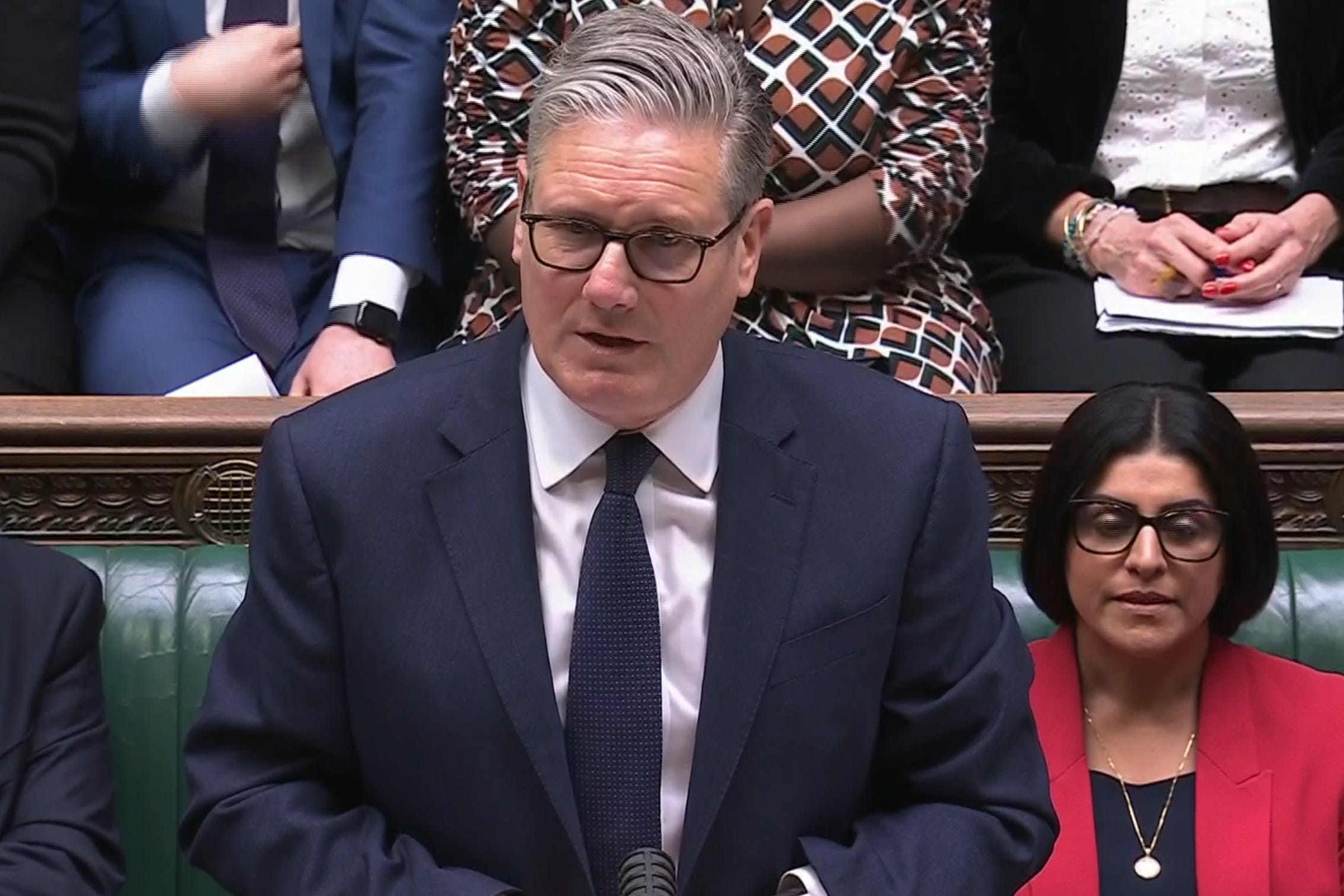
During PMQs on Wednesday, Sir Keir said he disagrees with Lord Robertson after the former Nato chief accused the government of “corrosive complacency” on defence spending.
Sir Keir said: “Last February, that was seven months after taking office, I took the decision to increase defence spending from 2.3 per cent to 2.6 per cent, paid for by my difficult decision on overseas aid.
“Last June, at the Nato summit, I committed to raising core defence spending to 3.5 per cent. Last November, the Budget committed record funding to defence. I reaffirm those commitments now.
“The strategic defence review is a 10-year blueprint for national security. The defence investment plan [Dip] will put that into effect. It will be published as soon as possible.”
During her clash with the prime minister, Tory leader Kemi Badenoch pressed the prime minister on when the Dip will be published, calling for it to come before the end of the parliamentary session.
She said: "Lord Robertson’s criticisms were of the prime minister, and he says Britain’s national security is in peril.”
Mandelson failed US ambassador vetting – but was given the job anyway
Starmer accused of misleading MPs after Mandelson ‘failed vetting’
Streeting risks reigniting Labour civil war in benefits cuts to fund defence row
Risks to children on social media ‘can’t go on like this’, PM tells tech bosses
England lags behind rest of world by allowing greyhound racing, MPs told
Lack of trust in government triggered vaccine disinformation during Covid pandemic