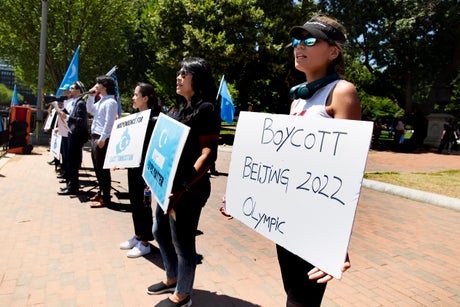
Activists have documented what they say is an alarming rise in deportations of Uighur Muslims at China’s request from Muslim-majority countries.
Oslo-based Uighur activist Abduweli Ayup told CNN he had confirmed 28 Uighur deportations from three Muslim-majority countries between 2017 and 2019, comprising 21 from Egypt, five from Saudi Arabia and two from the UAE.
China has been accused of systemically oppressing Uighurs in the country’s Xinjiang region, and the UN has expressed concerns about the mass incarceration of more than a million Muslims and other minority groups in detention centres.
China has denied the allegations, saying the centres are providing voluntary vocational training as part of a programme to prevent separatist violence.
Uighurs speaking out in exile around the world have previously described facing pressure from the Chinese authorities that includes threats to their family members back in Xinjiang. But activists say the growing number of deportations could point to the growing reach of Beijing’s efforts to quash criticism of its policies in the region.
In its report, CNN cited the case of Ahmad Talip, who was living with his wife Amannisa Abdullah in Dubai when he was called to the police station. He dropped his pregnant wife and son at a friend’s house, promising to return soon. When he still hadn’t returned by the next morning, she went to the police station.
Ms Abdullah found her husband in jail and pleaded for his release. He told her he believed he would soon be deported and that she should leave the UAE for Turkey, where many Uighurs in exile are based. Within three or four weeks of the police detaining him, Mr Talip was extradited to China.
Following her husband’s suggestion, Ms Abdullah fled to Turkey, where she gave birth to a daughter who is yet to meet her father.
International pressure has mounted over China’s treatment of the Uighurs, with several countries including the UK, the US and the European Union having announced sanctions against Chinese officials over the issue. Some national legislatures have passed resolutions accusing China of genocide in Xinjiang, though most governments have baulked at this description and see it as a specific legal term which should be used in the context of a judicial process.
Earlier this year, several top international brands faced a backlash from Chinese customers after they took a stand on using cotton that may have been picked using forced Uighur labour in the Xinjiang region. It was estimated that about 30 Chinese celebrities severed ties with the brands as a result.