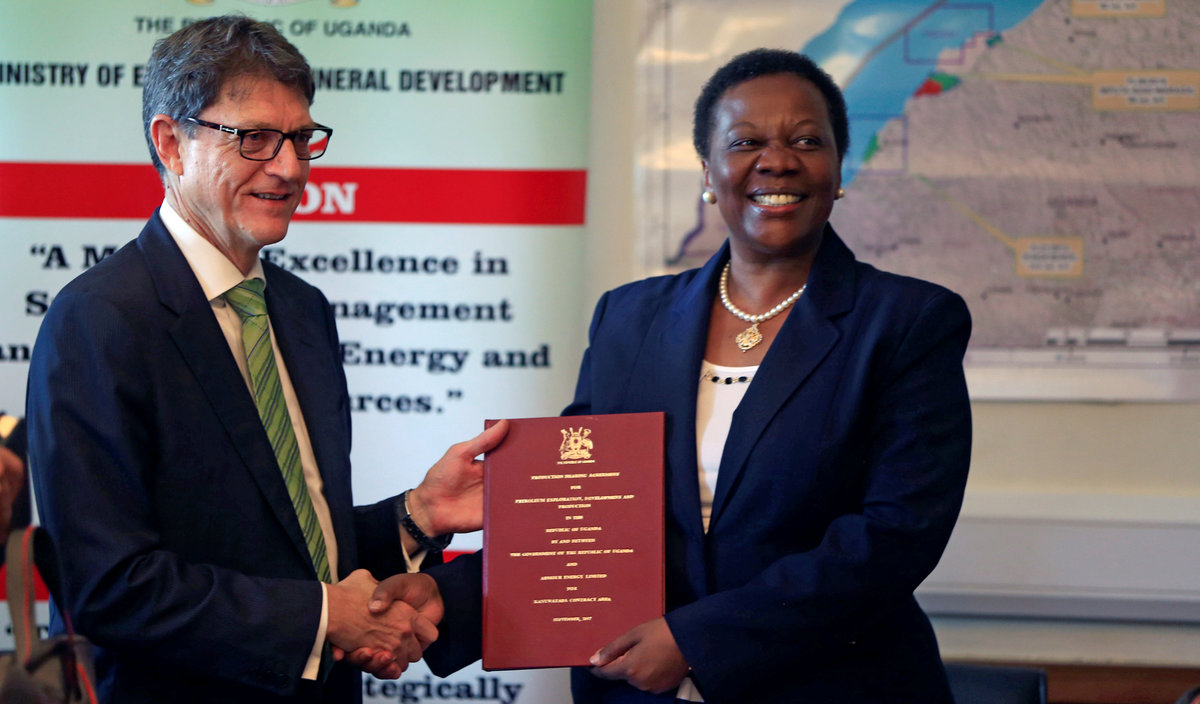
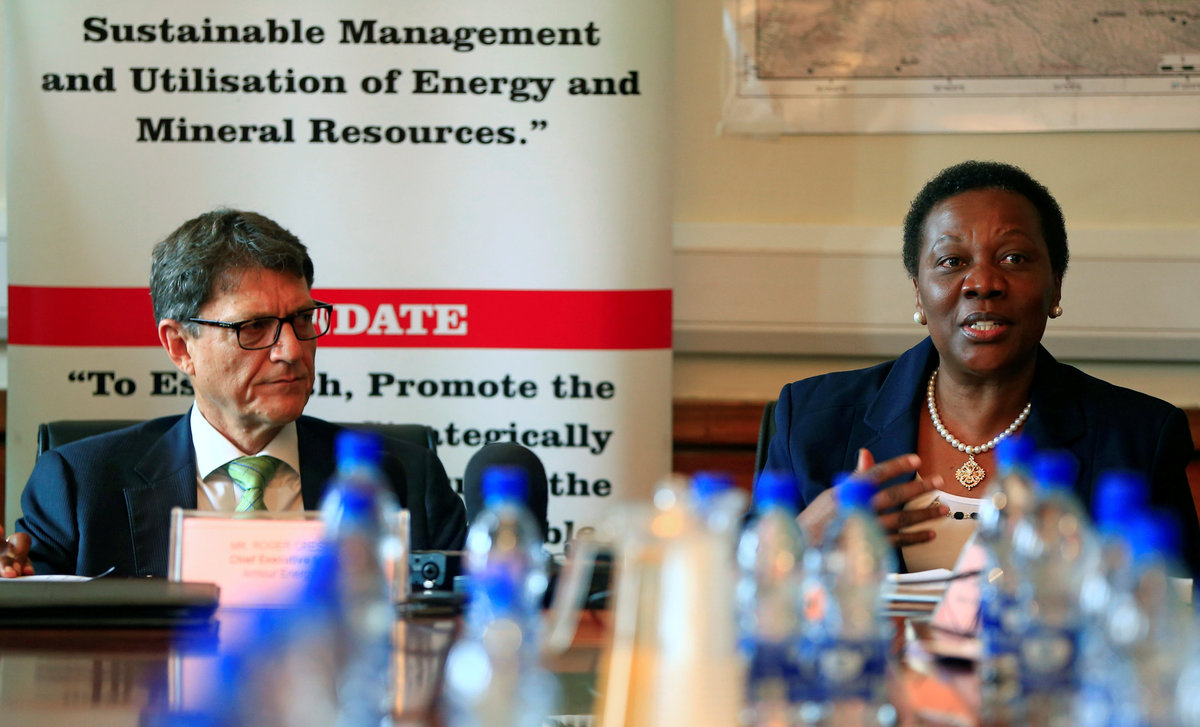
KAMPALA (Reuters) - Uganda signed an oil exploration deal with Australia's Armour Energy Limited <AJQ.AX> on Thursday, the first under a protracted competitive licensing round launched in 2015.
The production-sharing agreement covers Kanywataba block, a 344-square-kilometre (133-square-mile) area in the Albertine rift basin near the border with Democratic Republic of Congo, officials said at the signing in the Ugandan capital Kampala.
Kanywataba was previously licensed to existing operators, Frances' Total <TOTF.PA>, China's CNOOC <0883.HK>, and Britain's Tullow <TLW.L>.
But the three firms, which now own all of Uganda's crude discoveries, gave back control of the block to the government in 2012 after explorations failed to find oil.
Energy Minister Irene Muloni said low oil prices meant "protracted negotiations" with firms that participated in the licensing round.
At the launch of the round, six blocks covering 2,674 square kilometres were offered and 19 firms initially expressed interest.
Four - Armour and three Nigerian firms - emerged as winners, and Armour is the first to sign an agreement with the government.
Muloni said the cabinet had already approved deals with one of the Nigerian firms, Oranto Petroleum International, and the government expected to sign deals with the company in three weeks' time.
Uganda discovered petroleum in the Albertine basin in 2006. Gross reserves are estimated at 6.5 billion barrels and recoverable oil estimated at between 1.4 billion-1.7 billion barrels.
The first batch of licences awarded in the early 2000s were handed out on a first come, first served basis.
But after the discovery of commercial deposits Uganda enacted new laws to manage the sector. Under those laws exploration licences must be granted on a competitive basis.
Crude production has been repeatedly delayed by tax spats and disagreements over development strategy. It is now expected in 2020 when an export pipeline through neighbouring Tanzania is due to be completed.
"The exploration and development of oil in Uganda is a very exciting opportunity for us," Armour's Chief Executive Roger Cressey told the press conference.
Armour's exploration licence is valid for four years.
(Reporting by Elias Biryabarema; Editing by Edmund Blair and Susan Fenton)