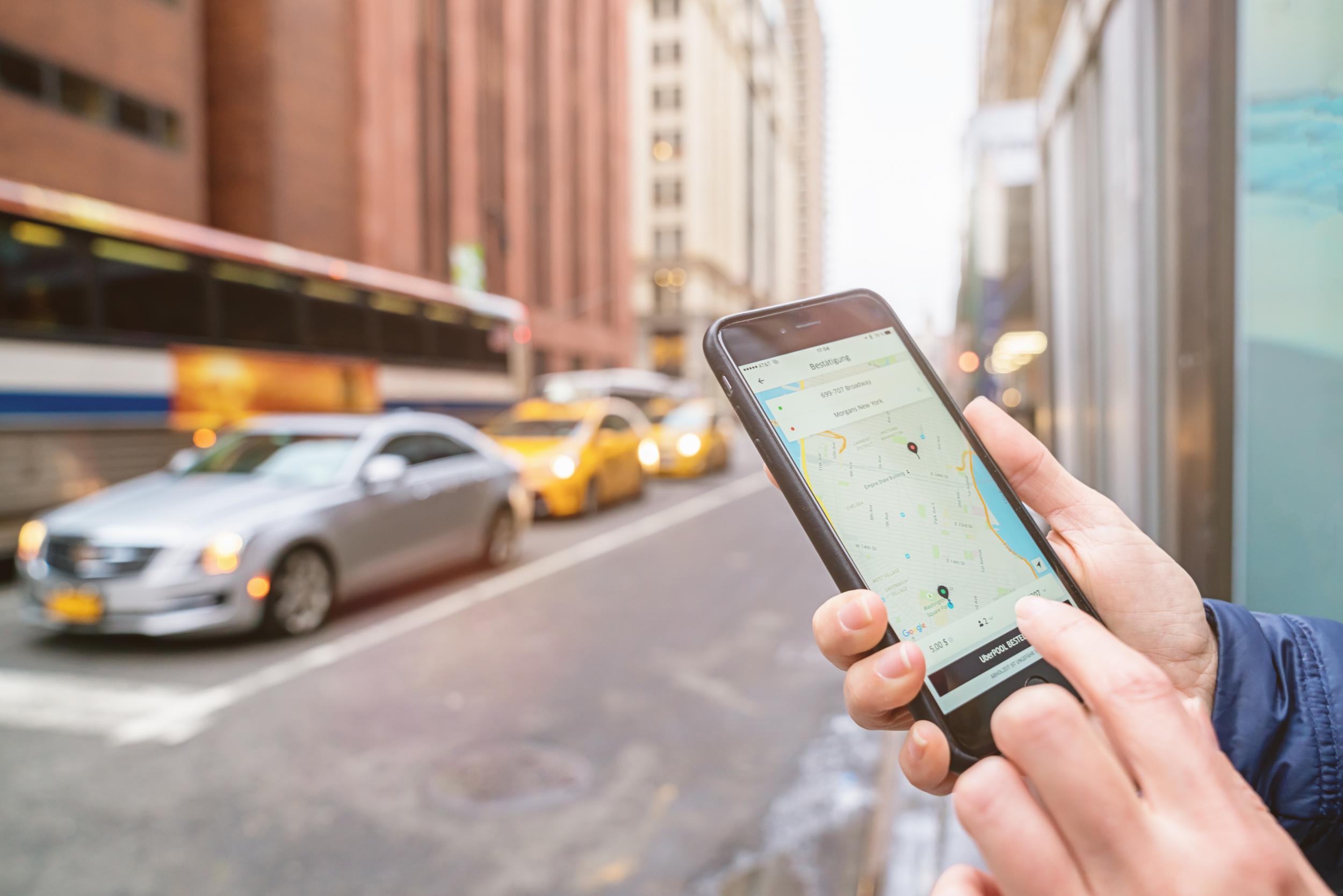
With Uber, investors are buying a verb that may turn into an oath.
The ride sharing app is roaring up to the New York Stock Exchange in the biggest, hottest and most hyped flotation of the year.
It’s a tech unicorn, a term used for a start worth more than $1bn (£760m), which hopes to achieve a valuation of 100 times that when it reaches the market.
With that aim in mind, its prospectus is stuffed with information on its plans for growth, growth and more growth. But it has had to warn that even with all that it may never make money.
Uber’s story is much bigger and more complex than that of rival Lyft, which blazed a trail for it when it joined a Nasdaq, only for the road to turn bumpy when investors started to take stock of what they’d bought.
Both companies cut their teeth with the business of matching drivers, working as independent contractors, with customers. They have revolutionised the personal transportation market in the process.
But Uber’s vision goes way beyond that. Comparing the two is like putting a carton of plain vanilla ice cream (Lyft) up against a Ben & Jerrys Cookie Dough S’wich.
Uber has ambitions in freight, meal deliveries, logistics. It’s pouring money into self driving cars, despite the project’s early difficulties.
CEO Dara Khosrowshahi sought to whet the appetite of investors by telling them that the company is “barely scratching the surface” when it comes to these industries.
Come ride our wave because it may reach tidal proportions, lining us up with the likes of Google, Facebook and Amazon, was the message to potential backers. The latter is a company Uber is particularly fond of comparing itself to.
Trouble is investors are being asked to start their surfs from the middle of the Atlantic in stormy waters, far stormier than any Amazon faced at the same stage. It's true that Uber has shaken up its governance model, and says it’s addressing a problematic workplace culture that resulted in a series of disturbing allegations of sexual harassment and misogyny. It’s revved up its board, sidelined founder Travis Kalanick (who still stands to make billions from the float) and boldly stated that “Uber always does the right thing, period".
The trouble is many of its drivers would beg to differ. At the leading edge of the gig economy, it is fighting legal battles on multiple fronts. Some of the early exchanges have not gone well. A case over drivers’ employment rights in the UK is heading for the Supreme Court after the Appeal Court said they were entitled to them. And it isn’t just in this country where the issue is being hotly debated in the legal arena.
If Uber loses it will kick positive earnings further down the road.
But its ambitions are such, the growth potential that tech investors hunger for is such, that investors will likely be prepared to pump a lot more financial fuel into the company than they will the more modest Lyft, even if the ultimate destination is the same.
In a country like the US, where it’s go big or go home, Uber is going very big and so it’ll get a bigger shot, even if its potential to create a very big mess is obvious.