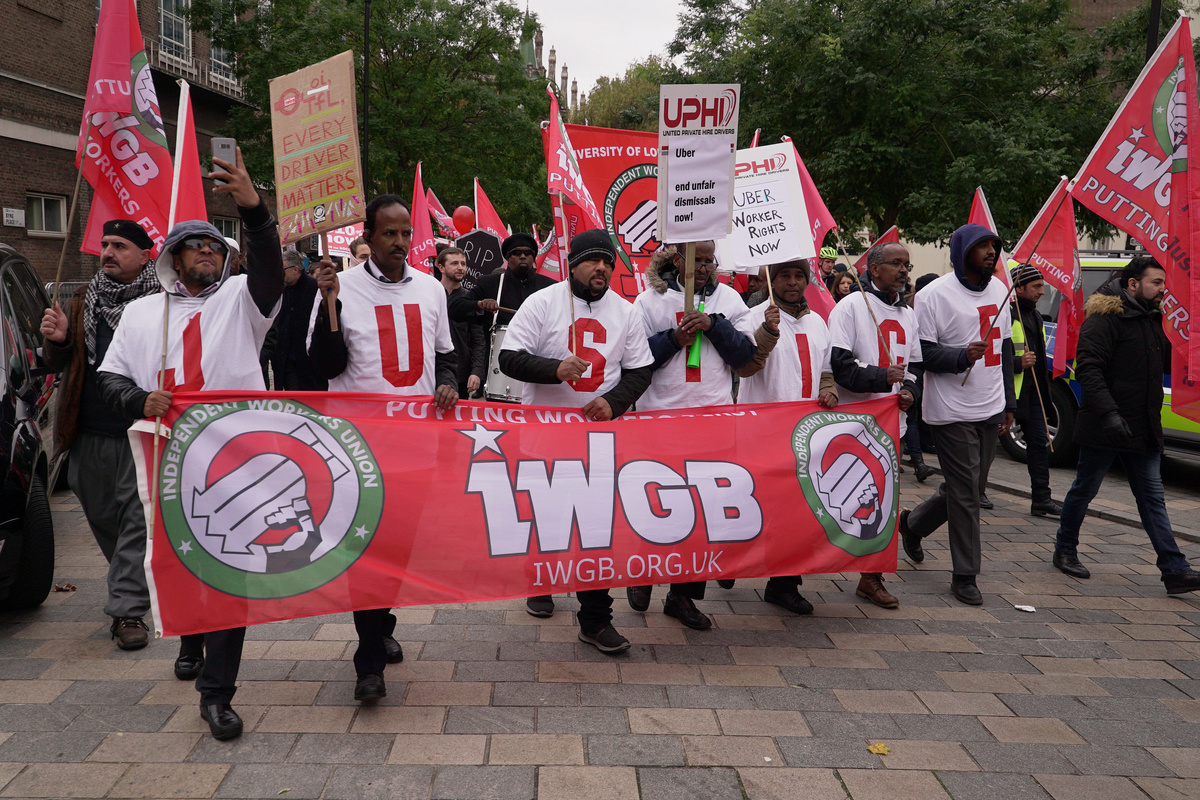
LONDON (Reuters) - Uber defended its business model at the Court of Appeal on Tuesday in the latest stage of a long-running battle over the classification of its drivers as self-employed, a designation that entitles them to few workplace rights in Britain.
The Silicon Valley-based company, which could be valued at $120 billion in a flotation, has faced protests, regulator crackdowns and license losses around the world as it challenges existing competitors and rapidly expands.
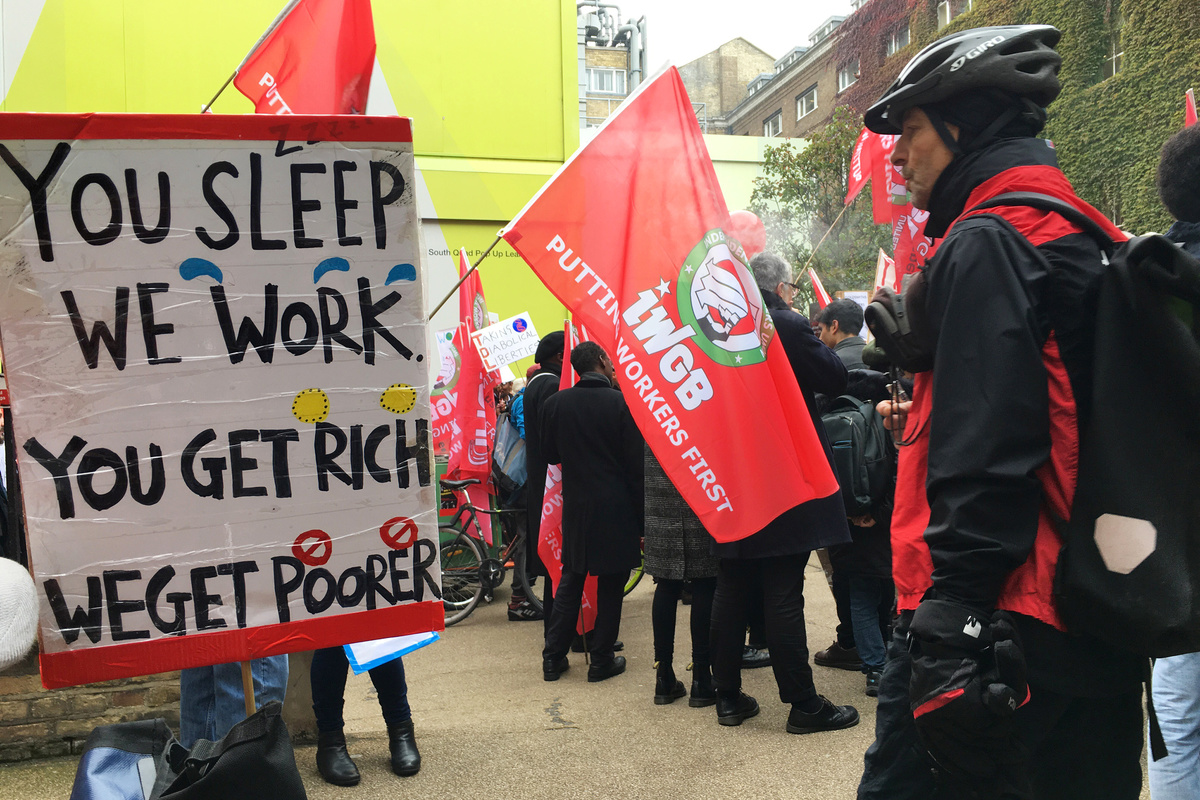
In 2016, two British drivers successfully argued at a tribunal that Uber exerted significant control over them to provide an on-demand taxi service and that they should be given workers’ rights, which include the minimum wage.
An employment appeal tribunal upheld that decision last year prompting Uber to go to the Court of Appeal.
Unions argue that the gig economy - where people often work for various firms at the same time without fixed contracts - is exploitative, whilst Uber says its drivers enjoy the flexibility and on average earn much more than the minimum wage.
It says its practices have been widely used for decades in Britain by minicabs, private hire vehicles which cannot be hailed in the street like traditional black taxis.
“Many mini-cab companies operate a business model under which drivers are self-employed, own their own cars, and bear the risk of their own expenses,” the firm said in a court document. But co-claimant in the case and chair of the drivers' branch of The Independent Workers Union of Great Britain James Farrar criticized the company.
"It's two years since we beat Uber at the Employment Tribunal, yet minicab drivers all over the UK are still waiting for justice, while Uber exhausts endless appeals," he said ahead of the hearing.
In Britain, the self-employed are entitled to only basic protections such as health and safety but workers receive the minimum wage, paid holidays and rest breaks. Uber has introduced a number of benefits for drivers in recent months.
The U.S. firm is embroiled in legal action around the world where courts have taken differing approaches to the issue of workplace rights.
The matter has risen up the political agenda in many countries as more people work for companies without fixed hours or a guaranteed income.
A march backed by several trade unions and involving cleaners, receptionists and security officers was held in central London last Tuesday.
The government launched a review into working practices last year but has yet to respond after a consultation closed in the summer. A reply is due in "due course," according to a business ministry spokeswoman.
(Editing by Stephen Addison)