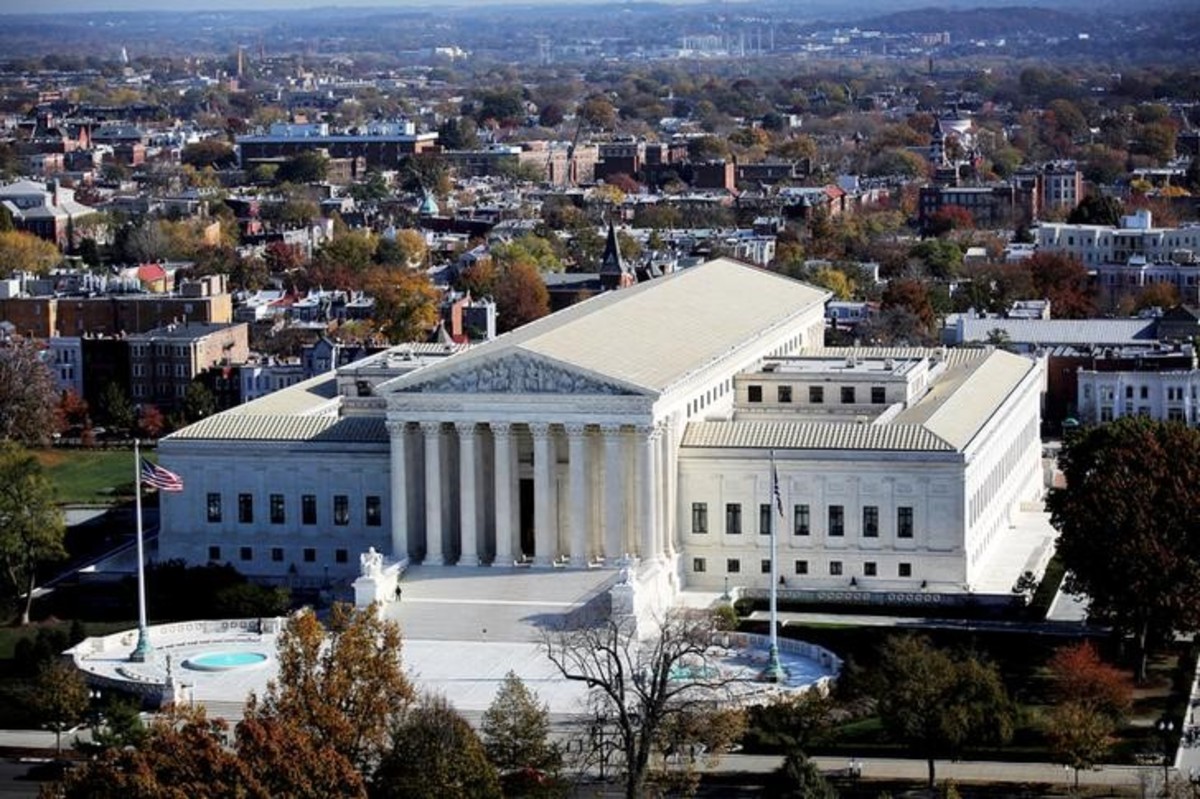
WASHINGTON (Reuters) - The U.S. Supreme Court on Monday turned away a challenge led by states and environmental groups to an Environmental Protection Agency regulation that lets government agencies transfer water between different bodies, such as rivers and lakes, without needing to protect against pollution.
The nine justices left in place a lower court ruling upholding the EPA's "water transfers rule," issued in 2008 by Republican former President George W. Bush's administration, that exempted such transfers from a national water discharge program aimed at curbing pollution.
Under the landmark Clean Water Act, permits are required for the "discharge of any pollutant" into "navigable waters." Opponents of the EPA rule said water transfers can pollute otherwise pristine water bodies and should require permits.
The New York-based 2nd U.S. Circuit Court of Appeals last year ruled that the EPA had acted reasonably in 2008 in adopting the rule over the objections of environmental groups.
A coalition of seven states led by New York and environmental groups led by Riverkeeper Inc appealed that ruling to the Supreme Court.
The appeals court overturned a 2014 ruling by a federal judge in New York who ordered the agency to go back to the drawing board on one aspect of the 2008 regulation, which exempts transfers from the national water discharge permit program that is administered by the EPA.
Some local government entities, such as the South Florida Water Management District and New York City, supported the regulation in part because obtaining permits and staying compliant is costly. They said no permits should be required because water is merely being transferred from one place to another and pollutants are not being added.
Business interests that depend on government-funded water management systems also supported the rule.
As well as pitting New York state against New York city, the rule also divides states, with a group of 11 Western states led by Colorado backing the EPA.
The Supreme Court has been asked before to decide the underlying legal question of whether permits are required for water transfers but has yet to rule on it.
(Reporting by Lawrence Hurley; Editing by Will Dunham)