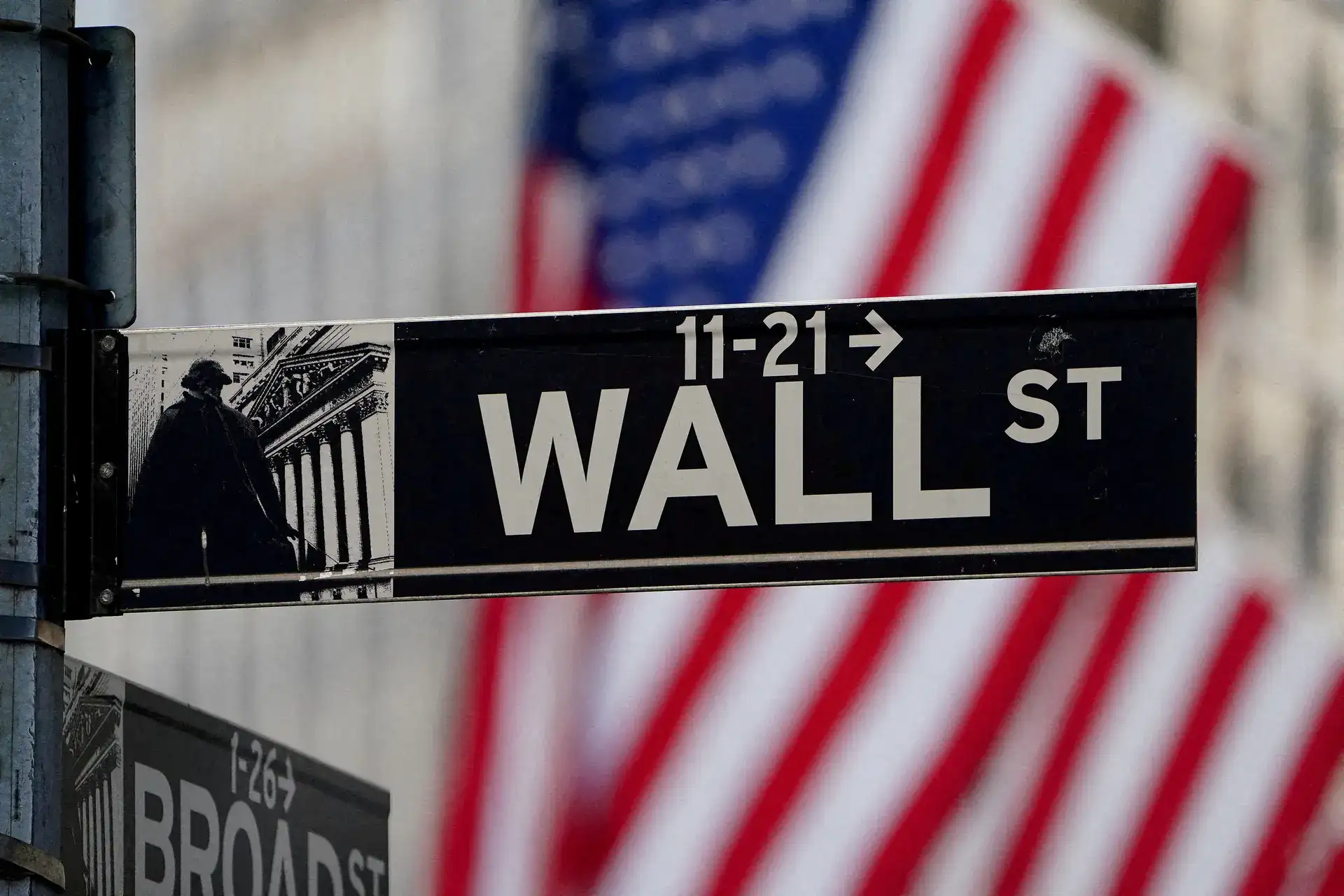
U.S. stock market is set to witness major correction? That's the apprehension investors are currently having as the artificial intelligence boom accelerates in the Wall Street, stock market concentration is reaching historic proportions – and not just in the U.S. where tech megacaps like Nvidia and Alphabet dominate. Increasingly, top-heavy indices are a feature of global equity markets, not a bug.
The rise of the "Magnificent Seven" U.S. tech giants has amplified equity market concentration. The top 10 U.S. stocks currently account for 33 per cent of the overall market's value, according to Morgan Stanley analysts, and 37.5 per cent of the MSCI USA index.
It's even more extreme in some other tech-heavy markets. The top single stocks in South Korea and Taiwan – Samsung and TSMC – account for around 20 per cent and 40 per cent, respectively, of their benchmark indexes, Morgan Stanley figures show. In fact, these two companies alone account for a fifth of the entire MSCI Emerging Markets Index, which covers 24 countries.
So should investors be worried? It depends.
On the one hand, market concentration can help lift all boats on the way up, as we are seeing today. Average annualized U.S. equity returns in times of increasing concentration since 1950 have been notably higher than during periods of declining concentration, Morgan Stanley's team notes, Jamie McGeever told Reuters.
But it's the down leg that matters.
The current period of concentration is mostly tied to one theme: AI. This means the S&P 500 and Nasdaq – and a growing number of indices in Asia – have essentially become directional bets on the success of this nascent technology.
In turn, if earnings and guidance from just a few tech giants fall short of expectations, the top-down drawdown could be as indiscriminate as the rally, potentially turning into a disorderly rout, as battle-scarred investors know all too well.
And given sky-high AI expectations, a market correction need not require AI to flop. The technology simply needs to be less revolutionary than expected.
Investors in an S&P 500 index fund may think they are diversified, but this is mostly an illusion. As RBC Wealth Management analysts note, more than $40 of every $100 invested goes into just 10 companies. This "passive concentration trap" creates a feedback loop where fund inflows lift the biggest stocks and increase their weights, regardless of whether their fundamentals justify it.
Perhaps an inflection point is near. Analysts at RBC note that the market-cap-weighted S&P 500 is outperforming its equal-weighted counterpart by more than 30%, a historically wide margin.
"This evolution requires a recalibration of assumptions," they wrote earlier this year. "The index has been a resilient benchmark, but its top-heavy structure warrants scrutiny."
Look at U.S. chipmaker Intel and its trajectory since the U.S. government took a 10% stake last August. Its shares have more than trebled in the last six weeks, taking its market cap to more than $600 billion from $185 billion.
Even if governments aren't taking direct ownership stakes, they may be less apt to crack down on market giants if they are concerned about whether their tech companies can compete with peers in rival countries.
Of course, the more top-heavy markets get, the greater the risk of a disorderly reversal. Properly gauging that risk may become increasingly challenging though, as the global economy appears to enter a new phase where the last century's rules no longer apply.