Where is the United States heading? The world is closely watching the U.S. presidential election in November.
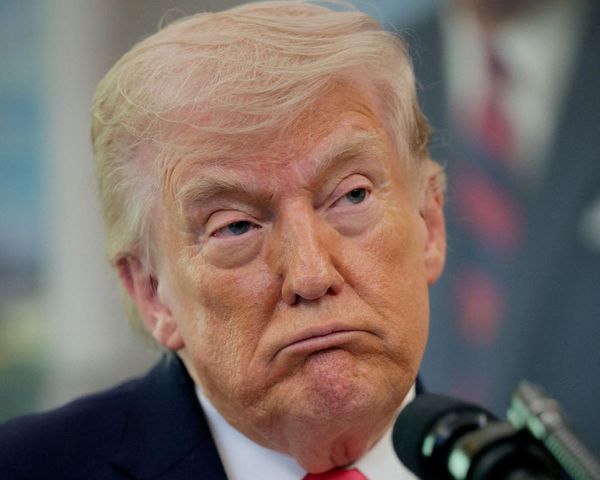
A verdict will be handed down on U.S. President Donald Trump, who proclaims an "America First" policy and displays an unpredictable and impulsive political style.
The international order focusing on U.S. military and economic power has been shaken, and cooperation among its allies, as well as wider multilateral cooperation, has been experiencing a conspicuous decline. In the U.S.-China conflict, common ground cannot be seen. The world situation is increasingly uncertain.
Trump puts top priority on his reelection and makes efforts to produce "results" that he can use to appeal to his supporters. As U.S. foreign policy is thus promoted from that perspective, it will be unavoidable for every other country to be affected.
Something to be wary of is that North Korea may take advantage of a chaotic situation to repeat its military provocations and try to win concessions, such as a lifting of sanctions.
North Korean leader Kim Jong Un, who is the chairman of the Workers' Party of Korea, warned at a plenary session of the party's Central Committee at the end of last year that Pyongyang will hold a "new strategic weapon." There is a fear that North Korea could change its current position of not producing or using nuclear weapons nor conducting nuclear tests.
Since the U.S.-North Korean summit meeting in 2018, Pyongyang has refrained from nuclear tests and test-launching intercontinental ballistic missiles. However, that does not mean Pyongyang's nuclear threat has been reduced.
It is vital to maintain the system of sanctions on North Korea until Kim takes a step toward the abandonment of its nuclear development. The history of past agreements on North Korea's denuclearization should not be forgotten, such as the Agreed Framework reached between the United States and North Korea in 1994 and a joint statement adopted after six-party talks in 2005. Both were broken by North Korean betrayal.
It is necessary that the international community strengthen its solidarity and insist that Pyongyang refrain from military provocations. Among other things, it is indispensable for both the United States and North Korea to make efforts to accumulate concrete measures toward denuclearization through their working-level negotiations.
The United States has promoted its sense of value -- spreading to the world democracy, the rule of law and free trade, and sharing prosperity -- since the end of World War II. But that sense of value is being shaken under Trump.
It is Trump's perspective that China has abused multilateral frameworks and that the United States has suffered a loss as a result. In a quest for U.S. profits, it is better to conclude new agreements that are favorable for Washington through bilateral negotiations. Stationing the U.S. military overseas and intervening in conflicts are also up for reconsideration as not being worth the cost.
Admittedly, attempts by prior U.S. administrations to encourage China to adopt democracy and fair trade did not succeed. People in the United States have become weary of its wars against terrorism in Afghanistan and in the Middle East.
Such circumstances may explain why Trump, despite continuing with his highly unconventional words and deeds, securely enjoys a certain amount of support.
It is quite reasonable for governments and people to consider, first and foremost, the interests of their own countries. This is true not only in the United States. Yet international cooperation does not necessarily run counter to national interests.
Multilaterally promoting rule-based trading systems, measures to cope with global warming and efforts to prevent terrorism will lead to more benefits for all countries.
Regional stability maintained through alliances is also in the interest of the United States. The present state of affairs -- in which Trump is damaging the U.S. alliances with Japan, with South Korea and with the North Atlantic Treaty Organization, by unilaterally demanding that allies assume more burdens -- cannot be overlooked.
Historically, the United States has repeatedly chosen policies of active intervention in international affairs on the one hand, or isolationist policies on the other. It took the lead in World War II and in the establishment of the United Nations, but was hit hard by the Vietnam War and became inward-looking. With the end of the Cold War and in the Gulf War, the United States demonstrated its overwhelming presence once again.
The diversity of its people gathered from various racial and ethnic backgrounds and its frontier spirit of boldly challenging technological innovation are strengths that no other country but the United States has.
Just as the global community is in a period of change, now is the time when the resilience of the United States is being put to the test. If Trump's assertion spreads widely and the whole nation turns its back on international cooperation, it will become even more difficult, and take more time, to correct its course of action.
The U.S.-Russia framework of nuclear disarmament has been unable to deal with China's expansion of armaments and is now on the brink of collapse. Building a new system of disarmament to fit the changing times is necessary.
The Nuclear Nonproliferation Treaty (NPT) Review Conference to be held this year is also a point at issue. There is a possibility of nonnuclear countries growing resentful of stagnation in nuclear disarmament, thus intensifying their confrontation with nuclear nations. Should the conference break down, the NPT's credibility will decline further.
The important thing is that the United States and Russia, first of all, must avoid a nuclear arms race and make efforts in confidence-building and disarmament negotiations. On top of these efforts, those two countries plus China must explore a new trilateral disarmament system.
The advancement in military technologies is remarkable. Schemes have taken concrete shape such as conducting operations in multiple domains simultaneously, particularly in outer space and cyberspace, together with operations on land, at sea and in the air. Development of weaponry utilizing artificial intelligence and of unmanned military aircraft is also advancing.
Existing regulations have been unable to keep up with the sophistication and complexity of arsenals. It is feared that a situation may unfold in which the exchange of attacks and counterattacks escalates beyond expectation. The mapping out of international rules is a matter of urgency.
-- This article appeared in the print version of The Yomiuri Shimbun on Jan. 3, 2020.
Read more from The Japan News at https://japannews.yomiuri.co.jp/