A last-minute agreement was reached on Friday between Japan and South Korea to maintain a military information-sharing pact for the present, one day before the pact was due to expire following Seoul's earlier decision to scrap it.
As a result, further deterioration of their relationship was avoided, and security cooperation among Japan, the United States and South Korea could also be maintained. The next focal point is how they will deal with the issue of South Korean former wartime requisitioned workers.
The Japanese and South Korean governments have continued behind-the-scenes negotiations at a foreign vice-ministerial level to avoid the expiration of the General Security of Military Information Agreement (GSOMIA).
But the negotiations came to a standstill when the gap could not be bridged -- South Korea tried to link Japan's tightened controls on exports to South Korea with the expiration of GSOMIA, while Japan claimed that they are separate issues. On Wednesday, the Japanese government was preparing for a situation in which there would be no way to stop Seoul's decision to scrap the pact.
It was on Thursday that progress could be seen on the GSOMIA issue. South Korea informed Japan of its intention to suspend a dispute settlement procedure at the World Trade Organization over Japan's enhanced controls on exports of semiconductor-related materials to South Korea. Japan considered the move to be "Seoul's compromise," according to sources. On Friday morning, the South Korean side informed Japan of its decision to maintain the pact.
A senior Japanese government official said: "U.S. pressure had a great impact [on Seoul's compromise]. The United States put pressure on South Korea by saying even such things as, 'This is about the relationship between the United States and South Korea. If you scrap the pact, it is not known how President [Donald] Trump will act.'"
Since August when South Korea decided to scrap the pact, Japan has emphasized its attitude of never compromising, with Japanese government officials saying that South Korea "made a wrong judgment." Japan aimed at resetting the conventional Japan-South Korea relationship in which Japan makes a compromise to maintain the relationship whenever a concern is raised, putting an end to South Korea's position that if Seoul asserts itself, Tokyo will accept the demand.
The administration of South Korean President Moon Jae-in overturned the 2015 bilateral agreement that declared a "final and irreversible solution" to the comfort women issue. On the issue of wartime requisitioned workers, the administration is also working on scrapping even the Japan-South Korea agreement on the settlement of problems concerning property and claims and on economic cooperation that was concluded in 1965 when the two countries normalized diplomatic ties.
With Seoul's compromise on GSOMIA, Japan's sense of crisis over the bilateral relationship being upended at its very foundation cannot be erased.
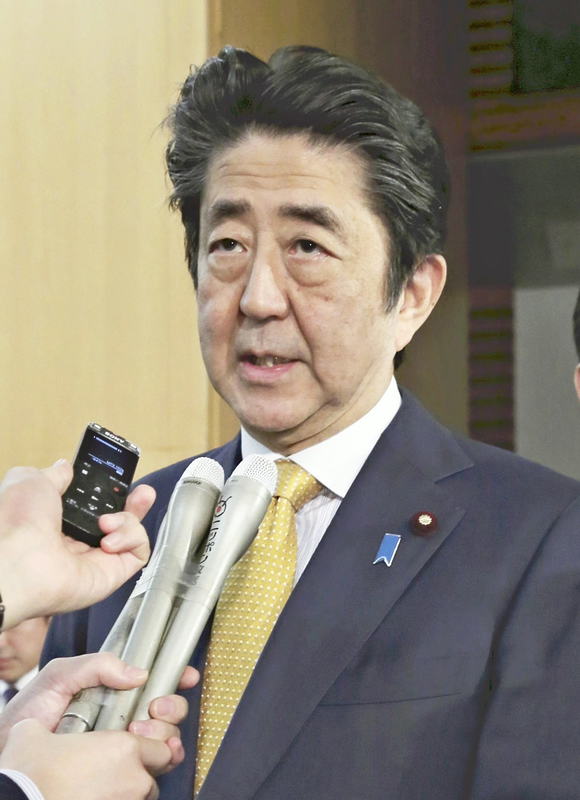
Japan likely accepted South Korea's about-face because it wants to use a meeting between Prime Minister Shinzo Abe and Moon on the sidelines of the Japan-China-South Korea summit meeting scheduled for late December in Chengdu, Sichuan Province, China, as an opportunity to improve the bilateral relationship.
U.S. pressure on Seoul
The last-minute agreement between the two countries represents a great compromise on the part of South Korea and comes against a backdrop of U.S. pressure to ask Seoul to maintain the pact.
The United States attaches importance to cooperation among Japan, the United States and South Korea as a deterrent against China and North Korea. The expiration of GSOMIA, which constitutes the basis for confidence-building between Japan and South Korea, could pose an obstacle to the U.S. strategy for East Asia.
Some senior officials in the South Korean government judged that if Seoul ignored the U.S. request, it would be excluded from U.S.-North Korea negotiations over Pyongyang's denuclearization, and it would be difficult to resume the economic cooperation projects between South Korea and North Korea that the Moon administration aims for, according to sources.
According to a survey conducted by Gallup Korea on 1,001 respondents across South Korea from Tuesday to Thursday, 51 percent support scrapping the pact, far exceeding the 29 percent who are against it. For the Moon administration, which will face a general election in April next year, there is a big risk that Seoul's compromise on this occasion will draw public criticism.
Therefore, the South Korean government is preparing for such a risk.
Concerning Japan's move to remove the tightened export controls, a senior South Korean government official said, "If Japan buys time, [South Korea] will terminate [GSOMIA] at a certain point."
Wartime labor issue still unclear
The next focal point is how this recent decision by the two countries will lead to the improvement of bilateral ties. For that purpose, it is indispensable for them to continue working on the issue of lawsuits for wartime requisitioned workers that triggered the deterioration of the bilateral relations.
If assets of Japanese companies seized based on the rulings of labor issue lawsuits in South Korea are sold, the Japanese government intends to take countermeasures, which could inevitably see the bilateral relationship deteriorate. The move to cash in on the assets is expected to occur at the end of this year or later.
Read more from The Japan News at https://japannews.yomiuri.co.jp/