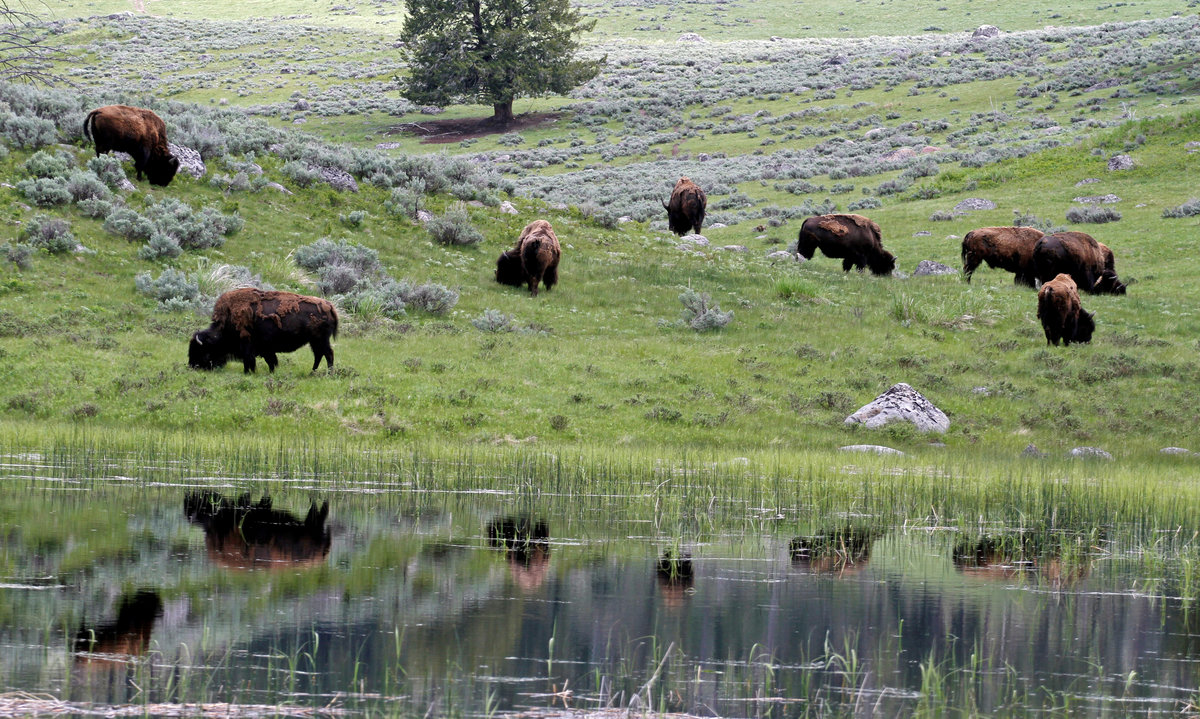
PINEDALE, Wyo. (Reuters) - A judge has ruled that U.S. wildlife managers erred in denying Endangered Species Act protection to bison at Yellowstone National Park and must reconsider extending such safeguards to America's largest pure-bred herd of wild buffalo.
The decision was welcomed on Thursday by wildlife advocates who petitioned the Obama administration in 2014 to protect bison in and around Yellowstone, where animals wandering outside park boundaries are culled for slaughter by the hundreds each year.
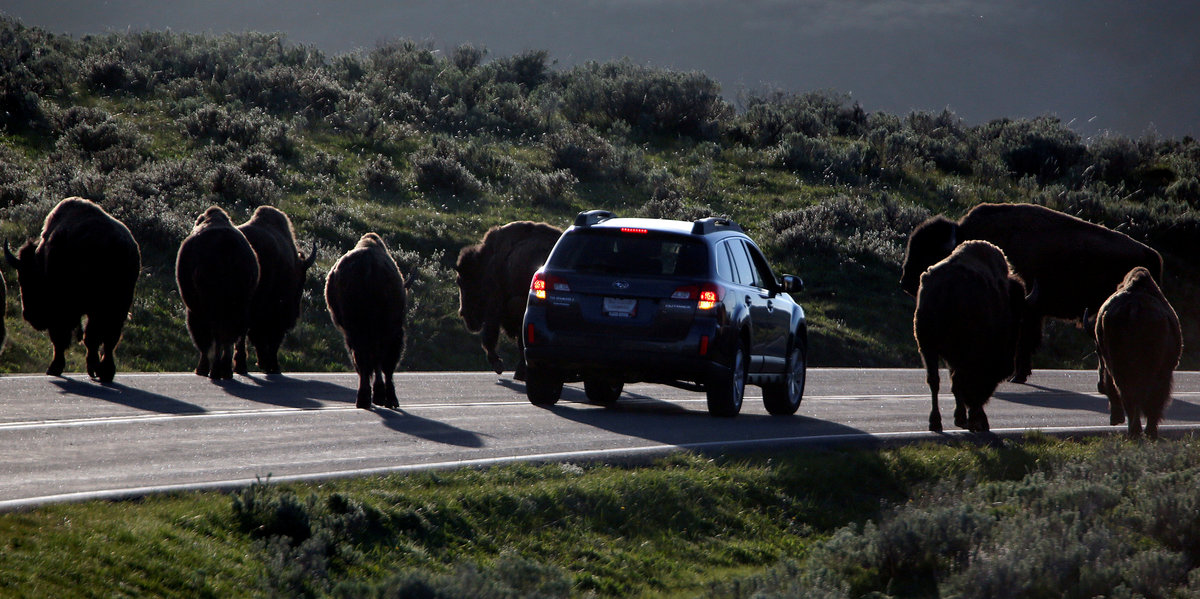
The seasonal culling is supported by ranchers in the region, particularly in Montana, concerned about exposure of livestock to disease, competition for grass and property damage from straying bison.
“This is a victory for bison,” Ken Cole, director of the Buffalo Field Campaign, told Reuters by telephone.
Officials for the U.S. Fish and Wildlife Service said they were reviewing the ruling, issued on Wednesday by U.S. District Judge Christopher Cooper in the District of Columbia.
Yellowstone's herd of 4,000-plus bison constitutes the largest and one of the last free-roaming, genetically pure groups of an animal that once roamed North America by the millions before being hunted to near extinction in the late 1800s.
Conservation groups have argued that endangered species status is necessary to ensure the long-term survival of wild bison, also widely known as buffalo, and help restore the creature to more of its historic natural range.
The bison, a shaggy, hump-shouldered animal weighing up to 2,000 pounds (990 kg) and standing 6 feet (1.8 meters) tall at the shoulders, was officially designated the U.S. national mammal in 2016.
The Fish and Wildlife Service concluded in 2015 that conservation groups had failed to present sufficient evidence that the Yellowstone buffalo band was imperiled.
Cooper ruled that the Interior Department agency had erroneously failed to consider or otherwise ignored evidence indicating Yellowstone bison may be threatened or endangered.
The ruling hinged on a scientific dispute over whether there are two genetically distinct populations of bison at Yellowstone, known respectively as a central herd and a northern herd. Conservationists cited research suggesting the government’s overall target at the park of 3,000 bison was too low to prevent extinction of one or both of them.
Government biologists dismissed that research. But Cooper said the Fish and Wildlife Service was required by law to explain why it found the research irrelevant, and he ordered a new agency review of whether Yellowstone bison merit protections.
The decision has no bearing on the estimated 160,000 head of privately raised bison, most of them in the West and consisting mainly of animals that carry cattle genes and are bred for commercial production.
(Editing by Steve Gorman and Peter Cooney)