WASHINGTON _ Despite President Donald Trump's warnings that a U.S. attack on Syria may be imminent, the Pentagon moved cautiously Friday out of concern that it may not have legal justification for military action because it hasn't confirmed that Syrian forces used a banned nerve agent in an attack on civilians near Damascus last weekend.
The wariness may be aimed at restraining the White House from ordering a multiday campaign of airstrikes on multiple Syrian targets. It also could be a smokescreen to buy time while the U.S. and its allies, including England and France, move more warships and other military resources into position.
Two U.S. guided missile destroyers armed with cruise missiles are in, or approaching, the eastern Mediterranean and a U.S. carrier task force, led by the Harry S. Truman, is on the way.
Defense Secretary James Mattis has warned that wide-scale military reprisals using manned bombers could spiral into a direct clash with Russia, which has installed a network of ground-to-air missiles in Syria, or pull the Trump administration deeper into the war if Syria, Iran or other proxies respond by attacking U.S. forces in the country.
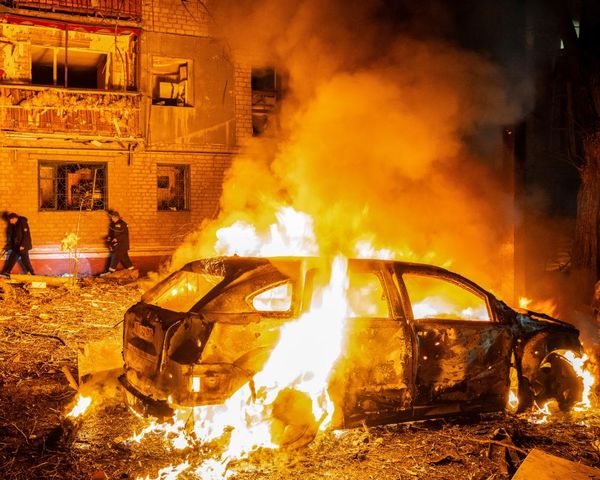
In White House meetings, Gen. Joseph Dunford, chairman of the Joint Chiefs of Staff, also has urged caution, one official said, citing the need to tailor the intensity of a U.S. response to the severity of a suspected gas attack that left 43 people dead, and hundreds wounded, in the rebel-held enclave of Douma.
The Pentagon's Central Command, which oversees U.S. military operations in the Middle East, has made heavy use of a communication channel with Russia's armed forces, called a "deconfliction line," to get a better picture of where Russian forces are deployed in Syria and to reassure Moscow that any U.S. strike will target Syrian military units, facilities and equipment involved in last Saturday's attack.
Forensic evidence from victims of that attack, including blood and urine samples, that the U.S. has received through intermediaries indicate the presence of chlorine gas, but evidence that a deadly nerve agent such as sarin also was used is less clear, two officials said on the condition of anonymity.
Heather Nauert, the State Department spokeswoman, said U.S. authorities had a "very high level of confidence" that President Bashar Assad's forces used chemical agents in Douma. "The exact kind or the mix _ that we are still looking into," she said.
Partly as a result, Pentagon officials have argued that the legal justification for retaliation may be weak. Use of any lethal chemical agent as a weapon, especially against civilians, is barred under international law, but unlike sarin, chlorine gas is not specifically prohibited by international treaty.
"There are so many unknowns that we want to make sure this is all legal and we don't go off half-cocked," said a U.S. official who spoke on the condition of anonymity.
Trump and his advisers, including his new national security advisor, John Bolton, face a conundrum.
A heavy attack involving manned bombers and missile strikes on multiple targets risks triggering a wider war, especially with Russia. But airstrikes that are too small might not send the desired signal to Assad to stop using chemical weapons.
Last April, in Trump's first military action, U.S. warships fired 59 Tomahawk cruise missiles on a Syrian airfield in response to a nerve gas attack several days earlier. In that case, officials said, there was clear evidence that Syria had used sarin _ evidence that is apparently not as clear this time.
Moreover, the Al Shayrat airfield was back in operation soon after the attack _ and Assad's military forces continued using chemical agents against civilians.
Trump, in Twitter posts in recent days, has given Syria time to move aircraft and troops out of likely targets, and provided Moscow advance warning, making it more likely its advanced air defense batteries could shoot down U.S. cruise missiles or warplanes, complicating the Pentagon's task of preparing a response.
Fact-finding teams from the Organization for the Prohibition of Chemical Weapons, an international watchdog agency based in The Hague, are expected to arrive in Douma Saturday to collect evidence. The town fell to Syrian forces after last week's bombardment, and Russian troops also have entered the area. Thousands of rebels and civilian residents have been moved.
Russia has repeatedly denied there was a poison gas attack, claiming that gruesome photographs of the victims were fake. On Friday, Russian Foreign Minister Sergei Lavrov went much further, telling a state-run news site that Moscow had "irrefutable evidence" that the gas attack was a "performance" staged by a foreign spy service. He did not identify the country or show any proof for his claim.
But Maj. Gen. Igor Konashenkov, a spokesman for the Russian ministry of defense, blamed the United Kingdom. He said London had "direct involvement," according to Russia's state news agency.
Konashenkov also said a Syrian medic who claimed to work at Douma's central hospital said the victims suffered smoke inhalation, not chemical exposure. He said a "rent-a-mob" had entered the hospital saying there was a chemical attack and begun washing each other in front of cameras. The medic insisted he "had not seen a single patient with signs of poisoning with chemicals," Konashenkov said.
The British Foreign Office dismissed Moscow's charges as "the latest in a number of ludicrous allegations from Russia, who have also said that no attack ever happened. This simply shows their desperation to pin the blame on anyone but their client: the Assad regime."
British relations with Moscow already are in a tailspin. Prime Minister Theresa May's government has accused the Kremlin of trying to murder a former Russian spy and his daughter in southern England with a military-grade nerve agent known as Novichok. The two survived the March 4 poisoning and Moscow has denied responsibility.
French President Emmanuel Macron, who has appeared as determined as Trump to respond in Syria, signaled Friday that he too had questions about the evidence _ and the timing of an attack.
"We have the proof that chemical weapons _ at least chlorine gas _ were used by Assad's regime," he said. France will respond when it will be "most effective," Macron said.
Macron has spoken to Trump several times this week and Friday he spoke to Russian President Vladimir Putin. Later, Macron said he wanted dialogue between France and Russia "to continue and intensify in order to bring peace and stability to Syria."
Putin called for a "thorough and impartial investigation" into the Douma attack, but warned of "ill-considered and dangerous steps" that have "unpredictable consequences," according to a report from the Kremlin's press service.
The finger-pointing continued during an emergency session of the United Nations Security Council Friday.
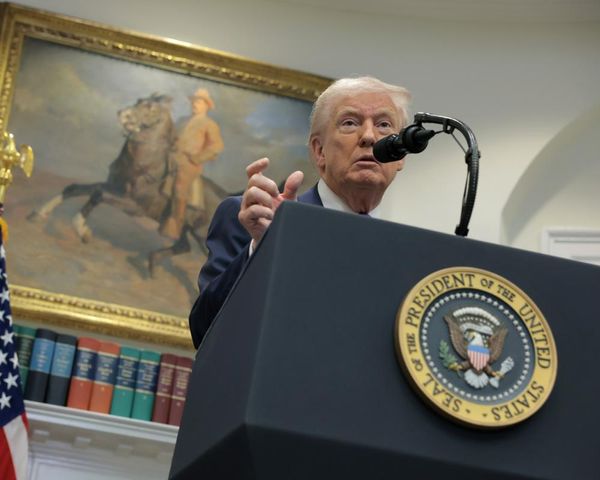
Ambassador Nikki Haley, Trump's envoy to the U.N., said Trump has not decided on a response, but said any military action would be "in defense of a bedrock international norm that benefits all nations," Haley said.
She said Assad's forces had used chemical weapons at least 50 times since the Syrian civil war began in 2011. She blamed Russia, in part, accusing it of "lies and cover-ups" that have led "to the trashing of all international standards against the use of chemical weapons."
Russia's ambassador to the U.N., Vassily Nebenzia, said in response that the U.S.' "irresponsible behavior" was "unworthy" of its status as a permanent member of the Security Council.
Top Senate Democrats, including Jack Reed of Rhode Island, Richard of Illinois and Robert Menendez of New Jersey, said Trump was sending "mixed messages" about a possible U.S. attack in Syria and called on him to make "a clear and compelling legal case" before any strikes.
"The use of U.S. military capabilities to conduct offensive action against another nation is a momentous decision that poses serious risks to the lives of U.S. military personnel involved and the possibility of escalation into a broader conflict," the senators wrote in a letter to Trump.
In testimony Thursday to the House Armed Services Committee, Mattis said he worried that Assad might retaliate for a major U.S. attack by using poison gas against the 2,000 American troops deployed in Syria.
"We have forces in the field, as you know, in Syria, and the use of chemical weapons in Syria is not something that we should assume that, well, because he didn't use them on us this time, he wouldn't use them on us next time," he said.
����
(Zavis reported from Beirut. Special correspondent Nabih Bulos in Beirut and Times staff writer Tracy Wilkinson in Washington contributed to this report.)