WASHINGTON_Nearly six months after President Donald Trump and North Korean leader Kim Jong Un embraced at a Singapore summit and made vague promises of peace and prosperity, talks have flatlined and Pyongyang has taken no significant steps to reduce its nuclear arsenal or production facilities.
Fears of all-out war clearly have eased in northeast Asia since the two leaders stopped trading crude insults and invective, as they had in the months before the June 12 summit. And U.S. officials point to confidence-building measures, including North Korea's suspension since last spring of additional nuclear weapons and ballistic missile tests.
But denuclearization, the primary U.S. goal, appears as distant as ever, analysts and diplomats say. The on-again, off again diplomatic process appears to have foundered and experts say North Korea is secretly expanding its nuclear and missile capabilities, just as it did during previous U.S. attempts to negotiate with the regime since the mid-1990s.
On Nov. 7, North Korean officials abruptly called off a planned meeting in New York with Secretary of State Mike Pompeo and threatened to resume nuclear testing unless the Trump administration lifts sanctions. Working-level meetings also have ground to a halt, State Department officials said.
Kim may prefer to wait for a second summit with Trump, who told the United Nations on Sept. 24 that he would meet the North Korean dictator again "very soon." The White House has not announced any date or location for that meeting.
The North Koreans "don't want to deal with bureaucrats. They think they can get the best deal possible" directly from Trump, said Sue Mi Terry, a former CIA analyst specializing in the Korean peninsula who now is at the Center for Strategic and International Studies, a nonpartisan think tank in Washington.
Pyongyang has stepped up pressure in other ways. The state-run North Korean new agency reported this month that Kim personally oversaw the testing of what it called an "ultra-modern" cutting-edge tactical weapon that took seven years to develop. It provided no details of the alleged weapon.
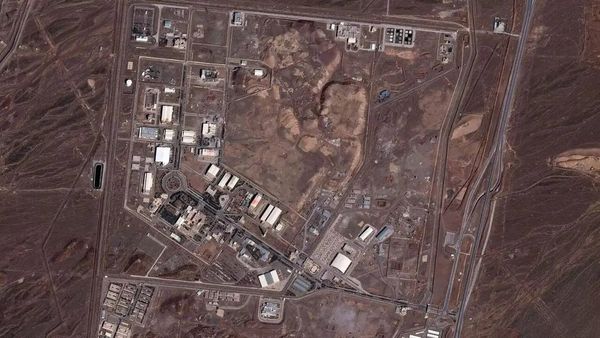
More significantly, in August, the United Nations nuclear watchdog agency, the International Atomic Energy Agency, reported that North Korea was taking action consistent with enrichment of uranium and construction at its main nuclear site. It called the "further development" of the nuclear program "a cause for grave concern."
Still, in building up its missile facilities, North Korea is "raising the price" on any potential deal with the U.S. by expanding the list of items it could use to demand concessions from the Trump administration, said Bruce Klingner, a former CIA deputy division chief for Korea who is now senior research fellow at the Heritage Foundation, a conservative think tank in Washington.
"You don't build them up to turn around and abandon them," he said.
Adding to the challenge, U.S. officials say, is that China has eased its enforcement of U.N. economic sanctions on North Korea since the Singapore summit _ in part a reflection of Trump's acrimonious relations with Beijing. China is North Korea's largest trading partner, and Kim has repeatedly met with Chinese President Xi Jinping this year.
So far, North Korea has balked at handing over a detailed inventory of its nuclear arsenal and production facilities, a key U.S. demand, saying its enemies would use it as a targeting list. IAEA inspectors would require a detailed inventory to inspect and confirm any claims of denuclearization.
Vice President Mike Pence recently said the U.S. goal in a second summit would be to develop a plan for a nuclear inventory and international inspections as a starting point for ultimately dismantling North Korea's nuclear weapons.
"I think it will be absolutely imperative in this next summit that we come away with a plan for identifying all of the weapons in question, identifying all the development sites, allowing for inspections of the sites and the plan for dismantling nuclear weapons," Pence said on NBC Nov. 15.
Less clear is what concessions Trump may offer or agree to if a summit occurs.
In addition to lifting U.S. sanctions, Kim wants an official end to the Korean War, the early Cold War conflict in which a U.S.-led U.N. force fought communist North Korea and its Chinese backers into a stalemate. Fighting was suspended in 1953 but the war never officially ended, and the Korean peninsula has been divided since.
The U.S. keeps about 28,000 troops in South Korea. Ending the war could increase pressure to withdraw those forces, and jeopardize the American military and diplomatic alliance with Seoul, one of the United States' closest allies.
South Korean President Moon Jae-in has been a cheerleader for detente with North Korea, raising concerns in Washington that he might let Pyongyang drive a wedge between the two allies. Washington is especially worried that Seoul may ease up on sanctions targeting the North.
South Korea's unification minister, Cho Myoung-gyon, sought to allay those fears in a recent address at the Wilson Center think tank in Washington. He said South Korea has emphasized cultural exchanges and family reunifications, but economic sanctions would remain as long as the nuclear threat exists.
"Korea and the U.S. (are) on the same page to achieve the same goal," Cho said.
Officials in Seoul said long-broken railway lines between the North and South should be reconnected by year's end. A South Korean envoy told reporters that the Trump administration gave its blessing to the project. Cho said Kim may visit Seoul within the year, the latest in a series of meetings he's had with Moon.
Publicly, the Trump administration has remained optimistic about its dealings with North Korea and defended its pursuit of denuclearization.
Pompeo said Oct. 7, after a visit to Pyongyang, said Kim had agreed to allow U.N. inspectors into the country to inspect the Punggye-ri nuclear test site, which it claims it destroyed in May by blowing up several tunnels. No inspections have taken place.
"As soon as we get it logistically worked out, Chairman Kim said he's ready to allow them to come in," Pompeo said at the time. "There's a lot of logistics that will be required to execute that."
State Department spokeswoman Heather Nauert said administration officials "go into this with our eyes wide open" and that while there is "work that's left to be done," progress has been made.
"A lot of people like to pooh-pooh that idea," she said. But, "we have still come a long way from where we were in our relationship and our posture with North Korea in the past year. We see that as progress."