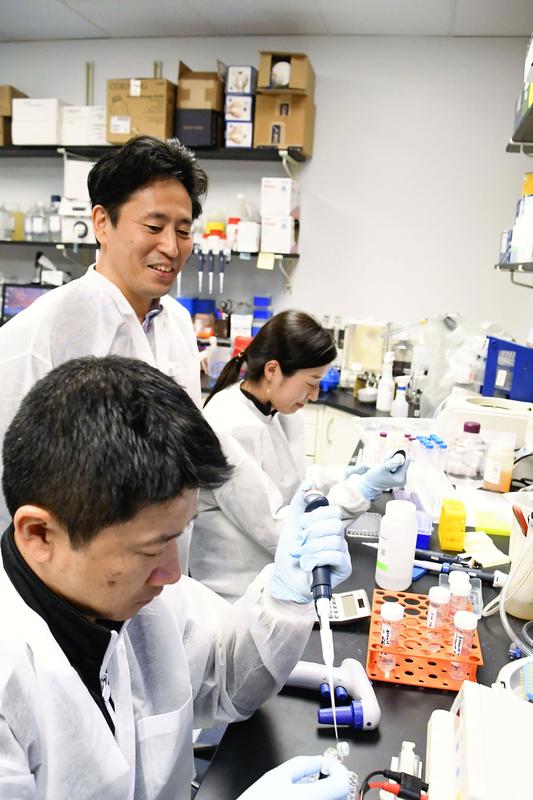
WASHINGTON -- A U.S. pharmaceutical start-up led by a Japanese researcher plans to launch a clinical trial of a new malaria vaccine in the United States this May.
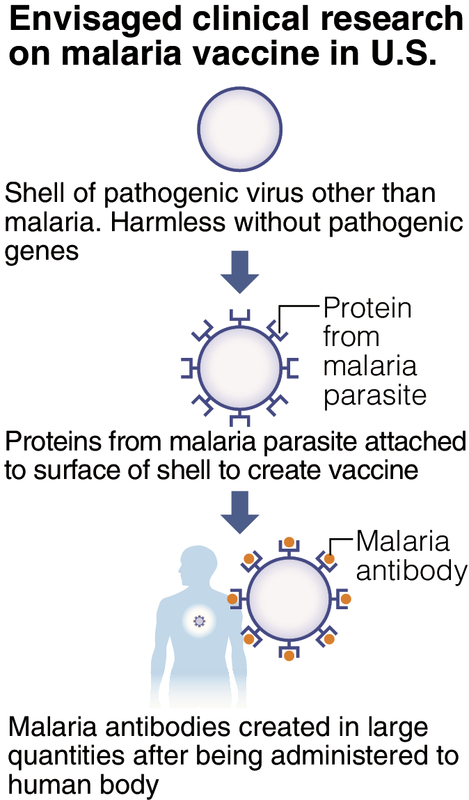
The company has developed the vaccine with its own method of attaching proteins from a malaria parasite to the surface of a different but empty pathogenic virus. It aims to establish a way to prevent malaria, which more than 200 million people are infected with each year across the globe.
Malaria continues to be rampant in tropical and subtropical areas. Multiple vaccines are in development, but no vaccine has been put into full-fledged practical use.
The clinical trial will be conducted by VLP Therapeutics, LLC in the eastern U.S. state of Maryland. Wataru Akahata, 45, a former senior researcher at the U.S. National Institutes of Health (NIH), serves as chief executive officer of the company.
At NIH, Akahata conducted research on the virus that causes ckikungunya fever, an infection with symptoms of high fever and headache that typically occurs in such regions as Africa, and developed a technology to create a harmless outer shell of the virus.
Akahata has also found that a malaria antibody can be created after a vaccine -- created by densely attaching proteins of a malaria parasite to an empty virus -- is administered to animals.
As the safety of the vaccine has been confirmed in monkeys, the U.S. Food and Drug Administration approved in late January the company's planned clinical trial. In the trial, which is scheduled to start in May, the vaccine will be given to about 30 people to examine whether they will be infected with malaria after being bitten by malaria-infected mosquitos. If the effectiveness of the vaccine is confirmed, the company will conduct clinical research on a large scale.
After obtaining a doctoral degree at Kyoto University, Akahata began his study at NIH in 2002 and founded VLP Therapeutics in 2013. During his graduate school days at Kyoto University, he saw AIDS patients with his own eyes when conducting field research on HIV viruses in Cameroon. From this experience, he continues to make efforts in research, saying, "I want to develop drugs to treat diseases that have no cure."
Read more from The Japan News at https://japannews.yomiuri.co.jp/