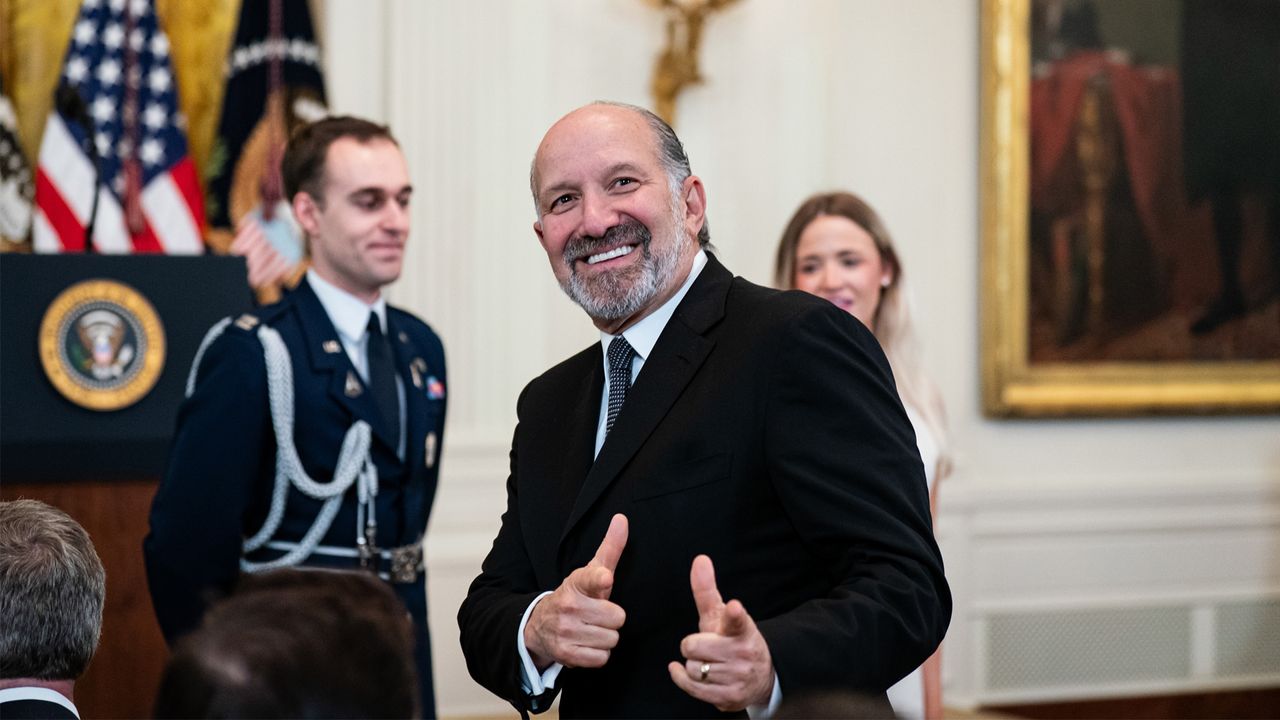
It's been four months since President Donald Trump lifted the ban on Nvidia selling its H200 AI chips to China, but Commerce Department Secretary Howard Lutnick says that the company still has yet to sell one to Chinese companies. According to Reuters, Lutnick said Beijing is making it difficult for Chinese companies to get permission to import these chips, as the Chinese Communist Party is focused on supporting its domestic semiconductor industry.
"The Chinese central government has not let them, as of yet, buy the chips, because they’re trying to keep their investment focused on their own domestic industry," Lutnick said. "We have not sold them chips as of yet."
Lutnick made the same statement in late February during a House hearing, when asked about the status of H200 sales. However, Nvidia claimed that it already received orders and export licenses for multiple Chinese customers at GTC 2026 last month. These conflicting statements make the current situation unclear — especially as it’s also been reported that AI chip exports are bottlenecked at the Bureau of Industry and Security, where undersecretary Jeffrey Kessler has reportedly been personally reviewing each individual application.
The U.S. is finally allowing Nvidia to export its chips to China again, with a 25% fee, and many major Chinese firms such as Alibaba and ByteDance were reportedly ready to order hundreds of thousands of Nvidia's AI GPUs. However, Beijing has called for its customs officials to block H200 imports and has essentially only allowed universities and R&D labs to acquire them. This is not surprising, as China has been pushing domestic companies to purchase locally-manufactured chips from Huawei, Alibaba, Baidu, Cambricon, Moore Threads, and others.
This is unwelcome news for Nvidia CEO Jensen Huang, as the company’s market share in China has fallen to under 60% — a big drop from the 95% share it had before the sanctions. Huang got into a heated discussion during a podcast with Dwarkesh Patel, disagreeing with a total ban of AI chip exports to China and reiterating that the the U.S. government should not let Chinese AI chips dominate over U.S. manufacturers just to make it harder for Chinese researchers to build their own AI models on the U.S. tech stack.
Despite the limitations and uncertainties, demand for H200 chips is still high in China — even though it’s behind the company’s latest Blackwell and upcoming Vera Rubin AI GPUs. It has gotten to the point that some firms are considering purchasing them on the black market.