(Reuters) - A U.S. appeals court on Monday allowed a research center affiliated with the Massachusetts Institute of Technology and Harvard University to keep patents potentially worth billions of dollars on a groundbreaking gene editing technology known as CRISPR.
The U.S. Court of Appeals for the Federal Circuit affirmed the validity of the Harvard and MIT patents, rejecting a challenge brought by a rival team of researchers associated with the University of California at Berkeley and University of Vienna in Austria.
Shares of Cambridge, Massachusetts-based Editas Medicine Inc, a biotechnology company that licenses Harvard and MIT's CRISPR-related patents, rose nearly 7 percent after the ruling before giving back most of those gains and was up 1 percent at $30.56.
CRISPR allows scientists to edit genes by using biological “scissors” which can find and replace selected stretches of DNA.
The technology has been hailed as a scientific breakthrough that could lead to cures for diseases driven by genetic mutations or abnormalities and also have applications for agricultural crops.
The Broad Institute, the biological and genomic research center affiliated with MIT and Harvard, said in a statement that the ruling was correct and that it was "time for all institutions to move beyond litigation" to "ensure wide, open access to this transformative technology."
Charles Robinson, an in-house lawyer at the University of California, said the institution was evaluating further litigation options. Robinson also said the university has "dominant" patent applications covering the use of CRISPR.
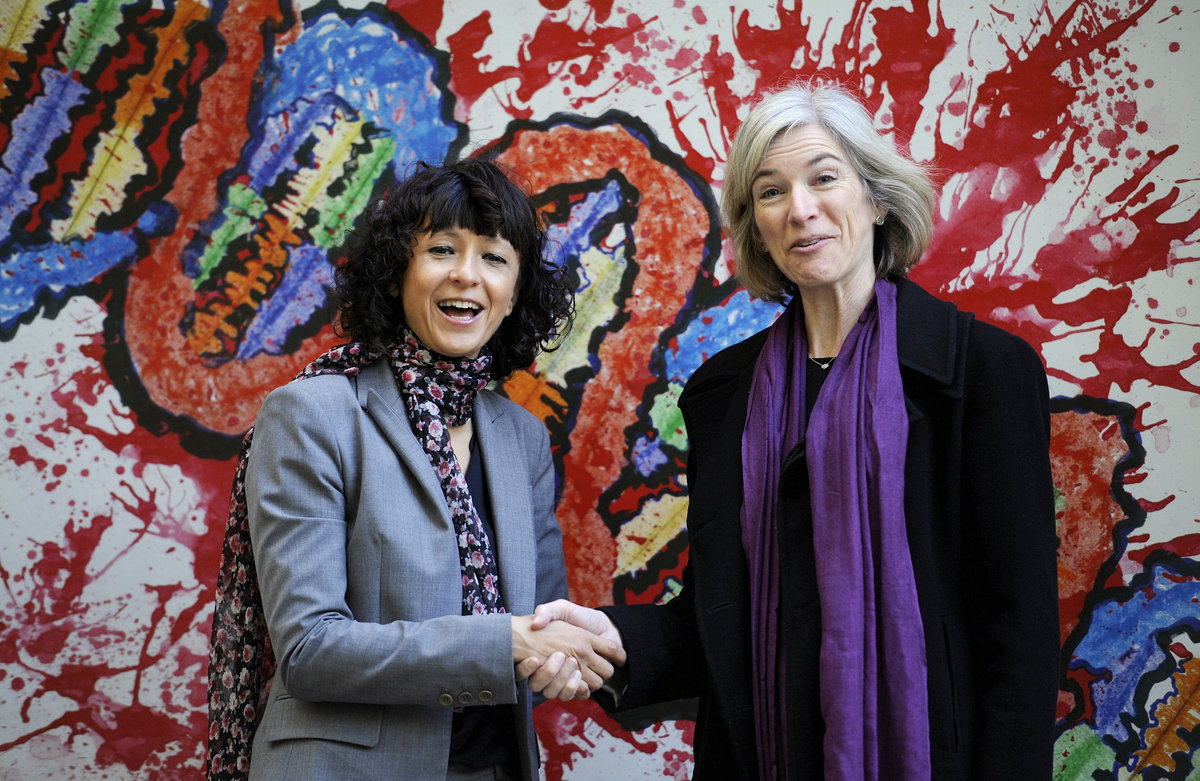
In 2012, a research team led by Berkeley’s Jennifer Doudna and Vienna’s Emmanuelle Charpentier was first to apply for a CRISPR patent.
A team at Harvard and MIT's Broad Institute applied for a patent months later, opting for a fast-track review process. It became the first to obtain a CRISPR patent in 2014, and has since obtained additional patents.
In April 2015, Berkeley petitioned the Patent Trial and Appeal Board to launch a so-called interference proceeding, claiming the Broad patents covered the same invention as its earlier application.
Broad countered that its patent represented the real breakthrough because it described the use of CRISPR in so-called eukaryotic cells, which include plant and animal cells, for the first time.
Monday's decision affirmed a February 2017 ruling by the patent court siding with Broad.
(Reporting by Jan Wolfe; Editing by Bill Berkrot)