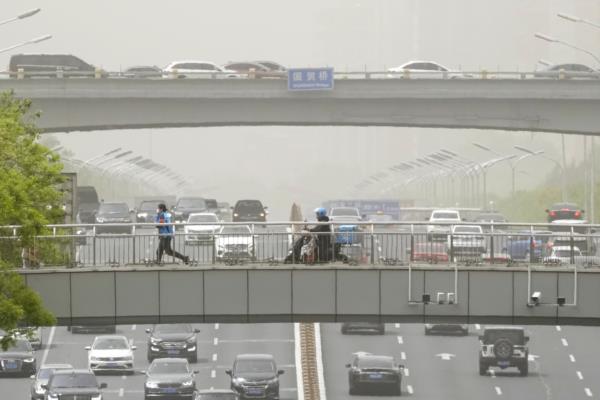
The United Nations General Assembly has designated the years 2025 to 2034 as the United Nations Decade on Combating Sand and Dust Storms. These extreme weather events are on the rise and pose a threat to health and economies across regions from central Africa to northern China.
The initiative, introduced by the Group of 77, a coalition of 134 developing countries and China, aims to address the negative impacts of sand and dust storms through international and regional cooperation.
A recent report by the United Nations Convention to Combat Desertification highlighted a significant increase in the frequency of sand and dust storms in recent years. These storms can lead to respiratory illnesses, crop and livestock loss, and desertification, although the documentation of their impact remains limited.
The report estimated that approximately 2 trillion tons of sand and dust enter the atmosphere annually, primarily in dry lands and regions with sparse vegetation. While natural conditions contribute to the majority of emissions, factors such as droughts and climate change exacerbate the issue.
Human activities, including unsustainable land management and water use, account for at least 25% of global dust emissions, according to the report.
As part of the newly adopted initiative, the UN Food and Agriculture Organization will promote mitigation practices in affected countries, such as sustainable land use management, agroforestry, and land restoration programs.
The resolution also emphasizes the importance of global cooperation in enhancing early warning systems and sharing weather information critical for forecasting sand and dust storms.
The General Assembly's resolution coincides with the upcoming International Day of Combating Sand and Dust Storms on July 12, established last year. The day aims to raise public awareness about the significance of combating these storms for public health, land use improvement, food security, livelihoods, and climate change resilience.
For more climate-related news, visit AP’s climate coverage.