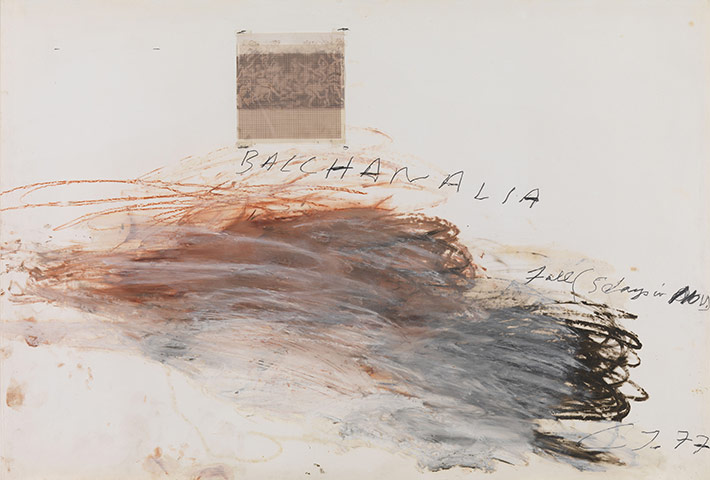
Like a southern dandy collapsing of exhaustion after dancing all night at the Charleston ball, Twombly – who is indeed a southerner, born in Lexington, Virginia in 1928 – lets fall a handful of leaves, brown and black windswept colours full of indescribable sadness and acceptance. The picture collaged on to his drawing is Poussin's Triumph of Pan Photograph: Dulwich Picture Gallery
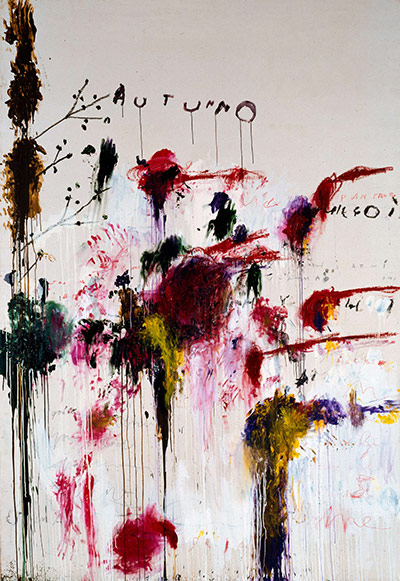
Tottering towers of colour, floating islands of colour, streams and rivulets of colour – the greatness of Cy Twombly as a painter lies in his architecture of colour and space. In this painting, the eruptions of heady purples and darkening greens hang in a huge empty void. That dazzling emptiness makes the chromatic flushes seem precious, intense and vulnerable Photograph: Dulwich Picture Gallery
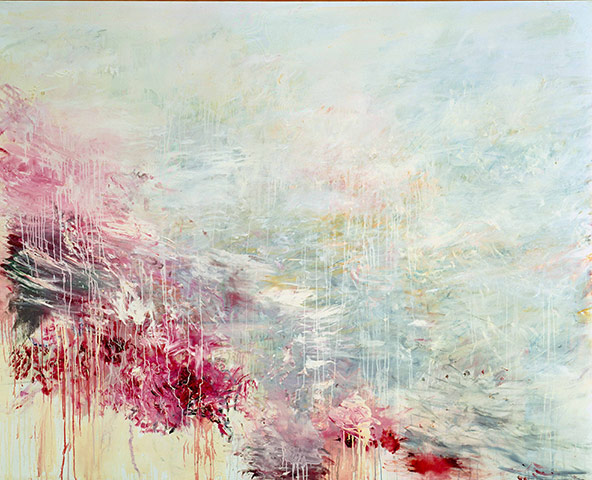
In Melville's novel Moby-Dick, the narrator stays at the Spouter Inn, a whalers' stopping place whose walls are decorated with eerie paintings of whale hunts, the ships lost in foam and ice, the whales dying. Melville is referring to real pictures – JMW Turner's whaling scenes, part of the British Romantic's nautical repertoire – and this painting by Twombly powerfully recalls those spooky works with its sea of white mist engorged with blood
Photograph: Courtesy Thomas Ammann Fine Art
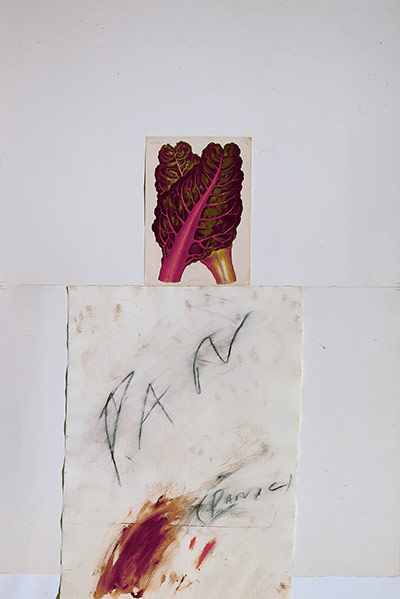
Sometime in the reign of the Roman emperor Augustus a voice was heard to cry, 'The great god Pan is dead!' But as a deity of lust and animality Pan lives on, and in this enigmatic drawing Twombly associates him with the curious embrace of two leaves, suddenly releasing a flesh of erotic, violent red crayon, and his own interpretation of Pan as 'panic', the shock of desire
Photograph: Dulwich Picture Gallery/Cy Twombly Archive
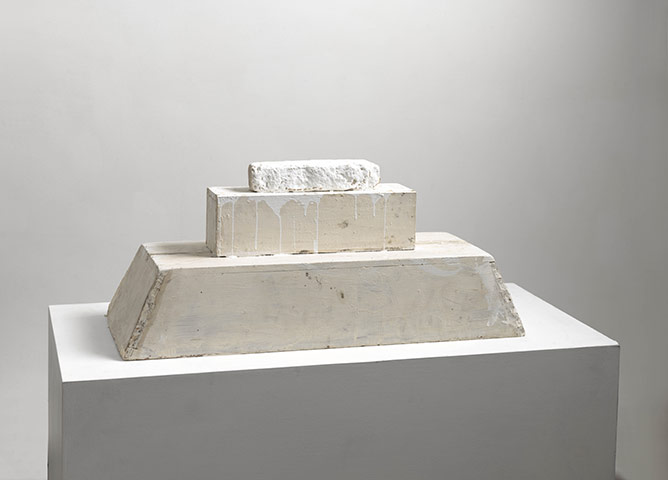
Twombly's sculptures, made with wood, found objects and paint, connect him more obviously than his other works with his friends of the 50s, Robert Rauschenberg and Jasper Johns. They have a homely, playful warmth: here, the steps and plinths of classical architecture are made intimate and soft Photograph: Dulwich Picture Gallery
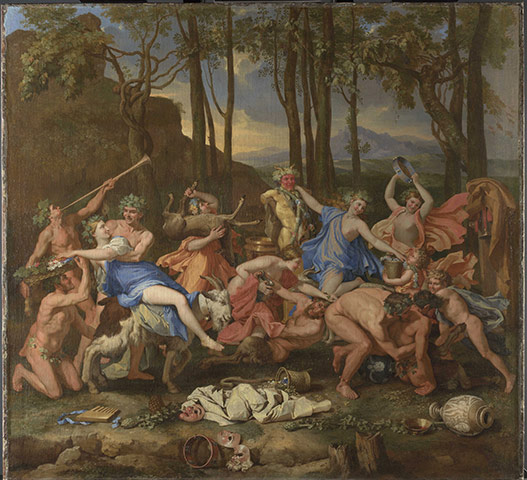
The dangerous pastoral god Pan is present as a statue in this painting and yet his face, reddened with wine or blood, looks eerily alive. It's as if the revellers are somehow bringing an old stone god to life – reanimating one of the more turbulent pagan deities – by their drunken rites. A miraculously painted and archaeologically detailed ancient wine jar lies on the ground, emptied, and the white frieze on it again suggests a dead world is being brought to life by this festival, the ancient world resurrected by an orgy
Photograph: Dulwich Picture Gallery/The Royal Collection 2011
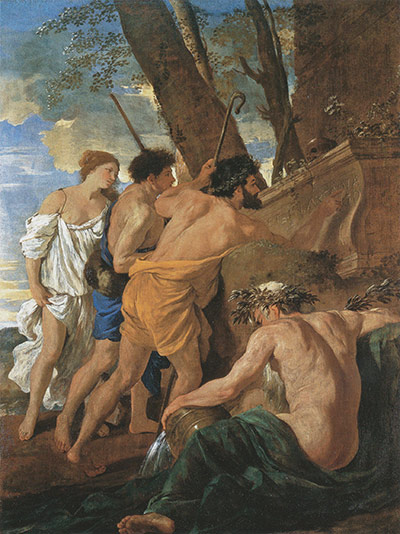
This is a version, from Chatsworth House in Derbyshire, of Poussin's most renowned theme. It is arguably even more poetic and haunting than the iconic version in the Louvre, often called Et in Arcadia Ego, for in that painting the shepherds point to the words, while here they strive to read them. We feel their anxiety as the message that death exists, even in Arcadia, dawns on them
Photograph: Dulwich Picture Gallery/Devonshire Collection, Chatsworth
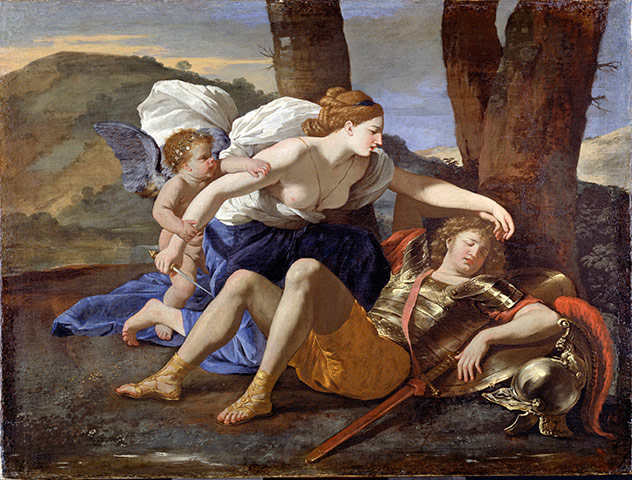
This scene comes from an epic poem by the baroque Italian writer Torquato Tasso celebrating the Crusades – a great theme for the counter-reformation renewal of the church in the 16th and 17th centuries. Poussin portrays Armida, one of the epic's chivalric characters, about to stab the sleeping knight Rinaldo when Cupid stays her hand. The figures and action are bold and abstract, which invites us to see it as an allegory of loving reason holding back murderous passion Photograph: Dulwich Picture Gallery
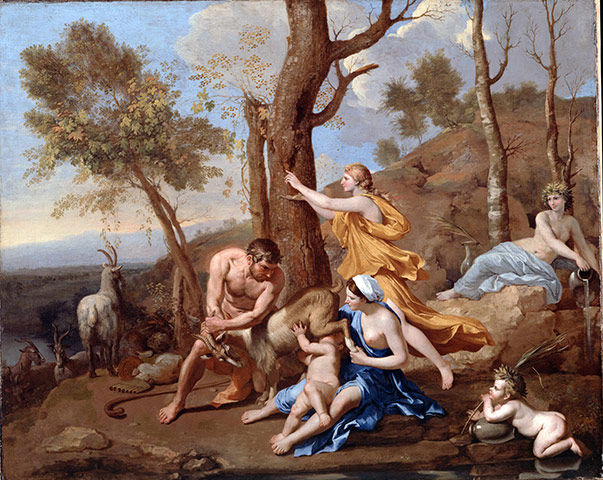
The classical poise, heroic loftiness and rational tone of Poussin's art make it impossible to be shocked or surprised by the sight of a child sucking milk from a goat Photograph: Dulwich Picture Gallery
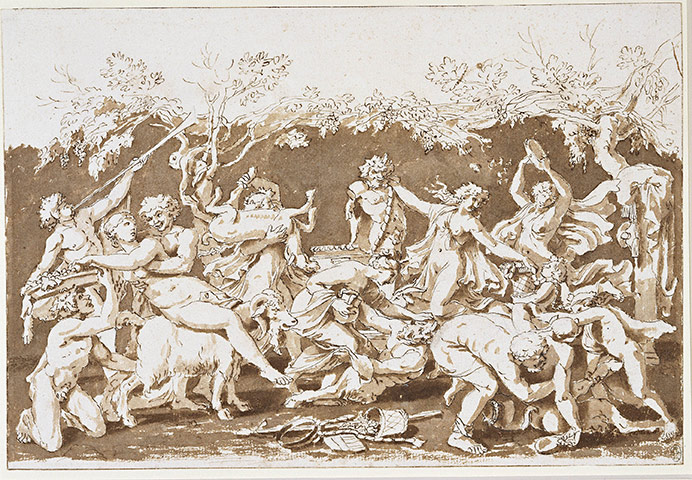
Poussin's highly finished drawing, in pen and wash over black chalk, shows how conceptualised and disciplined his art is. This is no sketch but a finely crafted drawing in which he has already made all the pictorial decisions that will be carried through into the painting. In fact they are so similar, the drawing may have been done after the painting
Photograph: Dulwich Picture Gallery