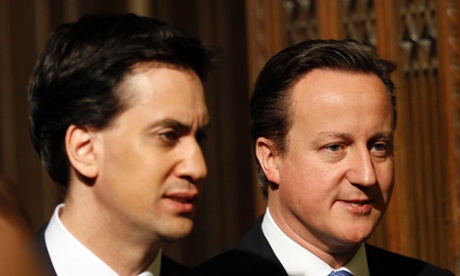
The first poll of 2015 by Lord Ashcroft has the Conservatives leading by six points. David Cameron’s party is up four points since last month. Labour is down three, on 28%.
National Poll (Lord Ashcroft) 09 - 11 Jan: CON - 34% (+4) LAB - 28% (-3) UKIP - 16% (-3) GRN - 8% (+3) LDEM - 8% (-)
— Britain Elects (@britainelects) January 12, 2015
Also released today, the latest figures from Populus. These show Labour ahead by five points.
National Poll (Populus) 09 - 11 Jan: LAB - 37% (+3) CON - 32% (-1) UKIP - 13% (-1) LDEM - 10% (+2) GRN - 4% (-2)
— Britain Elects (@britainelects) January 12, 2015
How can two polls differ so wildly?
There is a slight change in the Lord Ashcroft methodology (the pollster now “prompts” for Ukip, meaning they are named in the list of main parties rather than being included in “others”). But the figures are more likely to be explained by the 3% margin of error that the poll carries than by methodology.
The same is probably true of the Populus figures.
A YouGov poll released over the weekend shows numbers that are more in tune with recent trends.
National Poll (YouGov): 08 - 09 Jan: CON - 32% (-1) LAB - 32% (-1) UKIP - 18% (+5) LDEM - 7% (-1) GRN - 6% (-1)
— Britain Elects (@britainelects) January 10, 2015
It is in fact always best to look at the trends across polls, instead of focusing on one individual set of figures. Generally speaking when there are 10 polls, and nine fundamentally tell the same story, while one stands out as different, most attention will be placed on the one poll. But the other nine are more likely to be accurate. Of course both the Lord Ashcroft or the Populus poll could be picking up a change in voting intention, but until such movement is reflected in more figures there is no real evidence to suggest this.
The temptation to focus on numbers favourable to one’s preferred political flavour is often strong as it helps to suit a bias narrative. It would though be prudent to not draw too many conclusions from both today’s numbers - at least until there are more polls that point to one of the two main parties breaking away from the other.
As a final note of caution it is worth remembering that around mid-December last year, the Labour party enjoyed a spike in several polls, but subsequent figures quite quickly reverted back to type - the relatively stable trend of the two main parties locked in a neck-and-neck contest and heading towards a hung parliament.