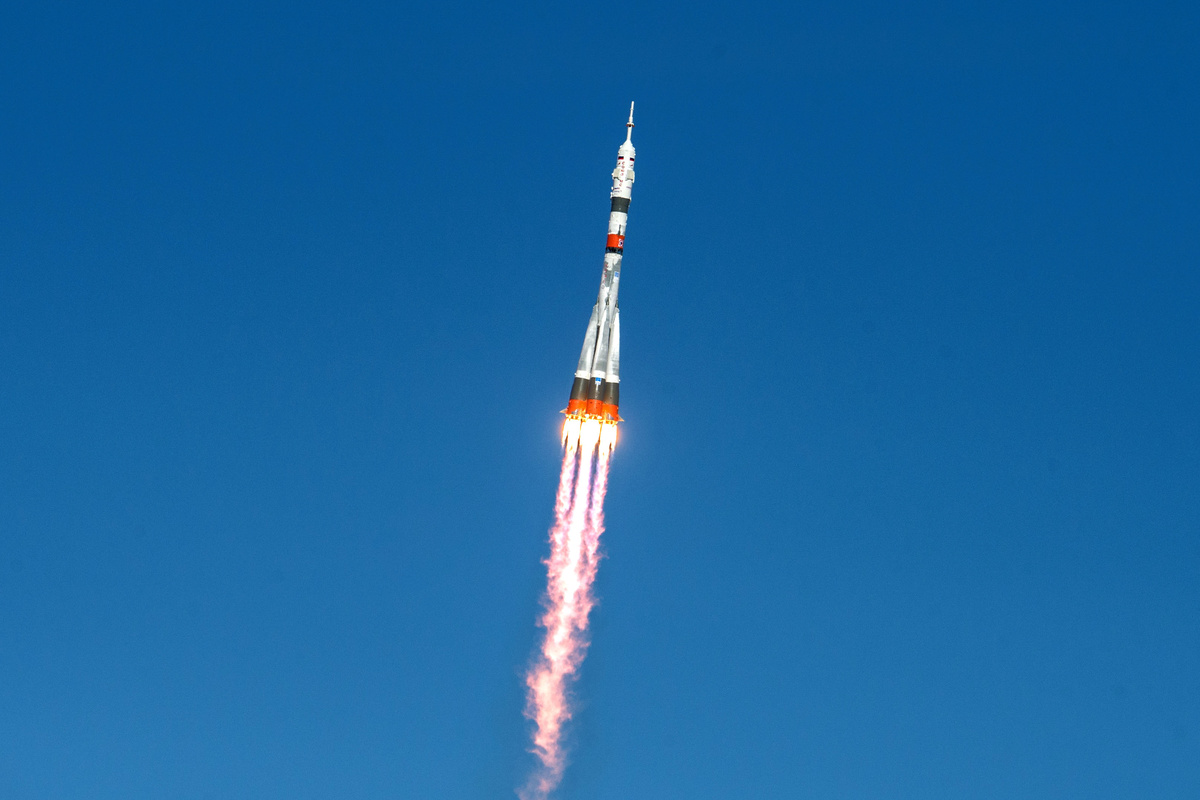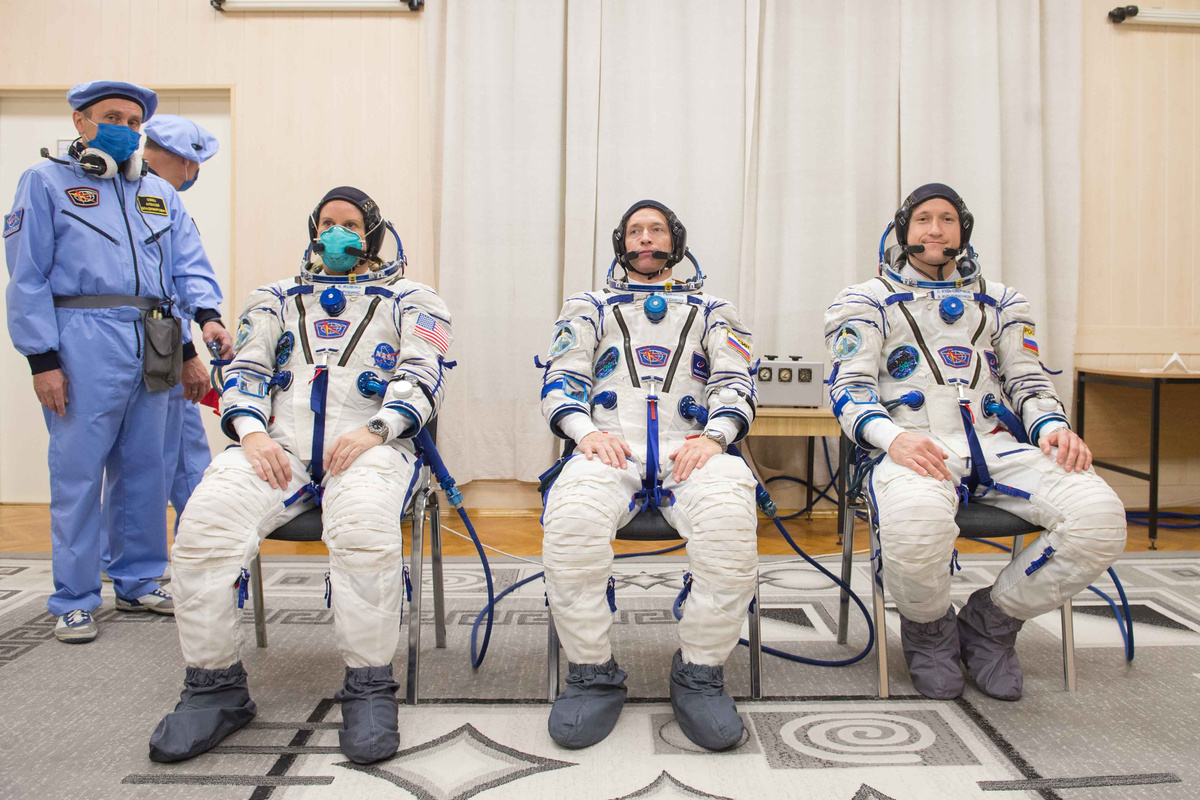
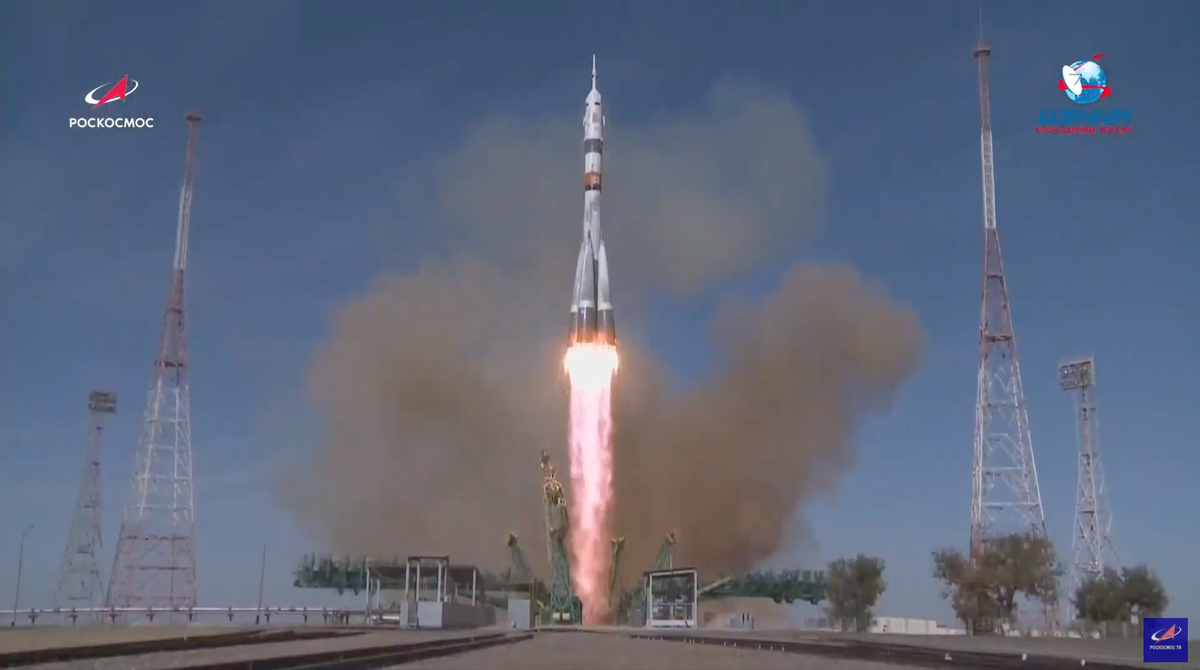
A Russian Soyuz spacecraft carrying a U.S. astronaut and two Russian cosmonauts successfully reached the International Space Station after blasting off from the Baikonur cosmodrome in Kazakhstan on Wednesday, live footage broadcast by Russia's space agency Roscosmos showed.
The Soyuz MS-17 spacecraft carrying NASA astronaut Kate Rubins, a microbiologist who in 2016 became the first person to sequence DNA in space, and Russian cosmonauts Sergey Ryzhikov and Sergey Kud-Sverchkov reached the space station roughly three hours after liftoff, bringing the orbital laboratory’s crew size to five.
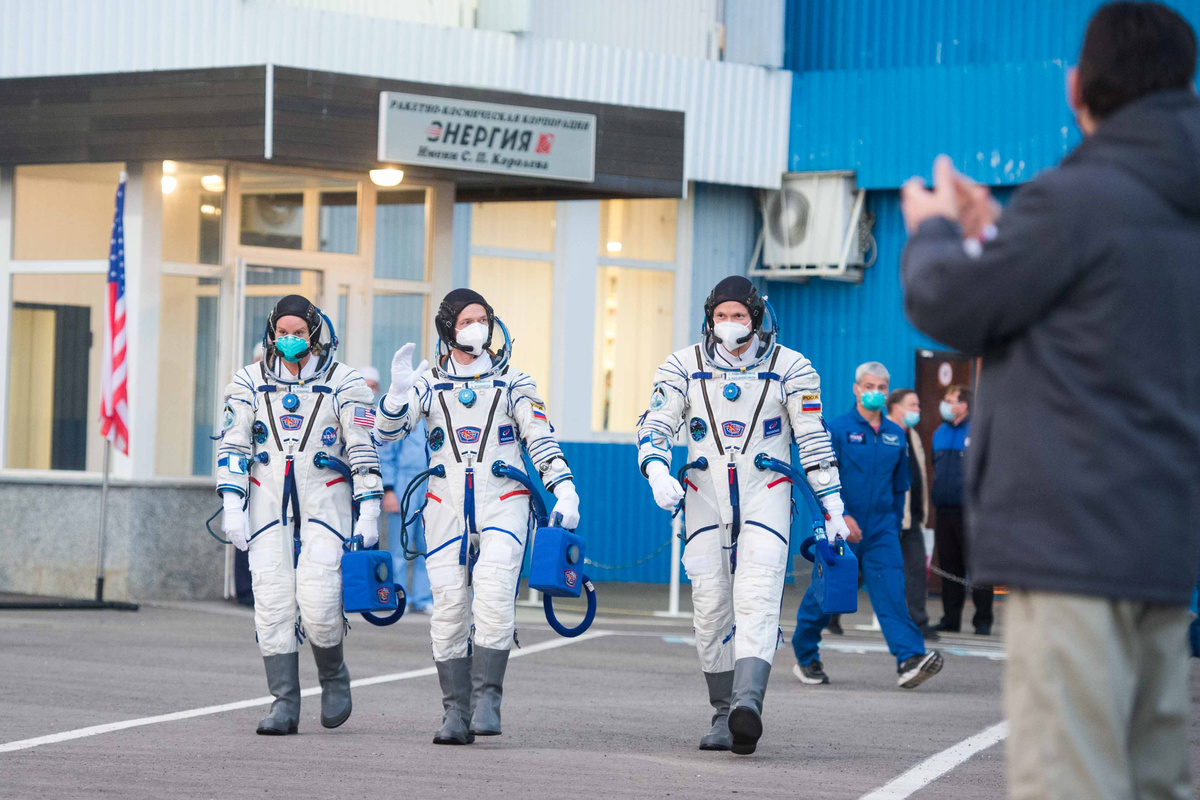
The mission is the last scheduled Russian flight carrying a U.S. crew member, marking an end to a long-held dependency as the U.S. revives its own crew launch capability in an effort to drive down the cost of sending astronauts to space.
Since the space shuttle program ended in 2011, NASA has relied on Russia to ferry its astronauts to the space station, an orbiting laboratory 250 miles (400 km) above Earth that has housed international crews of astronauts continuously for nearly 20 years.
The U.S. space agency in 2014 contracted Elon Musk’s SpaceX and Boeing Co <BA.N> to build competing space capsules in an effort to reclaim NASA’s launch independence. The $8 billion program enabled SpaceX’s first crewed trip to the space station in May, marking the first from home soil in nearly a decade.
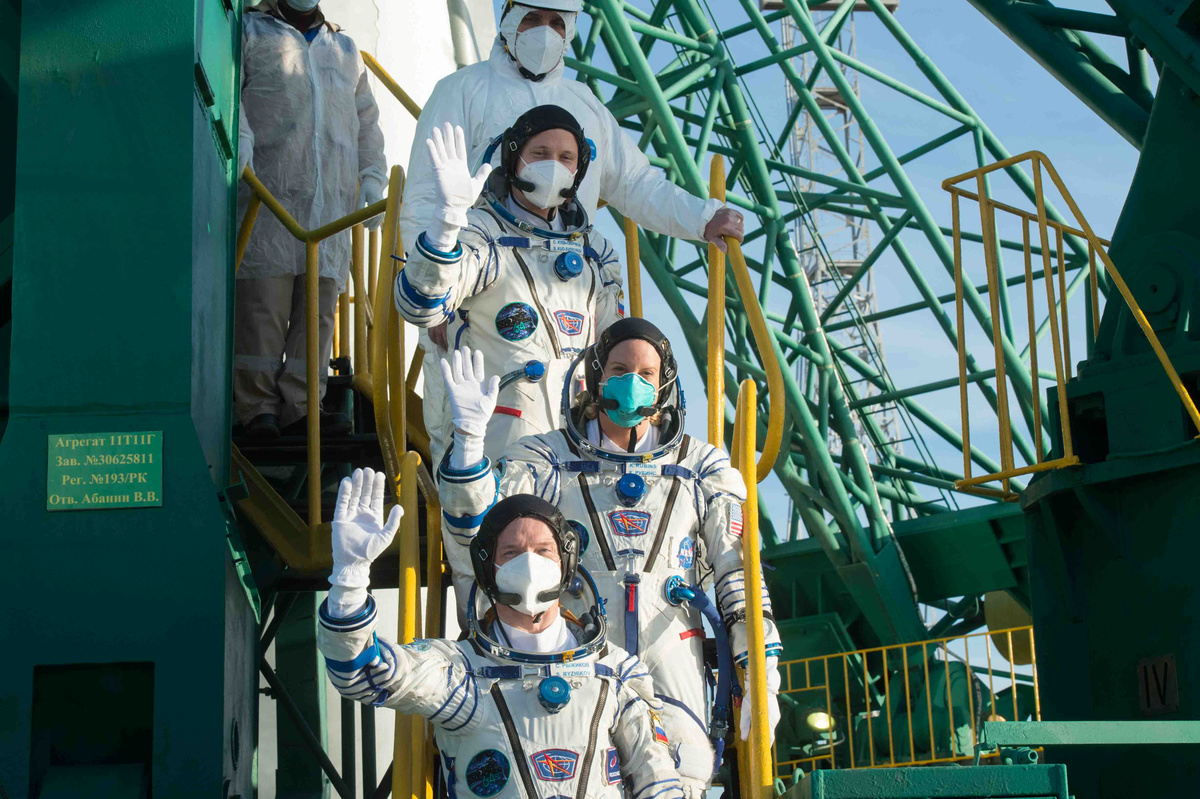
NASA has bought additional crew seats from Russia as its public-private crew program faced delays - with Rubins’ $90.2 million mission being the most recent - and in July ceased negotiations to purchase more as the agency prepares to start operational missions in November using SpaceX’s Crew Dragon capsule.
“We have an incredible partnership,” Rubins said in an interview from Russia’s Star City before her flight. “We’ll continue to train crews over here and we’re going to have cosmonauts come to the Johnson Space Center and train.”
NASA and Roscosmos have committed to continue the flight-sharing partnership in exchange for flying Russian astronauts on U.S. vehicles and to fly U.S. astronauts on Russian rockets when needed, a spokesperson for Roscosmos told Reuters.
“Of course, mutual flights are of interest for ISS reliability and continuous operations,” the spokesperson said. “This approach (mixed crew flights) will ensure delivery of the crew to the station, should a problem with the partner spacecraft occur.”
(Additional reporting by Gabrielle Tétrault-Farber in Moscow; Editing by Dan Whitcomb, Leslie Adler, Andrew Osborn and Marguerita Choy)