Two Liverpool fans who were qualified nurses came out of the crowd at Hillsborough in 1989 and helped with vain efforts to revive two of the 96 people killed in the crush, the new inquests into the disaster have heard.
David Evans, a charge nurse and manager of a surgical vascular ward in Liverpool, and John Boyle, a general nurse then working at Aintree hospital, who were both at the FA Cup semi-final as fans, gave emergency aid to David Thomas, who was 23 when he died in the Hillsborough crush, and Philip Steele, who was 15.
Boyle, giving evidence at the inquests in Warrington, said he had climbed out of central pen 4 of the Leppings Lane terrace, which was overcrowded, into neighbouring pen 5, and was then helped to clamber into the seated stand above.
When he saw casualties being taken on to the pitch, he made his way down to see if he could help, and quickly came across a St John Ambulance volunteer giving Philip Steele heart massage, with a “civilian” giving mouth-to-mouth resuscitation. Boyle said he believed from the colour of Philip’s face that, unlike others, he was not dead, and he took over giving mouth to mouth and instructed the St John Ambulance officer to give heart massage more vigorously. They continued for three or four minutes, Boyle said, but although he could not recall if he felt for a pulse, and could not say Philip was “beyond care”, Philip was not responding, nor showing signs of life.

“My brother was with me as well, and I was thinking about him,” Boyle said. “That’s when I moved away from Philip and started looking for other people to help.”
The jury, of seven women and four men, heard more harrowing evidence about the horror at Hillsborough, when critically injured, dead and asphyxiated people, some blue in the face, were being dragged out of the pens and laid on the pitch. BBC footage was shown of failed efforts to revive David Thomas, by Sheffield Wednesday’s club doctor, William Purcell, and Evans, at 3.27pm in the sunshine on the pitch.
Purcell, who has since died, said in a statement after the 15 April 1989 disaster that they worked on Thomas for “quite a long time”, but he was unable to rouse any response. A device he had for unblocking a person’s windpipe – a Brook airway – “proved useless” because Thomas’s airways became very quickly blocked with vomit, Purcell stated.
Thomas, a painter and decorator due to start his own business at the time, travelled from Liverpool to the match with two brothers, Christopher and Kevin Traynor, 26 and 16, and all three died in the crush in pen 3. Thomas’s daughter, Debbie, was present in court, hearing that her father was assessed as dead by an ambulance officer, Anthony Boyington, as soon as he examined him.
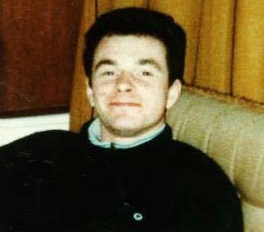
Philip Steele, the jury heard, went to the semi-final with his mother and father, Dolores and Leslie, and younger brother Brian, 13, with whom he was shown on CCTV footage entering through the Leppings Lane turnstiles just before 2pm.
In a statement in 1989, Brian Steele described the crush that took hold at the front of the pen after 2.50pm: “Philip was with me,” he said. “I was pushed towards the goal. I don’t know what happened to Philip and I didn’t see him after the first crush. There were people all around me and I couldn’t see anything. I had to put my head up to breathe, and all I could see was the sky. I don’t know how long I was in this crush for, but eventually the pressure was released from me and I made my way out.
“It was also during the crush that I started to fall to the floor, and somebody grabbed hold of my green jumper with buttons, and for quite some time my feet weren’t on the floor, by the person holding my jumper, and other people keeping me up.”
Both Philip and Thomas were taken in ambulances to Sheffield’s Northern General hospital, where a doctor, Janet Doore, pronounced dead a total of 11 people brought from Hillsborough. Their bodies were both then taken back to Hillsborough, where South Yorkshire police were using the football club’s gymnasium as a mortuary. Both were identified by their fathers during the night; the inquests heard that Philip was brought out to his father, Leslie, in a body bag.
A testament to Thomas from his brother in law was read, in which he was described as: “The type of person who would take the shirt off his back to use as a bandage if it was necessary.”
A photograph was shown of Philip, smiling, in his school uniform. His mother Dolores said of him in a statement: “He loved life, schoolwork and play. Something that came top of his list was football.”
The inquests continue.