The crisis between Israel and Hamas in Gaza edged towards all out conflict as both sides suffered fatalaties and vowed to continue exchanging fire.
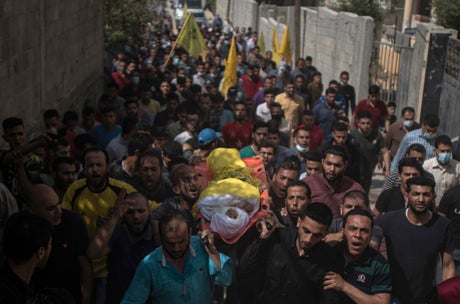
Burials began Tuesday for 26 Palestinians killed overnight by airstrikes in Gaza, and two people died in the southern Israeli town of Ashkelon following a rocket barrage fired from the Hamas-controlled enclave.
The surge in deadly violence was triggered by unrest in Jerusalem which saw Israeli police storm Al Asqa Mosque in Jerusalem with stun grenades and tear gas and Palestinians throw rocks, bottles and fireworks at police.
The holy city has been tense during the Muslim fasting month of Ramadan, with sporadic unrest and the possible evictions of Palestinians from homes claimed by Jewish settlers in a court case adding to the friction.
With tensions high, both sides stood on the precipice of all out war on Tuesday.
Grieving Palestinians said they had little to lose following the latest airstrikes, while Israel’s prime minister Benjamin Netanyahu said it would “increase the intensity and frequency” of attacks in Gaza.
Gaza’s health ministry said among its dead were nine children, most of them killed by Israeli air raids. Another 107 people were injured.
The Israeli military disputed the figures and said 15 of the dead were militants.
In Beit Hanooun town in northern Gaza, Abdel-Hamid Hamad said his nephew Hussein, 11, was killed on Monday in what residents said was an Israeli air strike. He told Reuters the boy was collecting wood when he was hit.
“Gaza has had enough, and nothing makes a difference now. Our children are getting killed. What should we do?” Hamad said.
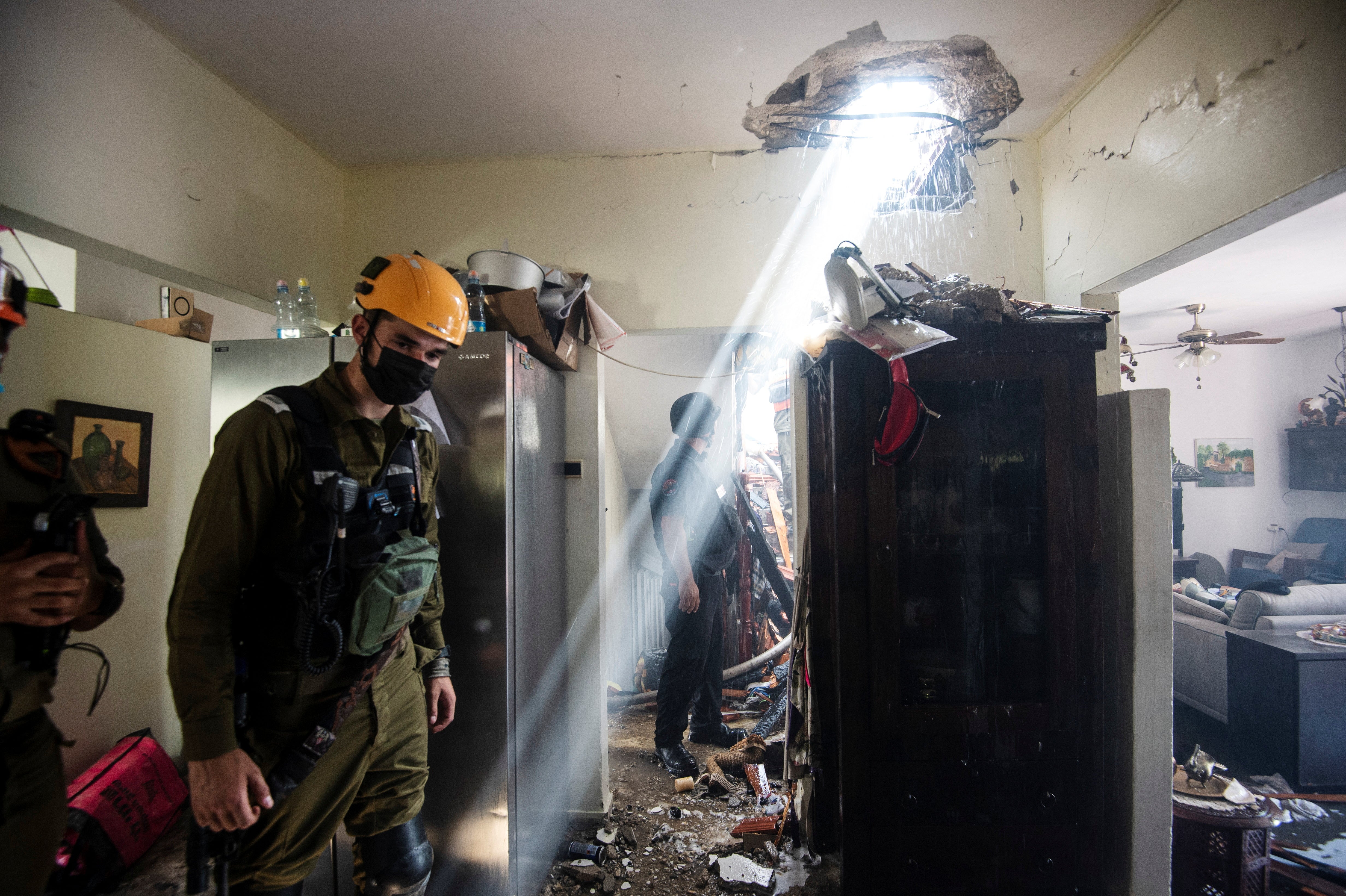
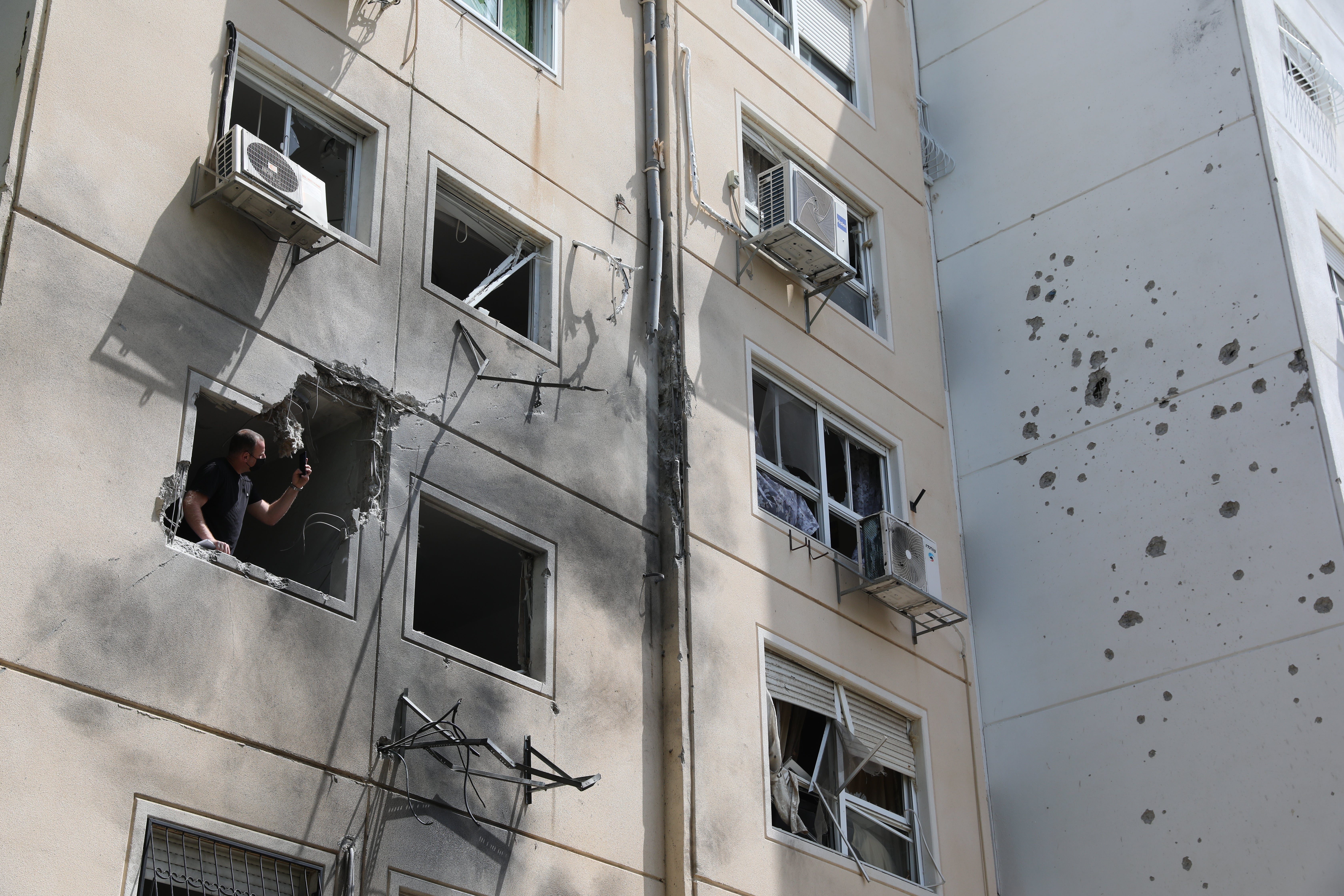
The two people killed in Ashkelon died following a rocket barrage on the town, said Israeli paramedics.
It was reported that both victims were women after one rocket hit a residential building and two landed in an open area.
A third person was also said to be in a critical condition, and 10 people were said to be injured in total.
Paramedics at the scene confirmed the two fatalaties. “We had two direct hits in Ashkelon of two buildings. Due to these direct hits, two people were killed and several more injured,” Uri Shacham, a spokesperson for Magen David Adom, Israel’s national medical and ambulance service told The Independent. “It’s a very hard day for the people of Israel and Ashkelon.”
At the site of the rocket attack a huge hole was seen in one building. Witnesses described how they just had seconds to dive for cover.
“We dived for the shelter when the rocket hit and after saw a massive hole in the building,” said Oshi Aohnah, a shop owner.
“We ran upstairs and found an old man shouting that his wife was missing. She was buried under part of the building which had collapsed on her.”
Paramedics said there had been two direct hits on two buildings.
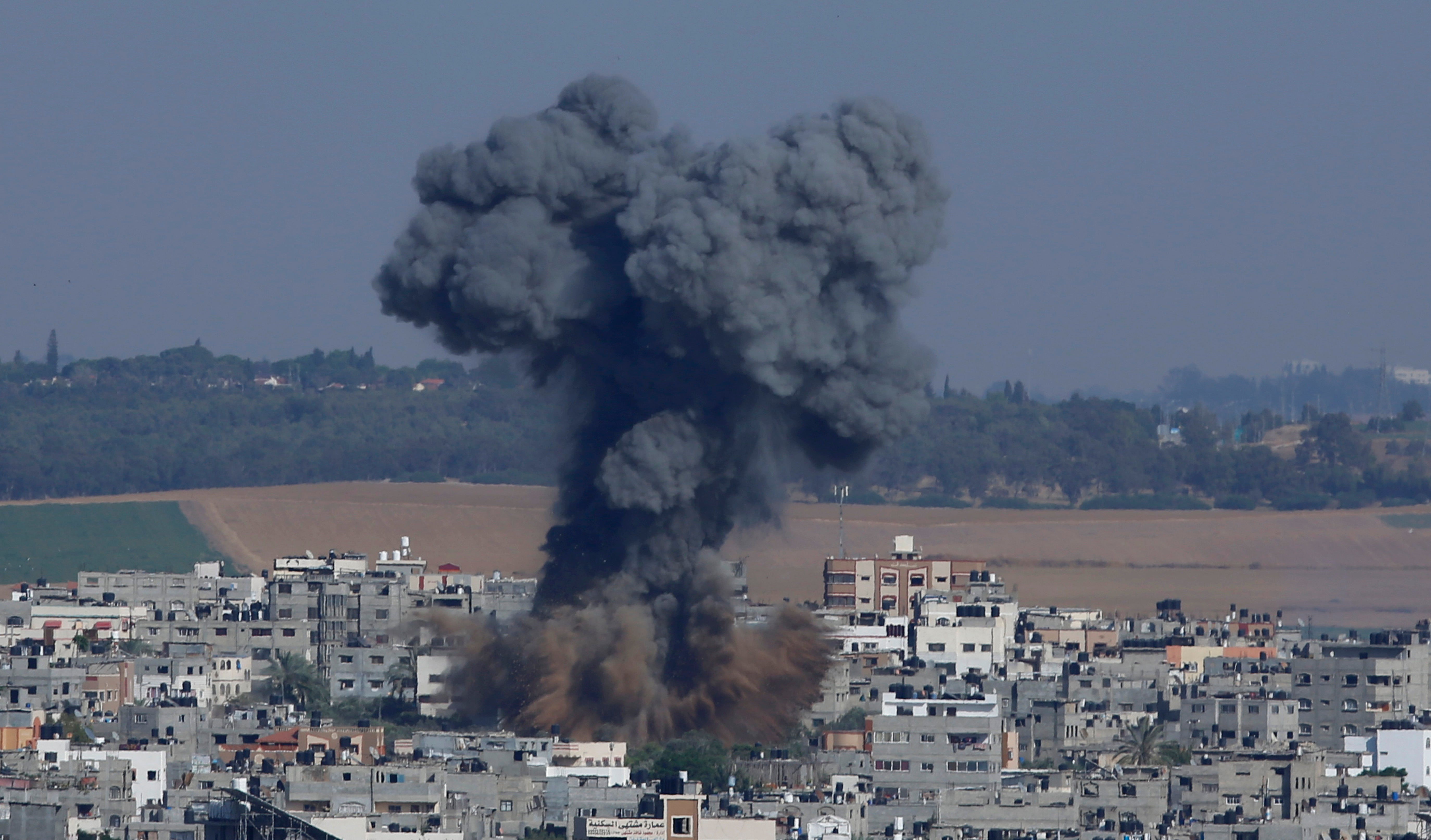
Israel had unleashed a wave of air raids on the tiny blockaded strip after Hamas fired long-range rockets on Monday towards Jerusalem, over 100km away, for the first time since 2014.
Military officials added that Israel had hit “130 targets” in Gaza, including the home of top Hamas commander.
Hamas had warned on Monday of a serious escalation after Israeli forces stormed Jerusalem’s Al-Aqsa mosque, the third holiest site in Islam, amid a wave of unrest in the contested city, which saw Israeli police deploy tear gas, skunk water and stun grenades against Palestinian protesters who threw rocks and bottles back.
More than 700 Palestinians were injured in the 24 hours of violence, including six medics, according to the Palestinian health authorities.
Several Israeli police officers were also wounded.
In the past, cross border flare-ups and violence have been ended by furious mediation by countries like Egypt and the west.
But despite horrific videos showing the fatalities in Gaza, and rocket sirens sending families scrambling for their bomb shelters in Israel, neither side shows signs of backing down.
As rocket attacks continued from Gaza, Israeli tanks massed on the border as officials said infantry and armour reinforcements were being dispatched.
Israel also said it had mobilised 5,000 reserve troops.
The surge in violence came after weeks of simmering tensions mostly focused around the tinderbox city of Jerusalem, which both the Israelis and Palestinians claim as their capital.
But unrest first erupted after the controversial decision by Israeli authorities in the holy month of Ramadan to cordon off the historic Damascus Gate to the Old City, where Palestinian families traditionally like to gather during Iftar, the evening meal to break the fast during this time.
After weeks of nightly unrest, Israeli police eventually withdrew the barricades.
But anger only boiled over again, in response to the possibility of the forced eviction of four Palestinian families from the nearby East Jerusalem neighbourhood of Sheikh Jarrah, on land claimed by Jewish settlers.
The deeply controversial decision, which Israel’s Supreme Court was due to rule on Monday but postponed due to unrest, could amount to war crimes, according to the United Nations.
Despite international anger, the issue has been dismissed by Israel’s foreign ministry as a private “real-estate dispute”.
International attempts at mediation have also begun.
Egypt, Qatar and the UN were trying to stem the violence, a Palestinian official said
US Secretary of State Antony Blinken urged all sides to take steps to reduce tensions.
The Arab League, some of whose members have warmed ties with Israel over the last year, accused it of “indiscriminate and irresponsible” attacks in Gaza and said it was responsible for “dangerous escalation” in Jerusalem.
The outbreak of hostilities led Netanyahu’s political opponents to suspend negotiations on forming a coalition of right-wing, leftist and centre-left parties to unseat him after an inconclusive March 23 election.
Opposition leader Yair Lapid has three weeks left to establish a government. Prolonged fighting could cut into Lapid’s mandate, with a new election - and another chance for Netanyahu to retain power - likely if he fails.