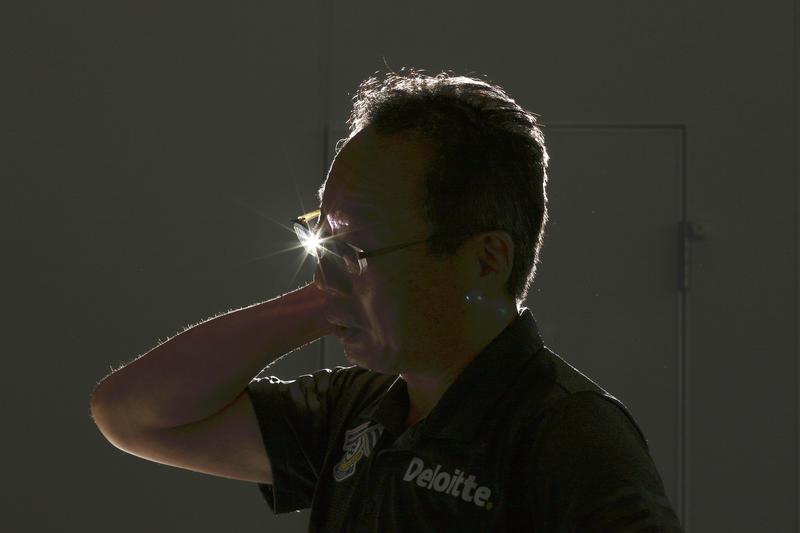
The Japan men's national soccer team exceeded expectations at the recent World Cup in Russia by advancing to the last 16, bringing additional popularity to soccer in Japan. The exciting J.League has resumed and has even attracted world-class Spanish players. Can Japan become even stronger? What is Japan through the eyes of soccer? When we asked such questions to former national team coach Takeshi Okada, he offered a number of insights.
Splendid Nishino direction
When I was coach [of the Japan national team at the 2010 World Cup in South Africa], we barely made it into the last 16. This time was different. Japan has definitely improved.
[At the most recent tournament Japan made it out of the group stage by beating Colombia, drawing against Senegal and losing to Poland. In the first knockout stage match, Japan could not reach the quarterfinals as Belgium, one of the strongest teams in the world, came from behind to win.]
One example was the match against Senegal. In the past, Japanese players were intimidated when opposing players with such high levels of physical prowess score the first goal. This time, however, Japan fought valiantly, coming back from behind twice to even the score.
Some say that Akira Nishino [the coach at this year's World Cup] was just lucky, but they're mistaken.
Certainly the players who honed their skills in the world's best leagues, such as in Germany or Spain, were instrumental in leading the team. However, creating a system that can independently function is exceedingly difficult. If you leave things entirely to the players, the team becomes disorganized. I think Nishino's achievement came after thinking more deeply than anyone else about what was needed in order for Japan's national team to win games.
There is no single right way to lead. The coach decides what to do in his own way according to the situation at hand. The basis for this is not statistical, but intuitive. It's taking a gamble. Nishino decided that in order to advance to the last 16 he needed to maintain the 0-1 losing score to Poland. This must have been the intuition he felt at the time. In the end, he won the gamble.
Japan has grown in the 25 years since the J.League was established. Our players concentrate on teamwork and use short passes to defeat opponents. This systematic style of play has come to be recognized as "the Japanese way."
However, growth curves always level off. At the World Cup in Brazil four years ago, Japan was eliminated in the group stage even though it had a good team. After seeing this, I realized that it would be impossible for Japan to catch up to and overtake the world by continuing to do the same thing, so I started to search for a new path to reach the summit.
The Barcelona doctrine
While meeting and talking to various coaches around the world, I ran into a coach of the world-famous FC Barcelona in Spain. I was surprised when he said to me, "Spain has a playing model. Doesn't Japan have one?" Spain is known for its freewheeling style of play, but there is a standard playing style that has fundamental principles. In Spain, players focus on fundamentals until 16, then they are allowed to play freely.
In soccer, there is no taking turns to bat as the transition between offense and defense is instantaneous. There is no time to discuss tactics. Players' ability to make decisions on the fly is fundamental.
During this past quarter century, all the foreign coaches who have come to Japan have said that Japanese players excel at doing what they are told to do, but cannot make decisions independently. In response to that, we coaches changed our coaching method. Instead of providing detailed instructions for what to do in different situations, we began allowing players to freely decide on their own.
On the other hand, players are given freedom when they are children. I've always felt uncomfortable about this, feeling that it is especially important to have children develop fundamentals.
After hearing what the Barcelona coach had to say, my perceptions changed. Whereas they had freedom that was built on top of a playing model at its core, we had only copied the freedom.
The way I think now is that freedom does not come from a completely free background. There are rules, which when broken, lead to surprisingly unfettered thought. In martial arts there is the term "shuhari." In the beginning you obey the master's teachings, then you break with them, and finally you leave them. I thought it is also the case with soccer that having rules and a collection of fundamentals is necessary.
In addition, the soccer world in Japan has blamed the weakness of our players' judgment on the country's education and culture. I want to change this with soccer. It's a challenge.
Imabari model
At the end of 2014, I became the owner of FC Imabari in Imabari, Ehime Prefecture. It is a soccer club that has teams for both children and adults. I set the goals for our first team as winning the J1 championship by 2025 and having four players be called up to the Japan national team.
The most important point is to have players develop a set of fundamentals by the age of 16. I began by discussing such a set of fundamentals with my staff almost every evening in order to make our own "Okada Method," referencing Barcelona's. One such fundamental entails dividing the field vertically into five equal parts, numbered from the first lane to the fifth lane. When the ball is in the first lane, there should never be more than two players in the fifth lane. I intended to complete the method in one year, but it took three years. There are about 80 principles. All the coaches finally learned it thoroughly by spring of this year.
It is a collection of principles using Japanese traits for winning on the global stage. It is a question of whether players can think freely and make autonomous decisions at its core. It will take 10 years to know whether it works.
Although our current first team was not originally schooled in the method, when we tested it on them we saw that even adults can change their style of play significantly. This season, the first team aims at entering the J.League for the first time, which means joining J3, the third division of the league.
I also came up with the notion of the "Imabari model" that aims at promoting the city of Imabari through soccer. Within the city there are 27 groups for children, 12 middle schools, and six high schools, with FC Imabari at the top. Together they form an organic pyramid designed to develop talent. We send out instructors free-of-charge to share the Okada Method with them. The high school coaches have accepted it and are determined to grow stronger together with us.
I want to make soccer a hallmark of Imabari. The cost of our operations is very high, but if we don't undertake them, our base, the city of Imabari, could weaken due to a declining population. This is felt as a real danger.
I don't have the sense that soccer is the only thing in my life. I have been involved in environmental education for over 40 years. "We borrow the Earth from our children" is a Native American expression. We should not destroy, hurt or defile what we are borrowing from the children of the future.
Our corporate philosophy is "To contribute to the creation of a society that values the wealth of the mind more than the wealth of material things for future generations." We aim for a society that spends money for trust, sympathy and emotion. That is the starting point of all my actions. Through soccer, with young people, I would like to change society.
-- Takeshi Okada
Owner of FC Imabari and chairman of Imabari. yume sports Inc. As a soccer player, he played for Waseda University, Furukawa Electric Co. and the Japan national team. In 1997, he took over as coach of the national team and led Japan to its first appearance in a World Cup in 1998, although it lost all three of its games at the tournament. In 2007, he became the coach of Japan again and took the team to the last 16 of the 2010 World Cup. From 2012-13, he was the coach of Hangzhou Greentown (currently Zhejiang Greentown FC) in the China League.
Read more from The Japan News at https://japannews.yomiuri.co.jp/