It was breaking news for the global music industry when Justin Bieber announced last week that he is temporarily stepping away from music to focus on his mental health. Having entertained the world's audiences for so many years, Bieber was reportedly receiving treatments for depression last month.
"I've toured my whole teenage life, and early 20s. I realised, and as you guys probably saw, I was unhappy last tour, and I don't deserve that and you don't deserve that," he wrote on his Instagram. "I have been looking, seeking, trial and error as most of us do, I am now very focused on repairing some of the deep rooted issues that I have as most of us have, so that I don't fall apart."
Music makers bring joy to listeners. But unfortunately, many of these creators of happiness are not as happy as they should be. Apart from Bieber, many artists have been reported to have fallen victim to depression and mental-health issues. In 2016, Oscar-winning singer Lady Gaga opened up about her suffering from depression. One of the world's most successful recording artists, Adele, was also suffering anxiety, to the point that she had to hire a therapist to accompany her during a tour to help her cope with panic attacks. A list of artists who suffer depression goes on and on, including the late vocalist of Linkin Park Chester Bennington, Nirvana's Kurt Cobain, and British singer-songwriter Ian Curtis, to name only a few.
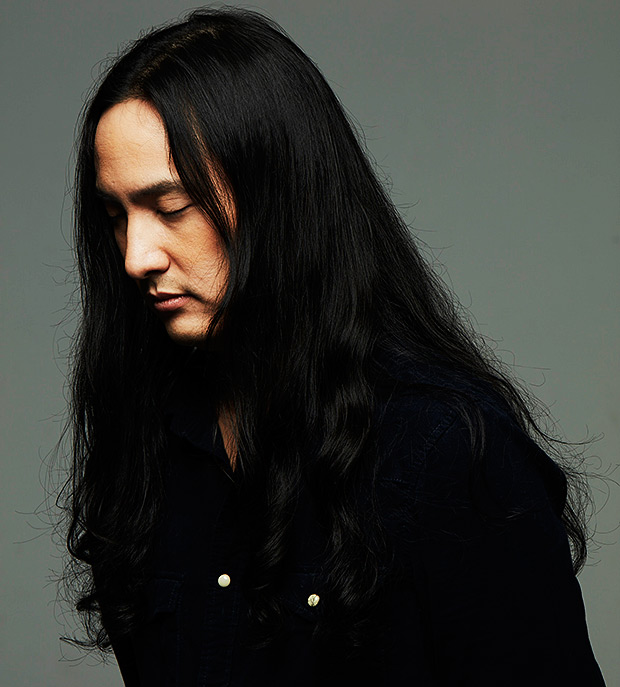
In recent years, Thailand's music landscape has become more open about mental-health issues, although the problem doesn't seem to be discussed as openly as in foreign countries. To raise awareness about the issue, music producer Krit Viryasiri has recently released a new single solely dedicated to depression.
A former member of the trio band 7th Scene, Krit drew inspiration from his own struggles with mental-health problems. He believes musicians are actually prone to developing mental illnesses given that they have the mind of a highly sensitive person.
IF 6 OF THESE SEEM FAMILIAR, SEEK HELP NOW
- Gloominess
- Miserable and feel like crying
- Desperation and hopelessness
- Unhappiness and loss of interest in things once pleasurable
- Disappointment and blaming yourself
- Loss of self-confidence
- Solitude
- Feelings of worthlessness
- Can't make decisions
- Forgetfulness
- Slow decision-making
- Sluggishness
- Fatigue
- Appetite loss
- Restlessness
Hotline for Depression
- Depress We Care, Police Hospital 081-932-0000facebook.com/Depresswecare
- Department of Mental Health 1323
- Samaritans Thailand Phone: 02-713-6793 (Noon-10pm) samaritansthai.com
"It's like a curse," he admitted. "Music artists are sensitive. They can be inspired by anything around them but their sensitivities can get them easily emotional."
Krit conceded that he too is a sensitive person. His happiness and sadness can go extreme. And that didn't cause any problem until eight years ago, when he broke up with his girlfriend.
"My heart was broken and I didn't want to do anything, even to eat. I didn't feel happy even for a second. After a month, I started to feel something was off. I then decided to see a psychologist," the 39-year-old songwriter-cum-producer said.
"The doctor said that I am a perfectionist and this kind of person always looks for a flaw, not happiness. A perfectionist tries to fix a problem he finds. But I couldn't fix my problem because the relationship was about two people. I then lost my balance."
Although medicines were prescribed, they were not the only approach Krit counted on. He tried other things to make himself feel better. He distracted himself from depression by watching videos about sound recording and equipment on YouTube. His time was then spent more wisely and at the same time he gained more knowledge for his music career. He also opted for walking meditation.
"My mother recommended I try walking meditation and I did. It was surprisingly helpful, because it enabled me to be aware of my thoughts. Before, I kept hurting myself by repeatedly thinking about the past. The meditation made me realise my negative thoughts and stopped them," Krit said.
During this difficult time, Krit went to hang out at the music label LOVEiS, where he had a chance to chat with celebrated producer Boyd Kosiyabong, who encouraged him to turn his depressive experiences into a work of art. The result was his electronic alternative-rock album Tao Nan (Major Depressive Episode) comprising six tracks -- The Perfect Present, Major Depressive Episode, Wasted Better Man, Mung (Vegetarian), Not Waiting, Just Loving and Let Go Go -- and which was released last month. The six tracks reflect the Kübler-Ross model, popularly known as "the five stages of grief". The model was first described by the late renowned Swiss psychiatrist Dr Elisabeth Kübler-Ross, a pioneer in near-death studies.
"I let my psychologist listen to the album and he told me the songs reflect the five stages of grief: denial, anger, bargaining, depression and acceptance."
Major Depressive Episode was sung by highly competent singers, including Apiwat "Stamp" Uaethavornsuk, Thanachai "Pod" Ujjin and Nattawut "Golf" Srimok from F*cking Hero. Despite great feedback from the audience, there were a few negative comments, which Krit said he wasn't afraid to receive.

"Everyone has the right to think and comment. Most people can express their opinions and don't really have to be responsible for what they criticise. These songs are well-intentioned. If someone looks at it negatively, I will assume that he or she misunderstands," Krit said.
Depression gave Krit a hard time, but it wasn't all bad. The best thing about his worst time was that his struggle pushed him to become a real songwriter for the first time.
"It was a miracle. In the past, I wasn't a lyricist. I specialise in the sound of music and guitar. Before making the album, I asked my friend to write a song for me. But I then realised that all of my feelings couldn't be expressed through conversations. I decided to write songs for the album by myself."
The songwriter-producer hopes his album and his experiences will help people who suffer from depression. He strongly wishes that through the music he creates, people will understand that depression is an illness, just like other diseases, and that patients should not be blamed for it.
"If you have a friend who has depression, you don't have to take special care of him or her. Treat them normally, like you do others. Don't give them advice, because it can be wrong. The best thing is to be there for them. This will make them feel better."