
Drying mangoes in Africa for shipping to the UK, to be packaged into delicious Fairtrade treats, leaves behind a big pile of problem.
Of 100 tonnes of fresh mangoes, more than half will be waste: the peel; the stone; parts that have gone bad; the over-ripe and the under-ripe.
This waste often sits in large piles outside processing facilities, attracting vermin and insect swarms and contaminating the local environment. Acids from the fruit blacken the earth; the stench is unbelievable. Many processing facilities are in built-up areas. Sometimes holes can be dug in the surrounding area to fill with the waste, but there is insufficient space to do this.
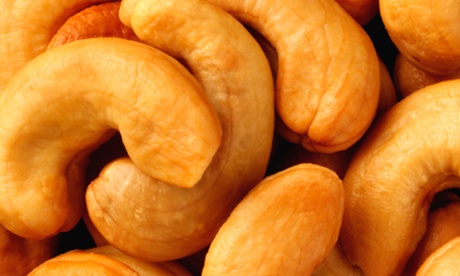
The mountains of shell left over in cashew processing cause different problems. Even for the small operations in Burkina Faso that work with UK Fair Trade food manufacturer Fullwell Mill, these waste mountains can weigh hundreds of tonnes. The shells are naturally toxic (processing removes the toxins so consumers are not affected). During heavy rains, this shell waste can wash through the local residential areas and into the river close by. This can then be carried downstream to villages dependent on the river water for their daily needs, causing blockages and pollution.
Because cashew nut shells contain oil, the mounds also bring with them the danger of fire, especially in the intense Burkina heat which can exceed 40 degrees. A blaze at another, much larger, cashew processing facility left a huge smoke cloud hanging over the nearest town; an environmental risk in a built-up area.
With support from the Fairtrade Foundation and other UK funders, Fullwell Mill is investigating solutions which will turn these headaches into valuable local resources such as heat, gas, electricity and a liquid effluent that can be used to make compost. This helps to save money, preserve the environment and can benefit workers and farmers in the supply chain at the same time.
As Ian Morris, the firm’s overseas project manager explains, “Without adequate waste collection services, the waste from many small businesses we work with can carry health risks for workers at processing facilities and local communities.
“Our goal is to use this waste material to create power and benefit the businesses and communities in other ways. In some cases, individual farmers and workers can gain more value from the produce they are growing and processing, and woodland and other natural resources can be protected.”
Making the most of mango waste
Early work on a biogas project has seen mango waste mechanically ground down into a pulp and mixed with water. It is then released into an airtight concrete dome below ground. The mixture then goes through a process known as anaerobic digestion, releasing biogas which is piped out and used in mango-drying, to cook meals for the workforce and occasionally for outdoor lighting.
Another byproduct of this digestion process is an effluent which flows from the outlet of the dome. This can be used directly to irrigate farmers’ fields, and can act as a fertiliser and a natural pesticide. The effluent can also be captured in dry material such as the peel found between the cashew nut and the shell to produce a compost that improves crop yield and quality.
Gas and charcoal from cashew shells
Fullwell Mill is working on uses for cashew shell waste. Processing cashew nuts involves steaming raw nuts in a large pressure cooker, known as an autoclave. Morris says, “One of the Burkina organisations we work with had been burning wood on an open fire to heat the water. This was inefficient, costly, smoky and environmentally unfriendly in a country plagued by deforestation.
“We are tackling this issue. The boiler is now heated by burning combustible gases produced from cashew shells in a gasifier. The shells are difficult to use as a direct fuel, but can be converted to gases and leave a residual charcoal.”
Fullwell Mill is also looking to use this gas to replace expensive butane gas to heat air for drying cashews and mangoes.
There could be additional benefits, Morris explains. “We are also working on a new kind of domestic gasifier cook stove which will mean that workers at the processing facility can take some cashew shell charcoal waste home to cook with safely at night.”
Electricity from coffee husks
Through Fullwell Mill, the Fairtrade Foundation is also funding the piloting of a new solar drier at the Fruits of the Nile food processing company in Uganda, which is expected to improve dried fruit quality. Fullwell Mill has also carried out a feasibility study on the coffee supply chain in Malawi, Rwanda and Uganda, and is now keen on exploring the use of coffee husk to be used to generate electricity, potentially making these processing facilities entirely self-sufficient energy-wise, with power to spare to supply other nearby facilities.
The company has an engineer in Africa, Neil Bianchi, who is working on all of these waste management and energy generation projects, and is in the process of recruiting further team members in this area.
“All of these developments need to be affordable, financially viable, robust, and simple enough to be able to be constructed, maintained, repaired and operated locally - a huge challenge,” says Morris, “But this work is tremendously exciting. These new technologies are good for the companies, for their workers and their farmers in some cases. They are good for the environment and good for their countries. The more news of these technologies spreads, the deeper the impact of the work we are doing.”
His hope is that other small and medium-sized businesses in Africa, Asia and beyond will see the opportunities in using these technologies and invest in them.
Content on this page is paid for and provided by Fairtrade Foundation, sponsor of the spotlight on commodities series




.png?w=600)








