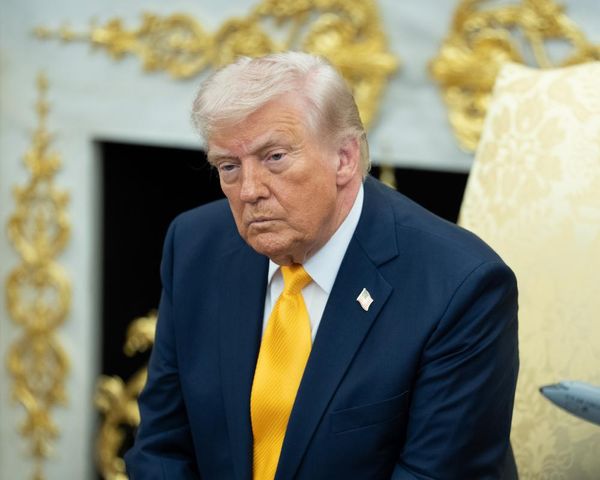
A late update: Donald Trump is increasingly unhappy that Turkey still hasn’t released Andrew Brunson from house arrest, two years after the pastor was arrested on espionage charges.
White House Press Secretary Sarah Sanders told a press briefing that:
“The president has a great deal of frustration on the fact that Pastor Brunson has not been released as well as the fact that other U.S. citizens and employees of diplomatic facilities have not been released.
Sanders says President Trump will continue to call on Turkey to release Pastor Brunson and other prisoners.
— Hunter Lovell (@hunter_lovell23) August 14, 2018
Afternoon summary
Time for a recap.
Turkey’s government has come out fighting today against the market turmoil that sent its currency tumbling in recent days.
Recep Tayyip Erdoğan raised the stakes, declaring that Turkey will boycott electronic products from the US. The Turkish president told an audience in Ankara that:
“We will boycott US electronic products.
“If they have iPhone, the other side has Samsung. In our country there is Venus, Vestel.”
Finance minister Berat Albayrak also tried to restore confidence, pledging:
We will make all kinds of preparations, from A to Z....
You will see that our lira will become stronger.”
Albayrak also took a swing at America, saying that the US dollar had lost credibility after being used as a tool for “political punishment”.
Turkey’s environment minister also jumped on the boycott bandwagon, saying US products wouldn’t be used for Turkish construction projects.
After days of losses, the lira has finally caught a break. It has rallied by over 8% against the US dollar today, back to 6.3 lira to the $, from almost 6.9 on Monday night.
But the diplomatic rift between Turkey and the US hasn’t been fixed. The White House is still demanding the release of American evangelical pastor Andrew Brunson, who has been held since the 2016 coup.
Analysts argue that Turkey needs to take decisive steps to prevent the market mayhem continuing; eg, an interest rate hike, improved relations with America, and a strategy to lower Turkey’s current account deficit.
Ripples from the Turkish crisis pushed India’s rupee to a record low this morning, apparently forcing the Indian central bank to intervene in the FX markets. Over developing market currencies, such as the Mexican peso and the South African rand, strengthened though.
In other news....
Germany has posted 0.5% growth in the last quarter, helping the wider eurozone to expand by 0.4% - the same the the UK.
Updated

After a calmer day than Monday, European stock markets have closed for the night.
Britain’s FTSE 100 fell by 30 points, or 0.4%, even though worries about Turkey have faded.
Mining stocks dragged the index down, as investors switched their attention to worrying about China instead.
David Madden of CMC Markets explains:
Mining stocks are in the red after China revealed disappointing economic indicators overnight. Beijing confirmed that fixed asset investment grew by 5.5% - a record low. Industrial output held steady at 6% in July, but economists were expecting an increase of 6.3%. Retail sales rose by 8.8%, which was below the 9.1% forecast, and it was a slower rate compared with the 9% growth in June.
The updates suggest that the Chinese economy is continuing to soften, and this prompted traders to dump mining stocks like Glencore, BHP Billiton and Rio Tinto.
The German DAX ended the day flat while the French CAC index dipped by 0.17%.
And in Istanbul, the Turkish stock market closed 0.75% higher - recovering some of Monday’s selloff.
Eurasia: EU-Turkish relations could be strengthened by crisis

At some stage, the Turkish leadership must move on from simply promising to protect the lira, and actually take action.
Mujtaba Rahman of Eurasia Group says president Erdoğan must take three steps.
- allows the Central Bank to significantly hike interest rates;
- de-escalate tensions with the US by releasing Pastor Andrew Brunson (or signalling a commitment to doing so)
- restore medium-term investor confidence via a credible program of fiscal consolidation and economic reform.
The Turkish crisis could be a good opportunity for the EU to strengthen its relationship with Ankara. After all, both sides have experienced Donald Trump’s confrontational approach to diplomatic relations and trade.
Rahman says:
Trump’s unpopularity in Europe makes it highly unlikely EU leaders are going to rally behind his approach. If anything, senior EU officials point to the “commonalities” that the EU and Turkey now both face vis-à-vis the US—on tariffs, threats and much besides—and suggest these might be used as a jumping off point for any discussion that follows: “We will tell the Turks we have sympathy for the situation they are in, but not how they are handling it”, says one.
Multiple meetings between EU and Turkish counterparts over the coming months will present an opportunity for the EU to better assess the situation; convey its concerns about Turkey’s deep-seated economic problems and reforms needed to fix them; and to potentially strengthen co-operation with Ankara. Turkey will be represented at the EU foreign ministers meeting at the end of the month; a potential Turkey, Russia, France and Germany summit, though still not confirmed, is scheduled for 7 September; and Erdogan is slated to meet with German Chancellor Angela Merkel at the end of September.
Erdogan is also likely to want to avoid triggering another crisis with the EU. Indeed, earlier yesterday, Albayrak tweeted a very positive response to German Economics Minister Peter Altmaier’s criticism of new US tariffs. The Turkish mainstream (i.e. pro-AKP) media have also been quoting dovish remarks by Merkel.
This suggests EU-Turkey relations are likely to continue to thaw, as we saw on 17 May at the EU-Western Balkans summit in Sofia.

Updated
The blizzard of comments from top Turkish politicians is helping to underpin the country’s currency.
As this chart shows, the lira has recovered to around 6.5 lira-to-the-US dollar today - down from 6.88 lira/$ at the close of play on Monday.
Traders are cheered by finance minister Albayrak’s pledge to make the lira stronger, and his pledge to stick to free market principles. That’s being taken as a pledge not to impose capital controls to shore up the exchange rate.

Updated
Finance minister Berat Albayrak also pledged:
“We will protect the lira, we will march with the lira and the lira will strengthen greatly in the coming period.”
And on the US dollar, he said:
“The dollar has lost its credibility.
In times when the dollar has been turned into a tool for political punishment, we will continue to strongly take steps to protect the lira in international trade.”
Turkey's finance minister: We'll protect the lira
Turkey’s finance chief has pledged to protect Turkish companies through the currency crisis, and predicted that the lira will recover its losses.
Berat Albayrak, Treasury and finance minister (and president Erdoğan’s son-in-law), said the government would protect the economy while sticking to free market rules and maintaining fiscal discipline.
Details were scarce, though - but it’s enough to keep the lira around 6.5 to the US dollar, a 5% gain today.
Albayrak told members of the ruling AK Party, that:
“We will make all kinds of preparations, from A to Z....
You will see that our lira will become stronger.”
(thanks to Associated Press for the quote).
Albayrak also followed Erdoğan’s lead, by declaring that the US dollar is being used a means to “politically” punish nations, and has lost credibility.
That’s a bold claim, given the US dollar has strengthened to a one-year high, while Turkey’s currency slumped to an all-time low of 7 lira to the dollar yesterday....
JUST IN: Turkey's finance minister says the US dollar has 'lost its credibility'
— The Spectator Index (@spectatorindex) August 14, 2018
Turkey’s boycott of American goods is gathering pace!
The Turkish environment minister, Murat Kurum, has announced that Turkey will not use US goods in construction projects, Reuters reports.
Kurum added that Turkey was going through an economic siege, due to ‘speculative moves’ in the value of the US dollar.

The idea that Turkey will stop buying iPhones has received a mixed reception on the streets of Istanbul.
Some Turkish citizens support president Erdoğan’s boycott of US electronics, but others think the idea won’t work.
Reuters reports:
“We supported him with our lives on July 15,” shopkeeper Arif Simsek said, referring to a failed 2016 military coup. “And now we will support him with our goods. We will support him until the end.”
But shopkeeper Umit Yilmaz scoffed. “I have a 16-year-old daughter. See if you can take her iPhone away ... “All these people are supposed to not buy iPhones now? This can’t be.”
America has renewed its efforts to get pastor Andrew Brunson released from house arrest, two years after he was accused of espionage related to the 2016 Turkish attempted coup.
Reuters has the details:
The U.S. Charge d’Affaires in Turkey visited Andrew Brunson, the evangelical pastor whose detention and trial on terrorism charges has sparked a crisis between the two countries, and repeated a call on Tuesday for his case to be resolved.
Jeffrey Hovenier, speaking outside Brunson’s home in the coastal province of Izmir where he is under house arrest, said Washington wanted the pastor’s case “as well as the case of the other unjustly detained Americans, and the Turkish national employees of the U.S. diplomatic mission” resolved fairly, swiftly and transparently.
I mentioned earlier that White House National Security Adviser John Bolton told Turkey’s US ambassador yesterday that relations between the two countries won’t thaw until Brunson is released.
The Turkish lira is holding onto its earlier gains, and is still up 5% at 6.5 lira to the US dollar.
Edward Park of investment management firm Brooks MacDonald fears the rally won’t last, though, unless Ankara take decisive action.
Turkey is rebounding from a low base but the lack of USD liquidity & US political impasse hasn't changed. Rally likely to be short lived unless we see meaningful reforms & rate hikes. I discussed #TurkeyCrisis with @steve_sedgwick & @cnbcKaren earlier https://t.co/CCoxUSjk0f pic.twitter.com/GOp9rAHx4U
— Edward Park (@Brooks_EdPark) August 14, 2018
How bad could the situation in Turkey get?
Nick Brooks of asset management firm Intermediate Capital Group believes things will get worse before they get better, given its weak economic position.
Brooks argues for a sharp hike in interest rates (from 17.75% today):
The fundamental problem in Turkey has been the build-up of unsustainable economic imbalances (current account deficit if 6.3% of GDP, Corporate foreign exchange debt is 35% of GDP, inflation rate of 16%), while the economy is now in a vicious downward spiral with the fall in the lira leading to concerns about corporate and financial sector solvency, further pushing down the currency and increasing capital outflows.
Only a sharp hike in interest rates to halt capital outflows and incentivise inflows will halt the downward spiral.
Capital controls, if implemented, will not be effective as Turkey needs foreign capital inflows to fund its current account deficit and to re-finance large foreign currency borrowing coming due this year. Investors will not bring new funds into the country if they don’t believe they will be able to get it back out.
Miranda Xafa, a former official at the International Monetary Fund, reckons Turkey could be forced to seek a bailout.
Otherwise, it will struggle to repay debts issued in foreign currencies such as the US dollar, she explains:
Looks like Turkey is long overdue for an IMF program. The longer it waits, the harder it will get to overcome the crisis and the bigger the cost in terms of lost output, inflation, and financial distress. pic.twitter.com/xjqQRm2cZP
— Miranda Xafa (@MXafa) August 14, 2018

Amid fears that the Turkish currency crisis could pull down the eurozone, the German tabloid Bild has analysed the immediate effects it might have on German consumers.
In a rather flippant article, it suggests the price of the popular chocolate spread Nutella should go down (as the hazelnuts in it come from Turkey). Jeans, and other items of clothing which Germany buys en masse from Turkey, should also get cheaper, it adds.
But there are risks too. German banks have a €17bn stake in Turkey, the paper points out (paywall). That’s less than other eurozone nations, such as Spain, whose BBVA bank is one of the most exposed to Turkey.
European bank exposure to Turkey, via Credit Suisse: pic.twitter.com/gBYiTZPdSf
— Tracy Alloway (@tracyalloway) August 14, 2018
Turkey’s problems have been building for a while, points out Witold Bahrke, senior macro strategist at Nordea Asset Management.
Bahrke explains how the strengthening US dollar has made Turkey’s current account deficit (the gap between what it imports and exports) a bigger problem.
Turkey is in a genuine currency crisis, with the lira falling 30% over three days. Fundamentally speaking, the reason for the Turkish meltdown is primarily a large current account deficit, which is 6% of GDP, and reliance on outside capital.
Markets do not care if liquidity stays abundant but can turn toxic when global liquidity dries up due to higher interest rates, the Fed’s balance sheet shrinks, and the US dollar strengthens. Making things worse, there are serious doubts about the ability of policymakers to correctly assess what kind of storm is currently brewing and how to deal with it.
Adding to the pain, a dispute between Washington and Ankara around the arrest of a US pastor in Turkey has prompted Trump to impose additional tariffs on Turkey this week. Altogether, we have a perfect storm.
Why is Erdoğan so implacably opposed to raising Turkish interest rates, even though inflation has bubbled to dangerous levels?
In a nutshell, the Turkish leader has an unorthodox view of economics, arguing that higher rates actually create inflation. Back in May, he called interest rates the “mother and father of all evil”. A month earlier, he criticised the Bank of Turkey for defying him and raising borrowing costs, making the markets concerned about central bank independence.
The conventional view, though, is that higher borrowing costs squeeze prices down, as they make credit less affordable.
Russ Mould, investment director at stockbroker AJ Bell, thinks Erdoğan’s views are based on experience of Turkey’s previous financial problems
“The current Turkish situation bears all of the hallmarks of the Asian and Russian economic crises of 1997-98, which finally spilled over into the West and led to a short, sharp bear market in developed market share prices, while Turkey last got into serious trouble in 2000-01 when the lira collapsed.
“That crisis followed a period of rip-roaring growth funded by a rising budget deficit and rampant overseas borrowing that left the economy overheating – which all sounds very familiar today, given Turkey’s $200 billion-plus of overseas debt, inflation in the high-teens and a current account deficit that represents nearly 6% of GDP.
“When the smash came in 2000, the Turkish lira halved in value and GDP plunged while unemployment and inflation soared. This all happened under the supervision of the International Monetary Fund (IMF), which offered more than $20 billion in financial assistance between 1999 and 2003, in return for a package of interest rate hikes and fiscal austerity.
“This economic disaster paved the way for the 2002 general election victory of the newly-created Justice and Development (AKP) Party under Recep Tayyip Erdogan, so no investor should be surprised by how Mr Erdogan is now responding.
“His rise to power was at least partly fuelled by public discontent with the IMF’s version of economic orthodoxy, so it is no wonder he is determined not to follow the path of higher interest rates and lower government spending now.
“Given that he also called interest rates ‘the mother of all evil’ in a speech last May, raising the question of whether he wanted to pay interest and repay overseas loans, let alone could do so, all it needed was some unexpected development to puncture confidence in Turkish assets and prompt capital flight. After all, ‘capital will always go where it’s welcome and stay where it’s well treated’, as one-time Citigroup chairman Walter Wriston once said, and it may well be that Turkey now no longer fits that bill.
Turkey’s currency crisis won’t abate until the country’s central bank is allowed to raise interest rates, argues David Kohl, chief currency strategist at Swiss bank Julius Baer.
He writes:
The Turkish lira has depreciated dramatically over the last few days. However, it is not the overall macro backdrop of Turkey that is so disastrous as to justify the sharp drop of the currency.
Economic activity, including export dynamics and domestic demand, is actually growing at a solid pace. The sharp depreciation of the currency is driven by the fact that the Turkish economy is in constant overheating mode, with inflation above 15%.
The reluctance of the central bank to step in has been weighing on the lira. Increasing signs that President Erdogan has been expanding his powers into the central bank, preventing rate hikes and articulating an outright demonisation of high interest rates, has led to the panic selling of the currency.
Reuters have published more quotes from president Erdoğan’s speech in Ankara today.
On the currency crisis, he called for Turkey to stay united:
“Together with our people, we will stand decisively against the dollar, forex prices, inflation and interest rates. We will protect our economic independence by being tight-knit together.”
He threatened retaliatory action against America’s sanctions and tariffs:
“We will impose a boycott on U.S. electronic products. If they have iPhones, there is Samsung on the other side, and we have our own Vestel here.”
Erdoğan’s also urged businesses to keep investing, and not be put off by the market turmoil:
“If we postpone our investments, if we convert our currency to foreign exchange because there’s danger, then we will have given into the enemy.”

Shares in Turkish electronics firm Vestel have soared by almost 8%.
It’s benefitting from president Erdoğan’s call for Turks to buy its Venus smartphone instead of Apple’s iPhone.
Updated
Erdoğan hasn’t always been so dismissive of iPhones.
Back in the attempted coup in 2016, the Turkish leader famously used Apple’s FaceTime service to mobilise his supporters. Erdoğan made a video call to a Turkish television network, urging the people to “convene at public squares and airports” to oppose the Turkish military forces who were trying to overthrow him.
The appeal worked, and Erdoğan has been tightening his grip on the Turkish levers of power ever since.
Updated

By threatening to boycott American electronics, president Erdoğan is signalling that he won’t be cowed by the market turmoil.
It’s an interesting threat. Turkey’s population is almost 80 million strong, meaning plenty of potential consumers.
But...given the slump in the lira, US goods such as iPhones are now much more expensive for Turkish consumers - so sales of pricy imports were already likely to fall.
Investors may be concerned that Ankara isn’t trying to calm the crisis - instead, relations with the Trump administration could be getting worse.
As Neil Wilson of Markets.com puts it:
Erdogan fired a shot back at the US with a statement saying he would ban US electronic goods. I can’t imagine Apple is too worried about this, but it nevertheless points to a worrying deterioration in relations between Ankara and Washington.
Erdogan doubling down like this won’t help market sentiment.
However, the lira is still holding onto its early gains as the currency stages a cautious recovery, after days of heavy losses.
Updated
Here’s Associated Press’s take on Erdoğan’s speech:
Turkish President Recep Tayyip Erdogan says his country will boycott U.S.-made electronic goods amid a diplomatic spat that has helped trigger a Turkish currency crisis.
Showing no signs of backing down in a standoff with the U.S., Erdogan suggested that Turkey would stop procuring U.S.-made iPhones and buy Korean Samsung or Turkish-made Vestel instead.
He said: “If they have the iPhone, there is Samsung elsewhere. We have Vestel.”
It was unclear how Erdogan intended to enforce the boycott.
Erdogan also renewed a call for Turks to convert their dollars into the Turkish lira, to help strengthen the currency.
The Turkish lira has nosedived in value in the past week over concerns about Erdogan’s economic policies and after the United States slapped sanctions on Turkey angered by the continued detention of an American pastor.
Turkish president: We'll boycott American goods

NEWSFLASH: Turkey’s president is giving another defiant speech, threatening to boycott American electrical goods in response to US sanctions.
President Recep Tayyip Erdoğan has told an audience in Ankara that the US was targeting Turkey.
He warns:
We will boycott US electronic products.
If they have iPhone, the other side has Samsung. In our country there is Venus, Vestel [the Turkish smartphone brand].
Erdoğan also makes a direct threat towards the White House, warning that those who are waging “economic warfare” against Turkey will pay a price.
According to Bloomberg, he says:
There is a price we’re paying for the period we’re in.
But there will be a price [which] those who’re waging an economic warfare against Turkey will also pay.
Erdoğan is vowing to maintain a “firm political stance”, as his government takes the necessary measure to protect its economy.
Erdoğan also argued that flip-flopping was not in the Turkish nation’s character, and that switching to foreign currencies would be “giving in to the enemy”.
He’s speaking at an event organised by Turkish think tank Seta (the Foundation for Political, Economic and Social Research).
Updated
These charts show the divide in Britain’s labour market, with unemployment at a 43-year low, but wage growth decidedly underwhelming:


UK jobless rate falls to just 4.0% but wage growth slows
Newsflash: Britain’s unemployment rate has hit a new 43-year low.
The UK’s jobless rate dropped to just 4.0% in April-June 2018, down from 4.2% previously. That’s the lowest level since the winter of 1975, when Harold Wilson was prime minister.
In April to June 2018, the unemployment rate was 4.0% – it’s not been lower since December 1974 to February 1975 https://t.co/tQdXLhXhhx pic.twitter.com/ffPaFsAZId
— ONS (@ONS) August 14, 2018
The Office for National Statistics reports that the number of people in work rose, while those out of work fell.
However, the number of people dropping out of Britain’s labour force also rose, and more people became self-employed.
Here’s the details:
- The number of people in employment increased by 42,000 on the quarter to 32.39 million in the second quarter of 2018.
- Unemployment declined by 65,000 on the quarter to 1.36 million.
- The level of inactivity increased by 77,000 on the quarter, resulting in the inactivity rate increasing to 21.2%.
- The number of self-employed people increased by 22,000 on the quarter to 4.77 million in the second quarter of 2018.
However, people aren’t feeling the benefits in their pay packets. Total earnings (including bonuses) only rose by 2.4% per year during the quarter, down from 2.5%.
Germany shrugs off trade wars and Brexit with 0.5% growth
Germany has beaten expectations by growing by 0.5% in the second quarter of 2018.
The eurozone’s largest economy benefitted from stronger domestic demand from households and companies.
Statistics body Destatis also reports that German exports rose during the quarter, while imports increased at an “even stronger” pace.
Germany has outpaced the UK over the the last quarter (UK GDP rose by 0.4%), and was rather faster than France’s 0.2% expansion.
German growth in the first quarter of 2018 was also revised higher, from 0.3% to 0.4%.

Teis Knuthsen of Denmark’s Kirk Kapital points out that Germany has now been growing for four years in a row:
The German economy grew by 0.5% q/q in Q2, better than expected, and the 16th consecutive rise. Germany is on track for its longest expansion on record. pic.twitter.com/I7bIKeec0o
— Teis Knuthsen (@TeisKnuthsen) August 14, 2018
However, economist Ulrik Bie thinks Germany could still falter in the months ahead, as Turkey’s crisis and the US-China trade wars bite.
GDP grew by 0.5% in Q2 bringing down annual growth to 2.0%. With headwinds from trade, Italy, Turkey, higher inflation, and continued frugality in households, GDP-growth could disappoint in coming quarters #macrobond #germany pic.twitter.com/wg1DyWVVH1
— Ulrik Bie (@UlrikBie) August 14, 2018

Despite the rupee’s slide, the picture is brighter in other emerging markets this morning.
South Africa’s rand has gained 2%, as it bounces back after hitting a two-year low during Monday’s selloff .
Russia’s rouble is up 1.5%, reaching 66.76 to the US dollar having struck 68 (also a two-year low) on Monday.
The Mexican peso is also catching a break, up 1% too.
Turkey’s stock market is also rallying this morning, up over 2% in early trading.
That mean shares have clawed back most of Monday’s losses.
After days of very heavy losses, Turkey’s currency is recovering some ground.
The lira has risen by around 5%, taking it back to 6.5 lira to the US dollar from over 6.88 late last night.
That could be a sign that investors are recovering their nerve - however, this still leaves the lira in a precarious place (it was worth 3.7 lira to the dollar at the start of 2018).
Look who is 'up' today! #TRY #Lira pic.twitter.com/YddPsaY89V
— jeroen blokland (@jsblokland) August 14, 2018
India shares another problem with Turkey, and indeed with all emerging markets -- the strengthening US dollar.
As America’s central bank, the Federal Reserve continues to raise interest rates, capital is being sucked out of developing markets and back to the US (because dollars offer a higher rate of return).
That weakens EM currencies, putting pressure on their central banks to raise interest rates too -- which undermines growth.
Hussein Sayed, chief market strategist at FXTM, says:
Economies with large current account deficits such as India, Argentina and South Africa will come under increased economic pressure as the Fed continues to tighten monetary policy.
Updated
The rupee’s woes are a sign that emerging market contagion is worsening, says Neil Wilson of Markets.com:
India’s rupee slipped to a record low against the dollar, with one USD buying 70 rupees at one point this morning.
This follows the chaos in the Argentine peso market on Monday as the currency plumbed fresh depths even as the central bank raised interest rates by 5 percentage points to 45%.
The rand is coming off its lows but the pressure across the board is there to see.
The Financial Times says the rupee is suffering from investors’ concerns about India’s lack of progress in fiscal consolidation and the country’s widening current account deficit.
That sounds rather similar to Turkey’s problems (without the diplomatic row with America, of course)
US: Turkey must released pastor Brunson

Overnight, America has warned Turkey that it won’t end the diplomatic row between the two countries until US pastor Andrew Brunson is released from house arrest.
White House National Security Adviser John Bolton met Turkey’s ambassador to the US, Serdar Kilic, yesterday and insisted that Brunson -- who was arrested in 2016 and charged with espionage -- must be freed.
Bloomberg explains:
President Donald Trump’s top national security aide warned Turkey’s ambassador on Monday that the U.S. has nothing further to negotiate until a detained American pastor is freed, according to two people familiar with the matter, signaling a standoff between the countries will continue as Turkey’s financial meltdown spreads to emerging markets.
Last night, my colleague Martin Chulov reported that a misunderstanding between Donald Trump and Recep Tayyip Erdoğan over Brunson, and a Turkish woman detained in Israel, may have helped caused the crisis.
The Indian government is urging people not to panic about the rupee’s slide to a record low this morning.
Subhash Chander Garg, economic affairs secretary at the ministry of finance, has blame the move on ‘external factors’ (a reference to the Turkish crisis, and the wider US dollar rally, I think), adding that there is no need to worry.
Updated
Rupee hits record low amid emerging market jitters

Newsflash: India’s rupee has fallen to a record low, as Turkey’s currency woes sends ripples through emerging markets.
The rupee fell to 70.09 to the US dollar on Tuesday morning, as investors fretted that the lira crisis will spread to other developing nations. The slide means the rupee has lost a tenth of its value so far this year.
Traders in Mumbai report that the Indian central bank may have stepped in to stabilise the currency after it fell through the 70-point mark for the first time over.
N. S. Venkatesh, chief executive of the Association of Mutual Funds in India, told the AFP newswire that:
“Investors are concerned that the rupee has crossed the 70 benchmark today....
The Reserve Bank of India’s monetary policy has shown concern for the rupee’s fluctuations so investors should not be worried by knee-jerk reactions in the forex market.”
Turkey's lira is relatively stable after slumping 20% in 4 days, but India's rupee hits record low https://t.co/SyWjEvAUD1 pic.twitter.com/sSKVyGycCM
— Bloomberg (@business) August 14, 2018
Introduction: Turkish crisis looms over the markets

Good morning, and welcome to our rolling coverage of the world economy, the financial markets, the eurozone and business.
Turkey is in the eye of the storm today thanks to the currency crisis that has wiped a third off the lira’s value in the last week.
As we covered yesterday, the Turkish crisis gave other emerging markets a jolt yesterday - forcing Argentina to hike its interest rates to 45% after the peso hit an all-time low.
President Recep Tayyip Erdoğan refused to bow to pressure from the markets yesterday. Instead, he hit out at the US for imposing sanctions in an attempt to force Turkey to release an American pastor named Andrew Brunson, who is currently under house arrest.
He declared:
“We are together in NATO and then you stab your strategic partner in the back.”
Tuesday’s GUARDIAN: “Fears of global crisis as Turkey battles to halt sliding currency” #bbcpapers #tomorrowspaperstoday pic.twitter.com/Jg70iPtQ11
— Allie Hodgkins-Brown (@AllieHBNews) August 13, 2018
Currently the lira is bobbing around 6.8 to the US dollar, close to Monday’s all-time low of 7.2. Turkey’s central bank seems to have calmed the crisis a little, by pledging yesterday to provide liquidity to its banking sector.
But worries over Turkey are mounting; its inflation rate is pushes higher, its current account deficit is worryingly high, and its companies may struggle to repay loans taken out in US dollars.
The markets remain unconvinced that Erdoğan’s government can cope with the currency crisis, triggered by the diplomatic spat with Washington that has resulted in higher U.S. tariffs.
Many economists argue that Turkey urgently needs a big rate hike, something Erdogan has opposed in the past.
European stock markets are expected to open higher, having been dragged down by Turkish worries on Monday.
Jasper Lawler of London Capital Group says investors will be watching emerging markets today.
The selloff in the Turkish Lira and the knock-on effects to other currencies and asset classes will continue to attract attention through today’s session.
Also coming up today
New UK unemployment data is expected to show that Britain’s jobless rate stuck at 4.2%, the lowest in over 40 years. That’s the good news. The bad news is that wage growth probably remains weak, with basic pay expected to only rise by 2.7% year-on-year.
We also get a new estimate of eurozone growth in the last quarter; it will probably confirm that the region’s economy expanded by just 0.3% in April-June.
The agenda:
- 7am BST: German GDP for Q2 2018
- 9.30am BST: UK unemployment data
- 10am BST: Eurozone GDP for Q2 2018
Updated