Turkish President Recep Tayyip Erdogan announced on Tuesday that he will host a summit next week in Istanbul with European leaders to seek a solution to the migrants' crisis.
However, he said he would not stop migrants trying to cross Turkey’s border into Greece in the meantime, despite EU pressure to do so.
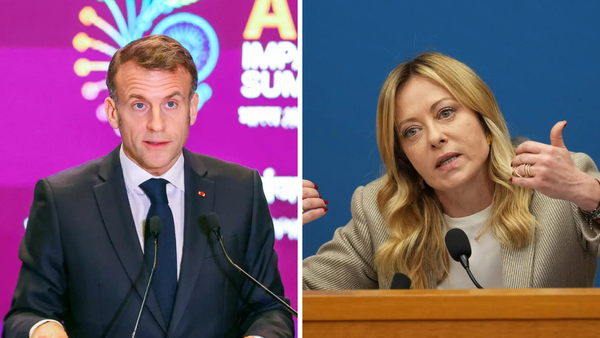
The summit will be convened on March 17 with German Chancellor Angela Merkel, French President Emmanuel Macron and possibly British Prime Minister Boris Johnson.
Erdogan said he had stressed in the Brussels talks the need to update both the 2016 migration deal between Ankara and the EU and Turkey’s customs union with the bloc, and also to revive Turkey’s stalled EU accession process.
“The EU leaders accepted that Turkey had fulfilled its responsibilities under the March 18 (2016) agreement and that the EU had acted slowly,” Erdogan said, adding that technical and political teams would now produce a road map.
Turkish Foreign Minister Mevlut Cavusoglu and Josep Borrell, the EU’s foreign policy chief, will conduct this process and try to come up with proposals in time for a summit of EU leaders on March 26, Erdogan added.
Tens of thousands of migrants have been trying to get into Greece since Turkey said on Feb. 28 it would no longer keep them on its territory as part of a 2016 deal with Brussels in return for EU aid for the refugees.
Greece has sent troops to the border area and used tear gas and water cannon against the migrants, but the pressure has continued. Greece said it stopped 963 illegal migrants in the 24 hours to 6 a.m. on Tuesday and arrested 52.
Ankara said Greece’s stance violates the migrants’ human rights. It has also accused Greek forces of shooting dead four migrants on the border, a claim Athens strongly denies.
Erdogan, who was speaking to reporters on his plane back to Turkey after discussing the migrant crisis in Brussels with top EU officials, repeated his call on Greece to change tack.
“We are not thinking of closing these gates. Our proposal to Greece is to open the gates. These people won’t stay in Greece. Let them cross from Greece into other European countries,” he said, calling for a “just, humane sharing” of the burden.
Greek military vehicles and soldiers on foot continued on Tuesday to patrol along the wire and steel fence that separates the Kastanies crossing from Turkey’s border post at Pazarkule.
Greek officials said the 52 migrants arrested from Monday to Tuesday included Syrians, Afghans and Iranians, Reuters reported.
On Tuesday Turkey’s migration authority said it had filed two applications to the European Court of Human Rights regarding one migrant it says was killed by Greek forces and a family it said was pushed back from the border.