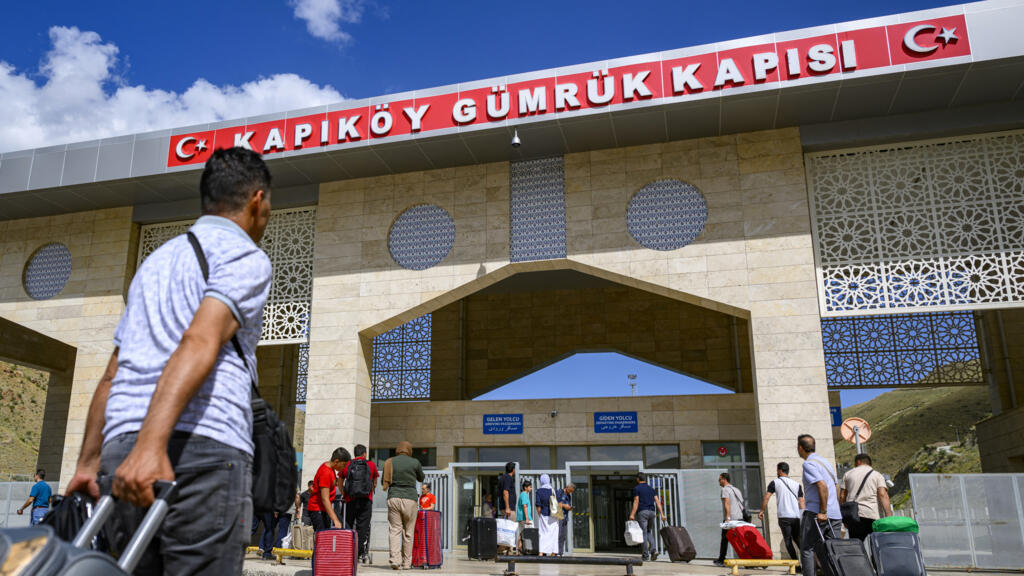
Turkey is opposing calls for regime change in Iran as security forces carry out a deadly crackdown on nationwide protests. The Turkish government accuses Israel of exploiting the unrest, and is leading efforts to block any military action against Iran – warning that a collapse of the regime could destabilise the region.
Since protests began across Iran almost three weeks ago, Turkey has tried to play down the scale of the unrest. It has distanced itself from Western allies calling for regime change and avoided offering explicit support for those demands.
The protests began on 28 December after a currency collapse triggered demonstrations by merchants and traders in Tehran. The unrest quickly spread nationwide. Activists say more than 2,000 protesters have been killed.
Alongside Saudi Arabia, Oman and Qatar, Turkey has lobbied Washington against any military response to the killings. Turkish Foreign Minister Hakan Fidan said such a move would worsen the situation.
“We oppose military intervention against Iran; Iran must resolve its own problems,” Fidan said. “We want the issue resolved through dialogue.”
France summons Iran envoy over 'unrestrained' protest crackdown
Fear of regional collapse
According to The Guardian newspaper, US President Donald Trump’s decision to step back from attacking Iran was influenced by Turkey and its Arab allies – who warned of regional chaos if an attack went ahead.
Turkey fears that Iran could descend into civil war similar to Iraq after the collapse of its regime, said Serhan Afacan, head of the Ankara-based Center for Iranian Studies, adding the consequences would be more severe due to Iran’s size and diversity.
“Iran has a population of about 90 million, including many ethnic minorities such as Turks, Kurds, Arabs and Baluchis,” Afacan explained.
“If a conflict erupts among these groups, it could result in a prolonged civil war. Any resulting immigration from Iran to Turkey could reach millions.”
Turkey and Iran unite against Israel as regional power dynamics shift
PKK security fears
Turkey already hosts about three million refugees. Experts say Ankara’s biggest security concern is the Kurdistan Workers Party, or PKK, which has fought Turkey for an independent Kurdish state and has an Iranian affiliate, PJAK.
Although the PKK announced a ceasefire last year and pledged to disband, Ankara fears unrest in Iran could give the group new opportunities, said Iranian expert Bilgehan Alagoz, of Marmara University.
“Day by day, we have started to see the PKK groups in certain cities of Iran demanding some separatist demands, and this is the main concern for Turkey,” he said.
Ankara also accuses Israel of exploiting the situation in Iran.
“Israel has targeted all these PKK groups and tried to motivate the PKK groups inside Iran,” Alagoz said. “Any instability inside Iran can create a space for the PKK.”
Fidan has also accused Israel of manipulating the protests.
Turkey is already confronting another PKK-linked group in Syria, the Syrian Democratic Forces, which controls large parts of the country. Ankara accuses Israel of supporting the SDF, adding Iran to a broader Israeli-Turkish regional rivalry.
France's Iranian diaspora divided over deadly protests back home
Energy pressure
Turkey could also clash with Washington over Iran if the protests continue. Trump has warned that countries trading with Tehran could face 25 percent tariffs.
Iran supplies Turkey with about one-fifth of its gas needs, according to Atilla Yesilada, an analyst at the Global Source Partners think tank. “Iran pumps 10 billion cubic metres of gas to Turkey every year, roughly one-fifth of total consumption,” he said.
That supply could theoretically be replaced by liquefied natural gas imports, but Yesilada warned that Turkey is already struggling to cut its dependence on Russia, its main energy supplier.
“Combine this with increasing American and EU pressure to cut gas purchases from Russia, and Turkey is in a very difficult situation,” he said.