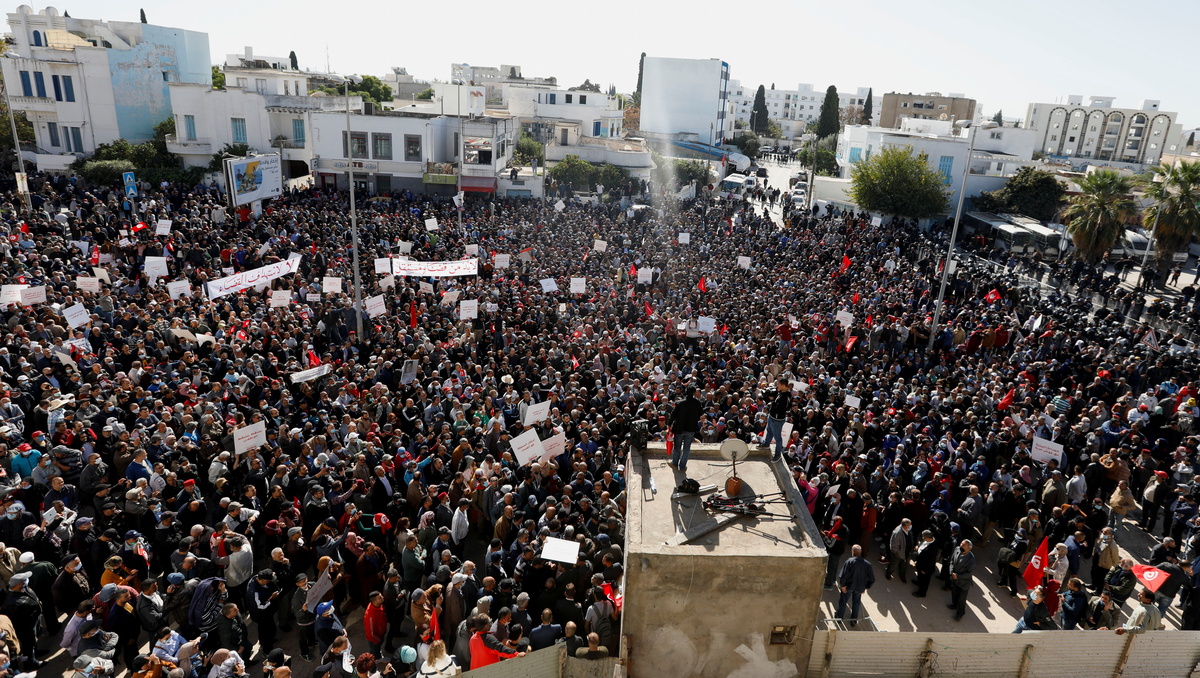
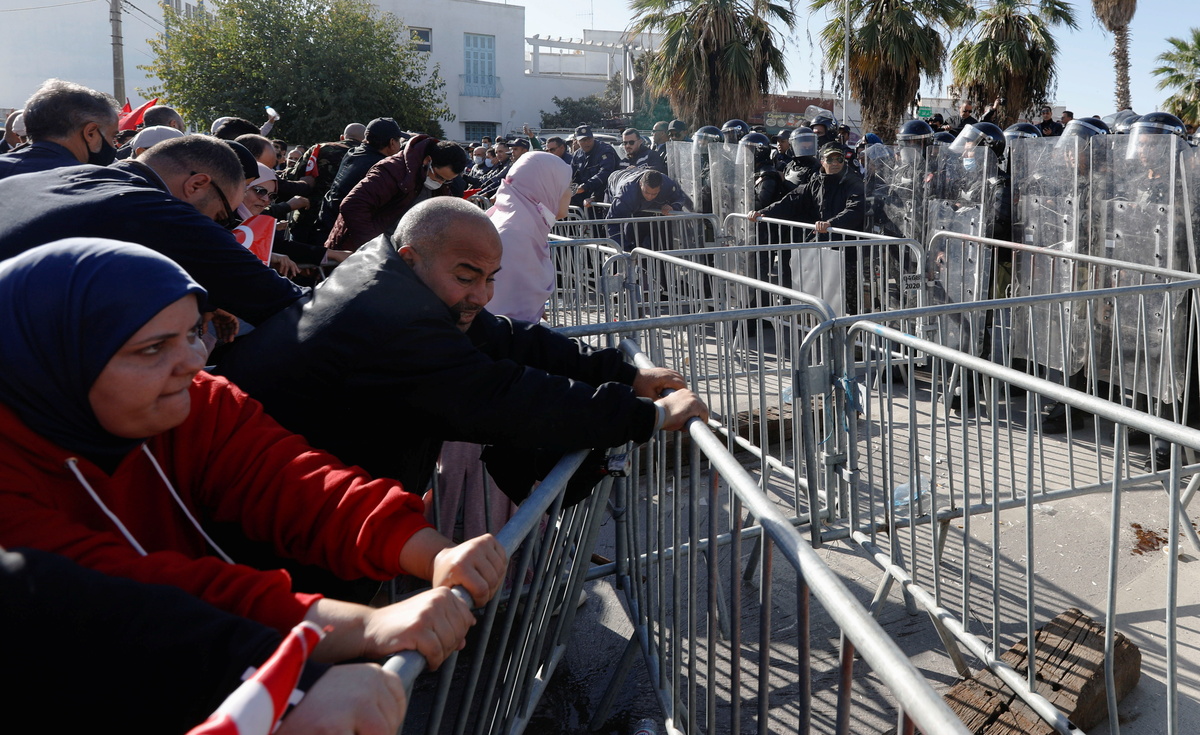
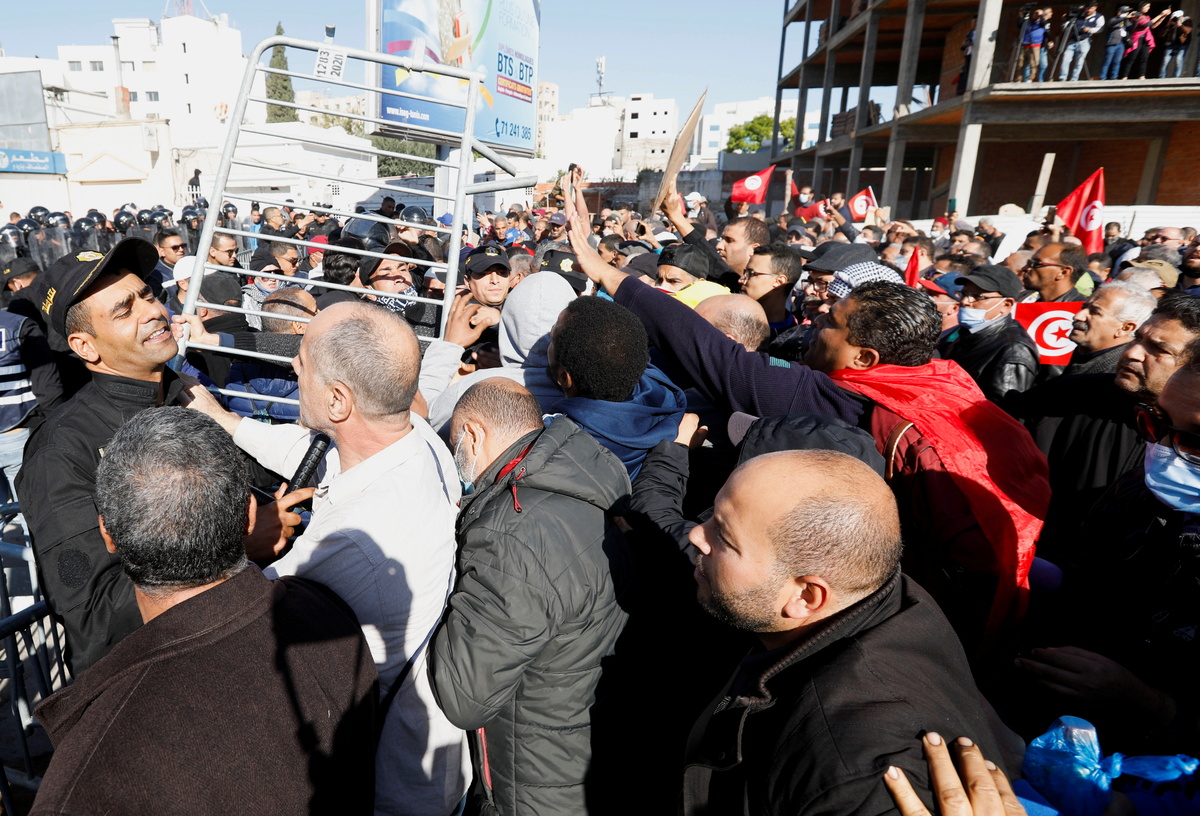
Tunisian police clashed with protesters near the chamber of the suspended parliament on Sunday as demonstrators marched against President Kais Saied's seizure of political power four months ago.
Hundreds of police had blocked off the area where thousands of protesters were gathering to demand that Saied restore parliament and normal democratic rule.
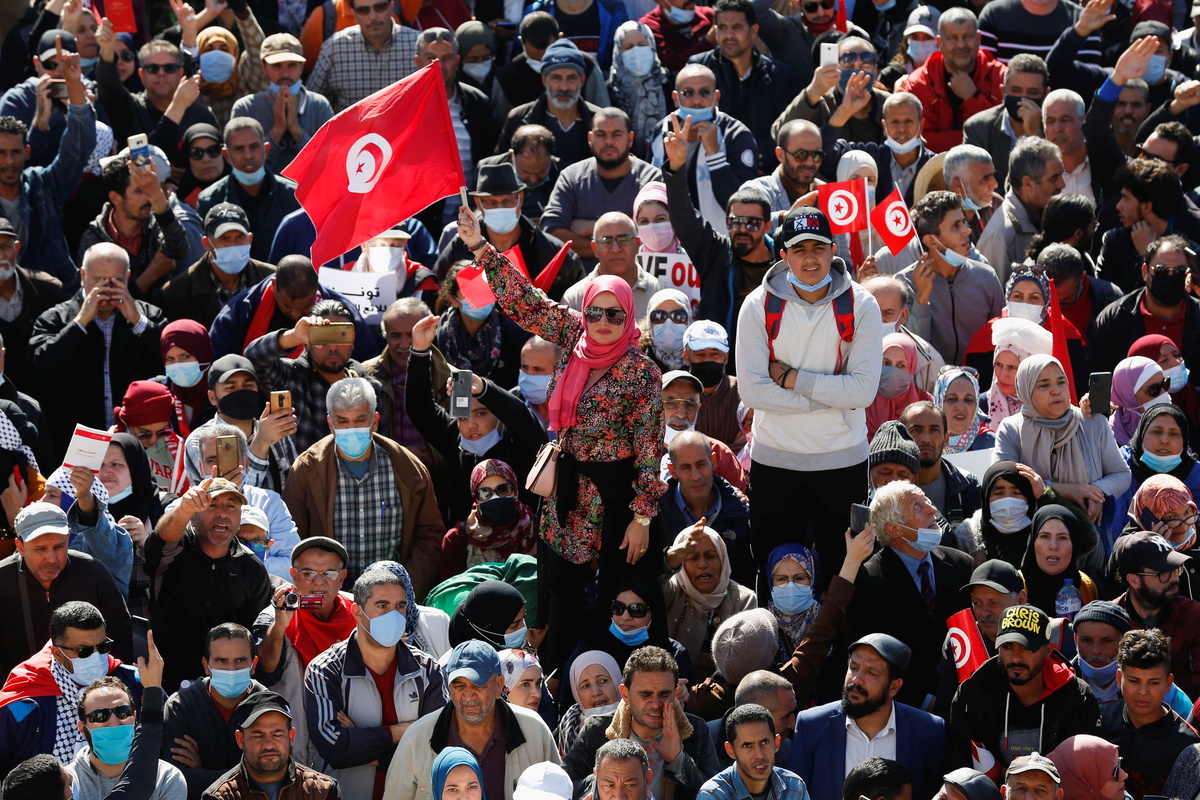
Increasingly vocal opposition, along with a looming crisis in public finances, may pose a new test of how Saied and the new government he has appointed will tackle threats to their authority.
"Shut down Kais Saied" and "Freedom! Freedom! End the police state!" protesters chanted as they pulled down barriers obstructing the roads leading to the parliament building at the capital's Bardo palace, leading to clashes.
"We are under one-man rule since July 25... we will stay here until they open the roads and end the siege," said Jawher Ben Mbarek, a protest leader.
Saied seized nearly all powers in July, suspending the parliament and dismissing the government in a move his critics called a coup, before installing a new prime minister and announcing he could rule by decree.
The president said his actions were needed to end governmental paralysis after years of political squabbling and economic stagnation, and has promised to uphold rights and freedoms won in the 2011 revolution that brought democracy.
His moves appeared to have widespread popularity and thousands of his supporters gathered for a rally to back him last month.
However, several prominent politicians have been arrested and hundreds have faced travel bans, while a former president living outside Tunisia, Moncef Marzouki, faces prosecution for his verbal attacks on Saied.
Sunday's protest followed clashes last week between police and protesters in the southern town of Agareb in which one person was killed.
"Tunisia is isolated internationally now with the closing of parliament and the coup... we want to restore democracy," said Abderrouf Betbaib, a former Saied adviser who was at the front of the protest.
(Reporting by Tarek Amara; Writing by Angus McDowall; Editing by Frances Kerry)