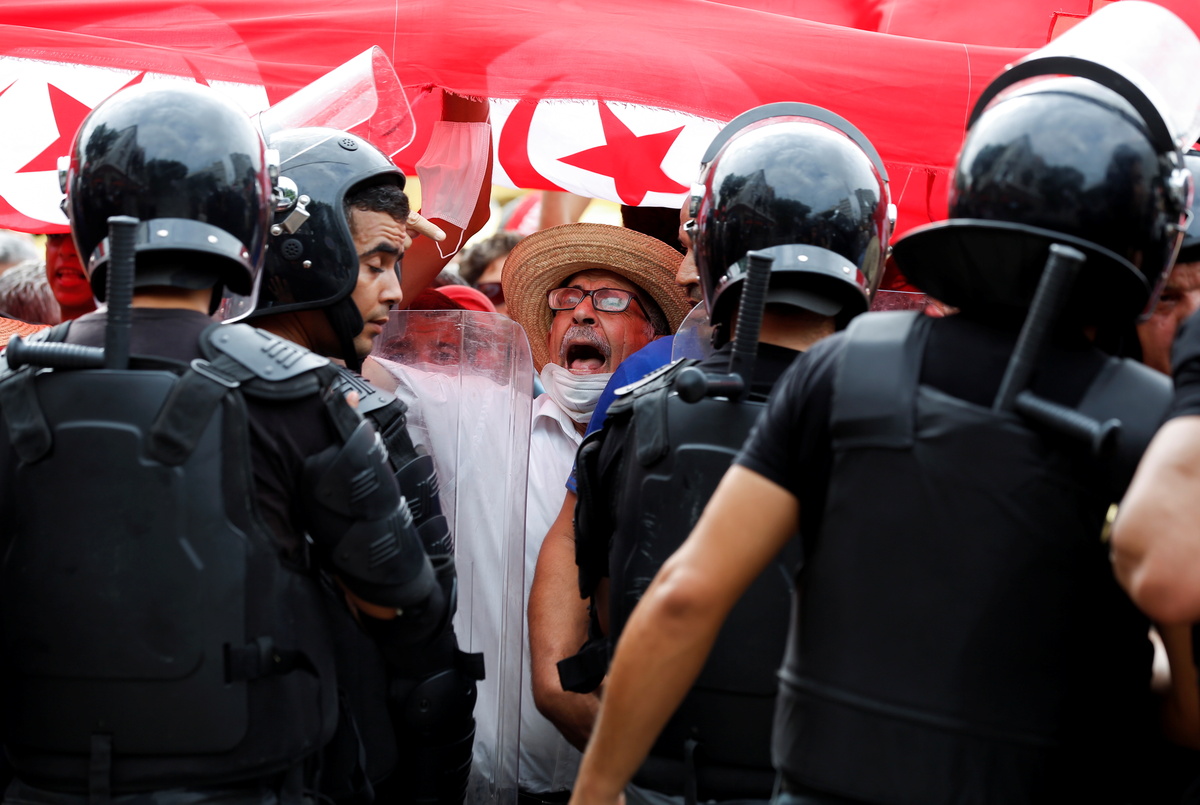
Tunisian President Kais Saied on Wednesday named a little-known professor as prime minister at a moment of grave national crisis after he seized wide powers in a move his foes called a coup.
Here is a timeline of events showing Tunisia's difficult transition to democracy after a 2011 revolution and the cascade of problems culminating in Saied's intervention.
* December 2010 - Vegetable seller Mohamed Bouazizi sets himself on fire after police confiscate his cart. His death and funeral spark protests over unemployment, corruption and repression.
* January 2011 - Autocrat Zine El-Abidine Ben Ali flees to Saudi Arabia, as Tunisia's revolution triggers uprisings across the Arab world.
* October 2011 - Moderate Islamist party Ennahda, banned under Ben Ali, wins most seats and forms a coalition with secular parties to plan a new constitution.
* March 2012 - Growing polarisation emerges between Islamists and secularists, particularly over women's rights, as Ennahda pledges to keep Islamic law out of the new constitution.
* February 2013 - Secular opposition leader Chokri Belaid is assassinated, prompting street protests and the resignation of the prime minister. Jihadists mount attacks on police.
* December 2013 - Ennahdha cedes power after mass protests and a national dialogue, to be replaced by a technocratic government.
* January 2014 - Parliament approves a new constitution guaranteeing personal freedoms and rights for minorities, and splitting power between the president and prime minister.
* December 2014 - Beji Caid Essebsi wins Tunisia's first free presidential election. Ennahda joins the ruling coalition.
* March 2015 - Islamic State attacks on the Bardo Museum in Tunis kill 22 people. In June a gunman kills 38 at a beach resort in Sousse. The attacks devastate the vital tourism sector and are followed by a suicide bombing in November that kills 12 soldiers.
* March 2016 - The army turns the tide against the jihadist threat by defeating dozens of Islamic State fighters who rampage into a southern town from across the Libyan border.
* December 2017 - The economy approaches crisis point as the trade deficit soars and the currency slides.
* October 2019 - Voters show dissatisfaction with the major parties, first electing a deeply fractured parliament and then political outsider Kais Saied as president.
* August 2020 - Saied names Hichem Mechichi as prime minister, but quickly falls out with him as the fragile administration lurches through successive crisis while struggling to handle the pandemic.
* January 2021 - A decade on from the revolution, new protests engulf Tunisian cities in response to accusations of police violence and as political infighting between Saied, Mechichi and parliament handicaps the pandemic response.
* July 2021 - Saied dismisses the government, freezes parliament and says he will rule alongside the new prime minister in an intervention that his foes call a coup.
* September 2021 - Saied brushes aside much of the constitution, which he says he will amend, and names Najla Bouden Romdhane as prime minister.
(Reporting by Angus McDowall; Editing by Catherine Evans)