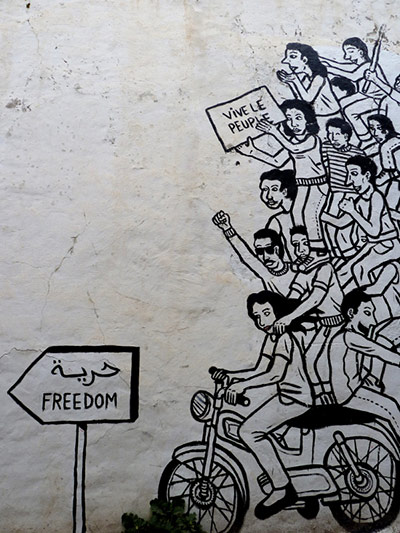
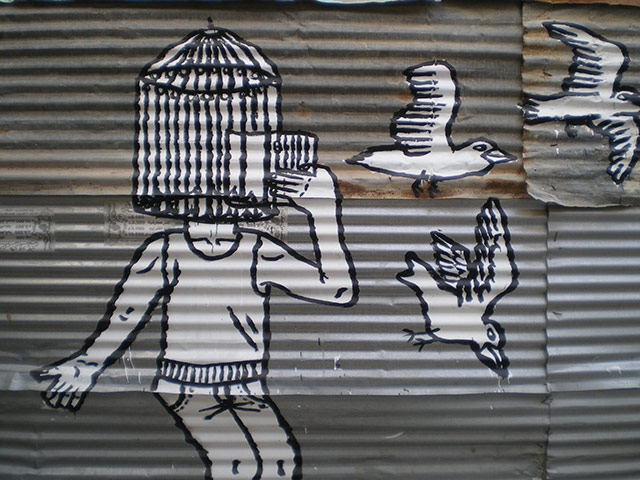
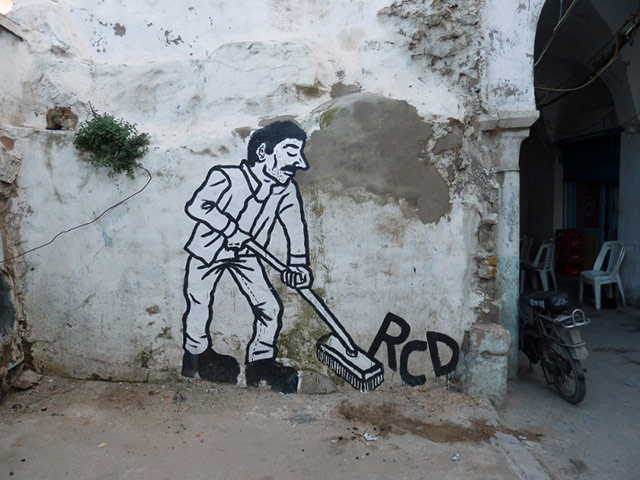
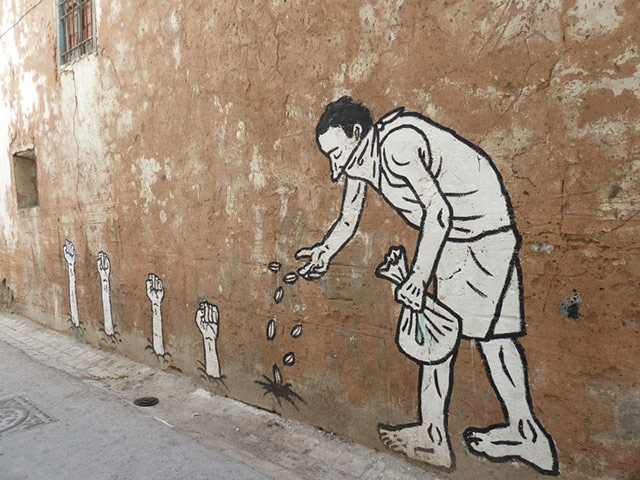
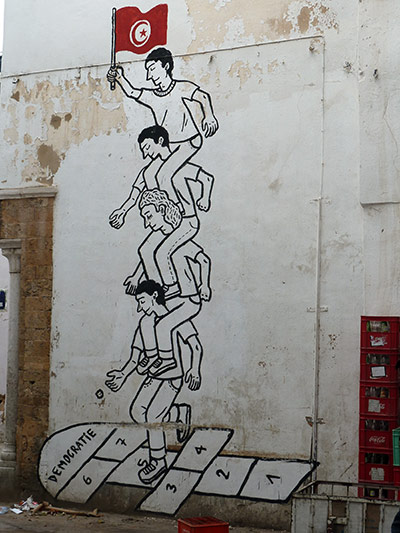
Since Tunisia gained independence from France in 1956, its people have experienced little in the way of liberty. Freedom of speech, of association and of political action were restricted, first under the autocratic rule of Habib Bourgiba and then, from 1987 until January 2011, under the repressive regime of Zine al-Abidine Ben Ali Photograph: Elissa JobsonTunisians are adjusting to the realities of free political speech. Politics, human rights and the justice system are now discussed openly in the cafes and bars of Tunis. But some habits are hard to shake and people can still be heard speaking in hushed tones when the conversation turns to the police or the Ben Ali regime Photograph: Sondos BelhassenThe Constitutional Democratic Rally party (RCD) was swept from power on 14 January 2011, after 23 years of repressive rule. Mass protests in Tunis, and in towns across the country, were sparked when Mohamed Bouazizi, an unemployed graduate, set fire to himself in front of government buildings in his home town of Sidi BouzidPhotograph: Elissa Jobson
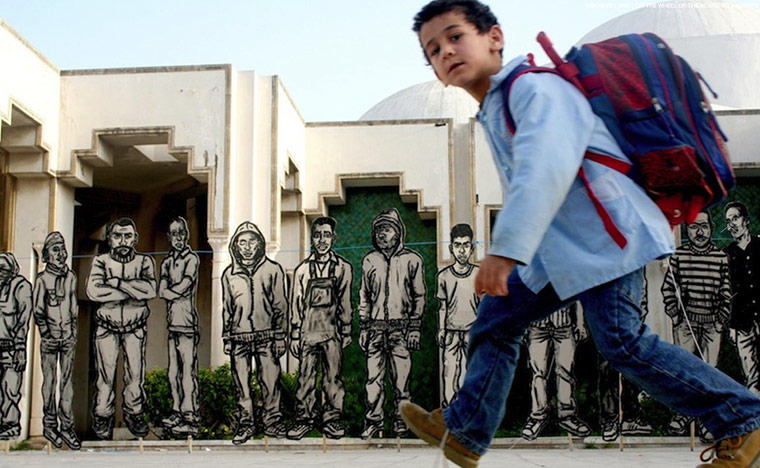
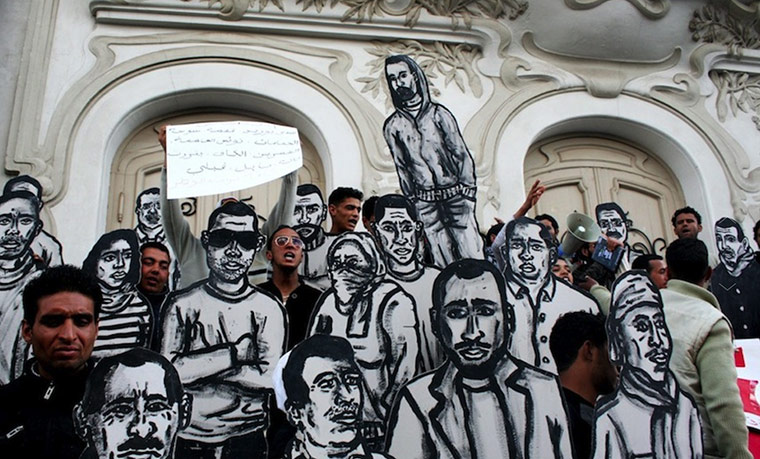
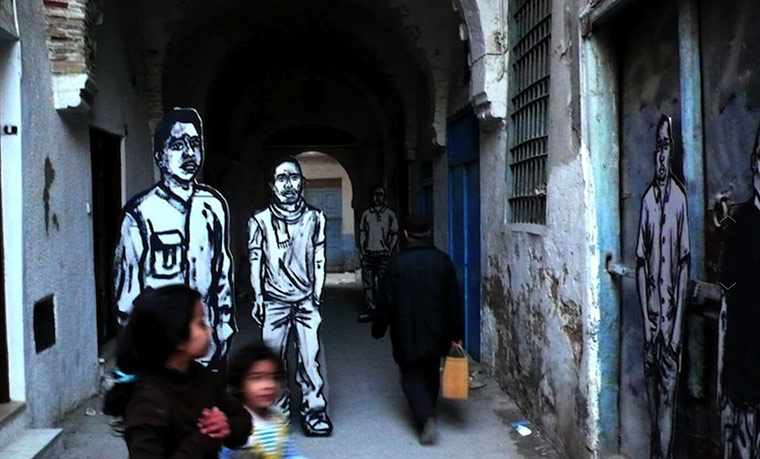
Mohammed Hanchi was one of those who lost their lives during the Tunisian revolution. Only 19, he was killed on 25 February during clashes between police and demonstrators which led to the resignation two days later of the prime minister, Mohamed Ghannouchi, a former minister of finance under Ben Ali Photograph: Sondos BelhassenThe popular uprising that unseated the dictator Zine al-Abidine Ben Ali in January grew out of chronic youth unemployment; social and economic disparities between the affluent coastal regions and the impoverished interior; and a lack of political freedomPhotograph: Elissa JobsonDemocratic rule in Tunisia is far from secure. Crucial elections in July will determine the membership of a 260-seat assembly charged with drafting the new constitution. Fears are rife that the revolution could be derailed before the process is completePhotograph: Elissa JobsonAs well as the murals, Zoo Project created 40 life-sized figures representing some of the 236 (according to official numbers) people who were killed in January's uprising. This has been called the martyrs series, Tunis. This creation was found in the Bab-Souika districtPhotograph: zoo-project.comThe martyrs series, Tunis: Demonstration at the Theatre Municipal, Avenue BourguibaPhotograph: zoo-project.comThe martyrs series, Tunis: the medina in the Hafisa districtPhotograph: zoo-project.com
Sign up to read this article
Read news from 100’s of titles, curated specifically for you.