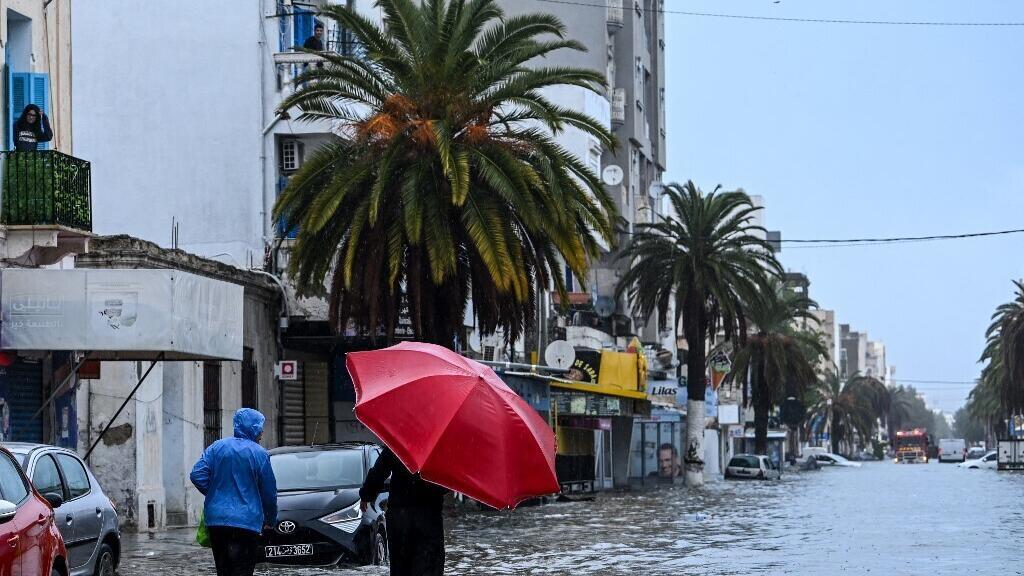
Rainfall of a level not seen for more than 70 years has caused flooding in Tunisia, leaving four people dead. Authorities say schools and many businesses, particularly in the capital, were forced to close from Tuesday.
"We have recorded exceptional amounts of rainfall for the month of January" in certain regions such as Monastir (east-central), Nabeul (northeast) and Greater Tunis, Abderazak Rahal, director of forecasting at the National Institute of Meteorology (INM), told AFP.
At least four people were killed on Tuesday as floods swept across Tunisia amid the worst torrential rain for over 70 years in some regions, and there were fears the death toll could rise, authorities said.
Images of flooded streets circulated on social media, showing numerous cars stranded in torrents of water reaching up to the doors.
Meteorological officials said the rainfall levels in some regions were the heaviest recorded since 1950.
Unprecedented chaos
"The rain fell all night, it didn't stop, and it's still coming down. At first, I didn't pay much attention; there were only small leaks. But when I got out of bed, I found myself standing in water," said Mostafa Riyahi, a resident of Tunis, in his flooded home.
A source within the Ministry of Defense, who requested anonymity, also told AFP that even the army, as a member of the commission for combating natural disasters, is participating in rescue operations.
The cloudbursts are inundating streets, submerging vehicles and disrupting daily life in multiple governorates (provinces) of the North African country, with emergency services struggling to respond to the scale of the flooding.
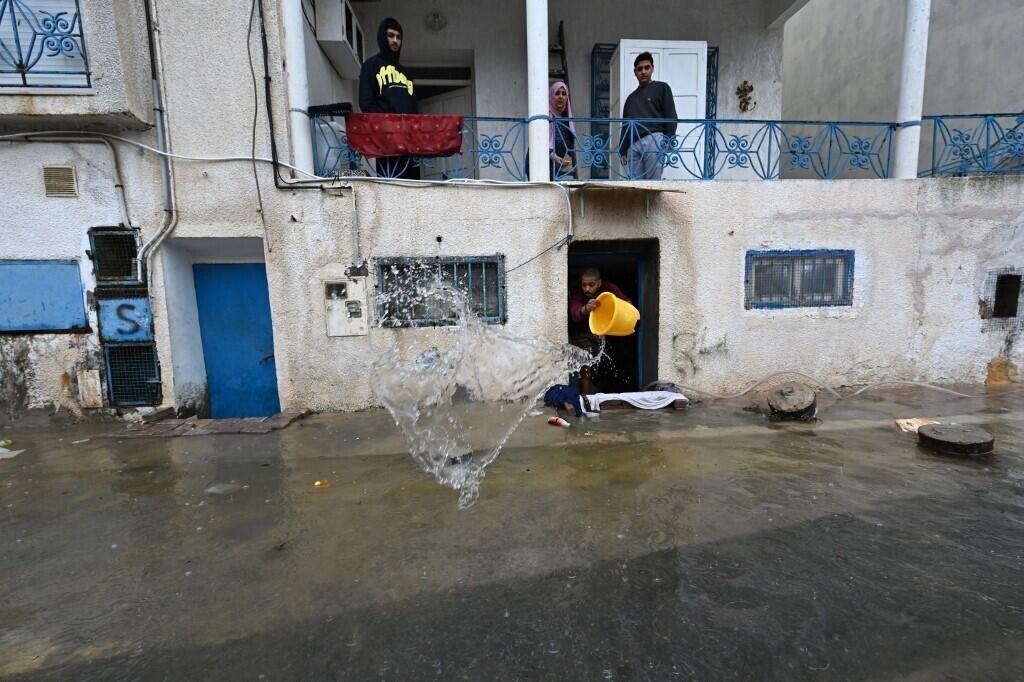
Civil protection teams say several areas are cut off by rising waters, particularly in low-lying neighbourhoods.
Schools had to close in the capital Tunis and in the towns of Nabeul, Sousse and Beja, and court sessions were suspended and public and private transport crippled in some districts, at least on Tuesday.
Videos shared on social media keep on showing fast-moving floods sweeping debris through residential streets, with seawater inundating neighbourhoods in the coastal town of Menzel Temime.
Infrastructure and climage change
The latest rainfall has proved record-breaking, but Tunisian streets often flood after heavy downpours, largely because of the state of the country’s infrastructure.
Drainage and stormwater networks are often old and poorly maintained, particularly in rapidly expanding urban areas, with waste sometimes clogging the system.
Rapid urbanisation of some areas has also led to less rainwater being absorbed into the ground, increasing runoff.
The dramatic deluge comes as Tunisia grapples with a seven-year drought, worsened by climate change and marked by a sharp decline in water reserves in dams nationwide.
The country has seen severe water stress, particularly affecting agriculture and drinking water supplies, with cuts imposed in several regions during the summer.
In neighbouring Algeria, several regions have also been hit by massive downpours and floods.
(with newswires)