Afternoon summary
- Theresa May has described North Korea’s launch of a missile over Japan as “reckless provocation”. She spoke before setting off on a visit to Japan.
- Labour and the TUC have criticised government proposals to curb excessive executive pay as ineffective. Frances O’Grady, the TUC general secretary, said the plans were “feeble”. (See 9.51am.) Rebecca Long-Bailey, the shadow business secretary, said the government was just prolonging “crony capitalism”. She said:
These proposals are just more crony capitalism from the Tories, who once again prop up the rigged system for the few at the expense of the many.
The Tory plan is a fraud, watering down an original promise to increase workers’ voice to a lone representative on the board of directors or a separate employee advisory council. Each of these will be easily outvoted or ignored.
The Tories seem to believe fixing Britain’s broken system of corporate governance, which not only leads to scandals like BHS, extreme executive pay, but also growing inequality and stagnating wages, is just a matter of changing one or two nameplates around the boardroom table.
And Rachel Reeves, the Labour MP who now chairs the Commons business committee, said the plans did not go far enough. She said:
I welcome the government’s intention to improve transparency on executive pay and to force companies to explain better how they are behaving responsibly, especially following so many examples of performance not matching some staggering pay packets.
A new code for private companies is a positive step forward, but without tough and effective enforcement mechanisms it is unlikely to be enough.
The previous BEIS select committee proposed a number of measures to curb executive pay and make companies more accountable to shareholders, employees and stakeholders.
The government has shied away from this tough approach and in doing so makes business as usual the easy option for business executives, rather than reform to tackle the excess and greed that holds back our economy and pay for everyone else.
- More than 70% of voters would find paying an “exit bill” to the EU for Brexit of £30bn or more unacceptable, a Guardian/ICM poll suggests. (See 2.56pm.)
That’s all from me for today.
Thanks for the comments.
Updated

Updated

Theresa May hailed a “watershed summer” for women’s sport as she welcomed England’s female cricket and rugby teams to Number 10, the Press Association reports.
Skipper Heather Knight led England’s cricketers to victory in the Women’s World Cup in July while their rugby-playing counterparts finished as runners-up after losing a thrilling final to New Zealand last week.
May said both England teams had contributed to a “breakthrough moment” for female sport.
She said: “It has been a watershed summer for women’s sport in our country and it was a great honour to welcome two teams, whose achievements have been such an important part of this breakthrough moment, to Downing Street today.
“Interest in women’s sports is at an all-time high and with record attendances and huge global interest, I hope we can seize this opportunity to grow women and girls’ sport in communities across the length and breadth of the land.”
She told the two teams: “I am incredibly proud that, with you, our nation can call on such wonderful ambassadors for young women and girls today.”
England cricketer Anya Shrubsole - player of the match in the final after taking six Indian wickets - said: “Growing up, you see successful sportspeople visiting the prime minister and it feels a million miles away. To be here today is an indication of how far women’s cricket has come.”
Updated
As promised, here are more figures from the latest Guardian/ICM poll.
Here are the state of the party figures.
Labour: 42% (down 1 from Guardian/ICM in mid July)
Conservatives: 42% (no change)
Lib Dems: 7% (no change)
Ukip: 3% (no change)
Greens: 3% (up 1)
- Tories and Labour tied, with both on 42%, a poll suggests.
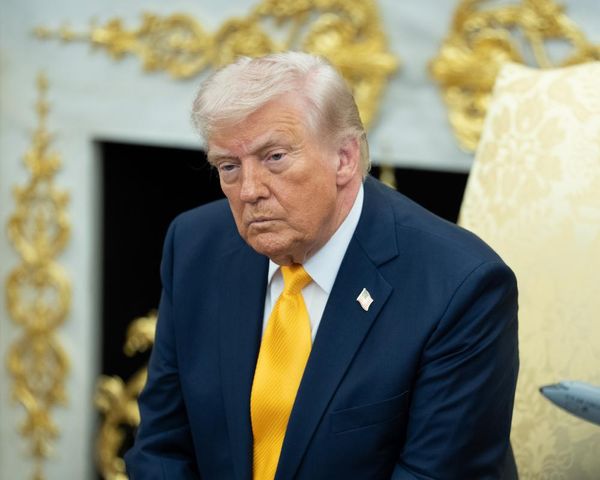
And here are results when we asked about President Trump’s planned state visit to the UK, which is now expected to take place next year. People were asked which response best described their reaction if Trump did visit.
Pleased: 13%
Accept the case for a visit, but not necessarily pleased: 26%
Upset, but would leave it at that: 20%
Upset, and would consider joining a protest march: 7%
Upset, and would definitely join a protest march: 4%
Not care one way or the other: 27%
- 11% of people say they would protest if President Trump visits the UK on a state visit or at least consider joining a protest, the poll suggests.
Trump has reportedly told Theresa May that he does not want to come to the UK if he is going to be greeted by large protests. Given that, if 4% if adults really did join an anti-Trump protest, that would mean about 2m people hitting the streets, we may not be seeing him on our soil any time soon.
But, in other respects, these figures could be a lot worse for the US president. Only 31% of people said they would be upset by his arrival. That is more than double the 13% who would be pleased to see him here. But a majority of people would either accept the case for his coming or not care, the poll suggests.
ICM Unlimited interviewed a representative online sample of 1,972 adults aged 18+ on 25 to 28 August 2017. Interviews were conducted across the country and the results have been weighted to the profile of all adults. ICM is a member of the British Polling Council and abides by its rules.
UPDATE: Here are the full tables (pdf).
Updated
May accuses North Korea of 'reckless provocation' with missile test
Theresa May has issued her own statement condemning the lastest North Korean missile test, underlining what her spokeswoman told the lobby this morning. (See 12.27pm.) May told broadcasters in a clip:
This action by North Korea is reckless provocation. These are illegal tests and we strongly condemn them.
There will be an emergency meeting of the UN security council later this afternoon and we will continue to work with our international partners to put pressure on North Korea to stop these illegal tests.
And of course, I will have the opportunity on my visit to Japan over the next few days to be discussing these issues with Prime Minister Abe.
She also said that she was not worried about spending the next few days within firing range of a North Korean missile. Asked if she had any reservations about visting Japan following the latest missile launch, May replied:
No. I’m absolutely clear that trip to Japan will go ahead. It gives me the opportunity to sit down with Prime Minister Abe over the next few days to discuss the action that North Korea has taken.

Updated
More than 70% of voters find Brexit 'exit bill' of £30bn or more unacceptable, poll suggests
At the Number 10 lobby briefing this morning the prime minister’s spokeswoman was unable to say why the government has not yet published a position paper on the amount the UK is willing to pay when it leaves the EU (see 12.27pm), despite this being one of the three issues up for negotiation in the current phase of the Brexit talks. (The government has published papers on 11 other issues.) But it didn’t matter, because all the reporters in the room knew the answer, or at least part of the answer. Ministers are worried about the public backlash.
There is another factor; conceding now that the UK would be willing to give away £Xbn would involve sacrificing a key bargaining chip, and so there are sound reasons for not saying too much too soon.
But the government has said almost nothing about what it might be willing to pay. And fresh Guardian/ICM polling today helps to explain why.
In April we asked people if they thought paying an “exit fee” of either £3bn, £10bn, or £20bn was acceptable or unacceptable. This time we asked exactly the same question, but with more realistic figures. We dropped the £3bn figure, which was only included in April because a newspaper report at the time (paywall) claimed this was the maximum amount some cabinet Brexiteers were willing to pay. Instead we asked about a bill of £10bn, £20bn, £30bn, £40bn. A report earlier this month by the Telegraph’s respected Europe editor, Peter Foster, said the UK government was willing to pay up to £36bn. Number 10 dismissed the story as “inaccurate speculation”, although it looked very plausible to Brexit specialists. The EU is said to demanding a much higher figure (up to £70bn?), although it has not said so formally yet.
Here are the poll results. People were asked if paying an “exit fee” of up to £10bn/£20bn/£30bn/£40bn, “as a one-off or in instalments, as the UK’s contribution to spending commitments made by the EU when the UK was a member”, was acceptable or not acceptable.
£10bn
Acceptable: 41%
Not acceptable: 40%
£20bn
Acceptable: 18%
Not acceptable: 65%
£30bn
Acceptable: 11%
Not acceptable: 72%
£40bn
Acceptable: 9%
Not acceptable: 75%
And here are the key points.
- Around three quarters of voters think paying an “exit fee” of £30bn or more to the EU would be unacceptable, a poll suggests. One recent report claimed the government was willing to pay a fee of £36bn. Only around one voter in 10 thinks such a sum would be acceptable, the poll suggests.
- Even an “exit fee” of £20bn would unacceptable to two thirds of voters, the poll suggests. Only 18% of voters would find this amount acceptable.
- But support for an “exit fee” of just £10bn does seem to have gone up since April, the poll suggests. In April 64% of respondents said paying that amount would not be acceptable, and only 15% said it would be acceptable. Now 41% say £10bn would be acceptable, and 40% say it would be unacceptable. This shift may partly be explained by the fact that £10bn was the lowest sum offered in this survey, but not in the April survey. But the new survey also suggests that ....
- Public support for paying a small “exit fee” seems to be increasing. In April 33% said a £3bn fee would be acceptable (against 46% who said it would be unacceptable). Now 41% say a £10bn exit fee would be acceptable. This shift may be explained by the fact that over the last four months the case for the UK having to pay some sort of “exit fee” has received increased media attention.
The poll also include state of the party questions, and questions about President Trump’s state visit. I will publish those figures soon.
ICM Unlimited interviewed a representative online sample of 1,972 adults aged 18+ on 25 to 28 August 2017. Interviews were conducted across the country and the results have been weighted to the profile of all adults. ICM is a member of the British Polling Council and abides by its rules.
UPDATE: Here are the full tables (pdf).
Updated
George Osborne, the former Conservative chancellor who now edits the Evening Standard, is continuing to use Standard editorials to lambast Theresa May and her Brexit strategy. In today’s offering, the paper suggests Labour’s Brexit policy is now much credible than the government’s.
Theresa May was elected Conservative leader because she offered a pragmatic compromise after the party was split down the middle on the EU referendum. She voted Remain, but said she understood the concerns of Leavers ...
The sensible, solid centre of the party, taking their cue from David Cameron, swung behind her and she saw off the challenge from the hard Brexit ideologues. The contrast with the Labour leadership battle a year earlier was striking. In that contest, Jeremy Corbyn had been anything but ambiguous in his hard-Left message. He won by bypassing the sensible centre in the parliamentary Labour party, not by co-opting it.
The cool political calculations made over this hot bank holiday weekend show how far we have come since then. Now it is the Conservative leader who has become hung on ideology, and the Labour leader who sees advantage in compromise.
The editorial is also very critical of the British government sources whose unattributable comments form the basis of the Daily Telegraph’s splash.
TELEGRAPH: Britain's fury at 'unhelpful' Barnier #tomorrowspaperstoday pic.twitter.com/n11VpvLrqD
— Neil Henderson (@hendopolis) August 28, 2017
Here is an extract from the Telegraph story (paywall).
The latest round of Brexit talks descended into open hostility as Michel Barnier sniped at Britain for “ambiguity” in its stance on the so-called “divorce bill” and lectured the UK to take the issue “seriously”.
Senior sources close to the talks rounded on Mr Barnier, saying he was “stuck with a headache of his own making” over the Brexit bill because of suggestions that Britain should pay to leave the EU and continue to make payments for access to the single market during a transition period. “We are not going to pay twice,” said one source.
The source added that Brussels would simply “pocket gains” if Britain made a financial offer, “as their reaction to our offer on citizens’ rights showed. We made a generous offer and got no credit”.
Another source described Mr Barnier’s attack as “inconsistent, ill-judged, ill-considered and unhelpful for the next round of negotiations”.
And this is what the Standard editorial is saying about this.
Last night the British government described the principal EU negotiator, Michel Barnier, as “inconsistent, ill-judged, ill-considered and unhelpful” — an approach that is itself inconsistent with the stated plan to be generous towards the Europeans, ill-judged when Britain should be winning allies, ill-considered when one thinks how such remarks will be read in other capitals, and unhelpful coming from a Britain that needs these negotiations to work.
This morning we saw the result of such an approach in Jean-Claude Juncker’s blistering response. The moment when brittle Brexit delusions will be shattered on the anvil of these negotiations is both being delayed and amplified by this whole testy, ideological approach. The government boasts its approach is based on “constructive ambiguity” — yet it is being neither constructive nor ambiguous.
Tom Brake, the Lib Dem Brexit spokesman, says Jean-Claude Juncker’s comments about the government’s Brexit papers (see 10.46am) reflect very badly on David Davis, the Brexit secretary. In a statement Brake said:
David Davis has described the government’s approach as ‘constructive ambiguity,’ but it looks increasingly like destructive complacency. This endless game of smoke and mirrors is undermining investment and already leading to jobs moving abroad.
Ahead of Theresa May’s visit to Japan, a Japanese diplomat has told the BBC that Japanese businesses operating in the UK are “concerned” with the Brexit processes to come. As the Press Association reports, Shinichi Iida, minister for public diplomacy at the Japanese embassy, told the Today programme:
The Japanese embassy here has been having very close conversations with the Japanese businesses operating in the UK.
Yes, they are concerned with the Brexit processes to come and it is no secret the Japanese government and also as well as lots of Japanese companies preferred the situation in which the UK would remain within the EU.
However, what Japanese businesses are expecting in my view is the clarity and the predictability over the process to come, particularly the recent agreement within the UK government for the provisional period will be a very important factor because it will give the time and adaptability for the Japanese companies to adjust to a new environment after Brexit.
Iida said there were around 1,000 Japanese companies operating in the UK, employing 160,000 people.
As I said earlier, different news agencies have translated Jean-Claude Juncker’s comments about the British government’s Brexit papers in slightly different ways. (See 10.25am, 10.33am and 10.46am.)
In the comments Mochyn69 suggests posting the original words in French. The full text of the Juncker speech is now on the European commission’s website, and so I’m happy to oblige. He was speaking to ambassadors in Brussels. Here is the key paragraph.
Et puis il y a eu le Brexit dont je ne voudrais pas dire trop parce que tout s’ébruite. Et dans la mesure où le gouvernement britannique hésite à annoncer toutes ses couleurs, pourquoi est-ce que j’annoncerais les nôtres pour inspirer les leurs ? Le team de négociation britannique est à Bruxelles, ils sont en train de discuter avec mon ami Michel Barnier. Mais je voudrais être tout de même très clair. J’ai lu avec l’attention requise tous les papiers proférés, produits par le gouvernement de Sa Majesté; aucun ne me donne vraiment satisfaction, donc il y a énormément de questions qui restent à régler. Pas seulement les problèmes frontaliers entre la République d’Irlande et l’Irlande du Nord, ce qui est un très sérieux problème auquel nous n’avons pas de réponse définitive, mais aussi le statut des Européens qui vivent au Royaume-Uni et le statut des Britanniques qui vivent sur le continent. Il doit être ultra-clair que nous n’entamerons aucune négociation sur la poursuite des événements – je veux dire par là sur les nouvelles relations notamment économiques, commerciales, trade, entre le Royaume-Uni et l’Europe avant que ne soit résolues toutes les questions qui ont trait à l’article 50 et donc au divorce entre l’Union européenne et le Royaume-Uni. On ne peut pas mélanger les genres, je n’ignore pas qu’il y a des intersections partielles entre les deux dimensions, mais le Conseil européen, suite à la proposition de la Commission, a été ultra-clair: d’abord régler le passé avant d’envisager l’avenir.
Updated
No 10 lobby briefing - Summary
Here are the main points from the Number 10 lobby briefing.
- No 10 said that Theresa May was “outraged” by North Korea firing a missile over Japan but that it would not stop her trip to Japan this week going ahead. The prime minister’s spokeswoman also said that the UK expects fresh sanctions against North Korea to be discussed at a United Nations security council meeting in New York tonight. She said:
The prime minister is outraged by North Korea’s reckless provocation and she strongly condemns these illegal tests.
From our perspective, we are willing to continue to work with out international partners to keep the pressure on North Korea.
The spokeswoman said that May expected to spend “quite a lot of time” with the Japanese prime minister Shinzo Abe over the next three days and that they would discuss North Korea. She also said plans for the Japan trip had not changed. “We are going on the trip and our plans haven’t changed at all,” the spokeswoman said.
- Downing Street urged the EU to show “more imagination and flexibility” in the Brexit talks. In response to the comment from Jean-Claude Juncker, the European commission president, this morning about the UK’s Brexit papers not being satisfactory (see 10.46am), the spokeswoman said the government has published a number of papers recently. She went on:
We believe we are in a good position and we would like to move on to discuss our future relationship ...
As David Davis [the Brexit secretary] has said, we believe that we need the EU to show some more imagination and flexibility when it comes to these discussions ... Our desire is to discuss both [withdrawal and the future trade relationship] at the same time.
- The spokeswoman said further Brexit papers would be published in the coming weeks. But she was unable to say why the government had not yet published one on the “Brexit bill” - one of the three issues that the EU wants to focus on at this stage in the Brexit talks.
- Downing Street said Theresa May had “full confidence” in Boris Johnson in response to claims in the Times (see 10.58am) that the foreign secretary is widely regarded by his counterparts abroad as a joke and a liability. Asked about the general claims in Rachel Sylvester’s column, the prime minister’s spokeswoman said:
I’m not going to comment on a newspaper column. The prime minister meets the foreign secretary regularly. They have a good relationship.
Asked the stock question about whether the prime minister has full confidence in Johnson, the spokeswoman said she did. The spokeswoman also said May thought Johnson was doing a good job, although the spokeswoman gave a more evasive answer when asked if May thought Johnson had the confidence of his fellow EU foreign ministers. And the spokeswoman refused to comment on two specific claims in the Times column: that even the Trump White House views Johnson as a joke (see 10.58am), and that the intelligence agencies are wary of sharing secret information with him. (Sylvster says: “At the intelligence agencies, there is a nervousness about giving sensitive material to a politician who treats every public outing like an after-dinner speech. ‘It’s all about managing Boris, not respecting him,’ says one Whitehall source.”)
- Downing Street said that the government is undertaking a review of how the fostering system works. The “stocktake”, which is being carried out by the Department for Education, will report by the end of the year, the spokeswoman said. She made the comments in response to questions about the reports about a five-year-old Christian girl in the care of Tower Hamlets being placed in foster care in two Muslim households. The spokeswoman said that she could not comment on individual cases, but that there were rules in place and that the priority was children’s safety.
- The spokeswoman claimed that May’s position on putting workers on company boards “has been consistent” and “has not changed”. That was in response to a question about whether May accepted that she had dropped plans to put workers on company boards. The spokeswoman said:
[May] wants to improve workers’ representation and that’s going to be achieved with part of this report, which is about changes to the corporate governance code.From her perspective, her position has been consistent and has not changed.
But a comparison of what May was saying in July last year with what has been announced today shows that the original proposal certainly has been watered down. See 9.51am.
- The Department for Transport is today opening the procurement process inviting companies to bid for contracts worth £3bn to transform Euston station.

Updated
May 'outraged' by North Korea missile test, says No 10
I’m just back from the Number 10 lobby briefing. Asked about North Korea launching a missile over Japan, the prime minister’s spokeswoman said that Theresa May was “outraged by North Korea’s reckless provocation”.
The spokeswoman also said that May’s visit to Japan this week is still going ahead as planned and that the UK expects fresh sanctions against North Korea to be discussed at a United Nations security council meeting in New York tonight.
I will post a full summary of the briefing shortly.
I’m just off to the Number 10 lobby briefing. I will post again after 11.30, when it’s over.
In the meantime, here is an extract from Rachel Sylvester’s column in the Times today (paywall). It’s five-star hatchet job on Boris Johnson, the foreign secretary, who is “rapidly becoming a national embarrassment”, Sylvester says.
Boris Johnson is becoming the Where’s Wally? of international diplomacy. All over the world the geopolitical tectonic plates are shifting yet at this time of huge global significance the foreign secretary is all but invisible on the international stage. On the nuclear threat posed by North Korea, the crisis over Saudi Arabia and Qatar or the clash between the US and China, he is irrelevant. On Syria, Afghanistan, Iraq, Iran, Russia, Venezuela, Turkey and Yemen, he is incoherent. Occasionally he surfaces briefly, like a hostage paraded before the television cameras to prove he is still alive, as he did after a visit to Libya last week, but even then he is ineffective because he has ceded all influence to others.
As the US enters an extraordinary culture war under Donald Trump, Mr Johnson remains morally ambiguous, flip-flopping between dismissing criticisms of the president as a “whinge-o-rama” and claiming he got it “totally wrong” in his response to the recent racial violence in Charlottesville. He made a serious strategic error in aligning himself so quickly with a divisive populist across the Atlantic who no longer even has the support of his own Republican Party.
In this country, Labour has finally joined the argument about the implementation of Brexit, but the foreign secretary is nowhere to be seen in that debate. Having fooled the United Kingdom into voting to leave the European Union, by promising that it would mean an additional £350 million a week for the NHS, he has no realistic idea of what Brexit should entail. He suggests the policy should be to have our cake and eat it and that other EU countries can “go whistle” for UK payments, as if this were some kind of public school game rather than a negotiation on which the future of the nation depends. Again, there is an inability or an unwillingness to think through the long-term consequences of his position ...
I’ve just spent a fortnight in America and was shocked by the number of tech entrepreneurs, hedge fund managers and political strategists I met who asked: “Why has your prime minister appointed a fool as foreign secretary?” According to diplomatic sources, even officials at the Trump White House “don’t want to go anywhere near Boris because they think he’s a joke”. If that seems ironic, one minister says: “It’s worse in Europe. There is not a single foreign minister there who takes him seriously. They think he’s a clown who can never resist a gag.”
Updated
The Press Association has now filed its own version of the Jean-Claude Juncker rebuke to the UK. It has a more extensive version of the key quote, although its translation is again slightly different from AP’s (see 10.25am) and AFP’s (see 10.33am). PA quotes Juncker as saying:
I did read, with the requisite attention, all the papers produced by Her Majesty’s government and none of those is actually satisfactory.
So there is still an enormous amount of issues which remain to be settled.
Not just on the border problems regarding Ireland and Northern Ireland, which is a very serious problem in respect of which we have had no definitive response, but we also have the status of European citizens living in the UK and UK citizens living on the continent.
We need to be crystal clear that we will commence no negotiations on the new relationship - particularly a new economic and trade relationship - between the UK and the EU before all these questions are resolved.
First of all we settle the past before we look forward to the future.

The AFP news wire has a fuller and slightly different version of the Jean-Claude Juncker quote about the UK’s Brexit papers not being satisfactory. It quotes him as saying:
I have read with all necessary attention all the position papers drawn up by the UK government but none of them really give me satisfaction, so there is an enormous amount of questions that need to be resolved.
I presume that Juncker was speaking in French, and that AP (see 10.25am) and AFP have translated his comments slightly differently.
UK's Brexit papers are not satisfactory, says European commission president
Jean-Claude Juncker, the European commission president, said this morning the Brexit papers published by the British government recently are not satisfactory. According to the Associated Press news agency, commenting on the papers he said:
None of them give me any real satisfaction. So there are many questions that remain to be resolved.
The AP report says Juncker also reaffirmed the EU’s determination not to open talks with the UK about a future trade relationship until sufficient progress has been made on the withdrawal issues (the rights of EU nationals, Ireland, and financial obligations, aka the “Brexit bill”). The AP report says:
While British negotiator David Davis called for “flexibility and imagination” to move on all issues, Juncker said in some of his clearest comments so far, that “it must be made ultra-clear that we will not undertake any negotiation on the continuation of events” before the key divorce issues are settled first.
Juncker said that “we can’t mix things up” and insisted “first resolve the past before imagining the future.”
The BBC’s Adam Fleming says Juncker will get a progress reports on this week’s talks on Saturday.
"Must be crystal clear" that trade talks come after settling withdrawal issues, @JunckerEU tells conference of EU diplomats
— Adam Fleming (@adamfleming) August 29, 2017
So @JunckerEU says he'll have an idea on Friday night and @MartinSelmayr will have a paper on his desk by 11 on Saturday morning
— Adam Fleming (@adamfleming) August 29, 2017
Another @JunckerEU quote from this morning: He read the UK govt #Brexit position papers “and none of those is satisfactory"
— Adam Fleming (@adamfleming) August 29, 2017
The Financial Times’ Jim Pickard thinks that, if the government was proud of its corporate governance plans, Greg Clark, the business secretary, would have been out on the airwaves this morning promoting them.
if Greg Clark thinks his corporate governance package is anything other than thin gruel why is he not out defending it on #today?
— Jim Pickard (@PickardJE) August 29, 2017
Frances O'Grady's Today interview - Summary
Here are the main points from Frances O’Grady’s Today interview about the government’s corporate governance reforms.
- O’Grady, the TUC general secretary, described the plans as “feeble”. She said the government had “bottled it” in response to pressure from business and criticised ministers for refusing to curb excessive executive pay while capping pay rises for ordinary public sector workers. (See 9.19am.)
- She said Theresa May had gone back on her promise to put workers on company boards.
Most of us would think that workers on boards means workers elected by other workers, not people who are not workers selected by the boss. It seems to use plain common sense that we need the boardroom shaken up.
Putting workers on company boards was “mainstream” in the rest of Europe, she went on.
Of course, this is mainstream in the rest of Europe, with the majority of EU countries now providing for some form of worker representation on the board. Why does our government think that British workers aren’t up to the job?
In a speech in July last year, when she was running for the Conservative party leadership, May said:
The people who run big businesses are supposed to be accountable to outsiders, to non-executive directors, who are supposed to ask the difficult questions, think about the long-term and defend the interests of shareholders. In practice, they are drawn from the same, narrow social and professional circles as the executive team and – as we have seen time and time again – the scrutiny they provide is just not good enough. So if I’m Prime Minister, we’re going to change that system – and we’re going to have not just consumers represented on company boards, but employees as well.
But today, as the government press release says, ministers are just proposing “new measures will seek to ensure employee voice is heard in the boardroom”. Full details are in this 69-page government document (pdf), but the main proposal is to change the UK corporate governance code to require big companies “to adopt, on a ‘comply or explain’ basis, one of three employee engagement mechanisms: a designated non-executive director; a formal employee advisory council; or a director from the workforce.” The “comply or explain” clause means companies can ignore the rule if they want but that, if they do, they have to explain why.
- O’Grady said the government plans had “no teeth” and would little impact on executive pay.
A lot of these proposals are about transparency and voluntary action. And we may get one-off reductions in top pay for PR purposes, but then see it creeping back, because these proposals have no teeth. And much of the information that they are proposing to make transparent is already in the public domain.
- She said it was not enough to rely on shareholders to vote down excessive pay deals for executives because only three remuneration reports were defeated by shareholders in the last season.

Updated
Good morning. I hope you’ve all had a good summer.
The calendar year starts in January, the tax year starts in April, and the parliamentary year starts with the Queen’s speech in the spring. But, by general agreement, the political year starts around the beginning of September: either on the Tuesday after the August bank holiday (today), or when the prime minister and leader of the opposition get back to work after their summer holidays (roughly two weeks ago), or when the Commons returns in September (a week today).
We’re at the start of a 12-month cycle which, which probably for the first time in four years, won’t be overshadowed by a major referendum or election. But it won’t be dull. It is a year that will be dominated by Brexit, by the negotiations in Brussels and by the passage of several landmark pieces of legislation through parliament. At the moment there is considerable uncertainty about what will happen, but by the time we all get back from our holidays next summer, Brexit will be just seven months away, and we should have a much clearer idea of how it will unravel.
This morning the domestic news is dominated by Theresa May’s (well-trailed) announcement about corporate governance and executive pay. As Peter Walker explains in his overnight Guardian story, May has watered down her original plan to put workers on company boards.
The government’s press notice with full details of the announcement is here.
On the Today programme Frances O’Grady, the TUC general secretary, said she did not think the proposals would make much difference. They were “feeble”, she said.
Just a year ago the prime minister repeatedly promised fundamental reform of business. And that’s because there was real public concern about boardroom greed, about tax avoidance, and exploitative works practices at the likes of Sports Direct. This response, I’m afraid, is feeble ...
I’m afraid the government has bottled it in the face of business lobbying. And that doesn’t bode well for really tackling some of these big problems, like greed at the top, and what’s happening to everybody else’s pay.
I have to say, if the government had shown an ounce of the enthusiasm for capping top pay that it has shown for capping the pay of firefighters, nurses and teachers, we would probably be in a very different place.
I will post more from the O’Grady interview shortly.
The Commons is still in recess, but we’ve got a Number 10 lobby briefing at 11a.m
As usual, I will be covering breaking political news as it happens, as well as bringing you the best reaction, comment and analysis from the web. I plan to publish a summary at lunchtime and another in the afternoon.
You can read all today’s Guardian politics stories here.
If you want to follow me or contact me on Twitter, I’m on @AndrewSparrow.
I try to monitor the comments BTL but normally I find it impossible to read them all. If you have a direct question, do include “Andrew” in it somewhere and I’m more likely to find it. I do try to answer direct questions, although sometimes I miss them or don’t have time. If you want to attract my attention quickly, it is probably better to use Twitter.
Updated