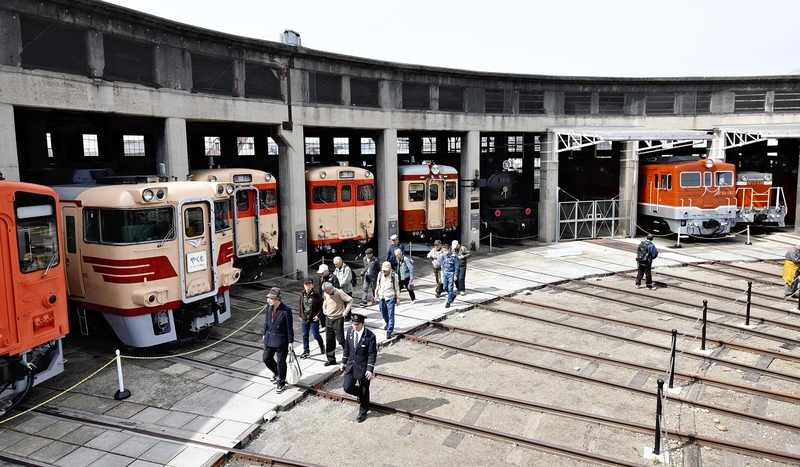
TSUYAMA, Okayama -- Old-time diesel train cars sit in a row, their flat faces poking out of a fan-shaped roundhouse.
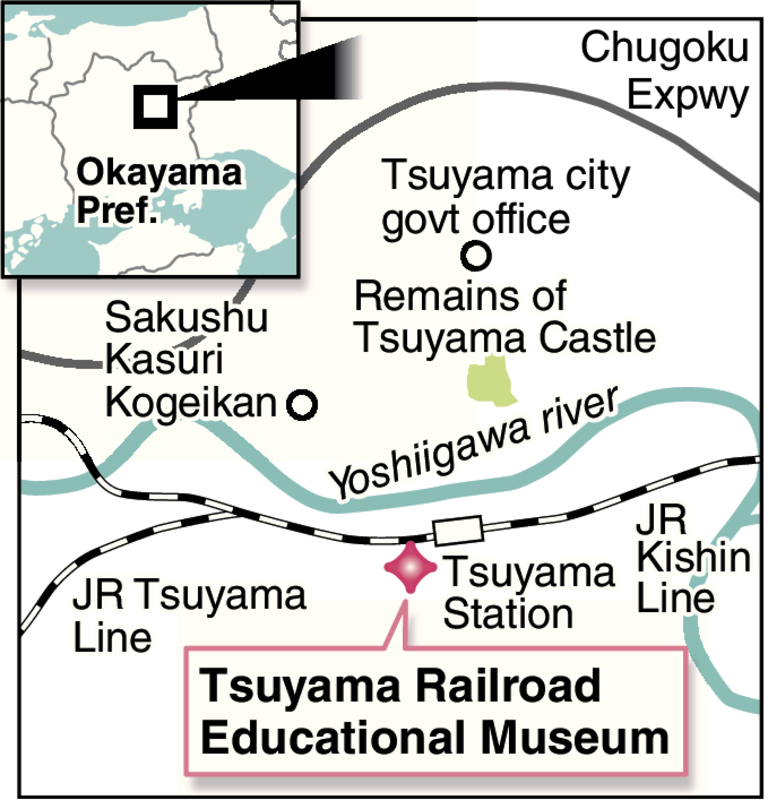
Opened in 2016 on the west side of JR Tsuyama Station in Tsuyama, Okayama Prefecture, the Tsuyama Railroad Educational Museum displays 13 trains, including diesel locomotives and railcars from the days of the now-defunct Japanese National Railways (JNR).
Although not flashy like the Shinkansen, the sight of these trains, which were used throughout the nation and are now quietly spending their "golden years" at the museum, wins the hearts of railways fans, families and other visitors.
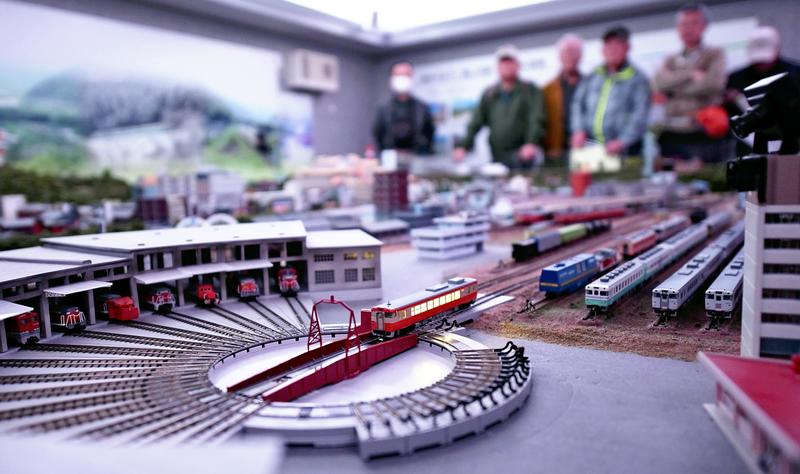
"It's like being in the world of a picture book!" exclaimed 5-year-old Kei Kawamoto of Higashi-Hiroshima, Hiroshima Prefecture.
The fan-shaped roundhouse, with its turntable capable of reversing the direction of the trains and 15 sets of tracks, has a similar structure to the one that appears in the popular "Thomas the Tank Engine" anime series, and is popular among families.
"I really like its round face," Kawamoto said with a smile when he saw the D51 steam locomotive popularly known as "Degoichi."
Key transportation point
Tsuyama has long been an important transportation hub connecting the Sanin and Sanyo regions. The roundhouse was established in 1936 on the grounds of Tsuyama Station, in tandem with the completion of the Kishin Line.
It is the second-largest of the more than 10 fan-shaped roundhouses remaining in the country, after the one at the Kyoto Railway Museum in Kyoto.
The Tsuyama roundhouse is distinctive for its large number of diesel trains. The regular exhibition of the trains began in 2016, in tandem with the museum's display rooms, and has drawn more than 200,000 visitors so far.
Train enthusiasts are particularly drawn to the DE50 diesel locomotive, a rarity in that only one was manufactured in Japan in 1970. Reportedly due to such factors as the electrification of the lines on which it was scheduled to be introduced, the locomotive was not produced in bulk.
Katsuaki Okamura, 77, of Suita, Osaka Prefecture, a former long-time employee of JNR and JR, stopped in front of the simple red body of a DF50, which was manufactured in 1958.
"When the Kii Peninsula was connected by a single train line, I took a trip on a train pulled by this locomotive," Okamura said. "Seeing this stylish, strong train brings back memories."
Haruhiko Mori, a 20-year-old university student from Chofu, Tokyo, said, "They have a certain dignity different from the stainless steel bodies of trains nowadays."
Mori's gaze was fixed on train cars that had operated around the country in such capacities as special express and express trains. The "JNR colors" of dark red or scarlet on cream give them a retro feel.
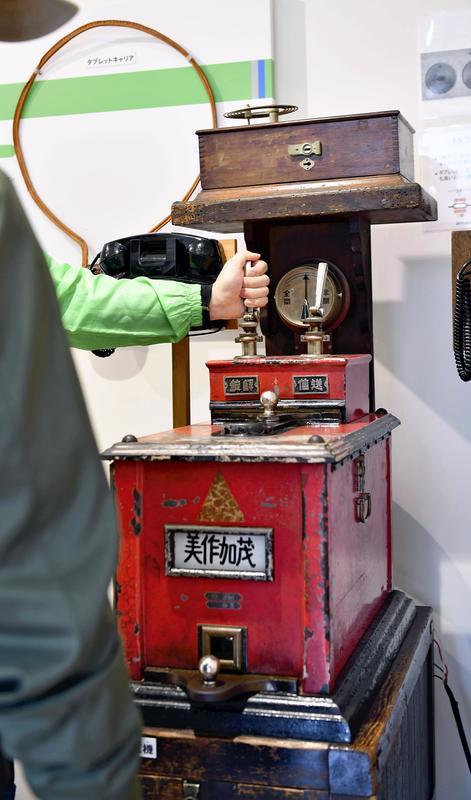
In the exhibition rooms near the roundhouse are displayed an assortment of old tools and devices that were used in the station or for trains. A block instrument for preventing collisions between trains on a single line of track can actually be operated.
Pulling a lever rings a bell, making one feel like a station employee of old.
Local line with atmosphere
The JR Tsuyama Line, on which a number of station buildings made of wood still remain, has drawn attention in recent years as a local line that lets visitors enjoy an old-time atmosphere. Since 2016, the line has been running a "nostalgia train" with an outer and inner decor based on that from the JNR days.
The line suffered damage last year from landslides and other effects of torrential rains that hit western Japan, but operations fully resumed about a month later.
"This roundhouse is still in active use today," says museum staffer Shogo Kishimoto, 31. A slot near the center is generally kept open for trains needing maintenance or inspection.
With its long years of consistent service, the roundhouse earned the designation of national "heritage of industrial modernization" in 2009, and last year was named a JR West "railway monument."
Light streaming in through the windows illuminates the inside of the roundhouse. Looking at the ceiling, black with soot, I feel its history of overcoming war and disaster while serving as the legs of the region.
-- Tsuyama Railroad Educational Museum
A 10-minute walk from JR Tsuyama Station, the museum is open from 9 a.m. to 4 p.m. Admission is 300 yen for high school students and older, and 100 yen for elementary and junior high school students. For more information, call the museum at (0868) 35-3343.
Sakushu Kasuri Kogeikan
The crafts hall is a 20-minute walk from JR Tsuyama Station, and is open from 10 a.m. to 4 p.m. For more information, call the hall at (0868) 23-0811.
Both facilities are closed on Mondays, or on the following day if Monday is a public holiday.
Read more from The Japan News at https://japannews.yomiuri.co.jp/