
I have tiny veins. So tiny that it usually takes several sticks before a phlebotomist can draw my blood. This has always been a problem, and as I aged, a bad situation got a lot worse.
Thankfully, my health hasn’t required that I have blood draws more than once a year in recent years. But, man, do I get stressed out when it comes to shots.
I trace a lot of this anxiety back to childhood. On “shot day,” teachers herded us like cattle into the auditorium. There we stood in long lines, with some of the children crying so hysterically a teacher had to restrain them.
Of course, the anticipation of the shot was a lot worst than the actual prick. But I still have to steady my nerves before I get a flu shot.
So you can imagine how anxious I am about getting the COVID-19 vaccine. I glanced at Wednesday’s front-page photograph of Dr. Marina Del Rios getting the first COVID-19 vaccination at Loretto Hospital in the Austin neighborhood, and I felt faint.
Yes. I’m one of those people who get weak in the knees if I even see someone getting a shot.
And I’m not alone.
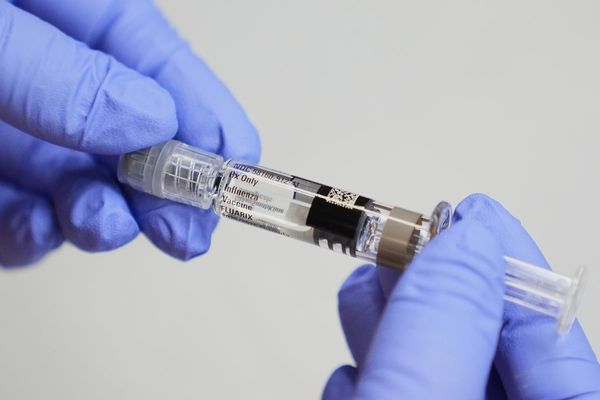
This extreme fear of medical procedures involving injections or hypodermic needles is called trypanophobia, and according to health professionals, this is a condition that affects at least one in 10 people. According to several online articles, symptoms include dizziness, fainting, anxiety, insomnia, panic attacks, high blood pressure, racing heart rate, feeling emotionally or physically violent, and avoiding or running away from medical care.
I probably won’t have to deal with this phobia for a while, given that the federal government has slashed Illinois’ share of Pfizer-BioNTech COVID-19 vaccine in half, to 4.3 million doses. The feds also cut in half another 8.8 million doses that were supposed to arrive next week, the Chicago Sun-Times reported.
The state’s health care workers, followed by long-term care facility residents, are first in line for the vaccine. That’s an easy call. Figuring out who comes after that will be the hard part.
Right now, the plan is to vaccinate essential workers and older residents with underlying health conditions. But who are those critical workers? For instance, will teachers get in line before postal and construction workers? How about bus drivers and journalists? CEOs? Where do they fit?
It may be a while before health officials sort out their priorities. For various reasons, some of you will choose not to get the vaccine. Some people (like my husband) have never had a flu shot and haven’t gotten the flu. Others have safety concerns about this particular vaccine because they don’t trust the Trump administration to do anything right.
I suspect that some of you will be willing to go to the back of the line because you have a fear of needles. The fear of needles has more than tripled in the last 30 years, according to a study cited by Advent Health Tampa.
But there are ways to overcome that fear. “Remind yourself that any pain associated with shots or blood draws are over almost instantaneously,” said Dr. Timothy Hendrix, medical director of AdventHealth Centra Care Center in Tampa.
Hendrix suggests patients be upfront about their fear. I understand most people don’t want to come off looking like a wimp, but better to look like a wimp than to end up fighting a deadly virus. Me, I’m going to do my best to avoid those long lines of rolled-up sleeves.
It gives me the willies just thinking about it. Having an extreme fear of needles isn’t shameful.
But it is best to deal with it before it is your turn to get in the queue.