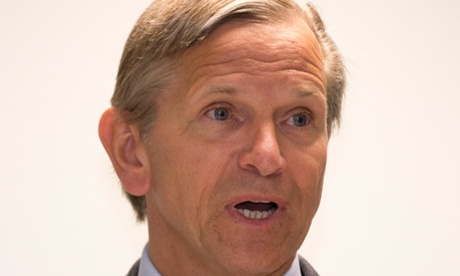
Two years ago, Marc Bolland was being asked whether he could cling on to his job as chief executive of Marks & Spencer in the face of seemingly perpetual flops in its clothing lines. Today the line of questioning is different: might he choose to depart on a high, declaring his work to be done? Neither extreme view was, or is, an exact fit. M&S under Bolland never failed as severely as the caricature suggested. But nor is it even remotely restored to cruising altitude.
Bolland’s error at the outset – one reason why he invited so much criticism – was to suggest that M&S could be overhauled within three years. He had to abandon his sales targets, embarrassingly, after a single lap of the track. Look back at that November 2010 presentation and laugh. The plan was to “grow total sales to £11.5bn–£12.5bn by 2013-14”.
Even today’s 2014-15 figures show total sales at only £10.3bn. Yet the reason why those original targets were preposterous also became plain. M&S wasn’t just suffering from a sluggish retail market. Its back office operations, from warehouses to supply chains, to a website that had been foolishly outsourced to Amazon in 2004, required a complete rewiring, taking capital expenditure to £800m a year.
That job – finally – has been completed, thus Bolland can boast that the heavy lifting has been done. In operational terms, M&S looks as if it has joined the 21st century, which arch-rival Next did at the time. Gross margins are improving on the general merchandise side (up almost two percentage points last year) and lower capital spending means £150m can be thrown at a share buyback programme.
Yet the lighter lifting is equally important. That will require M&S to demonstrate that its general merchandise division can improve sales, rather than merely squeeze out higher margins via efficiency savings. It’s not there yet. It’s not even close. As Wednesday’s statement says, full-year sales in general merchandise did not meet expectations.
A last-quarter return to positive like-for-like sales growth proves nothing. M&S’s food side has been successful throughout Bolland’s time, and helped to save his job, but a group-wide 6% improvement to £661m in underlying pre-tax profits offers promise of better times, nothing more. Bolland, rightly, is not getting carried away. “With our new infrastructure largely in place, we are focused on delivery,” he says.
It is the reason why investors would be alarmed if he jumped ship now: the job is not complete. Shareholders would wonder if the boss was declaring victory too early, as Bolland’s predecessor Stuart Rose did when he launched a share buyback programme in 2007, just before life went downhill fast Bolland’s buyback is more modest and more gradual. That’s sensible. But he would have done better to copy Next’s discipline of preferring special dividends if the share price runs ahead of events. At close to 600p, or 18 times last year’s earnings, it might be.