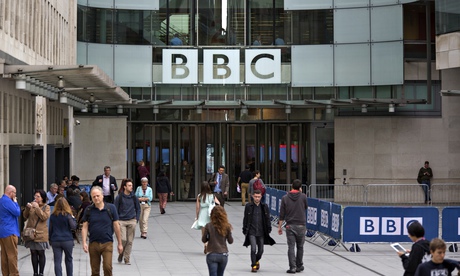
The BBC was not alone in being surprised by the Conservatives’ election victory. A relatively benign coalition-shaped political outlook suddenly appeared potentially much more threatening. But time and more reflection have left BBC strategists feeling a little more relaxed. John Whittingdale’s appointment as secretary of state – initially greeted in some quarters as portending virtual Armageddon for the BBC – now looks like a smart appointment of someone who, unlike most of his predecessors, starts the job with a pretty thorough understanding of the critical issues. And although he has reservations about it, in the longer term Whittingdale sees the licence fee as the best way of funding the BBC for at least the next 10-year charter period.
Even the chancellor, who is notably hawkish on the BBC and who tried to get the corporation to pay for over-75s’ licence fees, is now reckoned to be more sanguine. Why? Because with Labour in disarray and the Conservative leadership contemplating a lengthy period in office, upsetting core Tory supporters, many of whom quite like the BBC, by attacking it is much less appealing. In other words the likelihood of an all-out assault on the BBC and/or the licence fee in the course of the forthcoming charter review process seems remote.
Nevertheless the BBC still faces a monumentally testing time. After seven years of a frozen licence fee and the imposition of costs previously met by government (S4C, BBC World Service, broadband rollout etc.), it has had to cut close to 20% of its costs. Any further freeze, especially if accompanied by measures to decriminalise licence fee evasion which could cost £200m, is reckoned by senior BBC executives including Tony Hall to be bound to lead to significant cuts in services. In fact the BBC believes that to further embrace the digital revolution, increase its appeal to younger people and to keep up with the competition creatively, it needs a real increase in income. And yet it faces a Westminster consensus that as an organisation it remains bloated and inefficient.
Try to tell them the BBC should get more money and they look at you as if you’ve lost your marbles. So it was that Hall launched what he described as a “competition revolution” to drive inefficiency out of the BBC and improve creative standards and value for money for licence payers. At the centre of his “compete or compare” strategy – where all BBC services and operations would be fully exposed to market competition, or where that was not possible fully benchmarked against the market to ensure best practice and maximum efficiency – was BBC in-house production, protected under the charter by a system of quotas guaranteeing in-house producers 50% of the BBC’s production.
Independent producers (declaration of interest: I run a small independent production company) have long argued that BBC programme commissioners – and by implication licence payers – were being shortchanged creatively and in terms of efficiency by the in-house quota. In a speech last July Hall suggested production quotas be scrapped and, to sweeten what in-house producers saw as a very bitter pill, that BBC production be allowed to compete in the market by supplying programmes to non-BBC broadcasters at home and abroad.
But here was a problem. Whereas dropping the quota was essential to creating what former director general John Birt described as the kind of “compelling efficiency narrative” critical to tackling negative Westminster perceptions, launching BBC Productions onto the commercial marketplace wasn’t essential and was fraught with difficulty. And as time has gone by it has seemed possible that by tying the two proposals together, Hall may have jeopardised his chances of delivering the production quota reforms so vital to securing a more lenient licence fee settlement.
Which brings us to last week’s BBC Trust review of the corporation’s content supply arrangements, which concludes the quotas should be reduced or removed altogether to improve efficiency and creative outcomes. And as the current quotas are enshrined in the charter and agreements, I understand this proposal will be part of the BBC’s charter review submission due for publication in September.
The trust expresses no view on executives’ plans to relaunch BBC Productions as “BBC Studios” since they haven’t yet – nearly a year after it was first mooted – been sent a proposal for such a move. They do say, however, that any such proposal would be likely to require a regulatory review, and even a full public value test, which would probably take many months. I gather the BBC Studios proposal is not expected to form part of the BBC’s charter review pitch. Which means that the much-maligned BBC Trust might just have saved BBC management from itself.