US forces said they hit about 90 targets across Iran with President Donald Trump warning the conflict could “get much worse”.
Iran responded to a second day of renewed attacks by targeting Bahrain, Kuwait and Qatar early on Thursday.
US Central Command said the strikes were aimed at hitting Iran’s ability “to threaten freedom of navigation” through the Strait of Hormuz.
Renewed hostilities broke out on Tuesday after Iran targeted three tankers in the vital waterway, which remains a flashpoint in the fragile truce.
“U.S. forces remain vigilant, lethal, and prepared to execute operations directed by the Commander in Chief,” the statement from Central Command said.
They said the targets included more than 60 Islamic Revolutionary Guard small boats.
Iranian state media reported explosions in Bushehr, home to the country’s nuclear power plant complex, and the southern ports of Chabahar, Konarak, Bandar Abbas and Sirik.
They also said a railway bridge in the Golestan province had been hit while the Revolutionary Guard reported two bridges had been attacked.
Bahrain – home to the US Navy’s 5th Fleet – Kuwait and Qatar all sounded sirens early on Thursday amid retaliatory Iranian fire. Kuwait said it was intercepting drones and missiles.
Mr Trump also reposted on his Truth Social platform a picture of buildings in flames billowing thick black smoke, purportedly to be in Iran, with the message: “This is retribution for yesterday’s bombing of ships. If it happens again, it will get much worse.”
The latest exchange of fire threatens to again disrupt shipping transiting the Gulf channel and cause difficulties in securing a permanent end to the conflict, launched by the US and Israel on February 28.

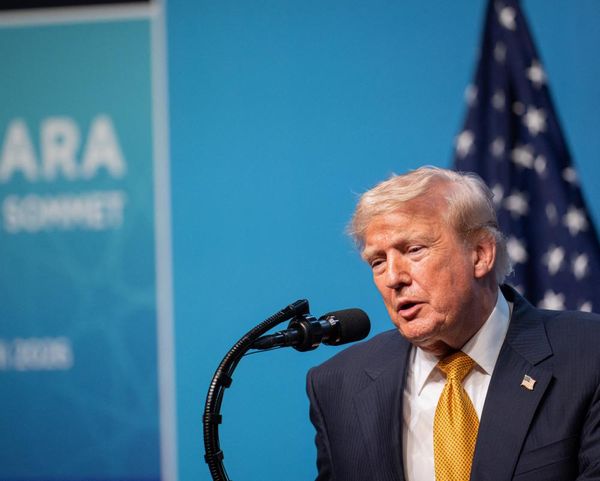
Asked earlier about the status of the interim ceasefire deal, Mr Trump said: “I think it’s over. I don’t want to deal with them any more. They’re scum.
“They’re sick people. They’re led by sick people and they’re vicious, violent people. And if they had a nuclear weapon, they’d use it.”
He said he would allow negotiations to continue.
Speaking on Air Force One, after a brief stop to change planes at RAF Mildenhall in Suffolk on his return flight from the Nato summit in Turkey, Mr Trump said the US had “won militarily” and that Iran wanted to make a deal.
“They want to make a deal so badly – I just don’t know if they’re worthy of making a deal,” he said.
“I don’t know that they’re going to honor the deal. That’s the problem.”
Iranian deputy foreign minister Kazem Gharibabadi said on X that Mr Trump’s remarks “are not a sign of power but an admission of the failure”.
In a post on X, Iranian parliament speaker Mohammad Bagher Qalibaf said: “The era of bullying and extortion is over. It leads nowhere. We don’t fold.”
Meanwhile, Sir Keir Starmer has called for a return to the ceasefire and warned UK household bills would likely be hit unless the situation improved.
Ending Tehran’s stranglehold on the Strait of Hormuz, which disrupted global oil and gas supplies and drove up fuel and food prices, had been a key demand in previous negotiations.
However, the initial deal reached between the US and Iran only secures safe, toll-free passage of the waterway for 60 days, pending the outcome of a final agreement on Tehran’s disputed nuclear plans.
The pact also leaves it to Iran and Oman, in conjunction with other Gulf states, to “define the future administration and maritime services in the Strait of Hormuz”.
In the meantime, Iran has continued to try to exert leverage over the channel, including demanding ships seek permission to transit and raising the spectre of future charges.