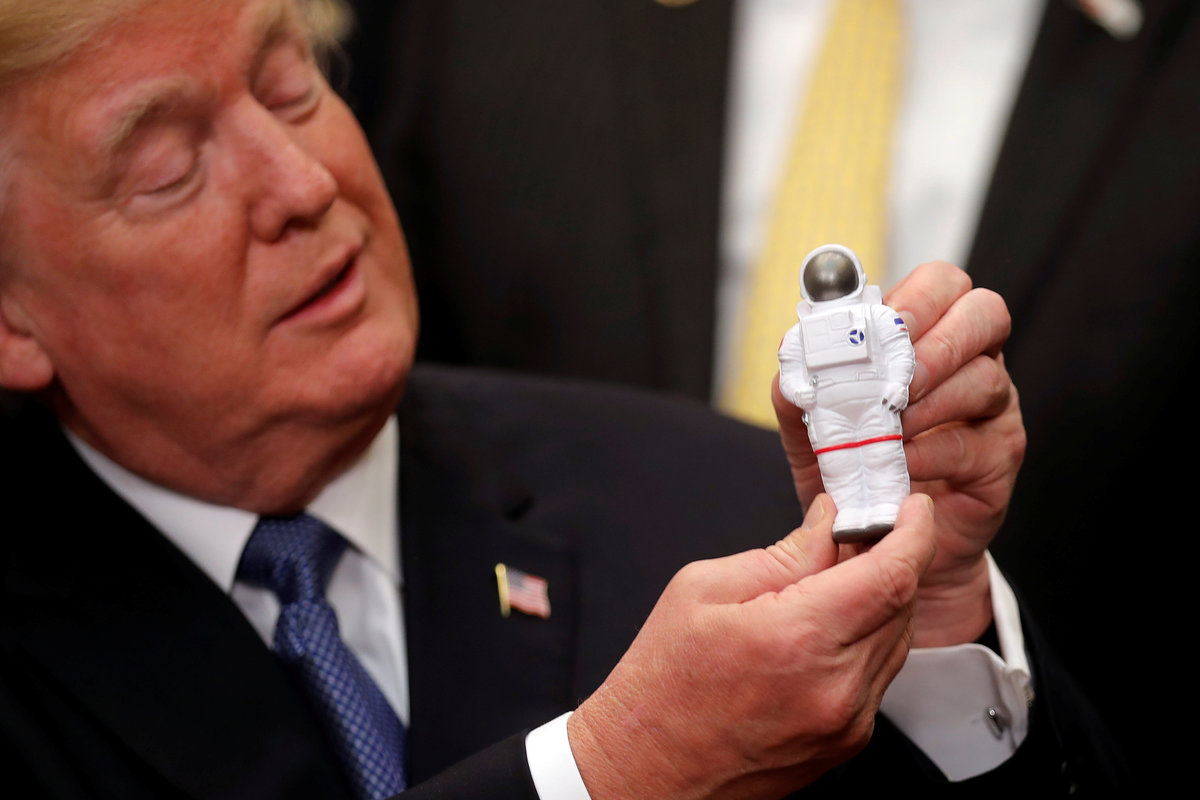
WASHINGTON (Reuters) - At a time when China is working on an ambitious lunar program, President Donald Trump vowed on Monday that the United States will remain the leader in space exploration as he began a process to return Americans to the moon.
"We are the leader and we're going to stay the leader, and we're going to increase it many fold," Trump said in signing "Space Policy Directive 1" that establishes a foundation for a mission to the moon with an eye on going to Mars.
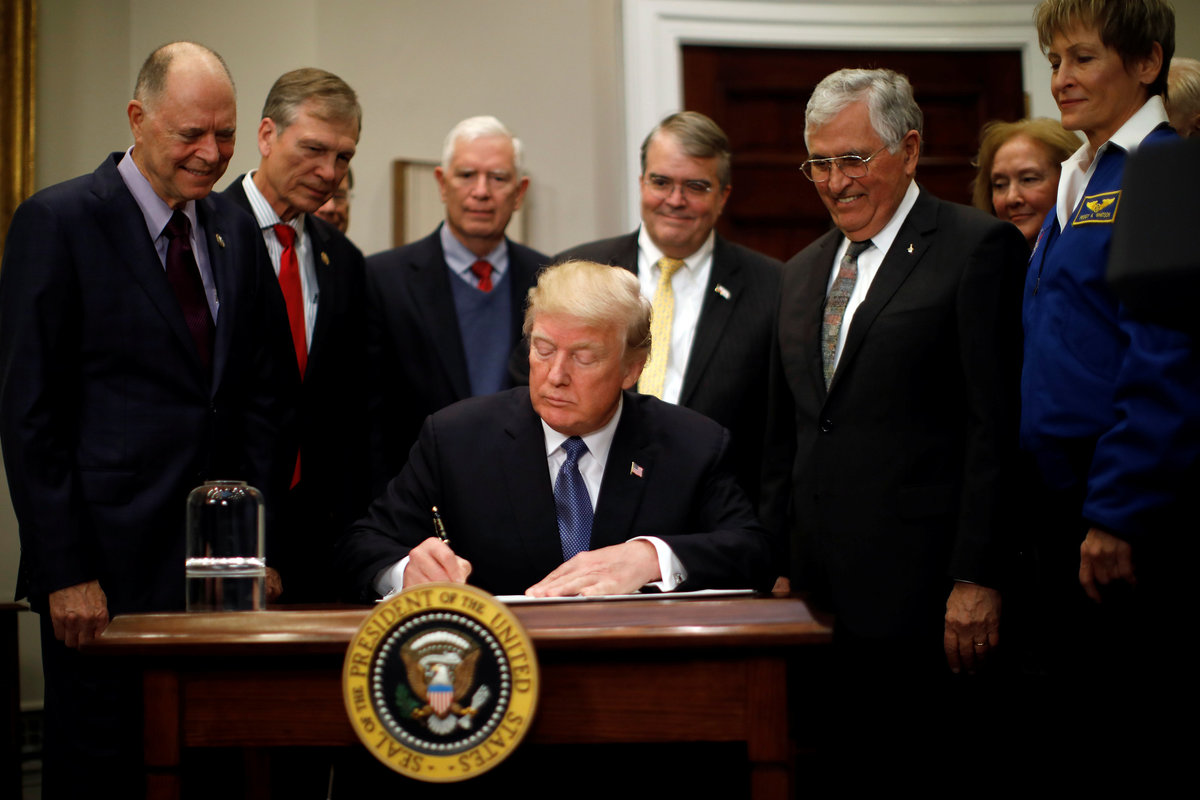
"This time, we will not only plant our flag and leave our footprint, we will establish a foundation for an eventual mission to Mars," Trump said. "And perhaps, someday, to many worlds beyond."
Back in June, China's space official said the country was making “preliminary” preparations to send a man to the moon, the latest goal in China’s ambitious lunar exploration program.
Trump's signing ceremony for the directive included former lunar astronauts Buzz Aldrin and Harrison Schmitt and current astronaut Peggy Whitson, whose 665 days in orbit is more time in space than any other American and any other woman worldwide.
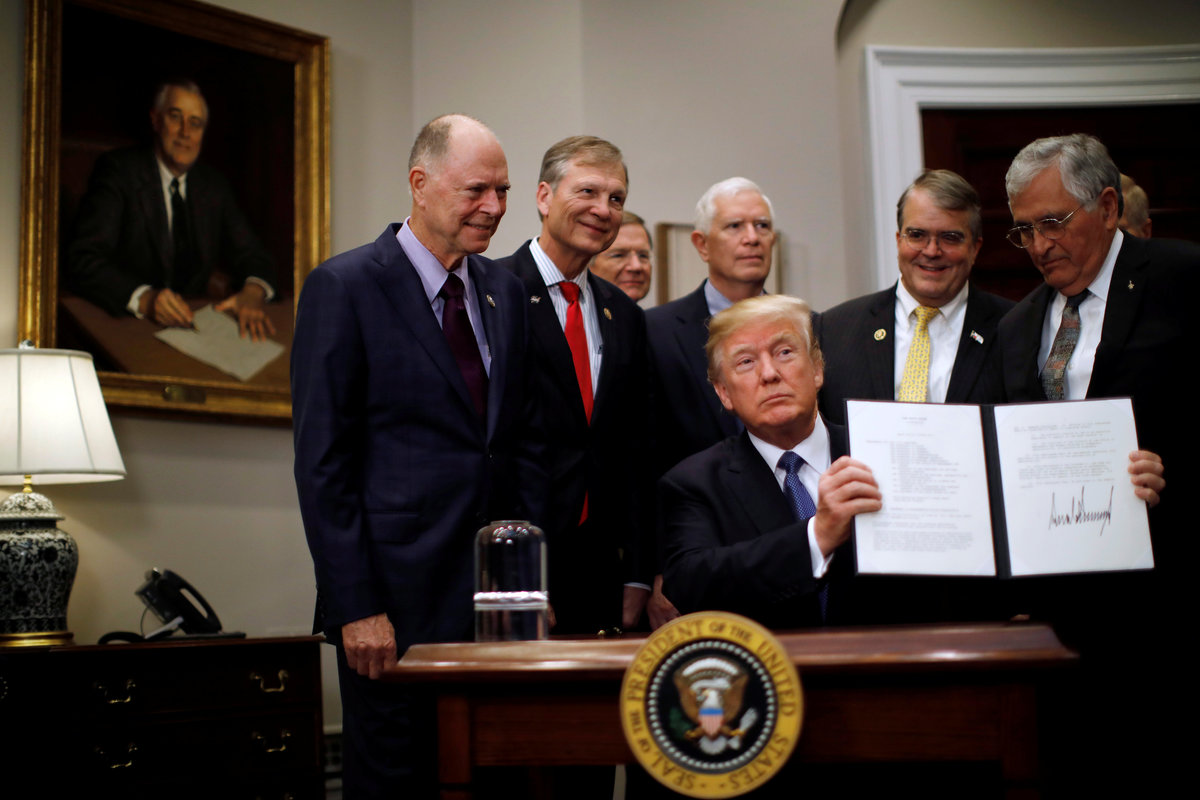
The ceremony also featured a moon rock 3.8 billion years old collected by Schmitt's Apollo 17 mission in 1972.
Trump said he was taking a giant step toward "reclaiming America's proud destiny in space."
"And space has so much to do with so many other applications, including a military application," he said without elaboration.
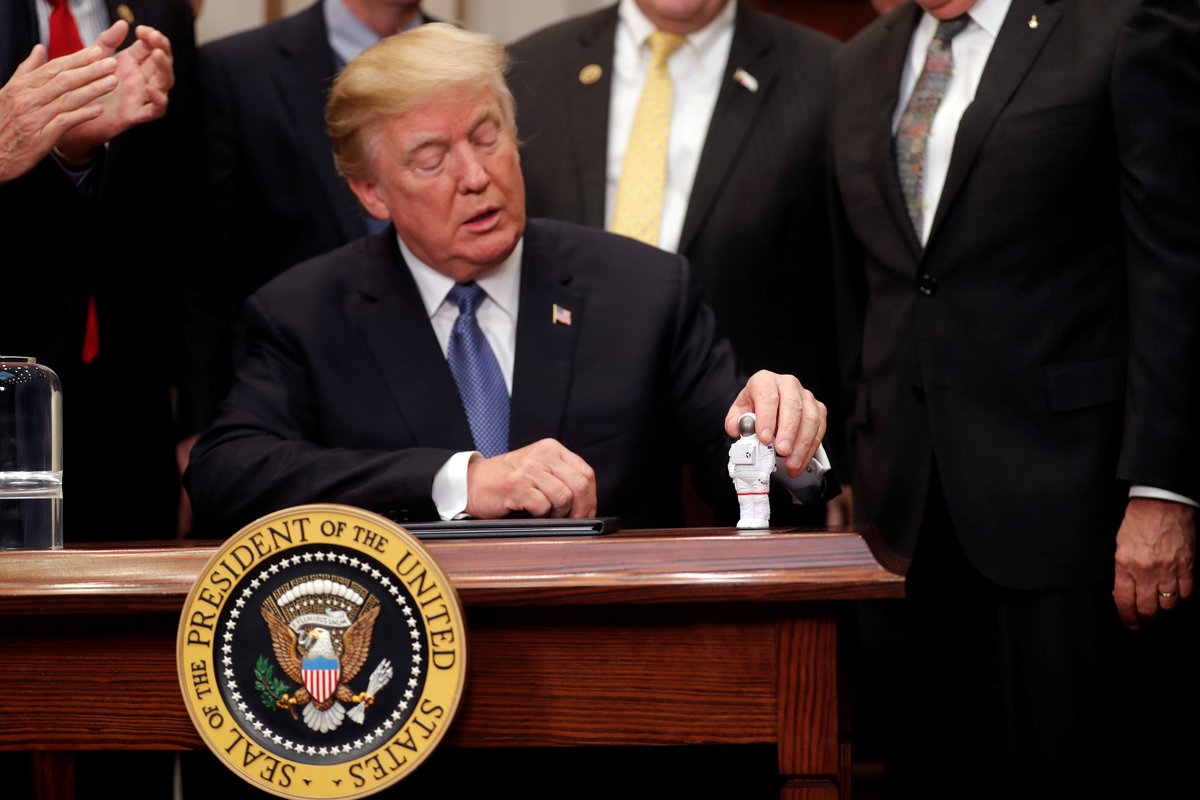
In approving the new policy, Trump abandoned what had been a goal of his predecessor, Democrat Barack Obama, who in 2010 backed a plan to send humans to a near-earth asteroid.
NASA said initial funding for the new policy would be included in its budget request for fiscal year 2019.
“NASA looks forward to supporting the president’s directive strategically aligning our work to return humans to the moon, travel to Mars and opening the deeper solar system beyond,” said acting NASA Administrator Robert Lightfoot in a statement.
(Reporting by Steve Holland; Editing by Jeffrey Benkoe and Lisa Shumaker)