WASHINGTON/SALT LAKE CITY (Reuters) - President Donald Trump on Monday shrank two wilderness national monuments in Utah by at least half in the biggest rollback of public land protection in U.S. history, drawing praise from pro-development lawmakers and a lawsuit from environmentalists.
Trump’s announcement followed months of review by the Interior Department after he ordered the agency in April to identify which of 27 monuments - protected areas designated by past presidents - should be rescinded or resized to give states and local governments more control of the land.
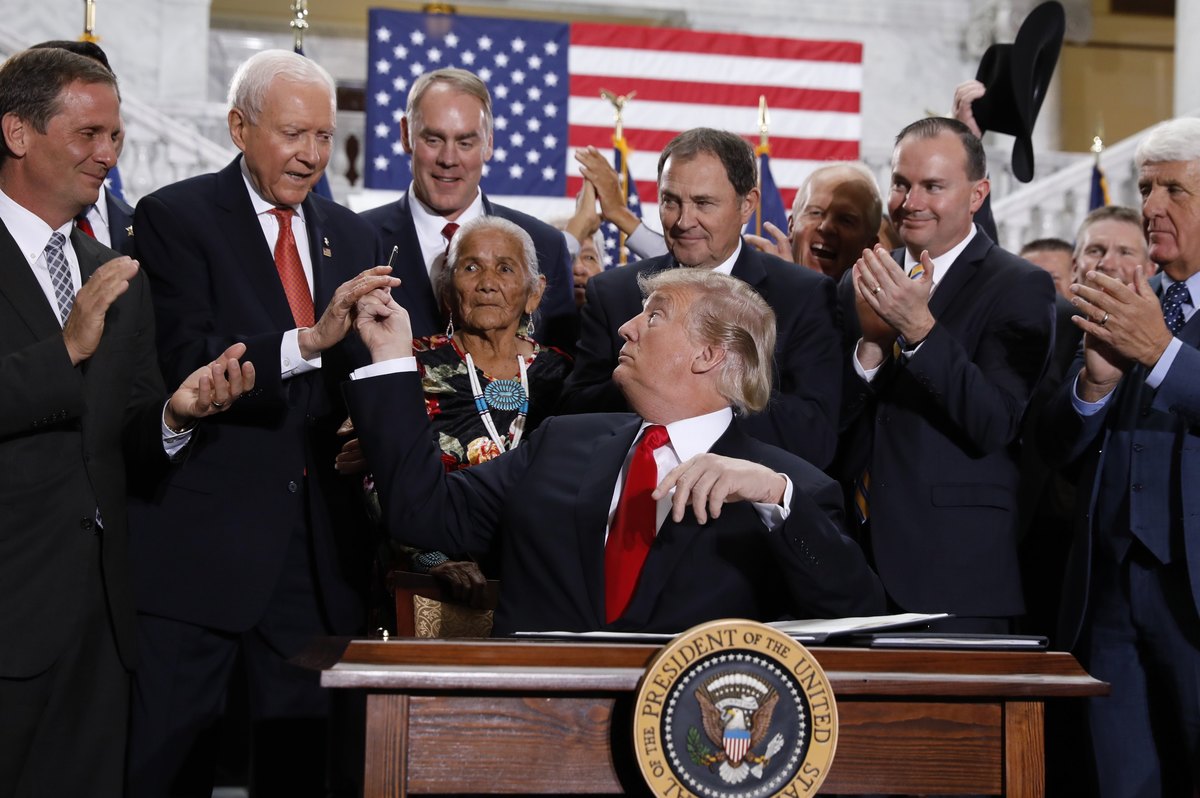
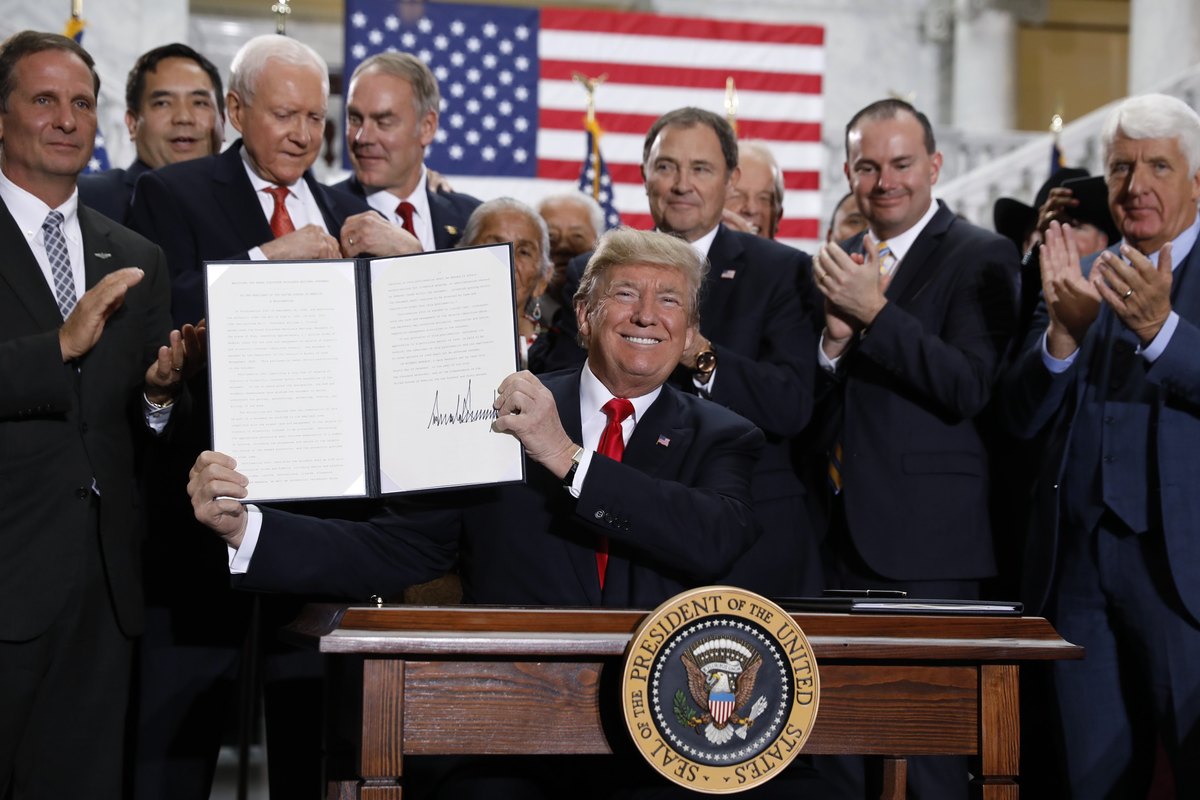
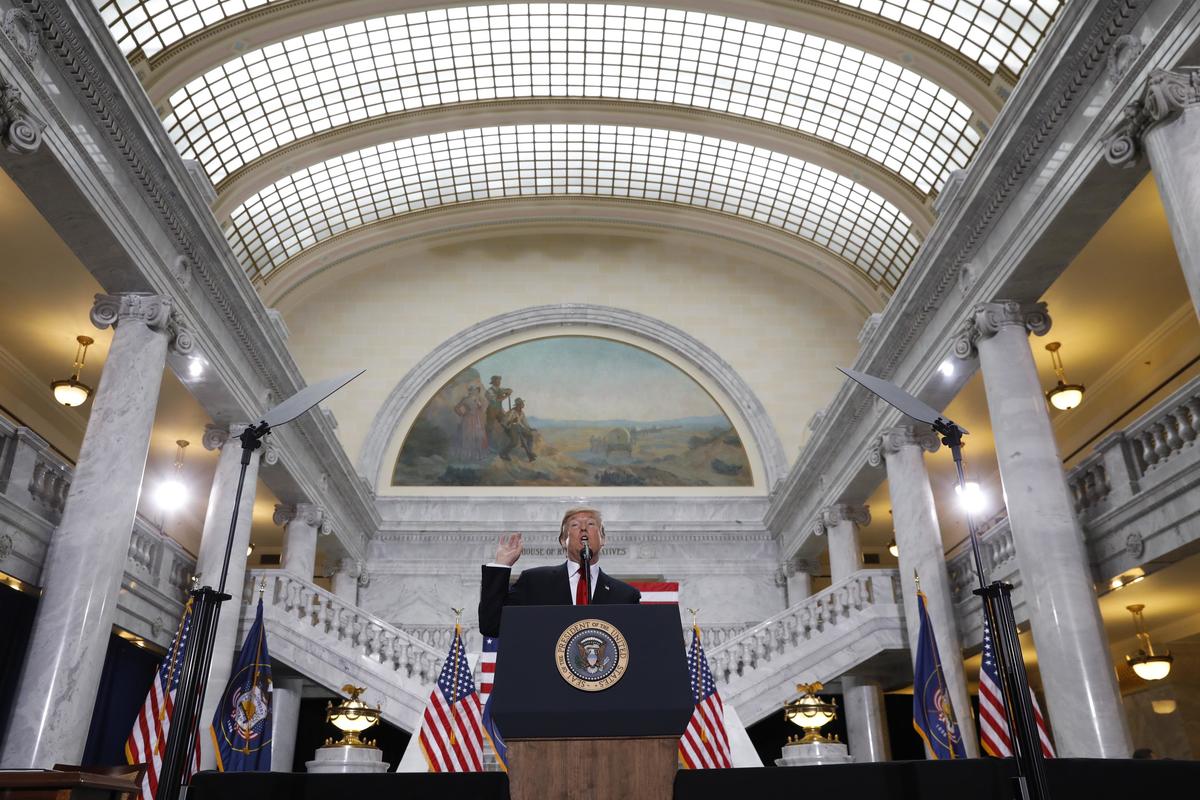
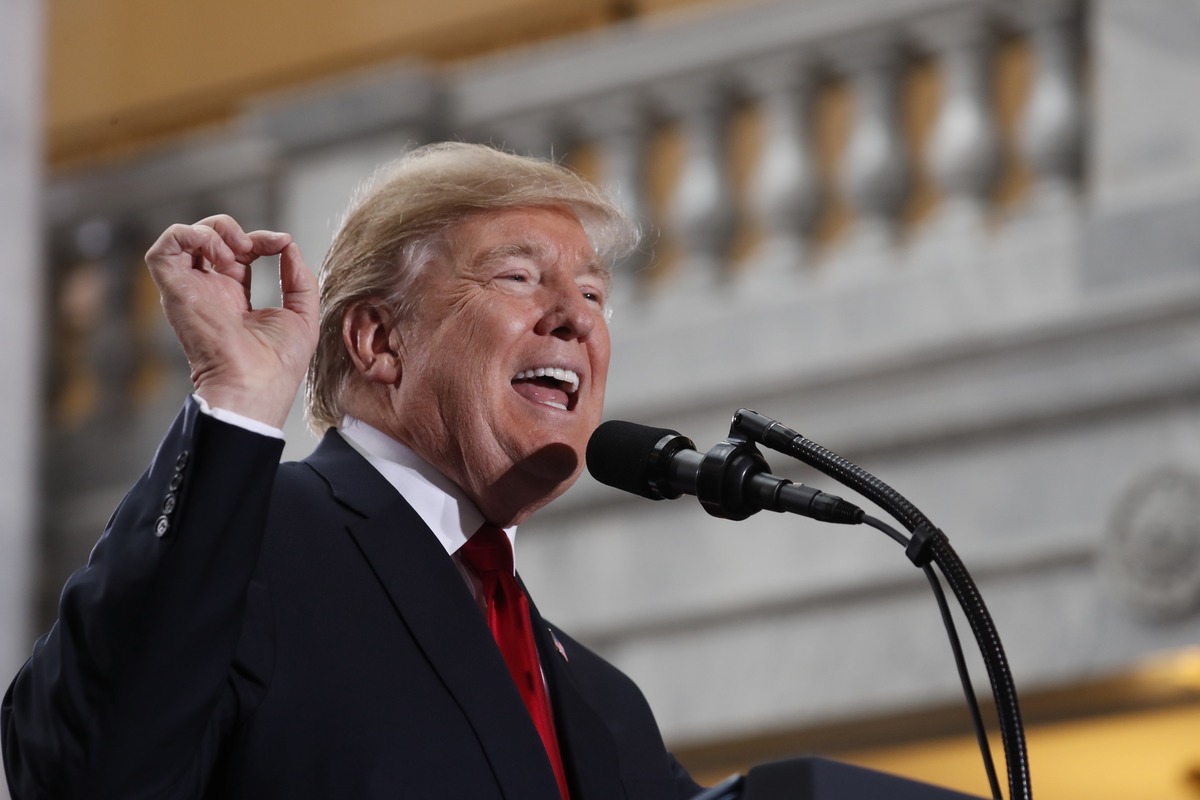
"Some people think that the natural resources of Utah should be controlled by a small handful of very distant bureaucrats located in Washington. And guess what? They’re wrong," Trump said in the state capitol alongside Utah's Republican governor, Gary Herbert, the Utah congressional delegation and local county commissioners.
Unlike national parks that can only be created by an act of Congress, national monuments can be designated unilaterally by presidents under the century-old Antiquities Act, a law meant to protect sacred sites, artifacts and historical objects.
Trump said former presidents abused the Antiquities Act by putting unnecessarily big chunks of territory off limits to drilling, mining, grazing, road traffic and other activities – a headwind to his plan to ramp up U.S. energy output.
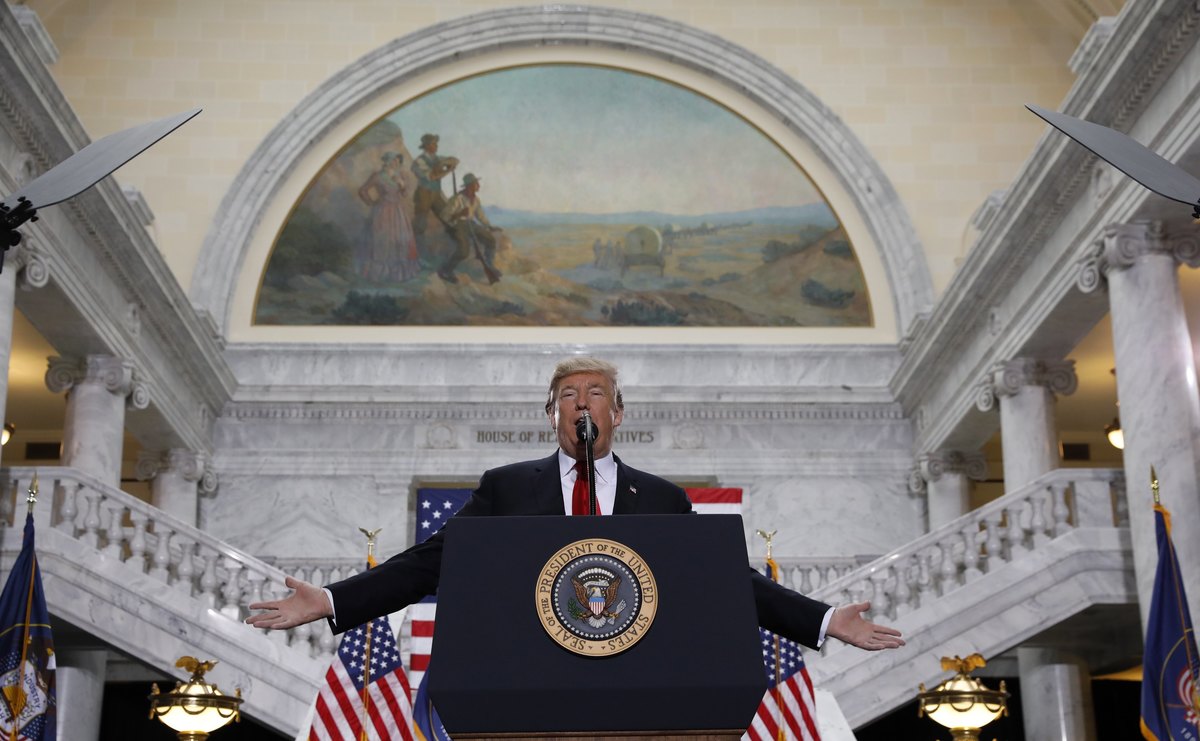
Trump signed two proclamations after his speech. One would reduce the 1.3-million-acre (0.5 million hectare) Bears Ears National Monument, created in 2016 by then-President Barack Obama in southeastern Utah, by more than 80 percent split into two areas.
The other would cut the state’s 1.9-million-acre (768,900-hectare) Grand Staircase-Escalante National Monument, designated by President Bill Clinton in 1996, nearly in half. The landscape of canyons, ridges and rock formations would be split into three zones.
While a handful of monuments have been resized in the past, none has been cut back to such an extent, putting the president's proclamation in uncharted legal territory. Previous presidents including Woodrow Wilson and William Howard Taft reduced some monuments but were never challenged in court. [L2N1L41B5]
Trump will ask Congress to look at the areas that are being removed from the current monuments to consider legislation designating some as a national conservation or national recreation areas, and create a co-management structure for tribes, an administration official said.
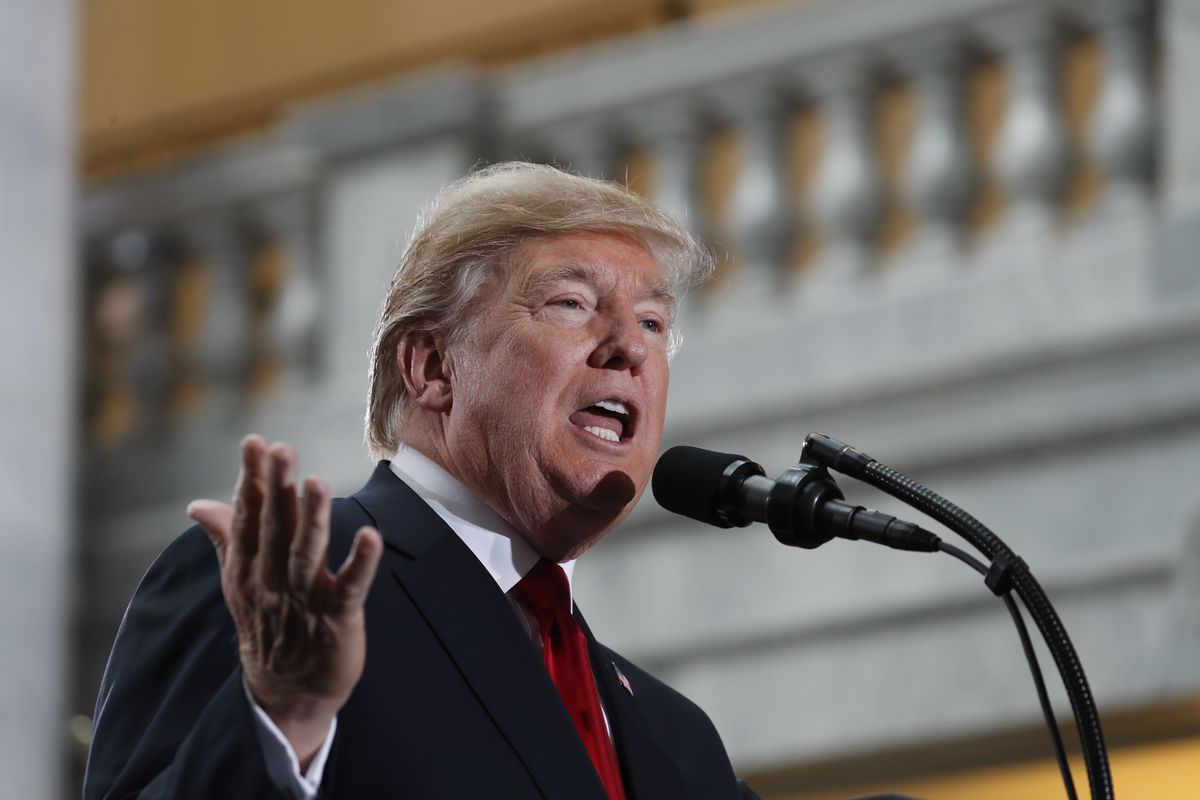
He said in his speech that the move was aimed in part at helping local communities access the land for hunting and grazing.
"Here, and in other affected states, we have seen harmful and unnecessary restrictions on hunting, ranching and responsible economic development," Trump said. "We have seen grazing restrictions prevent ranching families from passing their businesses and beloved heritage on to the children."
Grazing and hunting were already permitted in both the Bears Ears and Grand Staircase monuments
The results of the Interior Department's broader review of U.S. national monuments will be published on Tuesday and is expected to outline changes to a number of other sites.
SWIFT LEGAL RESPONSE
The Natural Resources Defense Council, the Center for Biological Diversity, the Sierra Club and other environmental groups sued in federal court in Washington on Monday, asking for a judge to block Trump from shrinking the monuments.
"When we see this kind of folly, we will meet it swiftly with a legal complaint," Sharon Buccino, director of land and wildlife programs for the Natural Resources Defense Council, said in a statement.
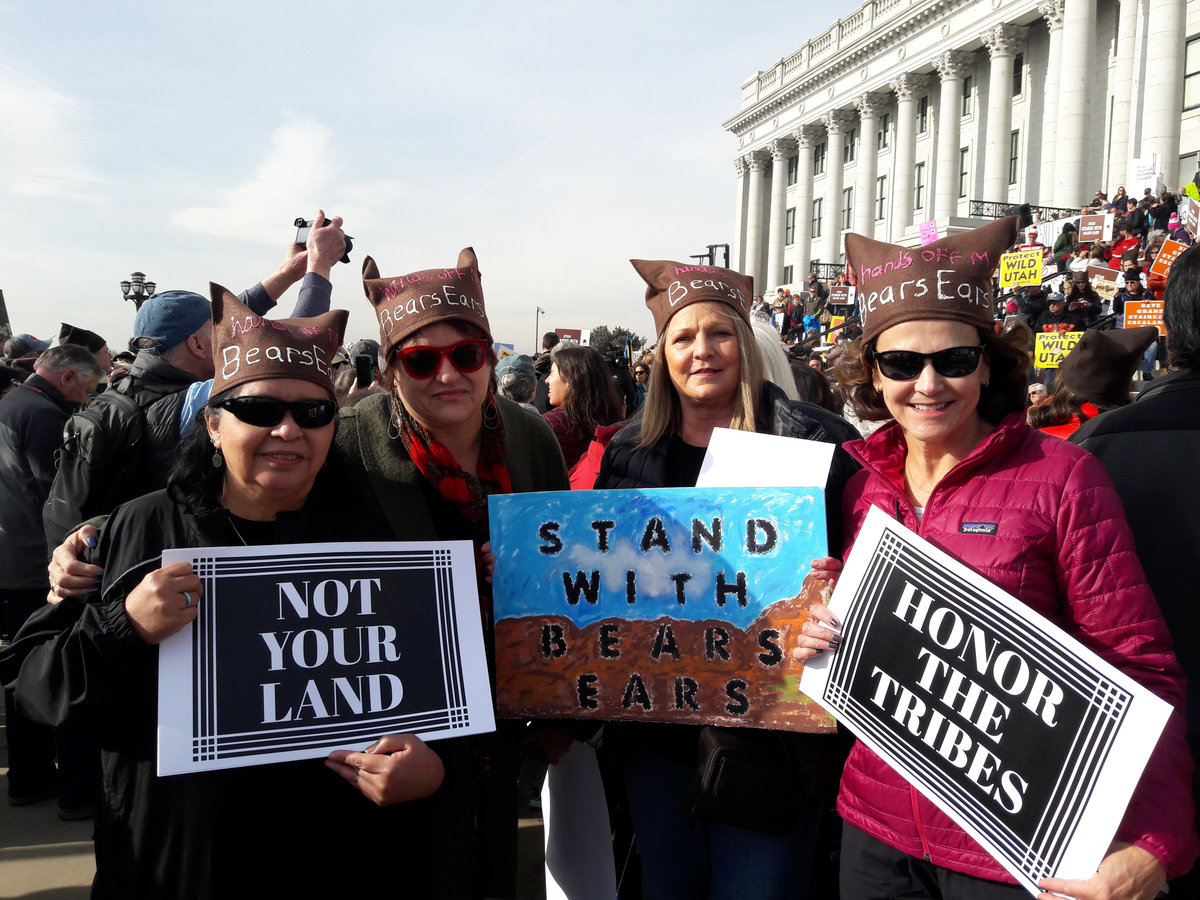
Five tribes that pushed for the creation of the Bears Ears monument and now manage it also filed a lawsuit against the Trump administration. They are the Navajo, Hopi, Pueblo of Zuni, Ute Mountain and Ute Indians who consider Bears Ears sacred.
"We will be fighting back immediately. All five tribes will be standing together united to defend Bears Ears,” said Natalie Landreth, an attorney for the Native American Rights Fund, which believes the cut would violate the Antiquities Act.
Jonathan Nez, vice president of the Navajo Nation, said the president was ignoring the treaty rights of sovereign Native American nations and that the Interior Department did not listen to tribal leaders who fought to create the monument.
"It’s a sad day in Indian country," said Nez.
Others welcomed Trump’s announcement as a chance to boost the economy in one of America’s most remote areas.
"Reducing the size of monument would help free up a lot of land that has been under oppression," said Mike Noel, a state representative from Kane County, more than half of which is occupied by Grand Staircase.
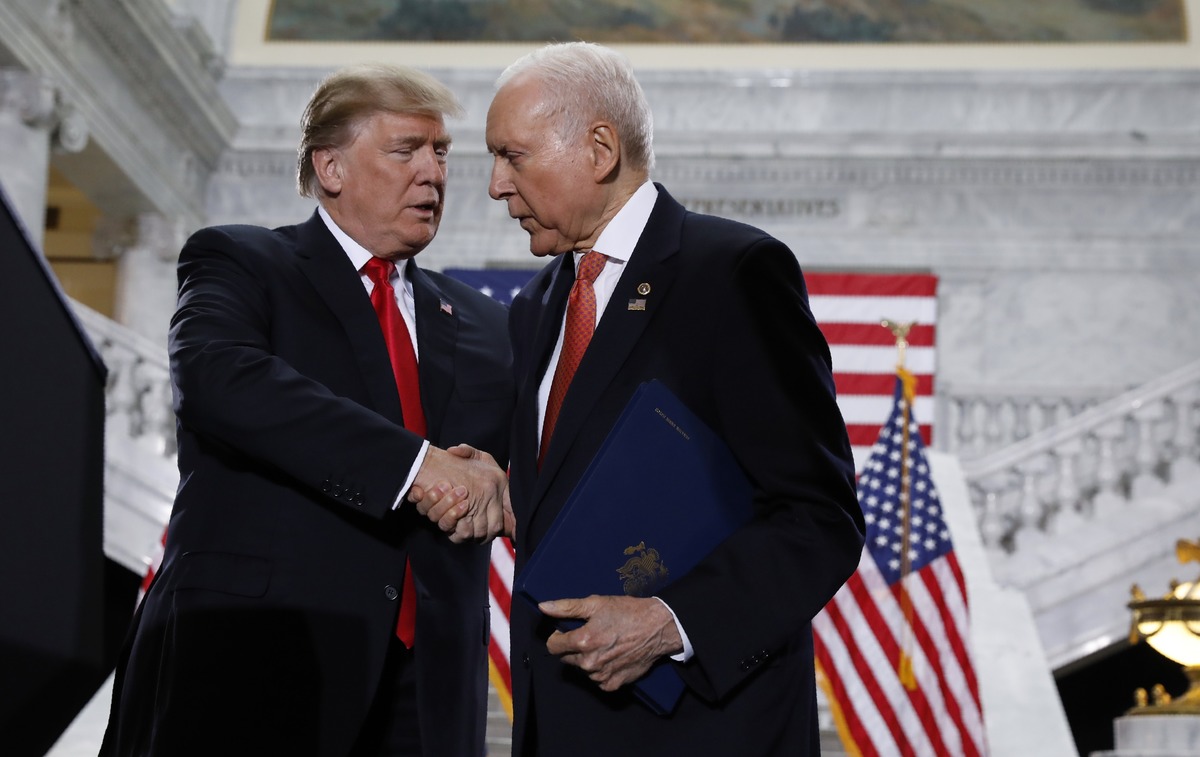
Republican Senator Orrin Hatch of Utah, who led the push by the state's congressional delegation to shrink the monument, introduced Trump at his speech on Monday and thanked the president for the proclamation.
“I appreciate his willingness to listen to my advice and even more importantly, to give the people of Utah a voice in this process," he said.
(Reporting by Valerie Volcovici and Roberta Rampton; Additional reporting by Lisa Lambert in Washington and Alex Dobuzinskis in Los Angeles; Editing by Cynthia Osterman, Peter Cooney and Alison Williams)