
U.S. President Donald Trump is preparing to divert $3.8 billion in total from programs across the Department of Defense, including a controversial war account used to fund emergency requirements as well as the procurement of ships, aircraft and Army vehicles, to help build his long-promised wall along the southern border, Foreign Policy has learned.
For the second year in a row, Trump will raid the Department of Defense’s coffers for money for the U.S.-Mexico border wall, dipping into funds earmarked for counterdrug activities and military construction. But this year, a significant chunk of those dollars will be funneled from a controversial war, according to a Feb. 13 reprogramming action signed by acting Pentagon comptroller Elaine McCusker obtained by Foreign Policy.
The account, the Overseas Contingency Operations fund, was established after the terrorist attacks of 9/11 to fund emergency requirements. It has been criticized as a “slush fund” used to circumvent mandatory spending limits set by Congress.
As it did last year, the White House is planning to transfer funds from elsewhere in the Pentagon’s budget into the counterdrug account. From there, the White House has argued it can legally transfer that money to build additional miles of the wall under U.S. Code Section 284 (b).
In total, the department plans to divert $1.6 billion from the Overseas Contingency Operations account to the counterdrug account, according to the reprogramming. The money was intended for procurement of C-130J airlift aircraft and MQ-9 unmanned aerial systems, as well as National Guard and Reserve equipment.
In addition, the department plans to transfer $2.2 billion from the base budget—funds that would otherwise have gone to buy Army vehicles, Navy aircraft and ships, and Air Force aircraft—to the counterdrug account. Specifically, the transfer includes $200 million from Army vehicles; $558 million from Navy F-35s, V-22s, and P-8 maritime aircraft; $911 million from Navy Landing Helicopter Assault ships and Expeditionary Fast Transports; and $532 million from Air Force F-35s, C-130Js, and the now defunct light attack aircraft program.
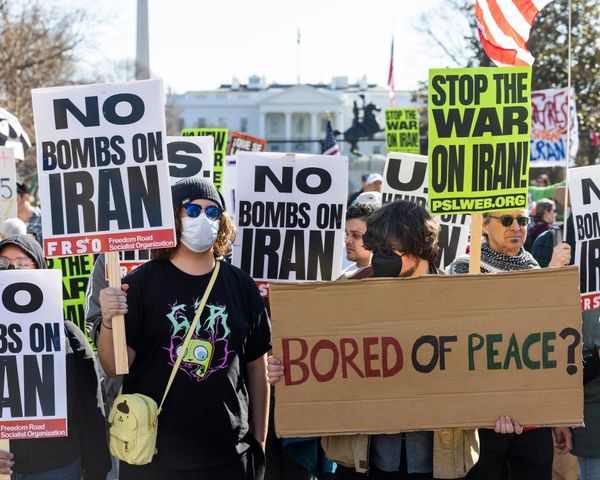
The news that the White House is preparing to raid the war account and funding for new equipment comes as the United States commits more U.S. troops to conflicts abroad. Since tensions with Iran spiked last summer, the Pentagon has deployed more than 14,000 additional U.S. forces to the Middle East, including 3,500 soldiers with the 82nd Airborne Division deployed last month after a U.S. drone strike that killed Iranian Maj. Gen. Qassem Suleimani.
In total, Trump plans to reprogram $7.2 billion in Pentagon funding this year to complete about 885 miles of new fencing by spring 2022, the Washington Post reported in January. That initially was reported to include $3.5 billion from the counterdrug account—up from $2.5 billion diverted in 2019—as well as $3.7 billion in military construction funding, slightly up from $3.6 billion in 2019.
The move would bring the total amount of federal funds channeled to the border wall to $18.4 billion. Building a wall on the U.S.-Mexico border was a key 2016 campaign promise for Trump, who faces reelection this year.
A judge in El Paso, Texas, ruled late last year that the White House broke the law in diverting funds for the border wall that had been authorized by Congress for the Pentagon and froze the $3.6 billion. But the administration appealed the ruling, and the U.S. Court of Appeals for the 5th Circuit lifted the injunction in January, allowing work on the barriers to proceed while legal challenges are pending.
Defense Secretary Mark Esper has defended the move to use Pentagon money for the wall.
“The first priority of the DoD is protection of the homeland,” Esper said during a press conference with his Japanese counterpart in January. “So the southwest border is a security issue. And so we’ll see how things play out, but we remain committed to supporting the Department of Homeland Security and its mission.”