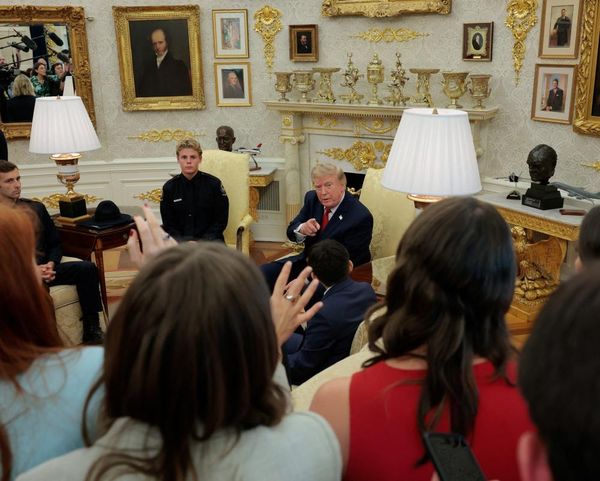
Donald Trump has pledged to cut the federal tax on petrol in the face of a spike in fuel prices caused by the Iran war.
Reducing the levy, which is currently 18 cents (13p) per gallon, would require the approval of Congress, which is controlled by the US president’s Republican Party.
Democrats had already proposed suspending the tax, as motorists count the cost at the pump.

Petrol prices have risen by more than 50% since the start of the Iran conflict, triggered by US and Israeli strikes.
The national average on Monday was 4.52 dollars (£3.32) per gallon, which is around 3.8 litres.
The soaring cost has fed into domestic discontent over the war and fuelled Republican concerns in the run up to the November midterm elections, which will decide the make-up of Congress and a host of state governorships.
And there is set to be no let up after Mr Trump said the Iran ceasefire was on “life support” and dismissed Tehran’s peace proposal as “garbage”, causing oil prices to again increase sharply.
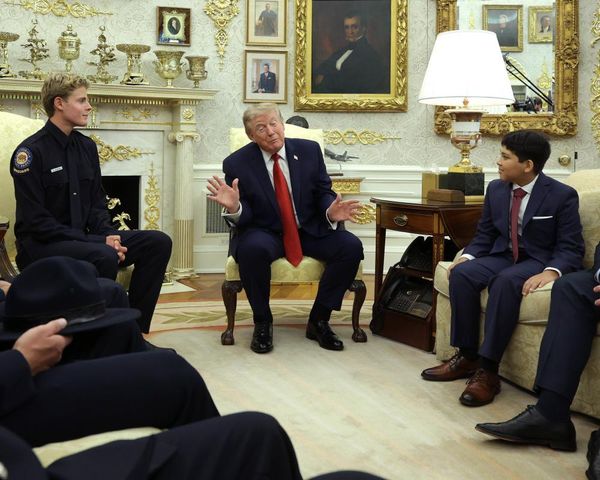
Asked whether he would suspend the federal fuel tax, Mr Trump said: “Yeah, I’m going to reduce.”
He added: “Let me tell you, as soon as this is over with Iran, as soon as it’s over, you’re going to see gasoline and oil drop like a rock.”
Pressed on how long he would cut the levy for, Mr Trump said: “Until it’s appropriate.”

He added: “It’s a small percentage, but it’s still money.”
The president’s comments come after US energy secretary Chris Wright told NBC News that Mr Trump was “open to all ideas” to cut the cost of petrol, including potentially pausing the federal fuel tax.
The levy generates up to 30 billion dollars (£22 billion) a year for the US government and is used to fund national transport schemes.
A number of states, which also tax fuel, have already moved to make reductions in response to rocketing forecourt prices, including Indiana, Kentucky and Georgia.
There has been mounting pressure in the UK for the Government to take similar action in response to hikes in the cost of petrol.
This is only set to increase in the wake of a disastrous set of local election results, which have left the Prime Minister fighting for his political life.

Fuel duty is frozen until September, with the rise scheduled for then under review as a result of the high prices.
The Government’s own cost-of-living tsar, Lord Richard Walker, the executive chairman of Iceland, last month said the administration should look at “extending” or “enlarging” the cut to ease the burden on motorists and businesses.
Chancellor Rachel Reeves announced in her November 2025 budget that the 5p-per-litre cut in fuel duty introduced by the Conservative government in March 2022 would only be extended until the end of August, with rates then gradually returning to March 2022 levels over the next five years.
Sir Keir Starmer has promised to keep a planned rise in fuel duty from September “under review in light of what’s happening in Iran”, and the Government stepped up efforts to help drivers find the cheapest fuel in their area through a price comparison site.