US President Donald Trump was reeling from sharp rebukes at home and abroad over his surprise announcement on December to immediately withdraw US troops from Syria when he flew into the al-Assad airbase in neighboring Iraq one day after Christmas.
Trump received operational briefs from US commanders suggesting a territorial victory against ISIS very soon, but the military needed just a bit more time, US officials said.
“They were upbeat about their ability to wrap things up,” one of the officials said. “I definitely think that was a seminal meeting” in terms of influencing Trump’s thinking.
Lieutenant General Paul LaCamera, the commander of the US-led coalition against ISIS in Syria and Iraq, explained to Trump, that a withdrawal could not be done without putting troops at risk, according to three officials familiar with the briefing.
The 45-minute briefing appears to have helped crystallize an understanding between Trump and his top brass on the ground.
Trump, in remarks to reporters, admitted that he felt better about the situation after talking to commanders in the theater instead of officials in Washington.
The briefing also helped win the US military and diplomats some breathing room to plan a more deliberate exit from Syria.
Nearly three weeks after the briefing, no troops have withdrawn from Syria and only some equipment has moved out.
In 2015, then-President Barack Obama first ordered US special operations forces into Syria after long hesitating to deploy “boots on the ground” in the midst of the Syrian civil war.
What started off as a mission involving dozens of commandos eventually turned into hundreds and then just kept growing. There are about 2,000 US forces in Syria today.
Although Trump initially announced plans for a speedy pullout, he has since said it does not need to go quickly.
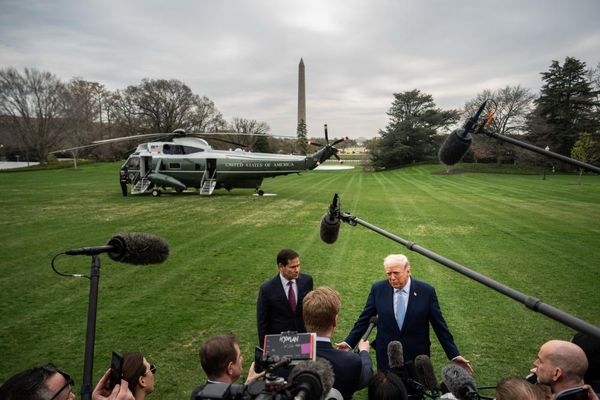
“We are pulling back in Syria, we are going to be removing our troops, I never said we are doing it that quickly,” Trump told reporters at the White House on January 6.
In fact, Trump said on December 19 that US troops were coming home "now" here and they had already defeated ISIS in Syria.
The Pentagon said on Friday that the withdrawal “is not subject to an arbitrary timeline,” and it would take into account conditions on the ground and talks with allies.
Trump’s concession of additional time has set off an apparent scramble by the US military and Trump administration officials to accomplish as much as possible in the twilight of the Syria campaign.
US officials told Reuters that planning for a complete withdrawal from Syria is still underway despite confusing and sometimes contradictory statements from the White House and tension with Turkey, which was meant to take over the campaign against ISIS.
It became clear that a rapid 30-day withdrawal, as initially suggested by the White House, would not meet the criteria of a “safe and responsible” withdrawal.
Before Trump’s surprise decision, Pentagon planning had suggested four months would be needed.