The fierce debate over public land in the West is expected to intensify following President Donald Trump's signing of an executive order Wednesday that could lead to the reduction or elimination of some national monuments.
Interior Secretary Ryan Zinke, who announced the order Tuesday, said Trump asked him to review monuments created by Presidents Bill Clinton, George W. Bush and Barack Obama under the 1906 Antiquities Act, which gives presidents the power to limit use of public land for historic, cultural, scientific or other reasons.
Zinke said the order would apply only to monuments that are at least 100,000 acres, more than two dozen of which have been established since 1996.
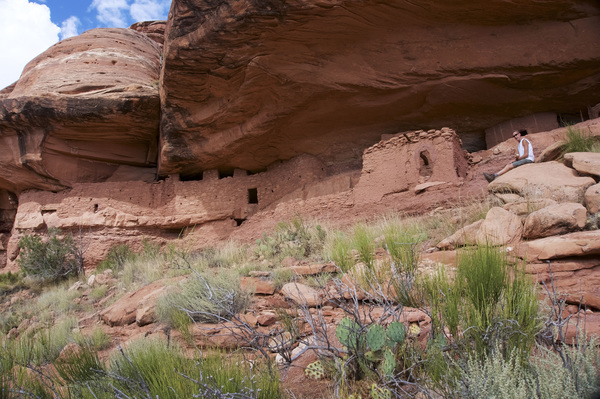
But he made clear that one region in particular will get special attention: the remote desert canyon lands of southeastern Utah, where Clinton created the Grand Staircase-Escalante National Monument in 1996 and Obama set aside the 1.3 million-acre Bears Ears National Monument in the final days of last year.
Both designations prompted an angry backlash from Utah Gov. Gary R. Herbert and Sen. Orrin Hatch, both Republicans, who say the federal government is putting excessive restrictions on lands that hold promise for oil and gas, mining and other potential development and the jobs it could create.
The monuments have been widely praised by the outdoors industry, environmental groups and Native American tribes that have inhabited the area for thousands of years and consider many parts of it sacred _ all of whom were quick Tuesday to criticize the executive order.
"An executive order that undermines national monuments is not only an attack on America's heritage and history, it's an attack on the millions of jobs and hundreds of billions of dollars that depend on our parks, monuments, and other public land," Jennifer Rokala, executive director of the Center for Western Priorities, wrote in an email.
Rokala cited a study by the Outdoor Industry Association that found the outdoor economy generates nearly $900 billion in annual spending. Earlier this year, Patagonia, REI and other companies pressured the association to pull its annual trade show out of Salt Lake City in protest of Utah officials' stance on protecting public lands.
Zinke, a Republican and former congressional member from Montana whose nomination to the Interior post was opposed by most major environmental groups, said the order requires him to issue recommendations to the president on whether to rescind, reduce or otherwise alter certain monuments. He could also recommend further review.
The order instructs him to submit a preliminary review within 45 days and a final one within 120. He said he would make a specific recommendation about Bears Ears by the 45-day deadline.
Zinke said the order was intended to give states and local communities a "meaningful voice" in the designation of monuments. He said elected officials and others told the administration that the monuments "may have resulted in lost jobs, reduced wages, reduced public access."
"I'm not going to predispose what the outcome is going to be," he said.
This week, Trump is also expected to order a review of Obama's decision in December to permanently ban offshore drilling along broad parts of the Arctic and Atlantic coasts. That decision was sharply criticized by the oil and gas industry.
Both executive orders by Trump venture into complicated legal territory and will certainly prompt a court fight if they result in reducing monuments or opening up areas to drilling.
The Antiquities Act gives presidents power to set aside land, but it does not specifically state that they can reverse a monument designation. So far, no president has attempted to do so, though a few have reduced their size, most notably Woodrow Wilson, who sharply downsized what was then called Mount Olympus National Monument and is now part of Olympic National Park in Washington state.
Robert Glicksman, a professor at George Washington University who specializes in environmental law, wrote in a email response Tuesday that reducing the size of a monument "may be easier to justify than outright reversals of monument designations" but that "even then, there could be issues as to the rationale for making monuments smaller."
Glicksman said he was not aware of any court rulings on the question.
The rarely used Outer Continental Shelf Lands Act of 1953 _ employed by Obama to ban offshore drilling _ is similarly spare in its language and legal history. The act says the president "may, from time to time, withdraw" federal waters from oil and gas development that are not already leased. It does not specify whether another president can reverse a withdrawal.
Christy Goldfuss, who served as managing director at the White House Council on Environmental Quality under Obama and helped shepherd Bears Ears to become a national monument, called the Trump orders "a thinly veiled attempt to appease industry and sell off our national parks, public lands, oceans and cultural heritage to the highest bidder."
Goldfuss, who is now vice president for energy and environment policy for the Center for American Progress Action Fund, said Trump "is entering a legal, political and moral minefield."
Zinke emphasized that the administration had no intention to sell or transfer public lands. He suggested that any changes could be a matter of easing development restrictions to better reflect what he said should be a "multiple use" approach to public land management.