In a sweeping and unprecedented move, President Donald Trump has signed an executive order officially classifying fentanyl as a weapon of mass destruction (WMD), signalling a dramatic shift in the United States' approach to the opioid crisis.
The order, announced on 15 December 2025, aims to expand federal powers to prosecute traffickers and target foreign suppliers. However, the decision has ignited intense debate among policymakers and health experts, who question the legal precedent and potential impact on overdose prevention efforts.
Fentanyl Recast as a Strategic Threat
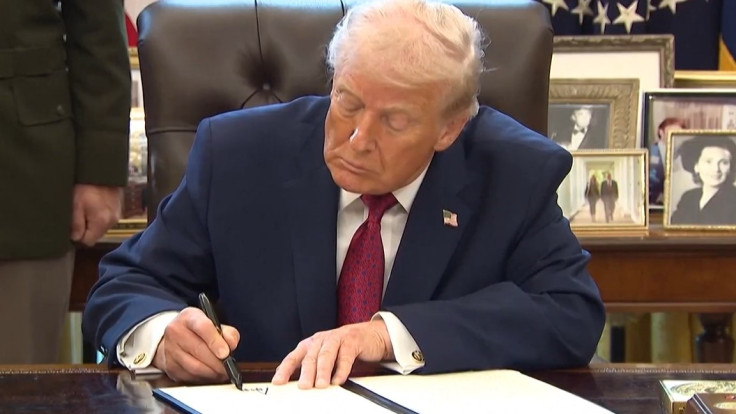
At a ceremony in the White House's Oval Office, Trump described the directive as a 'historic executive order'— one he said would better equip the government to combat the lethal synthetic opioid.
He declared: 'With this historic executive order I will sign today, we're formally classifying fentanyl as a weapon of mass destruction, which is what it is.'
Fentanyl can be lethal in doses as small as two milligrams. By designating the substance as a WMD, the administration is invoking legal frameworks traditionally used against chemical, biological and nuclear threats. This reclassification is intended to activate stiffer penalties, greater interagency cooperation and broader enforcement capacity under US law.
Trump also expressed concern about the 'potential for fentanyl to be weaponised for concentrated, large‑scale terror attacks against the United States,' a rationale that extends the order beyond domestic drug enforcement into a purported national security framework.
Political and Global Repercussions
The move coincides with wider Trump administration policies targeting international sources of fentanyl. Trump has previously accused foreign adversaries, especially China, of facilitating the flow of the drug into the US and has sought cooperation from Chinese authorities to curb production and trafficking.
Alongside the WMD designation, the executive order directs government agencies to focus prosecutorial, diplomatic, and military tools on cutting imports and dismantling transnational networks. It also reiterates the Trump administration's stance on classifying certain drug cartels as foreign terrorist organisations, an extension of measures begun earlier in his term.
Legal analysts say this marks a significant expansion of executive power in drug enforcement, but they also warn that the WMD framework could have unforeseen diplomatic and legal implications. Critics note that the term has historically been reserved for instruments capable of mass casualty in a military context, not substances primarily consumed domestically.
Public Health vs National Security
Public health data underscores why fentanyl has become a focal point in the national dialogue. The synthetic opioid is vastly more potent than heroin and has been a leading driver of overdose deaths in the United States. According to recent estimates, fentanyl-linked fatalities have numbered in the hundreds of thousands over the past five years, with nearly 330,000 deaths recorded.
Addiction specialists and harm-reduction advocates caution that enforcement alone cannot stem the crisis without simultaneous investments in treatment and prevention. Previous research has shown that expanding access to overdose reversal medications and community outreach can save lives.
Some public health experts say that the 'weapon' label risks overshadowing the medical realities of addiction, potentially deterring evidence-based interventions even as it intensifies criminal penalties. Others argue that the designation gives political momentum to stricter action. Opposition figures have raised concerns that the order could divert resources from treatment programmes at a time when some harm reduction efforts have driven down overdose rates in parts of the country.
A Controversial Turning Point
As federal agencies mobilise under the new classification, lawmakers and community leaders on both sides of the political spectrum are bracing for the consequences.
Whether the enhanced enforcement powers will significantly reduce the flow of illicit fentanyl into US neighbourhoods—or strain public health infrastructures and international relations—remains uncertain.
What is clear is that for many families affected by addiction, this executive order represents both hope for stronger action and concern over the balance between punishment and healing in one of America's most persistent public health emergencies.