WASHINGTON �� The U.S. government's efforts to fight human trafficking are stronger than ever, the Justice Department says. But those who work with victims say there's a new problem: President Donald Trump's anti-immigrant rhetoric.
"It's always been difficult, but what has changed is under previous administrations, the enforcement priority has been those who have committed crimes and other bad actors," said Jean Bruggeman, executive director of Freedom Network USA, an alliance of 32 organizations that work to prevent human trafficking. "We used to tell immigrant communities that if you're a victim of a crime, you should not fear coming forward. We can no longer say that."
The increased fear of law enforcement became clear in a survey last year by advocacy organizations. Three-fourths of respondents _ 715 advocates and attorneys from across the country_said they had clients who worried about calling the police or going to court against their abusers, while 62 percent said immigration-related anxiety expressed by survivors had increased under Trump.
"Survivors are concerned that they will be detained if they make a police report or call 911," one survey respondent wrote. "A 16-year-old survivor attempted suicide because she was concerned that her offender would report her and her family to ICE."
A new survey published in January shows that the problem has worsened. Eighty-two percent of the 147 providers who responded said survivors have had concerns about contacting the police; 70 percent of the service providers said they believe survivors will remain with their traffickers longer "given the recent political shift."
Trump's words and actions, including his campaign reference to Mexican "rapists," the travel ban he ordered early in his administration and his comment last month about people from "shithole countries" have filled many noncitizens with dread, and they're now more reluctant to report any sort of crime to the authorities, experts say.
"Before Trump, if a migrant was caught for speeding they might just get a ticket, now they're calling in ICE (Immigration and Customs Enforcement)," said Denise Brennan of Georgetown University's Institute for the Study of International Migration. "That's been carefully noted in these communities, and victims of exploitation are not going to go to those same law enforcement officers for help."
The State Department estimates that 14,500 to 17,500 people are trafficked into the United States each year, and Congress has passed bills that give law enforcement more tools to catch the traffickers. Trump has voiced his support and issued executive orders. This month, the Justice Department hosted a daylong meeting summit highlighting efforts to fight human trafficking.
Public support is overwhelming. But the goal of putting a big dent in the trafficking problem remains elusive, said Hilary Axam, director of the Human Trafficking Prosecution Unit in the Justice Department, because untrained law enforcement officers may see trafficked people in the U.S. illegally as criminals rather than victims.
"That's a vulnerability traffickers exploit," Axam said at the Justice Department meeting on human trafficking.
Archi Pyati, chief of policy at the Tahirih Justice Center, which works with immigrant victims of human trafficking and other abuses, said fears of reporting have "absolutely" increased since Trump took office.
"His executive orders, vitriolic language and the elevation of hate crimes _ all of these things have a profound impact on people who already feel marginalized," Pyati said.
Victims may be forced to work in the sex trade or in agricultural, manufacturers or other industries; frequently, they'll be promised better opportunities in the U.S., and then traffickers will take their passports and force them to work for low or no wages, claiming they'll be allowed to leave once they pay back their debts. A majority don't report the crimes because of fear of deportation and harm to their families' opportunities.
The Justice Department recently charged a fourth defendant in such a scheme that identified 10 victims of human trafficking on an egg farm in Ohio, where work included cleaning chicken coops, loading and unloading crates, and de-beaking and vaccinating chickens.
The Justice Department said the defendants recruited workers from Guatemala, promising them good jobs and the chance to go to school in the United States. But the victims, including some as young as 14, were taken to a dilapidated trailer park in Marion, Ohio, and forced to work at Trillium Farms for up to 12 hours a day.
Finding victims has never been easy. The numbers of convictions against traffickers has been steadily rising, but the 499 trafficker convictions the Justice Department secured in 2017 is low compared with the 4,460 cases reported to the National Human Trafficking Hotline.
There are an estimated 20.9 million victims of human trafficking worldwide, according to the International Labor Organization, and about 68 percent of them are trapped in forced labor.
There are immigration protections for human trafficking victims, but many victims are unaware of them. One person who works with victims in New York said in a survey that even when those protections are explained, more victims are choosing to return to their home countries.
While there are 5,000 visas available annually to allow undocumented victims and family members to remain and work in the country, provided they cooperate with law enforcement investigations, few people come forward to claim them. In 2017, only 1,141 victims applied for those visas and 672 were approved, U.S. Citizenship and Immigration Services said.
In contrast, applications for highly skilled worker visas reached the 85,000 cap within five days last year, the agency said.
Brennan, who spent years interviewing the first people to be granted the T-visas, as they're known, said the lagging numbers indicate an unwillingness by officials to look too deeply into industries that rely on cheap labor, such as agriculture, construction and food service.
"We don't want to provide immigration protections for these undocumented workers, because we'd have to take a hard look around at these industries and their working conditions," she said.
Even beneficiaries of the visas have become more fearful of ICE, Brennan said, preferring to call nongovernmental human trafficking prevention organizations rather than law enforcement _ if they call anyone at all.
"I've heard the reports to hotlines have dropped, everyone is just trying to lay low," Brennan said.
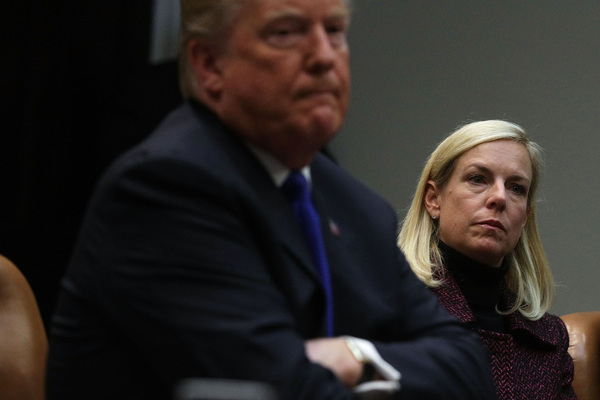
At the Justice Department meeting on trafficking, Homeland Security Secretary Kirstjen Nielsen gave the closing speech, highlighting the increased risk of human trafficking to immigrants. But her remarks were also sprinkled with references to the need to "secure our borders" and close immigration loopholes, and mentioned "trailer loads of illegal aliens" trafficked into the country.
"We need to secure the border. We need a border wall system _ walls work, we've talked a lot about walls," Nielsen said. "And importantly, (we need to close) legal loopholes that prevent my agents, who put their lives on the line every day, from being able to remove those they apprehend at the border."
Bruggeman, who was at the meeting, said she purposely left before Nielsen spoke. When read the above quotes, she was briefly silent before calling them "horrifying."